Can You Use Pine Sol On Wood Floors: Cleaning Guide
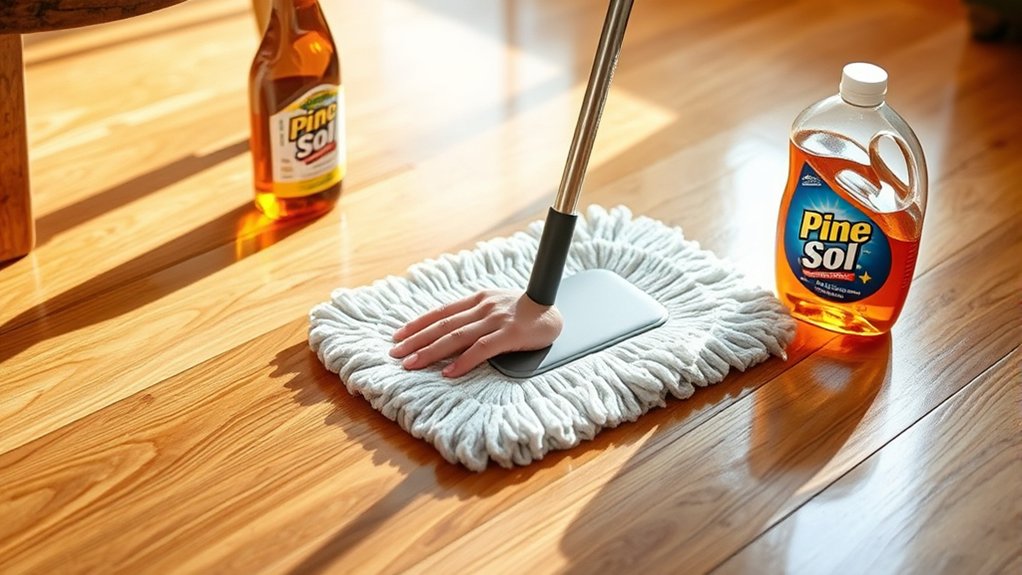
You can use Pine-Sol safely on sealed hardwood floors by diluting ⅛ cup per gallon of warm water. Apply it with a damp mop to avoid excess moisture or damage.
Never use it full strength or on unfinished, waxed, or oiled wood, as it can cause discoloration. Always test a small area first and rinse thoroughly to prevent residue buildup.
For a deeper understanding of proper techniques and alternatives, keep exploring the best care practices for wood floors. It’s worth taking the time to make sure your floors stay beautiful and well-maintained.
Is Pine-Sol Safe for Regular Use on Wood Floors?
How safe is Pine-Sol for regular use on your wood floors? Pine-Sol is good for hardwood when properly diluted. Use ⅛ cup per gallon of warm water to clean your hardwood floors effectively without damage.
Pine-Sol is safe for hardwood floors when diluted to ⅛ cup per gallon of warm water.
For regular cleaning, always apply it with a damp mop and avoid excess moisture that can harm finishes. Over time, frequent use may leave a residue that dulls the wood’s appearance. So, rinse occasionally to keep the shine.
Since wood floors vary, you should test a small, inconspicuous area first to make sure it works well and doesn’t cause damage. Avoid using Pine-Sol on unfinished or waxed floors because it can be absorbed and cause harm.
With proper dilution and method, Pine-Sol offers a safe and reliable option for maintaining sealed hardwood floors.
When Should You Avoid Using Pine-Sol on Hardwood Floors?
Because Pine-Sol can penetrate and damage unfinished, unsealed, or waxed wood floors, you should avoid using it on these surfaces.
If your hardwood floors are unsealed wood or have a worn finish, Pine-Sol may be absorbed, causing discoloration and structural damage.
You also want to steer clear of using Pine-Sol on waxed or oiled hardwood floors. It can strip away protective layers, which just speeds up wear and tear.
Plus, avoid cleaning damaged or compromised hardwood floors with Pine-Sol since broken sealants make them more vulnerable to moisture.
Using too much water when cleaning only makes this worse, so never saturate your floors.
Instead, for old, unsealed, or naturally oiled hardwood floors, go for specialized cleaners made to protect delicate surfaces.
Following these tips helps keep your floors looking good and lasting longer.
How to Dilute Pine-Sol Safely for Wood Floor Cleaning
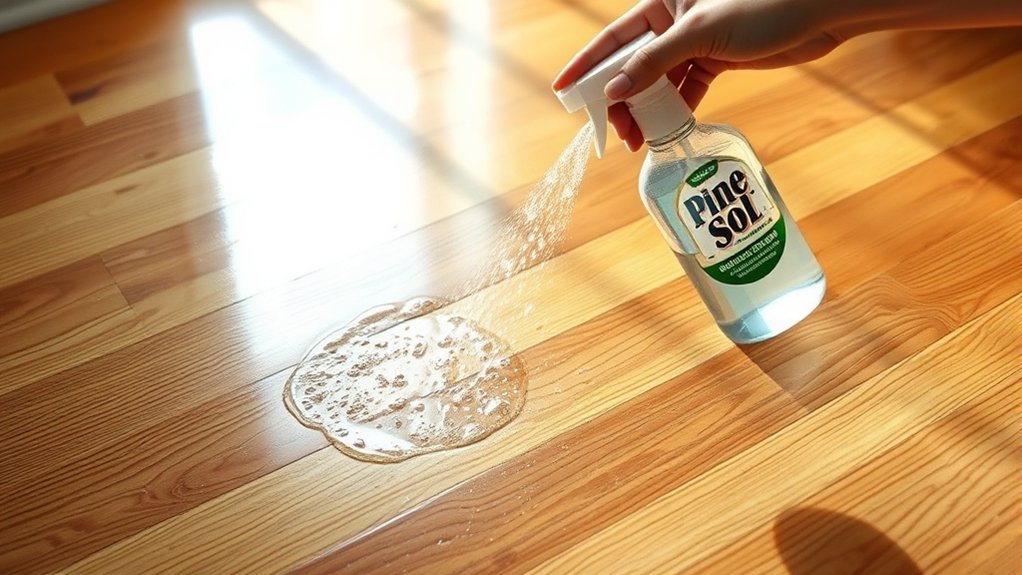
To dilute Pine-Sol safely for wood floor cleaning, mix ⅛ cup of Pine-Sol with one gallon of warm water according to the manufacturer’s instructions. This guarantees the solution is gentle enough for hardwood floors while still effective.
Before applying, test a small, inconspicuous area to check for any adverse reactions.
Use a damp mop rather than a soaking wet one to avoid excess moisture. After mopping, always rinse with plain water to remove any cleaning product residue and prevent buildup.
Follow these key points:
- Sweep or vacuum floors to remove dirt before cleaning
- Use the correct dilution ratio to protect wood finish
- Mop with a damp mop, minimizing water exposure
- Test a small area first for safety
- Rinse thoroughly with plain water after cleaning
Step-By-Step Guide to Cleaning Wood Floors With Pine-Sol
First, give your wood floor a good sweep or vacuum to get rid of all the dirt and debris.
Once that’s done, mix Pine-Sol with water as the label suggests.
Then, mop the floor with a damp mop—just enough moisture to clean, but not too much to soak the wood.
If you run into any stubborn stains, don’t worry.
Just apply Pine-Sol full strength using a sponge or an old toothbrush.
Make sure to rinse the area right away so you don’t end up with any sticky residue.
Preparing The Floor
Begin by thoroughly sweeping or vacuuming your wood floor to remove all loose dirt and debris. Proper preparation is essential for effective cleaning and preventing moisture damage on your hardwood.
Follow these precise steps:
Remove dust and grit to avoid scratching during cleaning.
Make certain the floor is dry before applying any solution.
Dilute Pine-Sol according to instructions to protect the wood finish.
Avoid soaking the floor; excess moisture can cause warping.
Plan for thorough rinsing after cleaning to eliminate residue.
This way, you’ll keep your wood floor looking great and lasting longer.
Dilution And Application
One gallon of warm water combined with ⅛ cup of Pine-Sol creates the ideal cleaning solution for your wood floors. Proper dilution is critical to protect your hardwood from moisture damage while maximizing Pine-Sol’s cleaning power.
Before application, sweep or vacuum thoroughly to remove loose dirt and debris.
Use a damp mop to evenly apply the diluted solution, making sure no liquid pools on the surface. Excess moisture can harm the wood.
After mopping, rinse the floor with clean water to eliminate any residue, which helps keep your hardwood looking great.
This careful dilution and application process balances effective cleaning with wood preservation. It helps your floors stay pristine without compromising their structural integrity.
Spot Cleaning Techniques
Target tough stains on your wood floors by applying full-strength Pine-Sol directly to a sponge or toothbrush for precise spot cleaning.
Before tackling the stain, always test Pine-Sol on an inconspicuous area to check for any adverse effects on your hardwood floors’ finish.
After scrubbing the stain gently, rinse the area immediately to remove all residue and avoid finish damage.
Follow up with a clean, damp cloth to wipe away excess cleaner and preserve your floor’s appearance.
Keep these spot cleaning tips in mind:
- Use full-strength Pine-Sol for targeted stain removal.
- Test on an inconspicuous area first.
- Avoid prolonged exposure to prevent dullness.
- Rinse thoroughly after scrubbing.
- Wipe with a damp cloth to maintain finish integrity.
How to Spot Clean Tough Stains With Pine-Sol on Wood
Tackle tough stains on your wood floors by applying Pine-Sol full-strength directly to the spot using a sponge or toothbrush.
For effective spot cleaning, gently scrub the stained area without saturating the hardwood to avoid damage.
Once the stain lifts, immediately rinse the spot with a clean cloth dampened with plain water to remove any Pine-Sol residue. This step is essential to prevent buildup that can dull or harm the wood finish.
Avoid letting Pine-Sol sit on the hardwood for extended periods, as prolonged exposure risks discoloration or damage.
Afterward, thoroughly dry the area and inspect the floor for any signs of wear.
By following this method, you’ll efficiently address tough stains while preserving your wood floor’s integrity.
It’s a simple way to keep your floors looking great without causing harm.
Common Mistakes to Avoid When Cleaning Wood Floors With Pine-Sol
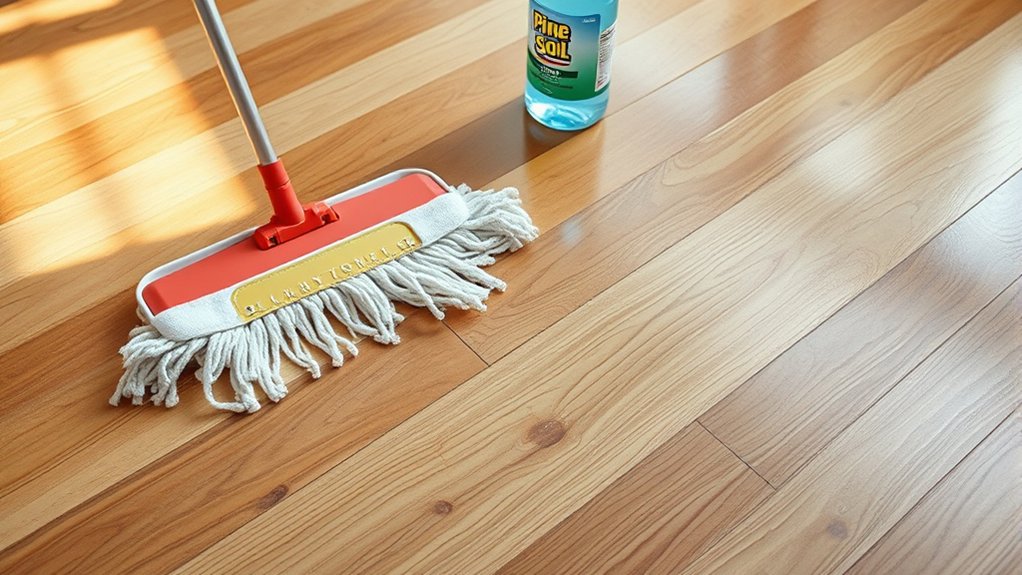
Although Pine-Sol is effective for cleaning wood floors, failing to dilute it properly can cause moisture damage and strip finishes. To protect your hardwood floors, you must use Pine-Sol cautiously as a cleaner.
Avoid these common mistakes to prevent damage and preserve your floors: Never use Pine-Sol undiluted; always mix ⅛ cup with one gallon of warm water.
Avoid cleaning unfinished, unsealed, or waxed wood floors to prevent absorption and finish stripping.
Don’t let Pine-Sol sit on the surface; rinse residue immediately with a damp cloth. Use a damp mop, not a soaking wet one, to minimize moisture exposure.
Regularly inspect floors for dullness or residue buildup from prolonged cleaner use.
Following these guidelines guarantees you protect your hardwood floors from moisture damage while effectively cleaning.
Best Alternatives to Pine-Sol for Hardwood Floor Care
Choosing the right cleaner is essential for maintaining the beauty and longevity of your hardwood floors. While Pine-Sol on hardwood floors is generally discouraged because of its harsh chemicals, you’ve got some great hardwood-specific cleaners to choose from.
Murphy’s Oil Soap gently cleans and enhances shine without damaging finishes. Bona Hardwood Floor Cleaner offers a pH-neutral formula that leaves no residue, making it safe for regular use on sealed wood. Zep Hardwood Floor Cleaner effectively cleans while protecting the wood finish without leaving a film.
For gentle maintenance, pair a microfiber mop with distilled water to avoid excess moisture, which can harm wood.
These alternatives provide safer, more effective options than Pine-Sol. They help you keep your floors looking great and lasting longer.
How to Maintain and Protect Your Wood Floors Long-Term
To keep your wood floors looking their best for years, you need a consistent maintenance routine that takes care of both daily cleaning and preventative steps.
Good upkeep not only preserves their appearance but also helps your hardwood last longer.
Try to do a deep clean every 2 to 4 weeks to get rid of embedded dirt. When you clean, use less water so you don’t risk moisture damage.
Here are some easy Do’s and Don’ts to help you maintain your floors effectively:
- Sweep or vacuum weekly to stop dirt buildup and scratches.
- Clean spills right away to avoid stains and warping.
- Put felt pads under furniture legs to protect the surface.
- Don’t drag heavy objects across the floor to prevent damage.
- Polish your floors every few months using wood-specific products to boost their shine.
Stick to these tips, and your floors will stay durable and look great for a long time.
Frequently Asked Questions
Can Pine-Sol Cause Discoloration on Wood Floors?
Yes, Pine-Sol can cause discoloration on wood floors, especially depending on the type of wood and the surface finish.
Its high pH balance might damage sealed, waxed, or unsealed surfaces, which can lead to uneven color changes.
If you clean your floors frequently with Pine-Sol without properly diluting or rinsing it off, the chances of discoloration go up.
So, it’s really important to be cautious with how you use it.
To keep your floors looking great, you might want to try cleaners made specifically for wood.
These products help maintain the finish and prevent your floors from dulling or staining over time.
Is It Safe to Use Pine-Sol on Unfinished Wood?
You shouldn’t use Pine Sol on unfinished wood since it can damage the wood fibers and cause staining.
Instead, choose Pine Sol alternatives like natural cleaning solutions or eco-friendly cleaners designed for unfinished wood care.
Focus on wood floor maintenance that preserves the wood finish protection by using gentle products recommended by manufacturers.
This approach guarantees your unfinished wood stays healthy and beautiful without risking harm from harsh chemicals.
How Often Should I Clean Wood Floors With Pine-Sol?
Think of cleaning frequency like tuning a piano. Regular adjustments keep it perfect.
You should clean wood floors with Pine-Sol every 2 to 4 weeks, diluting the product as directed for a streak-free finish.
For floor maintenance, sweep first to avoid scratches. If you prefer milder scents or gentler options, consider alternative cleaners.
Keep an eye on your floor’s condition and adjust cleaning based on traffic and scent preferences.
This way, you’ll maintain beauty and durability consistently.
Can Pine-Sol Be Used on Engineered Hardwood Floors?
Yes, you can use Pine-Sol on engineered hardwood floors if you follow safety precautions.
Make sure to dilute it properly to avoid damaging the finish. Always use a damp mop to prevent moisture harm.
It’s a good idea to check the manufacturer’s guidelines to see if the product is effective and compatible with your floors.
For floor maintenance, avoid using it on unsealed or waxed surfaces.
If you want, you can also consider cleaners specifically designed for engineered hardwood.
These options help maintain your floors safely and effectively.
Does Pine-Sol Leave a Slippery Residue on Wood Floors?
Imagine a thin, invisible film stretching across your wood floor. That’s the slippery residue Pine-Sol can leave if you’re not careful.
To avoid safety hazards and preserve your wood’s finish, follow cleaning tips like proper dilution and quick rinsing.
Understanding residue effects helps you compare products wisely for different flooring types.
Prioritize wood maintenance by using safety precautions to prevent buildup. This way, you keep your floors both beautiful and safe.
Conclusion
You can use Pine-Sol on wood floors, but only if you dilute it properly and avoid frequent use to prevent damage. Contrary to popular belief, Pine-Sol isn’t inherently harmful. It’s the concentration and overuse that cause problems.
Stick to a mild solution, spot clean tough stains, and never let it sit too long. For long-term care, consider gentler alternatives. Always follow up with proper floor maintenance to keep your wood looking its best.