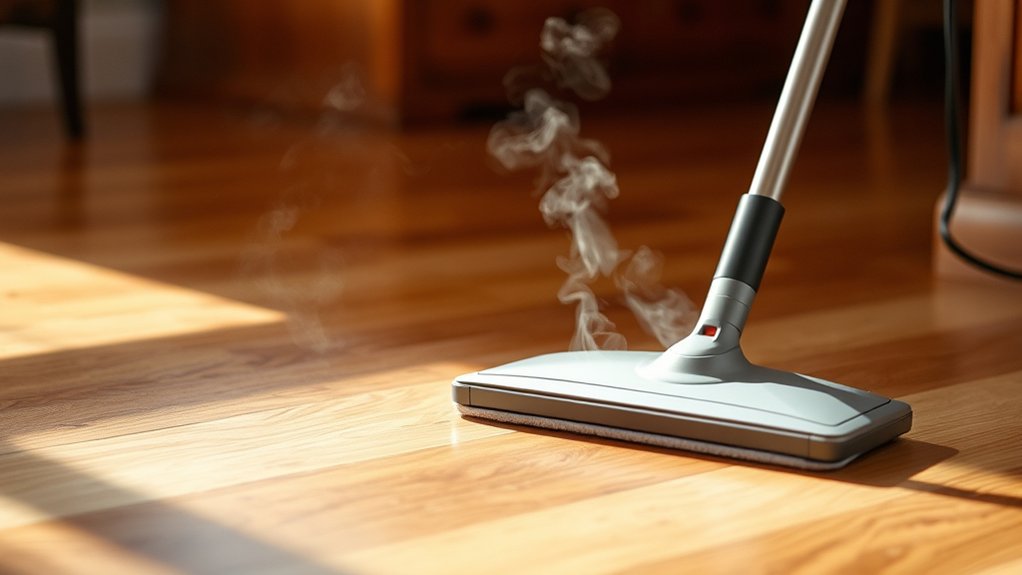
Can You Use A Steam Mop On Wood Floors: Safe Or Not
You can use a steam mop on wood floors only if your floors are properly sealed and you take strict precautions to minimize heat and moisture exposure. High temperatures can soften adhesives and damage finishes, while moisture may cause warping or swelling, especially on unsealed or waxed woods.
Always perform a water bead test and spot test before proceeding with low-moisture settings. If you want to keep your hardwood intact and avoid costly damage, understanding these details and alternatives is essential.
So, it’s really about being careful and knowing your floor’s condition before you steam mop. Otherwise, it’s better to look for safer cleaning options.
What Is Steam Mopping?
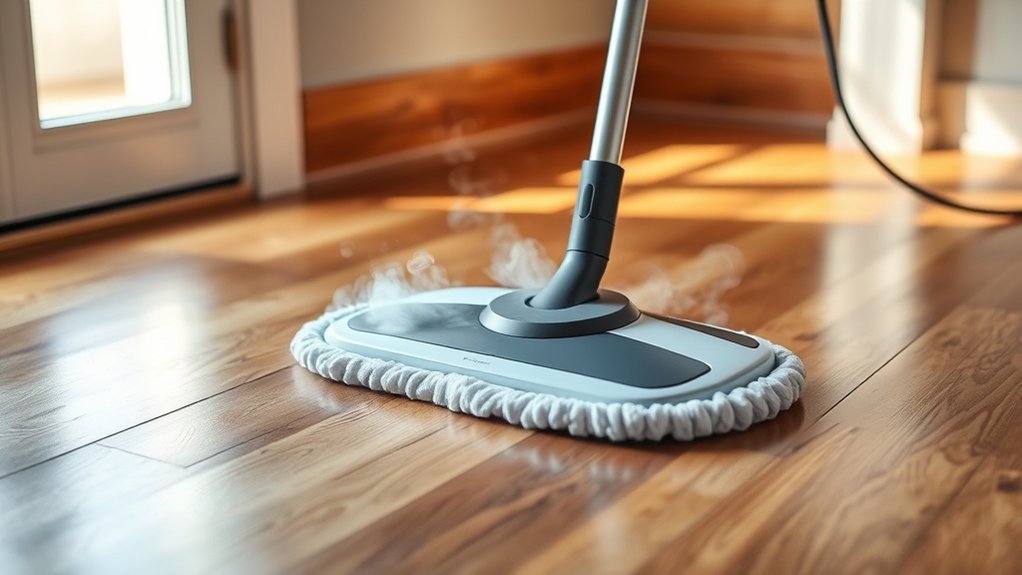
Steam mopping uses high-temperature steam, typically around 200°F, to clean and sanitize surfaces by breaking down dirt and grime without harsh chemicals. When using steam mops, you rely on water alone to generate steam that disinfects and loosens stubborn stains. This method works well on hard, non-porous floors.
But when it comes to hardwood floors, you need to be cautious. Moisture can penetrate the wood, especially if your floors aren’t properly sealed. The steam’s heat and moisture might cause damage in that case.
To minimize risks, use low-moisture settings and make sure your hardwood flooring is adequately protected before steam mopping.
Why Steam Mops Damage Hardwood Floors
Although steam mops offer a convenient cleaning solution, their high heat and moisture pose significant risks to hardwood floors. When you use a steam mop on hardwood, the heat (up to 212°F) can soften adhesives and degrade finishes. Moisture penetration through seams causes warping, swelling, and delamination.
Unsealed or waxed woods are especially vulnerable. Most manufacturers care guides explicitly warn against steam cleaning, as it may void warranties and lead to irreversible damage. Repeated exposure dulls finishes, demanding costly refinishing.
| Damage Cause | Effect on Hardwood |
|---|---|
| High Heat | Softens adhesives, weakens finishes |
| Moisture Penetration | Warping, swelling, delamination |
| Unsealed Surfaces | Increased absorption, deterioration |
| Frequent Use | Cloudiness, finish dulling |
| Ignoring Care Guide | Warranty void, permanent damage |
How to Check If Your Floors Are Safe for Steam Mopping
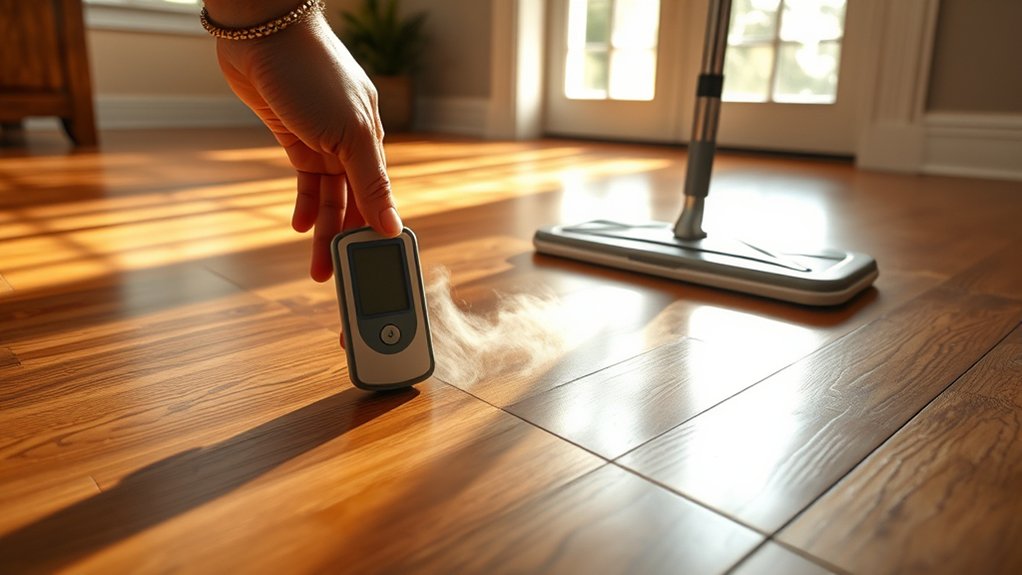
Start by checking if your wood floors are properly sealed. An unsealed surface can soak up moisture and warp, which you definitely want to avoid.
Here’s a simple way to test it: put a few drops of water on the floor. If the water beads up and doesn’t soak in, that means the seal is still good.
Verify Floor Sealing
Before using a steam mop on your wood floors, you need to verify that they’re properly sealed to prevent moisture damage. To verify floor sealing, first consult your manufacturer’s care guide to confirm whether steam cleaning is recommended.
Check for visible signs of damage like cracks or discoloration, which indicate vulnerability.
Remember, sealed hardwood floors resist moisture penetration, which is essential for steam mopping safety. It’s also important to differentiate solid hardwood from engineered hardwood because adhesives in engineered types may react poorly to steam.
While you won’t perform a water bead test here, reviewing your floor’s finish and warranty info helps guarantee compliance.
You can also conduct a controlled spot test in an inconspicuous area with low heat, then observe any changes within 10-15 minutes. This helps confirm your floors can handle steam without harm.
Perform Water Bead Test
Confirming your floor’s seal is only part of ensuring it can withstand steam mopping. You’ll also want to perform a water bead test to check for moisture resistance. This simple test helps verify if your sealed floors can handle the steam mop’s heat and moisture without damage.
To perform the water bead test, place a few drops of water on a discreet section of your hardwood floor. Then, observe if the water beads up or is quickly absorbed. If the water beads, your floors are likely sealed and safe for steam mopping.
If water seeps in, you should avoid using a steam mop to prevent warping or moisture damage.
Always cross-check your floor’s manufacturer guidelines alongside this test for maximum safety. It’s better to be safe than sorry!
Safer Alternatives to Steam Mopping for Hardwood Floors
Although steam mops offer convenience, they can introduce excessive moisture and heat that may damage hardwood floors over time. To protect your flooring, consider safer alternatives to steam mopping, such as using a microfiber mop for regular maintenance. Microfiber effectively captures dust and dirt without scratching the surface.
When deeper cleaning is necessary, opt for a damp mop with a well-wrung cloth and a pH-neutral hardwood cleaner, like Bona. This helps avoid excess water that could cause warping or discoloration.
Also, promptly spot clean spills with a soft cloth and wood-safe cleaner to prevent saturation. Keeping moisture levels low and sticking to these methods maintains your hardwood’s integrity while ensuring thorough cleaning without the risks associated with steam mops.
How to Use a Steam Mop Safely on Sealed Hardwood Floors
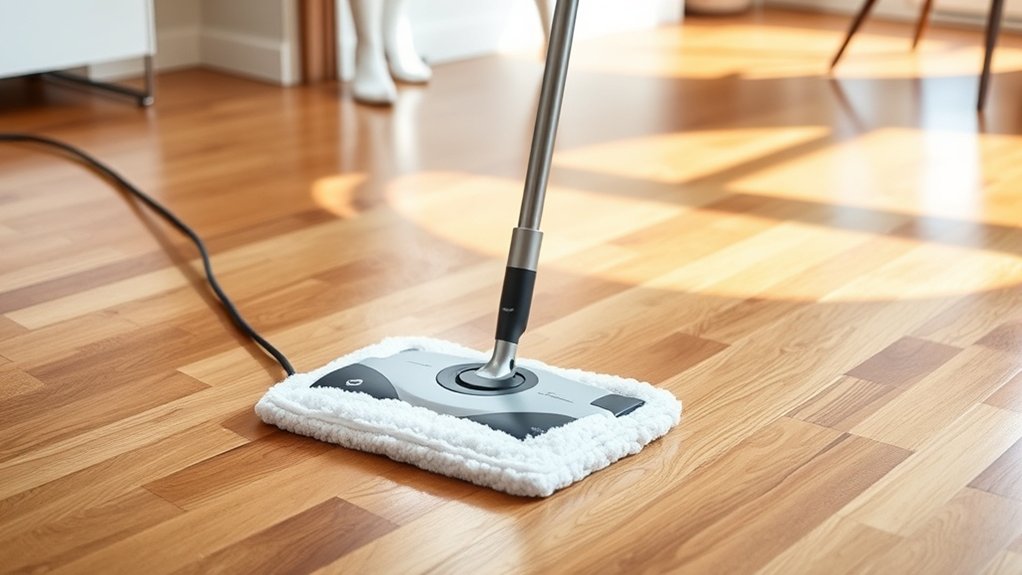
If you choose to use a steam mop on your hardwood floors, make sure they’re properly sealed to handle the moisture and heat. Sealed hardwood can withstand controlled steam cleaning, but you’ve got to be careful to prevent damage.
Ensure your hardwood floors are sealed before using a steam mop to safely handle moisture and heat.
Follow these guidelines: set the steam mop to a low moisture level to avoid water pooling.
Keep the mop moving continuously to prevent heat from concentrating on one spot. Use a microfiber pad designed specifically for steam mops to protect the finish.
Also, perform a spot test in an inconspicuous area first to check for any adverse reactions. It’s a simple way to make sure your floors stay looking great!
Common Mistakes That Damage Wood Floors
You definitely want to avoid exposing your wood floors to too much moisture. Steam can actually seep into the wood fibers, which weakens them and can lead to warping or even the adhesive coming loose.
Before you even think about using a steam mop, make sure your floors are properly sealed. If they’re unsealed or have a wax finish, they’ll soak up moisture and get damaged.
Skipping these simple steps could end up costing you a lot in repairs and might even void your floor’s warranty. So, it’s really worth taking the time to check first!
Excess Moisture Exposure
When steam mops release excessive moisture onto wood floors, they can cause serious structural damage such as warping, cupping, and delamination. This is especially true if the floors aren’t properly sealed.
Excess moisture seeps into unsealed wood, weakening the adhesives in engineered flooring and making separation more likely. Using steam mops on unsealed, waxed, or oil-finished floors can also cloud the finishes and cause swelling that you can’t fix.
To protect your floors, keep these tips in mind:
- Avoid steam mops on unsealed wood to reduce the risk of soaking the floor.
- Try a simple water drop test to check if your floor is sealed before you clean.
- It’s safer to use damp mops instead of steam mops to control moisture better.
- Remember, too much heat and moisture together speed up damage to the finish.
Being careful with your cleaning methods goes a long way in preventing costly damage from excess moisture.
Ignoring Floor Sealing
Proper sealing of hardwood floors plays a significant role in protecting them from moisture damage caused by steam mops.
Using a steam mop on unsealed wood exposes the floor to excessive moisture, which can weaken the wood fibers, leading to warping and delamination.
Before steam cleaning, perform a water bead test: if water absorbs rather than beads, your floor isn’t sealed properly and isn’t safe for steam mopping.
Many manufacturers explicitly state that using steam mops on unsealed floors voids warranties because moisture can compromise the finish and structural integrity.
Ignoring floor sealing risks costly repairs and shortened flooring lifespan.
Maintaining Hardwood Floors With Pets Without Steam Mops
Although steam mops offer powerful cleaning, maintaining hardwood floors in homes with pets without them requires careful attention to avoid moisture damage and scratches.
Instead of relying on a steam mop, prioritize regular vacuuming with a soft brush attachment to gently remove pet hair and dirt.
Use a damp microfiber mop paired with a pH-neutral hardwood floor cleaner to tackle pet messes while minimizing water exposure.
Spot clean spills promptly with wood-safe solutions to prevent stains.
Also, control indoor humidity to reduce wood expansion or contraction caused by pet-related moisture.
Consider these practices:
- Regular vacuuming to protect hardwood floors from scratches
- Damp mopping with pH-neutral cleaner to avoid moisture damage
- Immediate spot cleaning of pet spills with wood-safe products
- Using area rugs in high-traffic zones to reduce wear and tear
What Flooring Experts Say About Using Steam Mops
Since steam mops expose hardwood floors to high heat and moisture, flooring experts strongly caution against their use. The risk includes warping, weakened adhesives, and compromised finishes. You should know that steam mops can force moisture into seams, causing damage that might not show up right away.
Many manufacturers warn that using steam cleaners can void warranties on hardwood floors. So, it’s a good idea to avoid them altogether. Instead, flooring experts recommend using dry or lightly damp mops. Pair those with hardwood-specific cleaners to keep your floors in great shape.
| Concern | Cause | Expert Recommendation |
|---|---|---|
| Warping | Moisture seepage | Avoid steam mops |
| Adhesive weakening | High heat exposure | Use gentle cleaning methods |
| Finish damage | Steam-induced wear | Follow manufacturer guidelines |
Frequently Asked Questions
Can Steam Mops Remove Deep Stains From Wood Floors?
Steam mops can’t effectively remove deep stains from wood floors. For stain removal techniques, you should avoid relying on steam because it risks damaging the finish.
Instead, focus on wood floor maintenance using damp cloths with wood-safe cleaners designed for stubborn marks.
Steam mop alternatives like specialized hardwood floor cleaners provide safer, targeted stain treatment.
Always use caution to preserve your flooring’s integrity and avoid moisture-related damage while cleaning. It’s better to be gentle and patient when dealing with stains on wood floors.
How Often Can I Steam Mop Other Types of Flooring?
Back in the days of quills and parchment, you’d never imagine steam mops aiding carpet cleaning or tile maintenance!
You can steam mop tile every 1-2 weeks to keep it pristine. But avoid frequent use on laminate care, once a month tops, to prevent swelling.
Use caution on carpets; steam mops aren’t ideal there.
Always follow manufacturer instructions for each surface to avoid damage and guarantee safe, effective cleaning.
Are There Specific Steam Mop Brands Safe for Wood Floors?
Yes, certain steam mop brands are specifically engineered for wood floor maintenance.
Look for steam mop features like adjustable steam levels and microfiber pads. These offer safe cleaning solutions by minimizing moisture and reducing the risk of scratching.
Brands like Bissell, Shark, and Hoover provide models designed for sealed hardwood floors.
Always verify your floor’s sealing and follow manufacturer instructions closely. This way, you can protect your wood floors while safely cleaning them.
Does Steam Mopping Affect Wood Floor Warranties?
Yes, steam mopping can affect your wood floor’s warranty. Many manufacturers list warranty limitations that exclude damage caused by steam because it may violate maintenance requirements.
Using a steam mop could void coverage if floors aren’t sealed properly or if steam penetrates the finish.
To protect your warranty, it’s a good idea to check the care guidelines first.
You might want to consider alternative cleaning methods like damp mopping with approved solutions. Just be sure to avoid excessive moisture and heat exposure to keep your floors safe.
Can Steam Mops Sanitize Wood Floors Effectively?
Yes, steam mop effectiveness in sanitizing wood floors is notable because it eliminates up to 99.9% of bacteria and viruses using high-temperature steam.
However, for proper wood floor maintenance, you must guarantee floors are well-sealed to prevent moisture damage.
Using a low steam setting and moving the mop continuously helps protect the finish.
It’s a good idea not to rely solely on steam. Try to incorporate other cleaning solutions to minimize risks linked to excessive moisture exposure.
Conclusion
Think of your hardwood floors as a delicate instrument. Steam mops, like high heat, can mess up their harmony if you’re not careful. While sealed floors might handle gentle steam, unsealed wood can get seriously damaged by moisture and heat.
It’s always a good idea to test first and pick safer cleaning methods. Stay alert and take care of your floors’ protective finish. That way, you keep their natural beauty and make sure they last a long time.
In the end, your floors stay a strong foundation—not just a fragile memory.