Can You Use Goo Gone On Wood: Safe Usage Tips
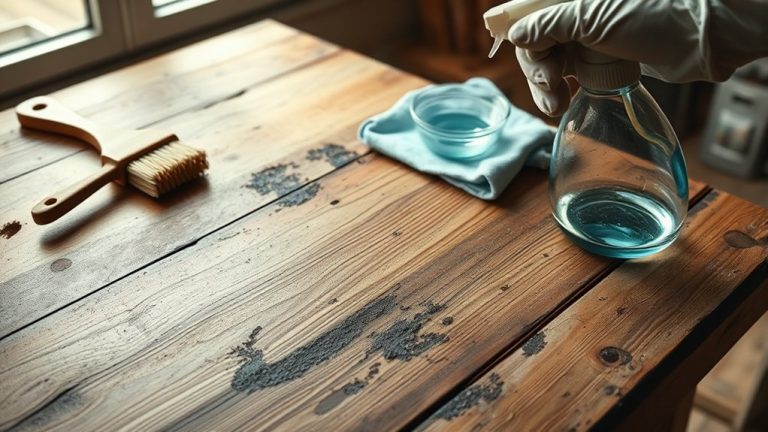
You can use Goo Gone safely on finished wood surfaces if you test it first on a hidden spot to check for discoloration. Apply a small amount, wait a few minutes, then gently wipe the residue away.
Avoid using it on unfinished or painted wood, as it can cause damage. Afterward, clean the area with soapy water and dry it thoroughly.
If sticky residue remains, there are other effective removal methods and care tips you’ll find helpful. Give them a try to keep your wood looking great!
Is Goo Gone Safe to Use on Wood Surfaces?
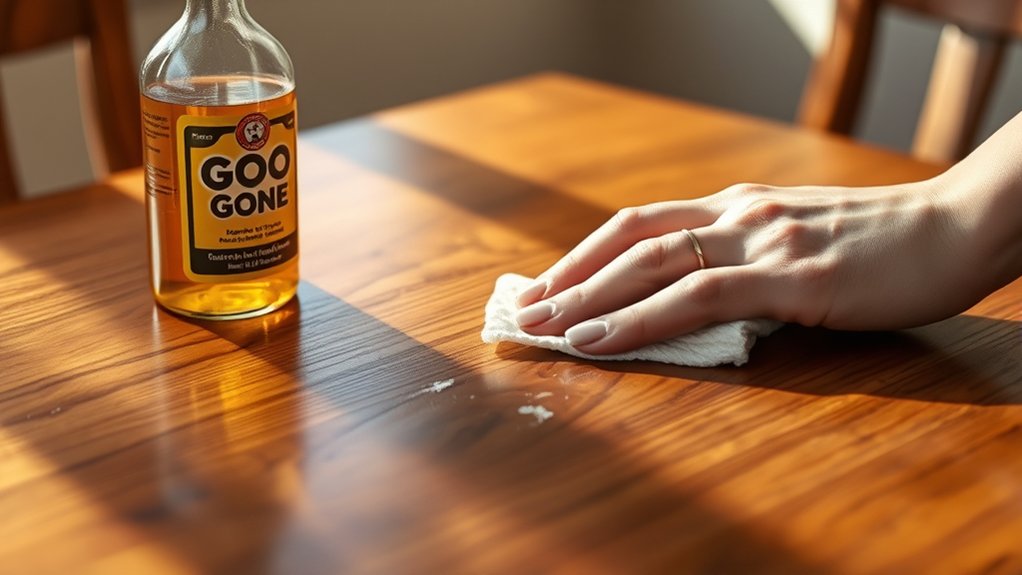
Although Goo Gone is safe to use on finished wood surfaces, you should never apply it to unfinished wood. Its petroleum-based formula can soak into the bare wood and cause staining or damage.
When dealing with adhesive on finished wood, apply Goo Gone directly and let it sit for 3-5 minutes to break down the residue effectively. Always test first on an inconspicuous area to make sure the product won’t harm your wood’s finish.
After treatment, clean the area with warm soapy water to remove any remaining Goo Gone and adhesive residue.
Avoid using Goo Gone on unfinished wood surfaces because it can interfere with staining and cause irreversible damage.
Following these steps helps you safely remove adhesive without compromising your wood’s appearance.
How to Test Goo Gone on Wood First
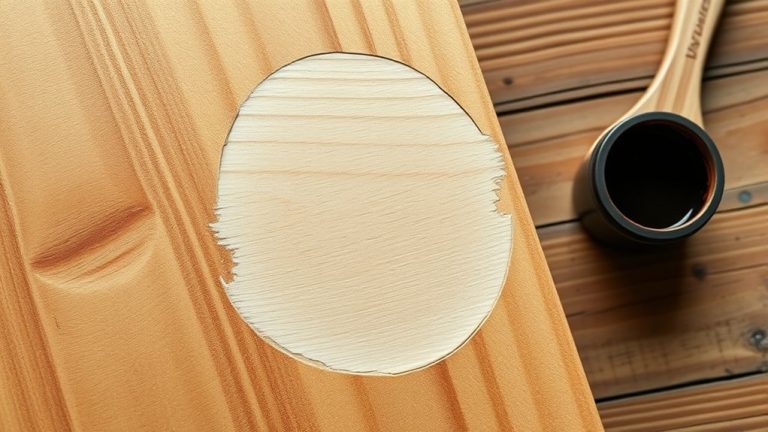
Start by picking a hidden spot on the wood to test out the Goo Gone.
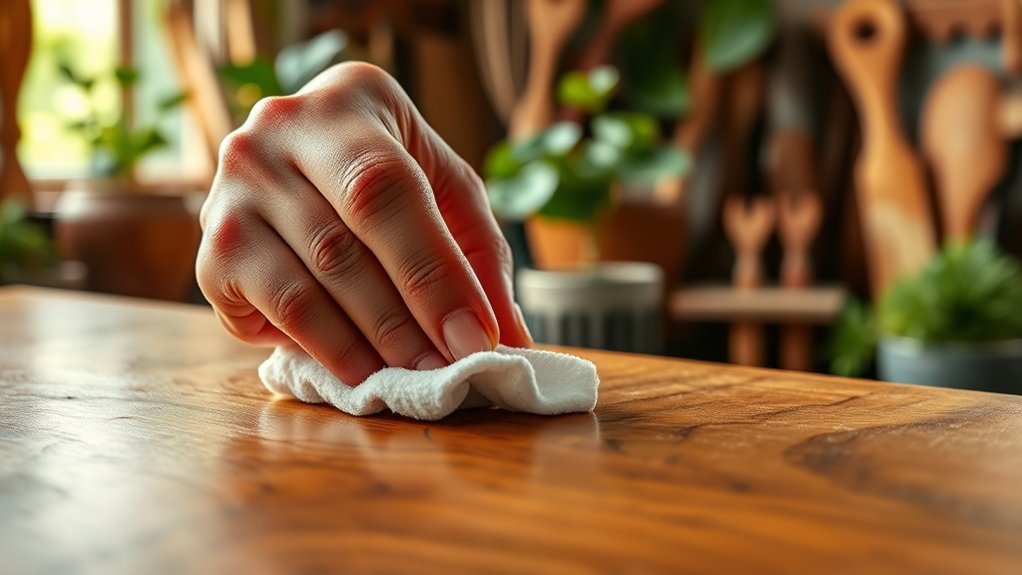
Just dab a small amount onto a clean, white cloth and gently rub it onto that area.
Then, wait about 5 to 10 minutes to see if there’s any discoloration or damage before you go ahead and treat the main surface.
Select Inconspicuous Area
Before applying Goo Gone on any wood surface, pick one inconspicuous spot to test its effects. This step lets you test Goo Gone safely, reducing the risk of potential damage or staining on visible areas.
Choose a hidden section, such as the underside or back of the wood, where any discoloration won’t be noticeable.
Apply a small amount of Goo Gone to this inconspicuous area and wait 3-5 minutes to observe any adverse reaction.
Afterward, use a clean white cloth to gently wipe the spot. Check carefully for any changes in color, texture, or finish.
If the wood remains unaffected, you can confidently proceed with treating the sticky area.
Make sure to regularly monitor the test spot afterward to verify no long-term damage develops.
Apply Small Goo Amount
Once you’ve confirmed that the wood’s finish won’t react negatively, apply a small amount of Goo Gone to the test spot. Use just enough to cover the area without oversaturating. Too much Goo Gone can seep into the wood and cause staining.
Let it sit for 3-5 minutes, then wipe it off to check for any damage. If all looks good, you can go ahead and remove stickers or sticky residue on the larger surface.
| Step | Action | Purpose |
|---|---|---|
| 1 | Apply small Goo amount | Prevent oversaturation |
| 2 | Wait 3-5 minutes | Allow Goo Gone to break down residue |
| 3 | Wipe clean | Check for adverse reaction |
| 4 | Repeat if safe | Remove more stickers |
| 5 | Clean the area | Remove any Goo Gone residue |
Observe Surface Reaction
Although Goo Gone is generally safe for finished wood, you should always test it on a small, hidden spot first to observe any surface reaction.
To properly use Goo Gone on wood, follow these steps for a patch test:
- Select a small, inconspicuous area first to avoid visible damage.
- Apply a small amount of Goo Gone and let it sit for 3-5 minutes.
- Use a clean, white cloth to wipe the area and observe the surface for discoloration or damage.
- If you notice any adverse effects, stop using Goo Gone and try alternative methods.
This process guarantees you safely use Goo Gone without harming your finished wood surface.
It’s always better to be safe, right? Testing first helps you avoid any unwanted surprises later on.
How to Remove Glue and Sticky Residue With Goo Gone
Remove glue and sticky residue from finished wood surfaces effectively by using Goo Gone Original.
Start by performing a patch test on a hidden spot to guarantee the product won’t harm the finish.
Apply Goo Gone Original directly to the adhesive from wood, letting it sit for 3-5 minutes to break down the residue.
Then, gently wipe away the softened glue with a clean cloth.
For tougher, dried glue, soak the area with Goo Gone and carefully scrape with a putty knife, reapplying as necessary.
After removing all residue, clean the surface with soapy water to eliminate any oily traces.
Avoid using Goo Gone on unfinished wood, as it may cause damage.
Following these steps guarantees safe and efficient removal without harming your wood’s finish.
How to Clean and Care for Wood After Using Goo Gone
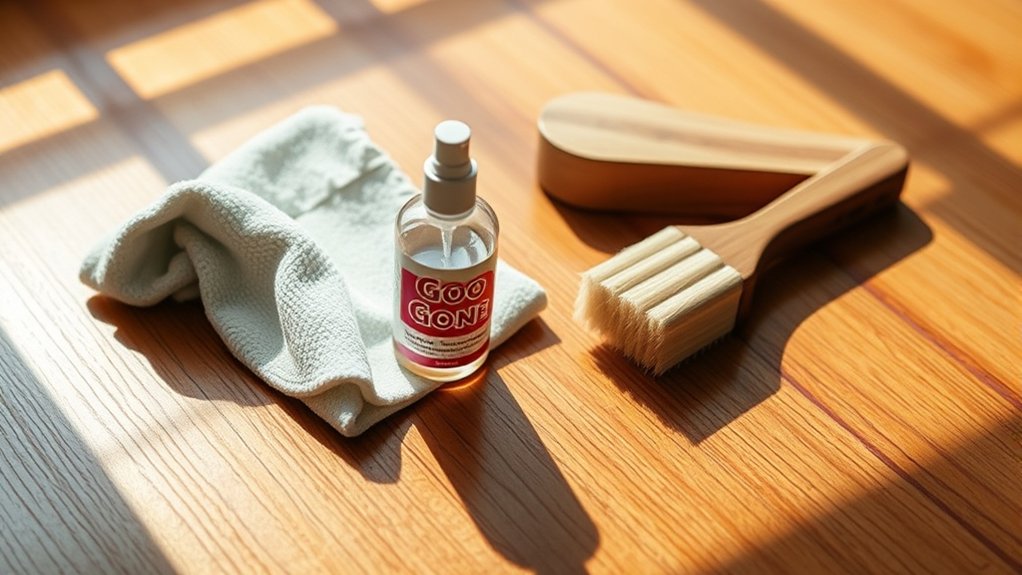
Because Goo Gone contains oils that can leave a residue on wood surfaces, you’ll want to thoroughly clean the area with warm, soapy water after use. This step prevents damage to the wood finish and guarantees no oily film remains.
Before applying Goo Gone, always do a patch test on an inconspicuous spot to check for any adverse reactions.
After cleaning, follow these steps to care for your wood:
- Rinse the treated area with warm soapy water to remove all Goo Gone residue.
- Dry the wood completely with a soft cloth.
- Apply a quality wood polish to restore shine and protect the finish.
- Regularly dust and use coasters to avoid future sticky buildup.
This routine keeps your wood looking its best after using Goo Gone. It’s really all about giving your wood the TLC it deserves!
What to Do If Goo Gone Doesn’t Fully Remove Sticky Residue?
If Goo Gone doesn’t fully eliminate sticky residue on your wood surface, try reapplying it and letting it sit for another 5 to 10 minutes. This helps break down the adhesive more effectively.
For stubborn spots, gently scrape using a putty knife or a Goo Gone Sticker Lifter. This way, you avoid damaging the wood. After that, follow up with warm soapy water to lift any remaining stickiness.
If residue still persists, apply rubbing alcohol on a cotton ball for tougher adhesive. Always finish by cleaning thoroughly with warm soapy water.
| Step | Action | Purpose |
|---|---|---|
| Reapply Goo Gone | Let sit 5–10 minutes | Break down sticky residue |
| Scrape gently | Use putty knife or sticker lifter | Remove loosened adhesive |
| Clean surface | Warm soapy water | Remove residue and Goo Gone |
| Treat tough spots | Rubbing alcohol on cotton | Dissolve stubborn adhesive |
Wood Surfaces to Avoid Using Goo Gone
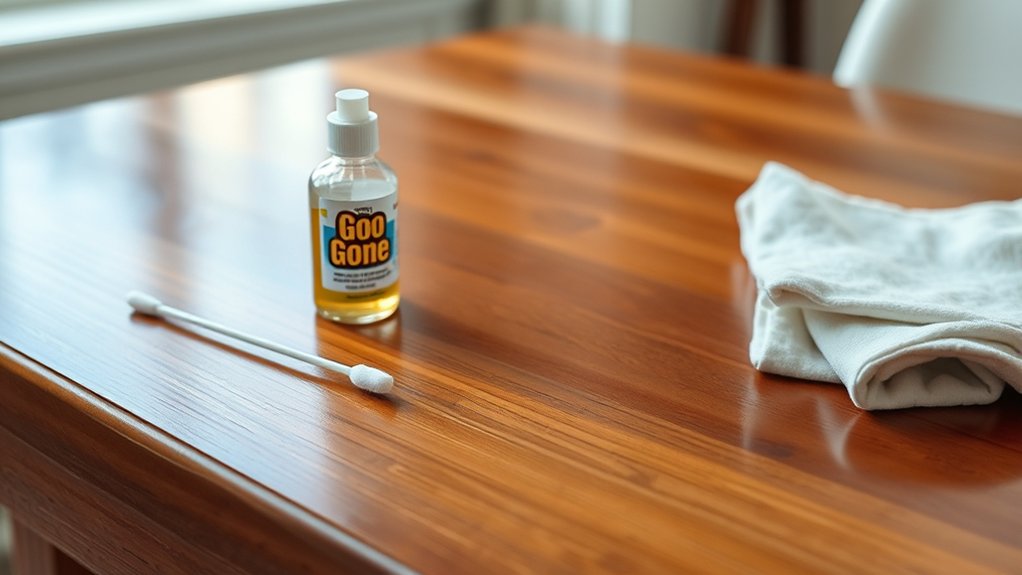
While Goo Gone can be effective on many wood surfaces, it’s important to know when to avoid using it. Some wood types and finishes may react poorly to the product, causing damage rather than safely removing sticky residue.
Avoid Goo Gone on unfinished wood because it can penetrate deeply and cause stains or damage. Painted wood is another no-go since it might strip or dull the paint. Always test first if you’re unsure.
Also, stay away from surfaces with delicate finishes because these can be compromised by the product.
And for areas that are better cleaned with warm soapy water, stick to that gentler, safer option instead.
If you’re unsure, just opt for warm soapy water or oil-based solutions instead of Goo Gone. This way, you protect your wood’s surface and finish without any risk.
Alternatives to Goo Gone for Removing Sticky Residue on Wood
When you need to remove sticky residue from wood but want to avoid Goo Gone, several effective alternatives can help you safely clean your surfaces.
Vegetable or olive oil gently breaks down the adhesive in sticky messes without damaging wood, making it a reliable alternative.
A white vinegar solution with equal parts vinegar and water also dissolves adhesives while remaining safe for most wood finishes.
For tougher spots, rubbing alcohol works well but should only be used on sealed wood to prevent harm.
You can also try a baking soda paste, which acts as a gentle abrasive to lift residue safely.
If you prefer a non-chemical method, applying heat with a hair dryer softens adhesive, allowing easy removal with a plastic scraper.
These alternatives provide safe, practical options for breaking down adhesives without Goo Gone.
Frequently Asked Questions
Can Goo Gone Damage Wood Finishes or Stains?
Yes, Goo Gone can affect wood finish effects if used improperly. To avoid damage, follow stain removal tips like testing on a hidden spot first and using gentle application techniques.
Always clean the area thoroughly afterward to protect the finish.
If you’re concerned, consider alternative cleaners designed for wood. Applying protective coatings after cleaning helps maintain the wood’s appearance and prevents future damage from solvents like Goo Gone.
Just take it slow and be careful, and your wood should stay looking great!
How Long Should Goo Gone Sit on Wood Before Wiping?
Let Goo Gone sit on the wood surface for 3-5 minutes during your Goo Gone application to effectively loosen sticky residue.
For tougher spots, go ahead and extend the wait to 10-15 minutes.
Before applying, make sure to check how the wood surface reacts by testing in a hidden area.
If you want, you can also try alternative cleaners or DIY methods like vinegar and olive oil.
After the wait, always wipe gently with a clean cloth to avoid damaging the finish.
Taking it slow helps keep your wood looking great!
Is Goo Gone Safe for Antique or Delicate Wood?
Imagine your antique wood glowing softly in the afternoon light. Goo Gone isn’t the safest choice here. For delicate surface protection, avoid harsh chemicals that can harm finishes.
Instead, try residue removal techniques like warm soapy water or oil-based solutions.
When focusing on antique wood care, rely on wood restoration tips that emphasize gentle, alternative cleaners.
This approach preserves beauty and value without risking damage to fragile surfaces or finishes. It’s all about taking care with what you use and keeping those antiques looking their best.
Can Goo Gone Remove Gum From Wood Surfaces?
Yes, Goo Gone is effective for gum removal techniques on wood surfaces. It softens gum residue, making cleanup easier without harming the finish.
To protect your wood surface, always test first and gently wipe off softened gum.
Compared to alternative gum solutions, Goo Gone offers thorough cleaning but requires follow-up washing to avoid residue effects. This product stands out in cleaning product comparisons for safely tackling sticky messes on wood.
Should I Ventilate the Area When Using Goo Gone on Wood?
You absolutely should ventilate the area when using Goo Gone on wood.
Studies show that poor ventilation increases exposure to solvents, causing up to 30% more respiratory irritation. Ventilation importance can’t be overstated for health precautions and minimizing odor effects.
Open windows, use fans, and apply Goo Gone sparingly.
If you’re worried, try alternative products with less harsh chemicals. Proper application techniques combined with good airflow keep you safe and your wood intact.
Conclusion
When dealing with sticky residue on wood, Goo Gone can be a handy helper if you use it right. Always test a small, hidden spot first to avoid damage. Remember, “measure twice, cut once” applies here: careful testing and gentle cleaning protect your wood’s finish.
If Goo Gone doesn’t fully work, try safe alternatives or consult a pro. With the right approach, you’ll keep your wood looking great without any sticky situations.