Can You Paint Wood Floors: Step By Step Guide For Durable Finish
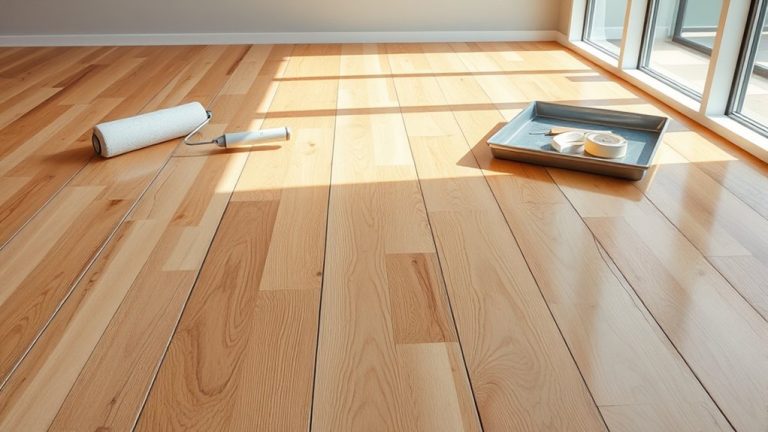
Yes, you can paint wood floors for a durable finish by following key steps. Start by thoroughly cleaning and sanding the floor, then apply a high-quality primer designed for wood.
Use at least two thin coats of floor-specific paint, sanding lightly between coats. Finish with multiple thin layers of clear polyurethane sealer to protect against wear and moisture.
Avoid common mistakes like skipping prep or applying thick coats to guarantee lasting results. Keep going to uncover expert tips for flawless painting and maintenance.
Key Takeaways
- Thoroughly clean, sand, and fill gaps on wood floors before painting for a smooth, durable surface.
- Use a high-quality primer compatible with floor paint to ensure strong adhesion and stain blocking.
- Apply at least two thin coats of floor-specific paint, sanding lightly between coats for even coverage.
- Seal painted floors with multiple thin coats of clear, water-based polyurethane for lasting protection.
- Maintain floors by using felt pads, cleaning gently, and reapplying sealer every few years for durability.
How to Prepare Wood Floors for Painting
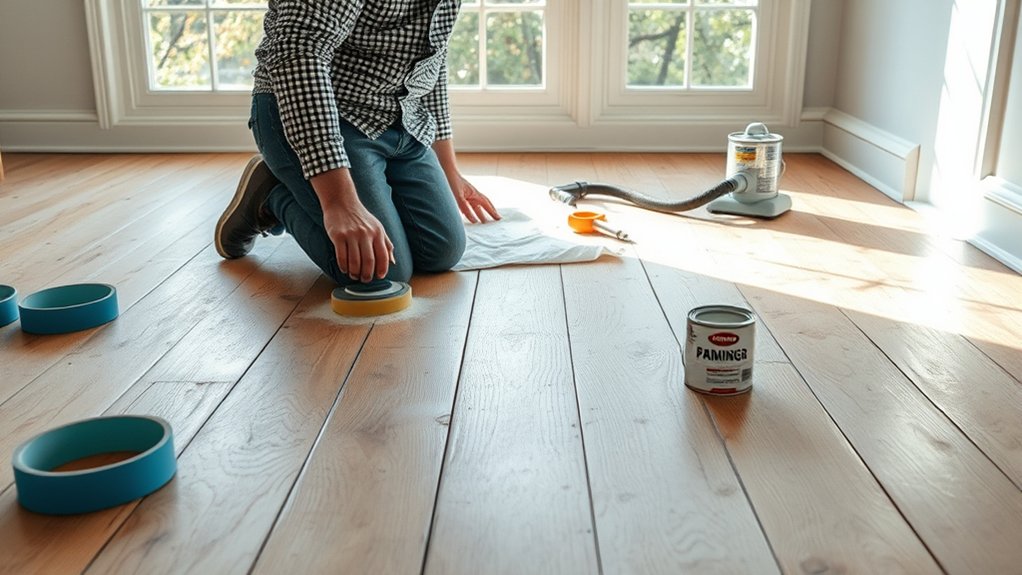
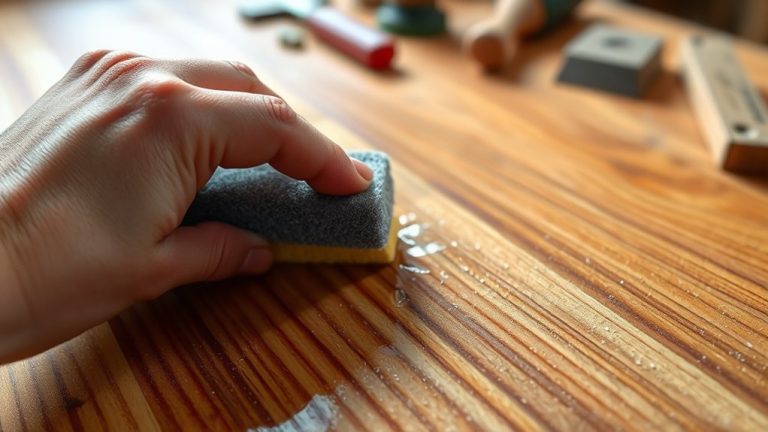
Start by thoroughly cleaning your wood floor with a vacuum and a damp rag to remove all dirt and dust. This guarantees a smooth surface for the paint to adhere properly.
Next, inspect the floor for any loose nails or staples and address them to prevent damage.
Fill gaps or holes with wood filler, and be sure to let it dry completely.
Then, sand the floor using medium-grit sandpaper. This step is really important because it creates a smooth surface and helps the paint stick better.
After sanding, clean the floor again to remove all the dust.
Apply a high-quality primer evenly and let it dry for at least 24 hours.
Choosing the Right Primer and Paint for Wood Floors
You’ll want to pick a high-quality primer that helps the paint stick well and blocks any stains. A water-based primer usually works great, especially when used with paint that’s made to go with it.
Now, when it comes to the paint finish, you have options—from low-sheen to high-gloss. This choice not only changes how your floor looks but also affects how durable it’s and how slippery it might be.
It’s best to go for paints that are specifically made for floors. These are designed to handle wear and tear, keeping your wood floors protected and looking great for a long time.
Primer Types Explained
Although selecting the right primer might seem straightforward, choosing one specifically designed for wood floors guarantees ideal adhesion and coverage. Among primer types, high-hiding primers like Fresh Start® provide excellent coverage and a strong base for paint.
Bonding primers such as Stix or Zinsser Bulls Eye 1-2-3 enhance adhesion on previously painted or glossy surfaces, ensuring durability.
You should also consider compatibility with paints. Select primers that work well with your chosen floor paint, such as Floor & Patio Latex Enamel, to maximize longevity.
For application method, use a brush on edges and a roller on larger areas for even coverage and proper drying.
Tinting primer a light gray can boost the topcoat’s vibrancy and coverage, giving your wood floors a flawless finish. It’s a simple trick that really makes a difference in the final look.
Paint Finish Options
When choosing paint finishes for wood floors, it’s essential to balance durability, appearance, and safety. Start with a reliable paint primer like Fresh Start® or Zinsser Bulls Eye 1-2-3 to secure strong adhesion and coverage.
For the topcoat, Floor & Patio Latex Enamel provides a durable finish perfect for high-traffic areas.
Consider your paint finish options carefully:
- Low sheen: Offers better slip resistance and a subtle look, ideal for safety.
- High gloss: Delivers a shiny, reflective surface but may be slippery.
- Durable finish: Quick-drying and washable formulas simplify maintenance.
Always test paint samples on your floor to confirm color and finish before applying the final coat. This approach guarantees a long-lasting, attractive result tailored to your space.
It’s worth taking the time to find the right combination for your floors. That way, you get both beauty and function without any surprises.
Durability and Protection
Selecting the right primer and paint is critical to ensuring your wood floors stand up to daily wear and maintain their appearance over time. Start with a high-quality primer like Fresh Start® High-Hiding All Purpose Primer or a bonding wood floor primer such as Zinsser or Stix to guarantee strong adhesion, especially on bare or previously painted surfaces.
Choose a durable paint for wood floors, like Floor & Patio Latex Enamel or Intelligent Floor Paint, designed for high-traffic areas and scratch resistance.
Apply each coat of paint evenly, allowing adequate drying time as per manufacturer instructions. Proper drying and curing prevent peeling and chipping, ensuring long-lasting durability and protection.
How to Prime and Paint Your Wood Floor
Begin by thoroughly cleaning your wood floor to remove all dirt and debris. This step is important to make sure the paint sticks properly.
Next, sand the floor with medium-grit sandpaper to smooth the surface and get rid of any glossy finish.
Sand the floor with medium-grit sandpaper to smooth the surface and remove any glossy finish.
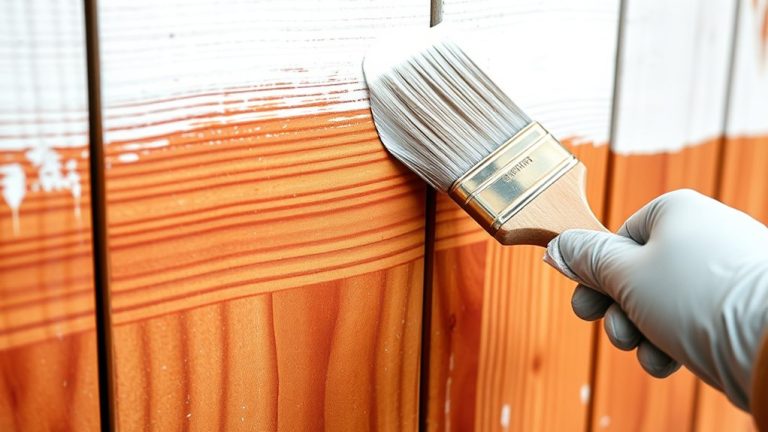
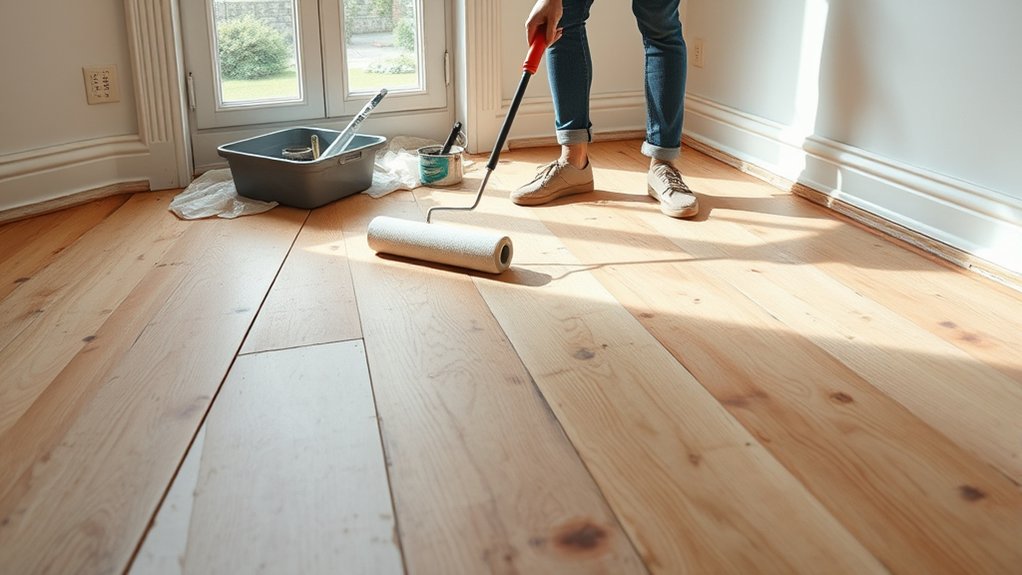
After sanding, apply a high-quality primer evenly. Use a brush to get the edges and a roller for the larger areas. Make sure to give it enough time to dry, following the instructions on the primer.
When it’s time to paint, choose a durable floor paint made specifically for wood floors. For the best results, apply two coats of paint. Be sure to wait the recommended drying time between each coat so the finish lasts longer.
Key steps include cleaning and sanding the wood thoroughly, applying primer uniformly and letting it dry, and painting with two coats of durable floor paint while respecting drying times.
Follow these steps, and you’ll get a smooth, long-lasting finish.
How Many Coats of Paint Do You Need on Wood Floors?
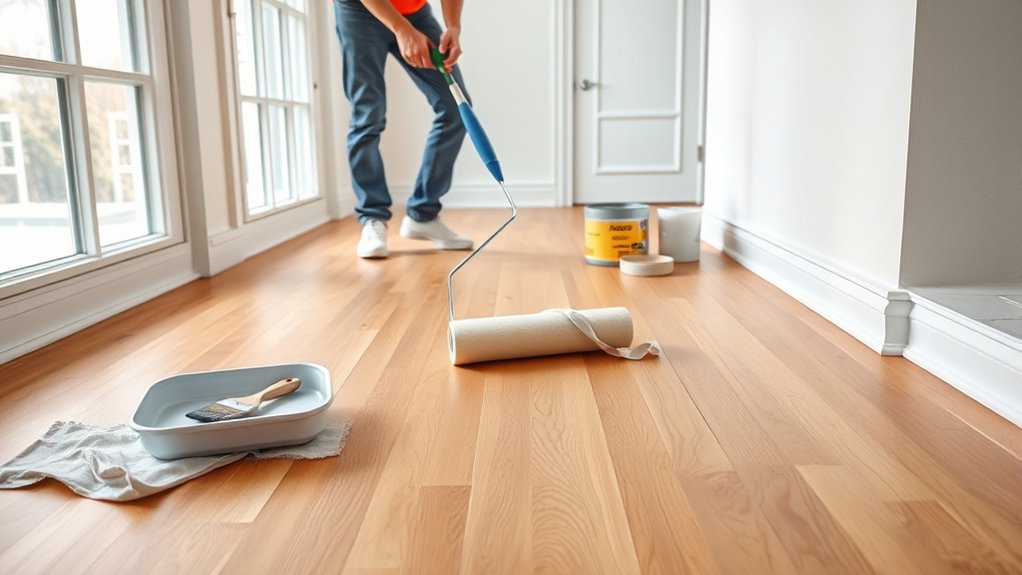
You’ll want to start with a primer coat to seal the wood and help the paint stick better.
Then, go ahead and apply at least two finish coats—this will give you even coverage and make the floor more durable.
Just be sure to follow the drying times between coats, and don’t forget to sand lightly in between for the best results.
Primer Coat Importance
Although it might be tempting to skip this step, applying a primer coat is essential for ensuring your paint adheres properly to the wood floor and resists peeling or chipping. A primer coat improves adhesion, seals the wood, and enhances durability by creating a stable base for your finish.
To get the best results, consider these key points:
- Apply two coats of primer for thorough sealing and ideal adhesion.
- Allow at least 24 hours of drying time between coats, especially when using a bonding primer.
- Use a primer that blocks stains to prevent bleed-through, ensuring a clean surface for your high-quality floor paint.
Following these steps guarantees a durable, long-lasting finish on your wood floors.
It really makes a difference in how your floors look and hold up over time. So, don’t skip the primer—it’s worth the effort!
Number Of Finish Coats
Two to three coats of paint provide the ideal balance of coverage and durability for wood floors. The number of finish coats you apply influences both the look and longevity of your floor.
Start with thin, even layers of high-quality floor paint, allowing adequate drying time, typically 24 hours, between each coat to prevent imperfections.
If you’ve applied a primer, expect to add an additional coat for proper adhesion and uniformity. For high-traffic areas, consider an extra coat to better resist wear and tear.
After each coat dries, inspect the surface carefully and touch up any missed spots to maintain a consistent finish.
Following this approach guarantees your painted wood floor remains durable and visually appealing over time. Just take your time, and your floors will look great for years to come.
How to Seal Painted Wood Floors for Long-Lasting Protection
Protect your painted wood floors by applying a clear polyurethane sealer. This forms a durable barrier against scratches and moisture. For best results, choose a water-based polyurethane because it dries faster and has less odor.
Apply at least two to three thin coats of sealer. Make sure to allow 24–48 hours of drying time between each coat. This process will extend the life of your painted floors and keep them looking great.
Apply multiple thin coats of sealer, allowing 24–48 hours to dry between each for lasting protection.
To ensure long-lasting protection, remember to inspect the sealed surface regularly and reapply the sealer every few years.
Also, use felt pads under furniture legs to prevent scratches.
Try to avoid heavy traffic or dragging furniture right after sealing. Following these steps will help your painted floors stay durable and visually appealing for years to come.
Common Mistakes to Avoid When Painting Wood Floors
When painting wood floors, avoiding common mistakes is essential to achieving a smooth, durable finish. Skip surface prep or primer use, and you’ll compromise paint adhesion. This can cause peeling and an uneven texture.
Applying thick coats instead of thin layers messes with drying times. That often leads to streaks or bubbling. So, it’s best to keep your coats thin and even.
Finally, neglecting a protective topcoat leaves your painted wood vulnerable to damage. Without it, scratches and stains can happen more easily.
| Mistake | Effect |
|---|---|
| Skipping surface prep | Poor paint adhesion, uneven finish |
| Applying thick coats | Improper drying, streaks, bubbling |
| Ignoring protective topcoat | Reduced durability, scratches, stains |
Avoid these pitfalls to guarantee your painted wood floors have a lasting, professional look. Prioritize primer use, thin coats, proper drying times, and sealing for the best results.
Tips for Caring and Maintaining Painted Wood Floors
After properly painting and sealing your wood floors, maintaining their appearance requires regular care. You should carefully return furniture to avoid scratching the surface.
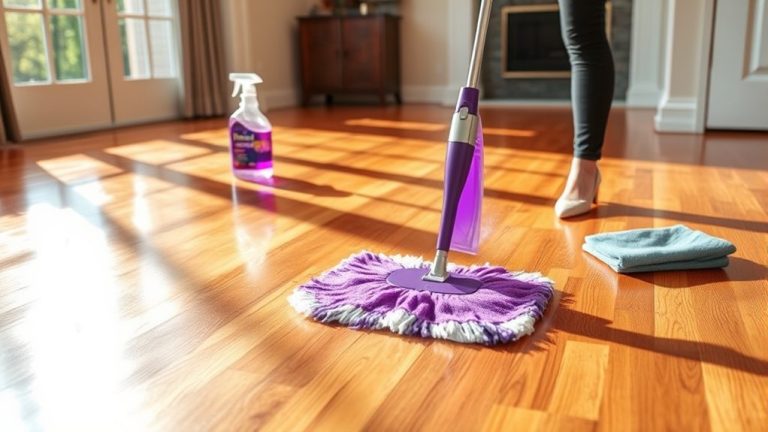
Also, clean floors consistently using a damp mop with a gentle cleaner to prevent buildup.
To protect your investment, consider these essential tips:
To protect your investment, follow these key tips for maintaining your painted wood floors.
- Place felt pads under furniture legs to minimize wear and prevent scratches.
- Use rugs in high-traffic areas to shield the painted finish from excessive wear.
- Apply a protective topcoat as recommended, usually every few years, to enhance durability.
Make it a habit to regularly inspect your floors. When you notice any chips or scratches, do touch-ups promptly to keep the finish uniform and long-lasting.
Following these steps will help guarantee your painted wood floors stay beautiful and durable for years to come.
Troubleshooting and Touch-Up Tips for Painted Wood Floors
Regular inspections are essential to maintaining the pristine look of your painted wood floors. Start troubleshooting by checking for scratches, chips, or wear, especially in high-traffic areas.
Keep leftover touch-up paint handy and apply it with a fine brush to seamlessly fix minor damage.
Clean painted floors using mild cleaners and a damp mop to prevent peeling or dulling. Avoid dragging heavy furniture by lifting pieces when moving them to protect the surface from scratches.
To extend durability, reapply sealer every few years. A clear polyurethane topcoat shields the paint from wear and keeps floors looking fresh.
Following these steps guarantees your painted floors stay beautiful and resilient over time, minimizing costly repairs and preserving their durable finish.
Frequently Asked Questions
Can I Paint Wood Floors Over Existing Carpet or Tile?
You shouldn’t paint wood floors over existing carpet or tile because carpet removal and tile preparation are essential for proper surface cleaning and paint adhesion.
Without removing these coverings, you’ll face durability concerns like peeling and trapped moisture.
Instead, focus on exposing the bare wood for a long-lasting finish.
If removing carpet or tile isn’t possible, explore other flooring options like vinyl or laminate that don’t require painting for durability.
How Long Should I Wait Before Moving Furniture Back?
You should wait at least 48 hours before daring to move furniture back. Your freshly painted floor isn’t a trampoline! The drying time guarantees proper paint curing, which helps prevent dents or smudges.
Keep in mind that environmental factors like humidity can stretch this time, so it’s best to stay patient.
When you do move your furniture, use felt pads to protect the floor during placement.
For maintenance, avoid heavy traffic for a full week. This helps lock in durability and keeps your floor looking flawless.
Are Painted Wood Floors Safe for Pets and Children?
Yes, painted wood floors can be safe for pets and children if you choose low-toxicity, non-toxic paints to keep paint toxicity minimal.
It’s really important to prioritize pet safety and child safety by waiting for the paint to fully cure before letting anyone use the floor.
Also, applying non-slip coatings helps with floor durability and traction, which is great for preventing slips and falls.
Be sure to follow maintenance tips like gentle cleaning to avoid wear and tear.
Plus, you can explore design options that combine style with safety.
This way, you create a durable, pet-friendly, and kid-friendly floor surface everyone can enjoy.
Can I Use Spray Paint on Wood Floors?
Spray paint on wood floors? It’s a double-edged sword. You can use spray paint types made for floors, but you’ll need precise application techniques to avoid drips and overspray.
Drying time varies, so be patient before adding a protective finish.
Choose colors wisely, as some fade faster. For lasting beauty, follow maintenance tips strictly. Regular cleaning and touch-ups keep your floor looking sharp despite spray paint’s usual durability challenges.
Just take it slow and steady, and you’ll get better results.
Will Painted Wood Floors Increase My Home’s Resale Value?
Painted floors can boost your home’s resale value if they match buyer preferences and current market trends. They enhance aesthetic appeal, making your space look modern and well-maintained, which attracts buyers.
Painted floors also offer a cost-effective way to refresh your home without high renovation costs.
That said, if natural wood finishes dominate your local market, painted floors mightn’t add much value. So, it really depends on what buyers in your area are looking for.
Prioritize quality and local demand to maximize the impact.
Conclusion
Now that you’ve prepared, primed, painted, and sealed your wood floors, you’re ready to enjoy a vibrant, durable finish that stands up to daily life.
Remember to clean regularly and touch up promptly. Avoid common pitfalls to keep your floors looking fresh.
With careful care, your painted wood floors will shine, protect, and transform your space. They’ll bring warmth, character, and style underfoot for years to come.