Can You Use Steam Cleaner On Wood Floors: Pros, Cons And Safe Alternatives
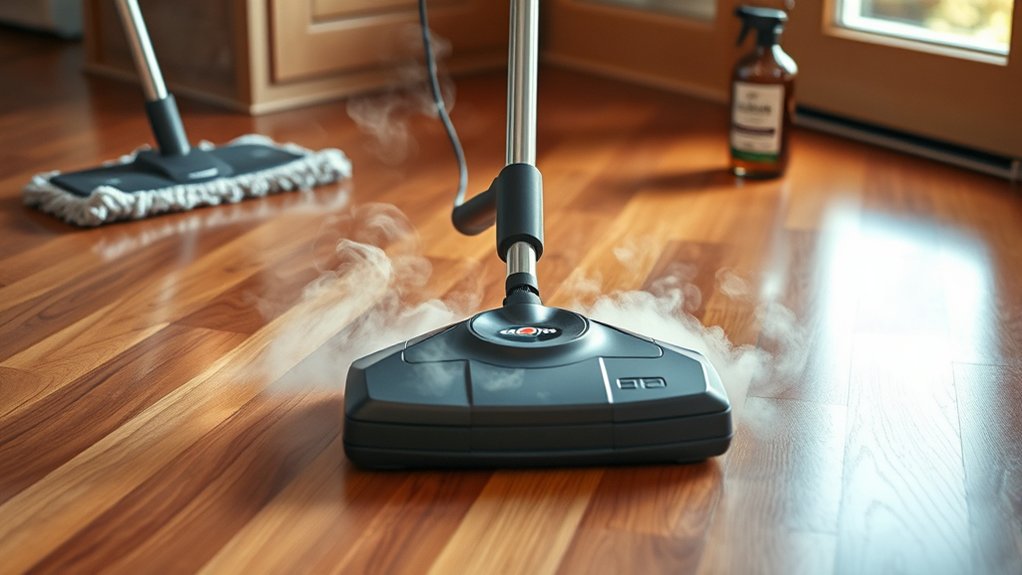
You shouldn’t use a steam cleaner on hardwood floors because the heat and moisture can cause warping, damage seals, and even void your warranty. Steam may seep into cracks, promoting mold and wood deterioration.
Instead, try damp microfiber mops with pH-neutral cleaners or gentle natural solutions like diluted vinegar. Regular vacuuming and wiping spills promptly also help protect your floors.
If you want to know how to keep your wood floors safe and looking great, there’s more to contemplate.
Is Steam Cleaning Safe for Hardwood Floors?
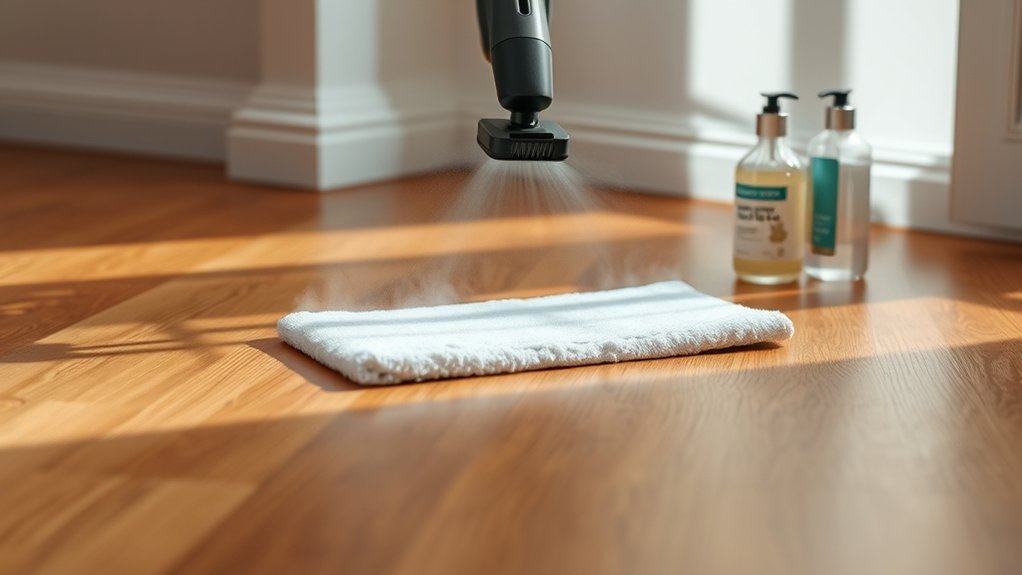
How safe is steam cleaning for your hardwood floors? Using a steam mop on hardwood might seem like a quick and efficient way to clean.
But manufacturers generally say it’s not safe for hardwood floors. The high temperature steam can cause thermal shock, which leads to cupping and warping because of rapid temperature changes.
Plus, the pressurized steam can force moisture into cracks and seams, damaging your wood’s integrity over time.
Pressurized steam can push moisture into seams, gradually weakening your hardwood floor’s structure.
If your floor has worn sealant or gaps, steam cleaning hardwood floors can increase the risk of lasting harm.
Many warranties get voided after steam cleaning because of these dangers.
To protect your floors, experts recommend avoiding steam mops.
Instead, they suggest damp mopping with pH-neutral cleaners for effective and safe hardwood floor care without risking moisture damage or warping.
How to Tell If Your Wood Floor Can Handle Steam Cleaning
First, start by testing if your floor’s sealant is still intact—water should bead up on the surface instead of soaking in. If it soaks in, that’s a red flag.
Then, take a close look for any cracks, gaps, or signs of wear like dull spots or water damage. These could allow steam to seep in and cause harm.
Finally, don’t forget to check your floor type and the manufacturer’s guidelines. This way, you can be sure that steam cleaning won’t void your warranty or make any existing damage worse.
Sealed Floor Verification
Wondering if your wood floor can handle steam cleaning? Start by performing a water bead test: place a few drops on the surface. If the water beads up, your sealed hardwood floors are likely protected.
If the water soaks in quickly, steam cleaning could cause moisture damage.
Next, check the manufacturer’s guidelines or warranty documents to see if steam cleaning is recommended for your specific floor type.
Pay close attention to engineered wood floors since their glue and adhesives are more vulnerable to steam moisture.
Also, look for visible signs of wear like scratches or gaps. These could mean the seal might be compromised.
When in doubt, reach out to a flooring professional to assess your floor’s sealant condition before you go ahead with steam cleaning.
Damage and Wear Signs
Although steam cleaning can be an effective way to maintain wood floors, you need to carefully inspect your floor for damage and wear signs before proceeding.
Hardwood floors must be properly sealed to resist moisture from steam. If the sealant is worn, steam can penetrate and cause damage.
Check for gaps between planks that allow steam to seep into unfinished wood, risking warping. Also, look out for surface scratches or worn spots that increase moisture absorption.
Signs of previous water damage like discoloration or buckling are a red flag, indicating compromised flooring.
If your floor shows these wear signs, steam cleaning could actually make the damage worse.
Be especially cautious with engineered wood because steam’s heat can weaken the adhesive layers.
Why Steam Mops Can Void Hardwood Floor Warranties
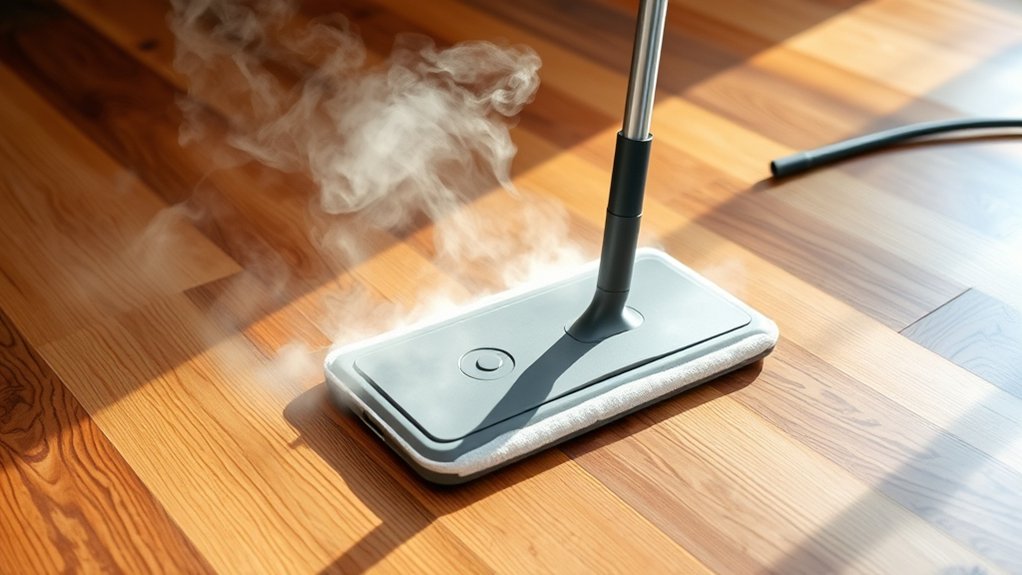
You’ll want to take a close look at your hardwood floor’s warranty before using a steam mop.
A lot of warranties specifically say you can’t use steam cleaning. That’s because steam mops can introduce too much moisture and heat, which can damage the wood.
If you go ahead and use one anyway, the manufacturer might refuse to cover any damage, leaving you on the hook for expensive repairs.
Warranty Terms Restrictions
Because steam mops introduce moisture and heat that can damage hardwood floors, many manufacturers explicitly exclude their use in warranty terms.
When you use steam cleaning on hardwood flooring, you risk moisture damage or thermal shock. This can cause warping, cupping, or finish clouding, which are problems not covered by warranties.
To protect your warranty, you should understand these restrictions carefully.
Key points to remember about warranty terms include:
- Many manufacturers specify that steam cleaning voids the warranty due to water damage risks.
- Warranties often require specific cleaning products and methods, excluding steam mops.
- Any moisture damage from improper cleaning is usually your responsibility.
Always check your hardwood floor’s warranty terms to verify you use only safe-to-use cleaning methods. That way, you can avoid voiding your coverage.
Damage Risks Impact
When you use steam mops on hardwood floors, the combination of heat and moisture can cause serious damage that often voids warranties.
Steam mops generate temperatures around 212°F, which can warp wood fibers and break down floor finishes. The pressurized steam forces moisture into cracks and seams, increasing the risk of long-term damage like cupping and warping caused by thermal shock.
Manufacturers clearly warn against steam cleaning because these risks compromise the floor’s structural integrity.
If your hardwood floors already show signs of worn sealants or gaps, steam mops only worsen the damage potential.
To protect your investment and keep warranties valid, it’s essential to avoid steam mops and opt for safer cleaning methods that don’t expose hardwood floors to excessive moisture or heat.
What Are Safe Alternatives to Steam Cleaning Hardwood Floors?
Although steam cleaning may seem like a quick fix, it can cause moisture damage to hardwood floors. So, exploring safer alternatives is essential. You want to maintain your hardwood’s beauty without using harsh methods that risk warping or finish damage.
Here are some safe options to evaluate:
Use a damp microfiber mop with a pH-neutral hardwood floor cleaner. This controls moisture and protects the wood’s finish. You could also try natural cleaning solutions like diluted vinegar. They gently lift dirt while preserving your floor’s integrity.
Another good idea is to hire professional cleaning services. They use specialized tools designed for deep cleaning without risking moisture damage.
These methods offer safe, effective ways of maintaining hardwood floors while avoiding the risks that come with steam cleaning.
How to Clean Hardwood Floors Safely Without Using Steam
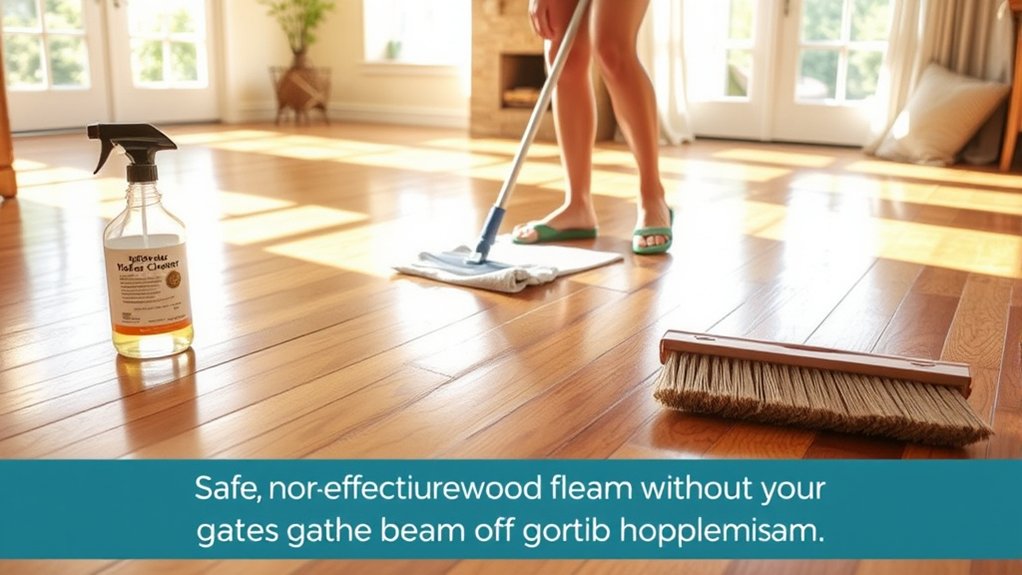
Cleaning hardwood floors safely without steam requires careful attention to moisture control and the right tools. To clean hardwood without risking damage, use a damp microfiber mop paired with a pH-neutral hardwood floor cleaner. This method avoids harsh chemicals and excessive water, offering the perfect solution for maintaining your floors.
Always wipe up spills immediately to prevent moisture absorption. Regularly vacuum using a suction-only vacuum or with the brush roller turned off to remove dirt that can scratch your floors.
For spot cleaning, gently dab affected areas with a soft cloth dampened in a wood-safe cleaner, avoiding saturation.
You can also consider hot water extraction techniques that heat water to safe temperatures, allowing effective cleaning without steam’s risks. These approaches help you clean hardwood without steam, preserving its beauty.
Best Maintenance Tips to Protect Hardwood Floors Long Term
To protect your hardwood floors over the long term, you’ll want to maintain consistent indoor humidity levels between 35% and 55%. This range helps prevent warping and shrinkage.
When you clean your hardwood, remember that steam cleaning isn’t recommended for sealed wood. Excess moisture can damage the finish. Instead, follow your flooring manufacturer’s advice and avoid harsh chemicals that dull the surface.
Here are the best maintenance tips to keep your floors in top shape:
Vacuum regularly using suction-only or a brush roller to remove dirt without scratching.
Wipe spills immediately to prevent moisture absorption and stains.
Use a hardwood floor cleaner lightly and wipe along the wood grain to deep clean gently.
Sticking to these practices helps extend your floor’s life and keeps its natural beauty looking fresh.
When Should You Call a Professional for Hardwood Floor Cleaning?
Maintaining your hardwood floors with regular care goes a long way, but there are times when professional help becomes necessary. If your floors show deep scratches, discoloration, or wear that a steam mop can’t fix, it’s time to call professional cleaning services.
This is especially important for unsealed wood or engineered wood, which require specific methods to maintain the integrity of the surface.
Professionals also handle extensive water damage or mold issues, ensuring proper remediation and preventing further deterioration.
Experts manage severe water damage and mold, providing effective remediation to protect your floors from lasting harm.
When floors haven’t been cleaned in years or are heavily soiled from pets or traffic, experts can revitalize them safely.
Periodic deep cleaning by professionals helps extend your floors’ lifespan and keeps them looking their best without risking damage from DIY attempts.
Frequently Asked Questions
Can Steam Cleaning Remove Tough Stains From Wood Floors?
Yes, steam cleaning can remove tough stains from wood floors, but you should use it cautiously. Different steam cleaner types offer varied heat and moisture levels, so pick one suited for wood floor durability.
It’s a good idea to incorporate stain removal techniques like spot-cleaning with wood-safe products before steam cleaning. This way, you’re tackling the stain from multiple angles and reducing the risk of damage.
For effective wood floor maintenance, consider cleaning product alternatives and follow stain prevention tips. These steps help protect your floors and keep them looking great for longer.
How Often Can I Steam Clean Hardwood Floors Safely?
You should follow frequency guidelines and steam clean hardwood floors sparingly. Ideally, once every few months is enough.
Different steam cleaner types vary in moisture output, so choose low-moisture models for better hardwood care.
Keep moisture levels low during cleaning to prevent damage. For ongoing maintenance, combine steam cleaning with gentler methods. This way, you protect your floors without overdoing it.
Also, adjust your cleaning frequency based on your floor’s finish and the manufacturer’s advice. That helps ensure you protect your investment with proper hardwood care and maintenance tips.
Does Steam Cleaning Affect the Finish or Sealant on Wood Floors?
Steam cleaning can gently challenge your wood floor maintenance by subtly affecting finish longevity and sealant protection.
The high heat and moisture involved in steam cleaning techniques may cause moisture damage or even surface scratches, especially if your floors aren’t perfectly sealed.
To keep your wood floors looking their best, use steam cleaning sparingly and opt for gentler methods.
This way, you’ll help preserve both the finish and the sealant that protect your investment.
Taking these precautions makes a big difference over time.
Can Steam Cleaners Be Used on Wood Floor Rugs or Mats?
Yes, you can use a steam cleaner on wood floor rugs or mats if their material is compatible with moisture. Just make sure to check the rug material carefully so you don’t accidentally damage it.
Steam cleaners are great at removing stains effectively.
That said, it’s best to use low-moisture settings and follow any maintenance guidelines to protect the wood underneath.
When it comes to mat care, cleaning frequently helps, but don’t overdo it. Regular vacuuming and spot cleaning go hand in hand with steam cleaning and can really help extend your rug’s life.
What Temperature Does a Steam Cleaner Reach on Wood Floors?
Imagine pouring boiling water on a delicate flower. That’s how steam cleaner temperature can affect your wood floors.
Most steam cleaners reach around 212°F (100°C). This can pose risks to your wood floor’s safety by increasing hardwood moisture levels and potentially warping the fibers.
Some steam cleaner types operate at lower temps like 185°F (85°C). These balance steam cleaning efficiency with wood floor maintenance.
It’s always a good idea to check your floor’s sealant before using steam. This helps protect its integrity.
Conclusion
When it comes to steam cleaning your wood floors, tread carefully. It’s like walking a tightrope over a fragile surface. Not all hardwoods can handle the heat and moisture. Missteps could void your warranty or cause lasting damage.
Instead, choose gentler, safer cleaning methods. Keep up with regular maintenance to let your floors shine like polished gems. If you’re ever unsure, call a pro. They can help protect your investment and keep your wood looking its best.