Can You Use Swiffer On Wood Floors: Cleaning Tips And Safety Guide
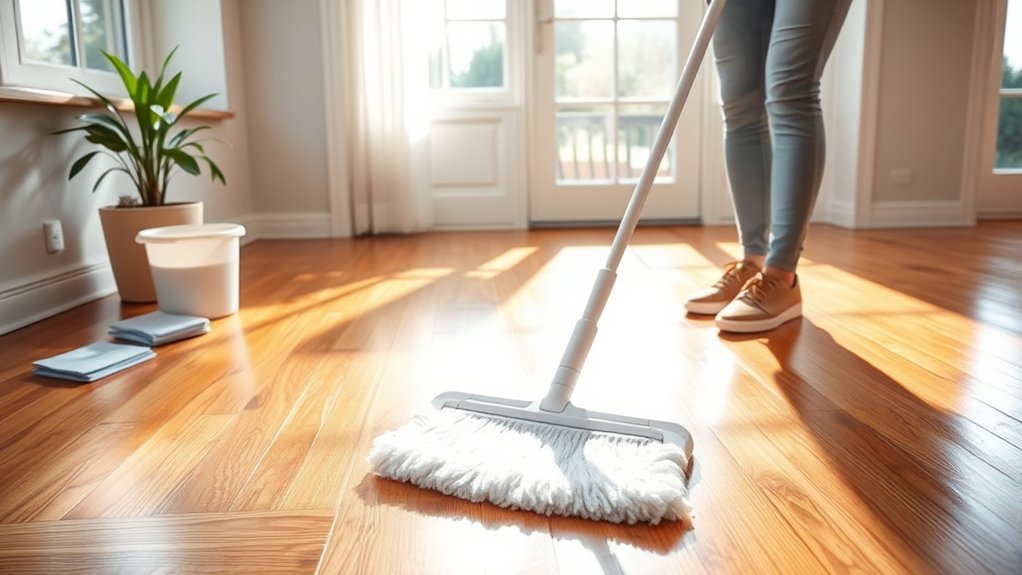
You can safely use Swiffer on sealed hardwood floors if you follow proper cleaning steps. Choose Swiffer WetJet or products made specifically for sealed wood. Always sweep first to avoid scratches.
Use a damp mop, not soaking wet, to prevent moisture damage. It’s a good idea to test the solution on a hidden spot before using it all over. Avoid using Swiffer on unfinished or oiled wood because it can cause harm.
Keep these tips in mind, and you’ll protect your floors effectively. Plus, you’ll get better at taking care of your wood floors with the right routine.
Key Takeaways
- Swiffer products are safe only for sealed hardwood floors, not unfinished, oiled, or waxed wood surfaces.
- Use Swiffer WetJet Wood Floor Cleaner with a damp mop to avoid moisture damage on wood floors.
- Always sweep or vacuum floors before Swiffer cleaning to prevent scratches from debris.
- Perform a spot test in an inconspicuous area to ensure compatibility and avoid residue or streaks.
- Avoid excess moisture and harsh chemicals to prevent warping, dulling, or structural damage to hardwood floors.
Is Using Swiffer Safe on Hardwood Floors?
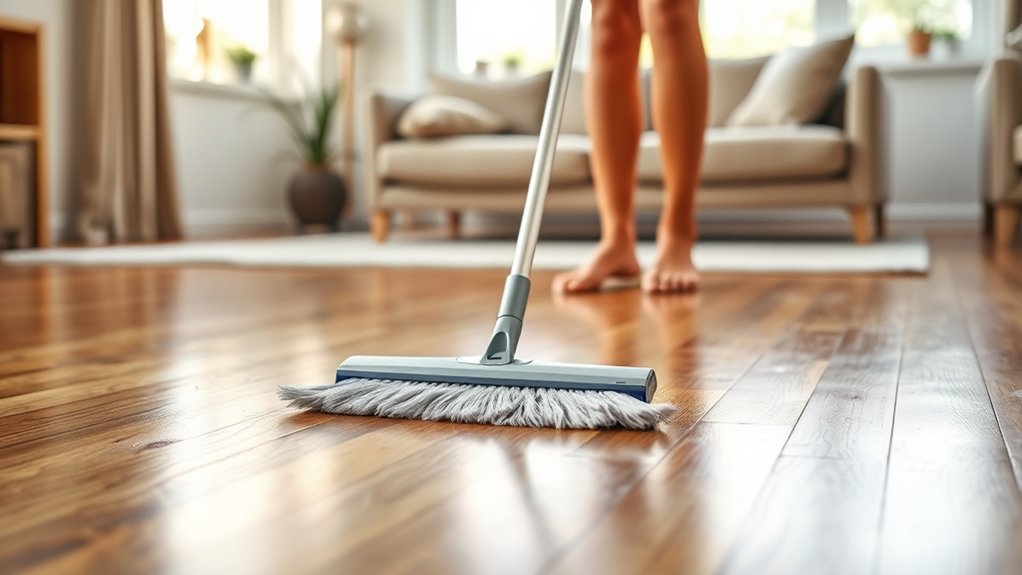
How safe is it to use Swiffer on hardwood floors? You can safely use Swiffer products on sealed hardwood floors if you follow proper guidelines.
Avoid using Swiffer on unfinished surfaces, oiled, or waxed wood, as these can suffer damage.
To clean hardwood floors effectively without risking streaking or harm, use a Swiffer cleaning solution specifically designed for wood, such as the Swiffer WetJet Wood Floor Cleaner Solution.
For streak-free hardwood cleaning, use Swiffer solutions made specifically for wood floors like the WetJet Wood Floor Cleaner.
Always apply it with a damp mop rather than a wet one to prevent moisture damage. Excess moisture can warp or discolor your floors permanently.
Before full use, test the product on a small, hidden area to confirm compatibility.
Following these steps guarantees both safety and peak cleaning results when using Swiffer on hardwood floors.
Which Swiffer Products Work Best on Hardwood Floors?
When you’re cleaning your hardwood floors, Swiffer WetJet is a great choice for sealed surfaces. It’s designed to be gentle yet effective.
But if you’re dealing with tougher, sticky messes, Swiffer PowerMop really steps up to the challenge.
For those times when you need a bit more scrubbing power, especially on finished hardwood, Swiffer Sweeper Pet Heavy Duty Wet Cloths work wonders.
Just remember to replace your mop pads regularly to keep things fresh and clean.
And one important tip: avoid using Swiffer products on unfinished wood because the moisture can cause damage.
Recommended Swiffer Products
Although not all Swiffer products are suitable for every type of hardwood floor, you’ll find that the Swiffer WetJet stands out for sealed wood surfaces thanks to its fast-drying, streak-free formula.
This product uses a specially formulated cleaning solution designed for sealed hardwood floors, ensuring effective dirt removal without damage.
For tougher messes, the Swiffer PowerMop offers multi-surface pads embedded with over 300 scrubbing strips.
This provides enhanced scrubbing power without excessive moisture.
If you deal with pet messes, the Swiffer Sweeper Pet Heavy Duty Wet Cloth Refills deliver 75% more scrubbing power.
They’re safe for all finished surfaces.
Just avoid using Swiffer products on unfinished surfaces.
Their cleaning solutions can cause damage or leave residues, making them unsuitable for non-sealed wood floors.
Safe Usage Guidelines
Since maintaining the integrity of your hardwood floors is essential, you should use Swiffer products specifically designed for sealed wood surfaces. Swiffer WetJet is an excellent choice for sealed hardwood floors, but avoid using it on unfinished surfaces or waxed floors to prevent damage.
Always verify the Swiffer cleaning solution is pH-balanced and formulated for wood floors to avoid residue or streaking.
The ABSORB + LOCK STRIP technology in Swiffer pads effectively traps dirt, but replace pads regularly to maintain peak cleaning.
Before fully applying any Swiffer product, perform a spot test in an inconspicuous area to confirm compatibility with your floor’s finish.
Following these safe usage guidelines will help you preserve your hardwood floors while keeping them spotless. It’s a simple way to keep your floors looking great without any hassle.
How to Prepare Hardwood Floors Before Using a Swiffer
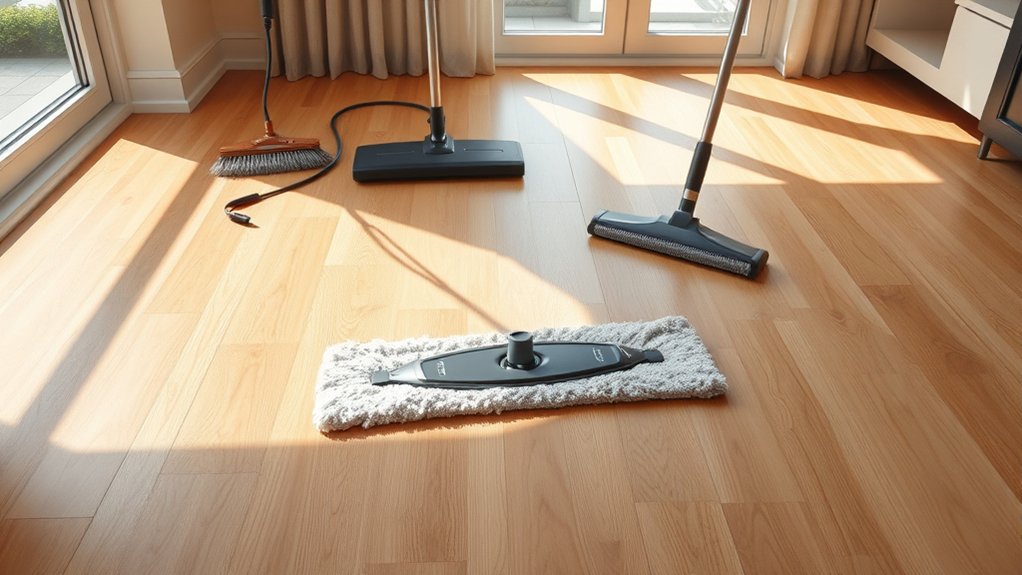
Before you start using a Swiffer on your hardwood floors, make certain the surface is free of loose dirt and debris to prevent scratches during cleaning. Sweep or vacuum high-traffic areas first for best results. Confirm that your Swiffer cleaning solution is compatible with sealed hardwood floors to avoid damage.
Always test the cleaning pad on a small, hidden spot to verify it doesn’t leave residue or streaks. Use a damp, not wet, Swiffer to preserve your floor’s integrity.
| Step | Action | Purpose |
|---|---|---|
| 1. Sweep | Remove loose dirt and debris | Prevent scratches |
| 2. Check solution | Confirm compatibility | Avoid damage to surface |
| 3. Test pad | Try on small area | Verify no residue or streaks |
| 4. Use damp mop | Avoid excess moisture | Protect hardwood floors |
How to Clean Hardwood Floors With a Swiffer
Once your hardwood floors are properly prepared, you can begin cleaning with the Swiffer WetJet designed specifically for hardwood surfaces.
Spray the Swiffer WetJet cleaner directly onto the hardwood floors, then use the mop to clean your floors with even, consistent strokes. The pads have 300+ scrubbing strips that effectively trap dirt and grime, preventing them from being pushed around.
Give special attention to high-traffic areas to maintain their appearance.
Always avoid using Swiffer products on unfinished or waxed wooden floors to prevent damage. Follow the manufacturer’s instructions closely to guarantee safety and ideal results.
Regular use of the Swiffer WetJet, combined with proper technique, will keep your hardwood floors clean, shiny, and well-maintained over time.
It’s a simple way to make sure your floors look great without much hassle. Just stick with it, and your floors will thank you!
Common Swiffer Mistakes to Avoid on Hardwood Floors
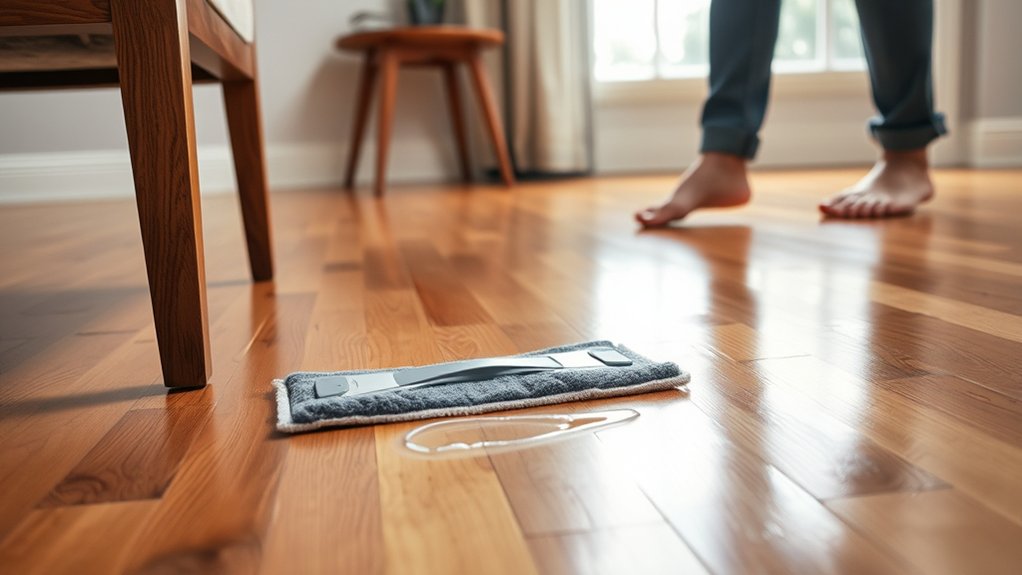
Although Swiffer products offer convenience, using them incorrectly on hardwood floors can lead to damage and ineffective cleaning. Avoid applying Swiffer on unfinished wooden boards, as it can cause permanent discoloration. Always perform sweeping or vacuuming first to remove debris and prevent scratches.
Use a damp mop instead of a wet one to avoid excess moisture, which may warp the wood. Watch out for streaking by following cleaning product compatibility guidelines. It’s a good idea to test new products on a small spot before full use.
| Common Mistake | Why to Avoid It |
|---|---|
| Using on unfinished wood | Causes permanent damage/discoloration |
| Skipping sweeping/vacuuming | Leads to scratches from debris |
| Using wet mop | Excess moisture warps wood |
| Ignoring streaking | Leaves residue, dulls finish |
| Not testing products | Risks damaging floor finish |
What Are Good Alternatives to Swiffer for Hardwood Floors?
Wondering which products can safely replace Swiffer for cleaning your hardwood floors? You want cleaners that respect your floor’s finish by guaranteeing proper pH balance and compatibility.
Two excellent alternatives are Murphy’s Oil Soap and Bona Hardwood Floor Cleaner.
Murphy’s Oil Soap requires dilution to avoid residue or streaking, while Bona is formulated specifically for wood surfaces, cleaning effectively without damage. Both outperform Swiffer in maintaining hardwood floors’ appearance and integrity.
For best results, incorporate these products into your regular maintenance routine, including damp mopping and prompt spill cleanup.
Murphy’s Oil Soap is a gentle, oil-based cleaner for hardwood floors. Bona Hardwood Floor Cleaner has a pH-balanced, wood-safe formula.
Just make sure to do proper compatibility checks to confirm no finish damage before use.
Choosing these alternatives helps keep your hardwood floors clean and well-preserved. It’s a simple way to care for your floors without worrying about harsh chemicals or streaks.
Give them a try and see the difference!
How to Protect and Maintain Hardwood Floors Between Cleanings
To keep your hardwood floors looking their best between cleanings, you should adopt consistent protective habits. Regularly dust mop or sweep to remove dirt and grit that can scratch your floors. Use felt pads under furniture legs and lift furniture rather than drag it to protect the hardwood surface.
Place absorbent mats at entrances to trap dirt and moisture, keeping floors fresh. Establish a cleaning schedule with light weekly cleaning and deeper cleanings every few months to maintain appearance and longevity.
| Action | Purpose |
|---|---|
| Dust mop daily | Remove dirt and grit |
| Use felt pads | Prevent scratches from furniture |
| Place mats at entry | Trap dirt and moisture |
| Schedule cleanings | Maintain floor freshness and life |
When Should You Avoid Using Swiffer on Hardwood Floors and Why?
You should avoid using Swiffer products on unfinished or non-sealed hardwood floors because the moisture can cause warping and permanent damage. It’s a real risk that can mess up your floors in the long run.
Plus, Swiffer might leave behind residue or streaks on some hardwood surfaces, which can make them look less shiny and even affect their protection.
Unfinished Wood Risks
Because unfinished wood floors are highly sensitive to moisture, you should never use Swiffer products on them. Swiffer cleaning products can cause moisture absorption, leading to cracking, warping, or swelling of unfinished wood.
These floors lack protective surface finishes, so exposure to cleaning solutions in Swiffer pads increases the risk of permanent damage.
Instead, opt for a barely damp microfiber cloth with a gentle cleaner like white vinegar to minimize moisture exposure. Regular maintenance is essential to preserve the wood’s integrity and appearance.
Key risks of using Swiffer on unfinished wood include:
- Moisture absorption causing structural damage
- Surface vulnerability to stains and lasting damage
- Reduced lifespan due to improper cleaning solutions
Surface Damage Concerns
Although Swiffer products offer convenient cleaning solutions, they can cause surface damage to hardwood floors if used improperly. You should avoid using Swiffer products on unfinished or waxed hardwood floors. The cleaning agents often contain harsh chemicals that penetrate and damage the wood permanently.
Excess moisture from Swiffer WetJet mops can lead to warping or swelling, especially if your hardwood floors aren’t properly sealed. Some users also report that Swiffer’s cleaning agents may scratch or discolor high-end hardwood finishes.
So, it’s a good idea to be careful with these products. To prevent surface damage, always test any Swiffer cleaner on a small, inconspicuous area first.
Make sure there’s proper ventilation during use as well. Being cautious with Swiffer products helps preserve your hardwood floors’ finish and longevity.
Frequently Asked Questions
Can Swiffer Pads Cause Allergens to Spread on Wood Floors?
Swiffer pads won’t cause allergens to spread if you maintain proper cleaning frequency and replace pads regularly. The pad materials trap dust particles and various allergen types effectively, protecting your wood floor’s surface.
If you neglect changing the pads, they can get saturated, which reduces their efficiency and might even release allergens back into the air. So, it’s really important to use fresh pads each time.
Also, make sure your space has good ventilation while cleaning. This helps minimize any environmental impact and keeps your home cleaner and healthier without spreading allergens.
How Often Should Swiffer Pads Be Replaced for Hardwood Floors?
You know what they say: a stitch in time saves nine. For hardwood care, replace Swiffer pads every 2-3 uses to keep dust removal effective and protect your floors.
If you’re dealing with high-traffic areas, it’s best to swap the pads after each use. That way, you’re making sure your floors stay clean without any buildup.
Also, choose pad types made specifically for hardwood floors. This helps avoid any residue that might dull their shine.
Following these simple tips will keep your floors looking great. It’s all about balancing the right product with efficient cleaning for lasting hardwood beauty.
Are Swiffer Wet Mops Safe for Unfinished Wood Floors?
You shouldn’t use Swiffer Wet Mops on unfinished wood floors because their cleaning solutions and moisture levels can damage the wood.
Unfinished wood needs gentle cleaning with minimal water to avoid warping.
For effective floor maintenance, try alternative mops like barely damp microfiber cloths.
It’s all about being careful with the amount of moisture you use.
Make sure to compare products carefully so you can preserve your floor’s natural finish and keep it looking great for a long time.
Avoid anything that might cause moisture-related damage—that’s the key!
Can Using Swiffer Affect the Floor’s Warranty?
About 30% of hardwood floor warranties are voided due to improper cleaning agents.
Using Swiffer can affect your floor’s warranty if it conflicts with manufacturer guidelines, especially regarding product compatibility and maintenance practices.
If your floor finish requires pH-balanced cleaners, Swiffer’s formula mightn’t comply, which could lead to long-term issues like damage or residue buildup.
So, it’s really important to check your warranty details carefully.
This way, you can protect your investment and make sure you’re taking proper care of your floors.
Always better to be safe than sorry!
Do Swiffer Products Leave Residue on Hardwood Floors?
Yes, Swiffer residue can sometimes appear on hardwood floors, especially if you overuse the cleaner or don’t change pads regularly.
To keep your floors looking shiny and avoid buildup, focus on proper hardwood cleaning techniques and adjust how often you clean.
Compared to other products, Swiffer is safe for sealed surfaces but mightn’t be the best choice for unfinished wood.
Always put surface safety first by testing products and following the manufacturer’s guidelines to protect your floors effectively.
Conclusion
You can confidently use Swiffer on your hardwood floors when you choose the right products and follow proper preparation and cleaning steps. Just be mindful of common pitfalls to keep your floors looking pristine.
If you prefer, gentle alternatives can offer a more tailored touch. Ultimately, treating your hardwood with thoughtful care and timely maintenance will guarantee its enduring beauty.
Making every cleaning session a graceful step toward preserving your investment.