Can You Remove Mold From Wood: Safe Removal Guide
You can safely remove mold from wood by first identifying mold spots and wearing protective gear like gloves, goggles, and an N95 mask to minimize health risks. Use effective cleaners such as a 50/50 hydrogen peroxide and vinegar solution, gently scrubbing with a soft brush while ensuring proper ventilation. Avoid bleach to protect wood fibers.
Thorough drying and controlling humidity prevent recurrence. Understanding these steps helps you restore wood safely and know when professional help is necessary. Just take your time with the process, and you’ll get great results!
How to Identify Mold on Wood Surfaces
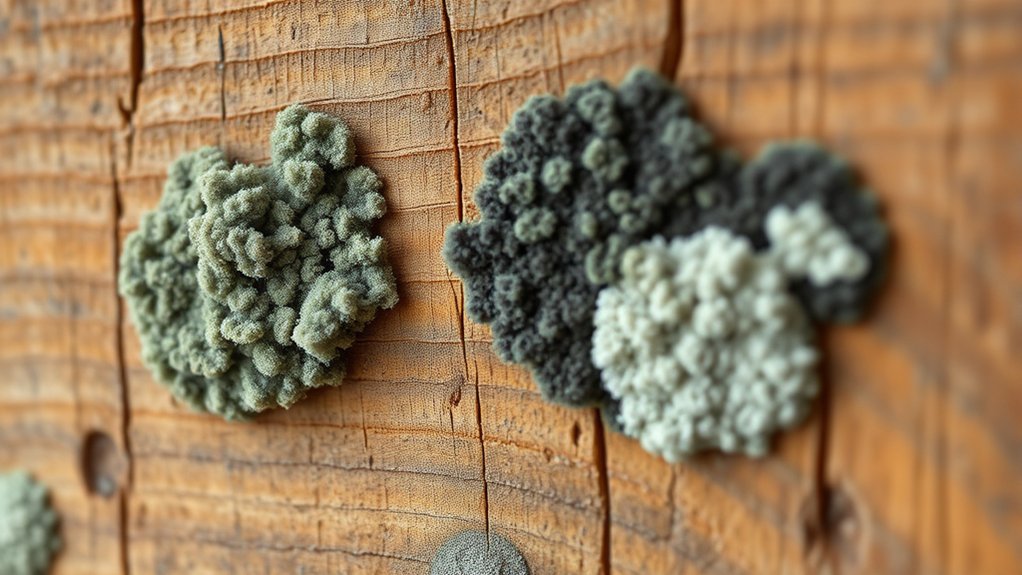
Anyone inspecting wood surfaces for mold should look for fuzzy, discolored patches that vary in color, as these often signal underlying infestations.
You’ll notice mold growth commonly appears alongside persistent musty odors and visible discoloration within the wood grain. Pay particular attention to moisture buildup, such as water stains or damp areas, since these conditions promote mold development.
Mold often accompanies musty smells and discoloration, especially where moisture or water damage exists.
A mold problem on wood can range from light surface spots to severe infestations. Black mold, especially Stachybotrys chartarum, thrives in damp, poorly ventilated wooden environments and poses significant health risks.
Identifying these signs early is essential. While light surface mold can be cleaned without difficulty, extensive mold growth requires thorough assessment to prevent further damage or health hazards.
Why You Should Always Wear Safety Gear When Cleaning Mold
Because mold spores can easily become airborne during cleaning, you should always wear proper safety gear to protect your respiratory system, skin, and eyes. Wear protective gloves made from non-latex materials to prevent direct skin contact with mold spores and cleaning chemicals. Safety goggles shield your eyes from irritating particles.
Furthermore, a NIOSH Approved N95 respirator filters airborne spores, reducing respiratory risks.
| Safety Gear | Purpose |
|---|---|
| Protective Gloves | Prevent skin irritation and allergic reactions |
| Safety Goggles | Protect eyes from mold spores and chemicals |
| N95 Respirator | Filter airborne mold spores |
Using this gear minimizes exposure, ensuring a safer mold removal process while maintaining your health. It’s definitely worth the extra effort to stay protected!
How to Assess Mold Severity on Wood Before Cleaning
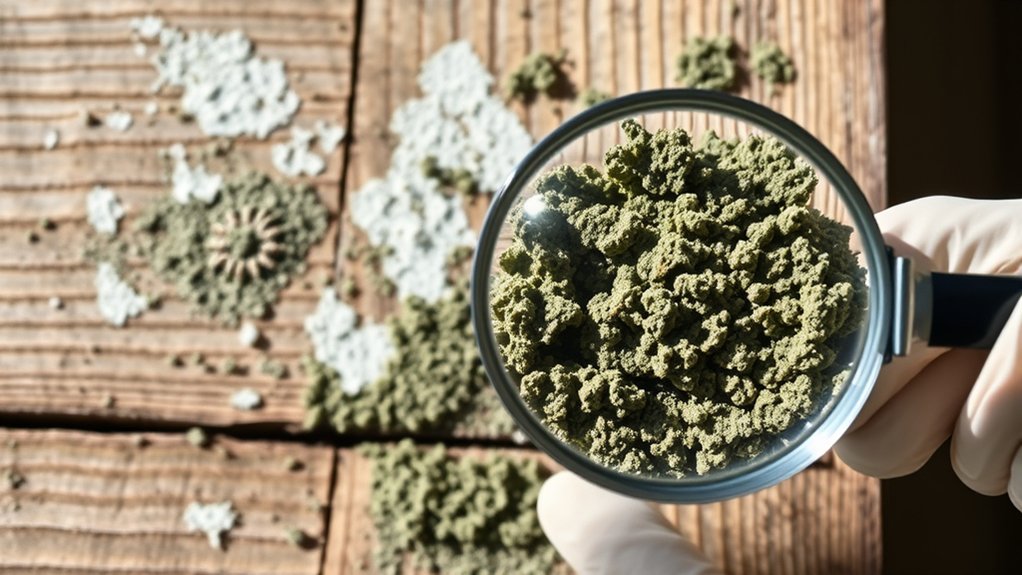
How do you determine the severity of mold growth on wood before starting the cleaning process?
Begin by inspecting for visible mold, such as fuzzy patches or discoloration. These signs indicate the extent of mold damage.
Also, check for a persistent musty odor. That smell often points to a deeper infestation within the wood.
A lingering musty odor often signals a deeper mold infestation inside the wood.
It’s important to evaluate moisture levels carefully because humidity above 80% really encourages mold growth.
Using a moisture meter to measure the wood’s moisture content can be helpful. Readings above 20% suggest conditions that allow mold to thrive.
Next, examine the wood for structural damage like rot or softness. These signs signal severe mold issues and might mean you need professional help.
By accurately evaluating these factors, you’ll better understand potential health concerns.
Plus, it helps you decide on the safest and most effective removal approach.
Best Cleaning Solutions for Removing Mold From Wood
If you’re dealing with mold on wood, using effective cleaning agents is key. A 50% white vinegar solution works really well, or you can try a mix of hydrogen peroxide and vinegar. These options are safe and do a great job eliminating mold without harming your wood.
You’ll want to steer clear of bleach, though. It might seem like a quick fix, but bleach can actually damage the wood fibers and doesn’t get deep enough to kill the mold roots. So, it’s not the best choice here.
And remember, always follow safe chemical guidelines when you’re cleaning. This way, you protect both your wood surfaces and your health while getting rid of that mold.
Effective Mold Cleaning Agents
Choosing the right cleaning agent is essential for effectively removing mold from wood while preserving its integrity. You want solutions that kill mold spores without damaging wood fibers.
Consider these scientifically backed options:
A 50% white vinegar solution kills about 80% of mold fungi and penetrates deeper than bleach. Hydrogen peroxide effectively destroys mold spores and is gentler on wood compared to harsher chemicals.
Baking soda mixed with water forms a mild abrasive to scrub away mold without harming the surface.
Dish detergent diluted in water works well for light surface mold, avoiding harsh chemical exposure.
Avoid bleach since it damages wood fibers and doesn’t penetrate well. Using these agents guarantees thorough mold removal while maintaining wood’s structural soundness.
Safe Chemical Usage Guidelines
Although effective mold removal relies on potent agents, safe chemical usage guidelines are essential to protect both the wood and your health.
For cleaning up mold on wood, use a 50% white vinegar solution, which kills about 80% of mold fungi and penetrates wood better than bleach. A 50/50 mix of hydrogen peroxide and vinegar enhances deep mold mitigation by reaching mold spores within organic material.
Avoid bleach, as it damages wood fibers and fails to eliminate deep mold.
To prevent mold and guarantee safety, ventilate the area thoroughly and consider wearing a NIOSH-approved respirator during application. Always test solutions on a hidden wood section first to avoid surface damage.
Following these safe chemical usage practices guarantees effective, health-conscious mold removal and prevention. It’s a smart way to keep your wood surfaces clean without risking your health or the integrity of the material.
How to Clean Light Mold From Wood Step-by-Step
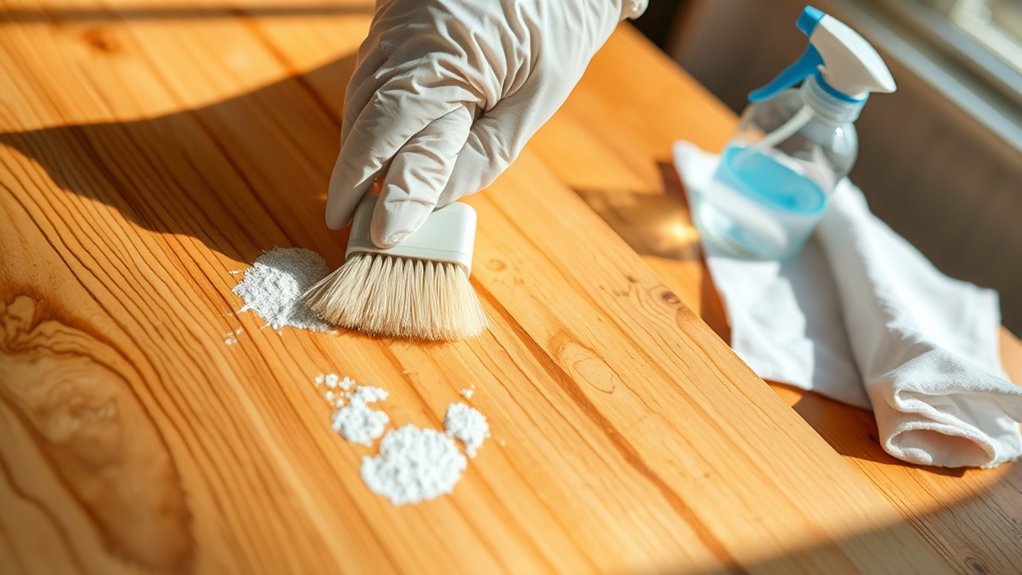
When light mold appears on wood surfaces, it requires prompt and careful cleaning to prevent deeper damage. Start by identifying mold through fuzzy or discolored patches.
Light mold on wood demands quick, careful cleaning to stop further damage and preserve the surface.
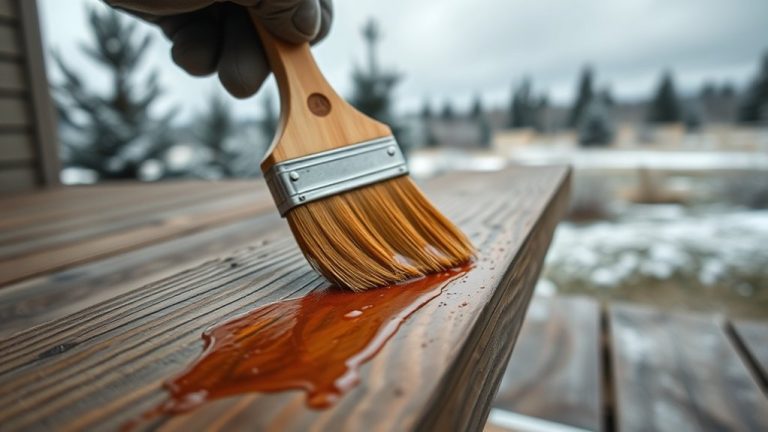
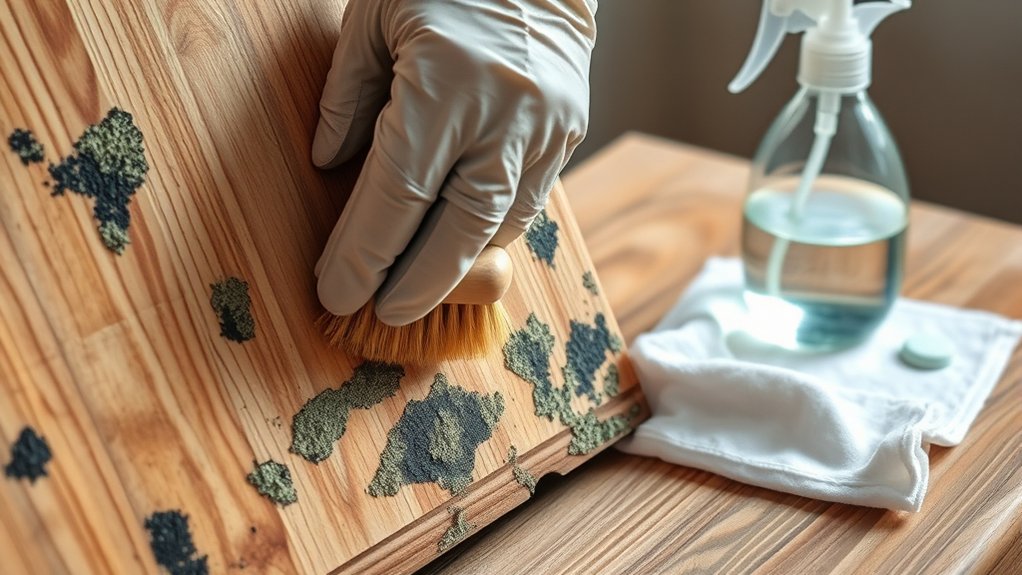
Prepare a cleaning solution by mixing hydrogen peroxide and white vinegar in equal parts. Apply this mixture gently to the affected wood using a soft-bristled brush to avoid damaging the surface.
Follow these precise steps for effective mold removal:
- Identify mold patches clearly before cleaning
- Use a 50/50 hydrogen peroxide and vinegar solution
- Gently scrub with a soft brush for thorough coverage
- Dry the wood fully to inhibit mold regrowth
After cleaning, make sure the wood dries completely to prevent moisture retention because moisture promotes mold growth.
Proper ventilation and humidity control also help with mold removal and long-term protection.
When to Replace Mold-Damaged Wood Instead of Cleaning
Several factors determine whether you should replace mold-damaged wood instead of attempting to clean mold. If the wood shows significant rotting or structural compromise, replacement is essential to maintain safety and integrity.
Mold on load-bearing walls or floors signals serious risks, so you must replace mold-damaged wood in these cases.
Extensive mold growth often penetrates deeply, making effective cleaning impossible. Porous materials like wood, when severely contaminated, resist thorough mold removal, so replacement is the safer choice.
Moreover, if water damage has severely weakened the wood, cleaning won’t restore its strength.
Finally, consider costs. When remediation expenses exceed replacement costs, you should opt to replace mold-damaged wood.
Making this decision promptly prevents further deterioration and potential hazards.
How to Dry and Protect Wood After Mold Removal
Once you’ve decided to clean or replace mold-damaged wood, the next step is to thoroughly dry and protect the wood to prevent mold from returning.
Mold thrives in high humidity, so controlling moisture is critical. To remove mold effectively and safeguard the wood, follow these guidelines:
Use fans and dehumidifiers to reduce humidity and improve air circulation.
Verify wood moisture content falls below 20% to inhibit mold regrowth.
Apply a mold-resistant treatment or wood preservative to enhance durability.
Regularly inspect wood for moisture buildup or mold, especially in areas prone to high humidity.
Wear protective gear during this process to avoid exposure.
Maintaining proper ventilation and dryness will keep your wood safe from future mold infestations.
Signs It’s Time to Call a Professional Mold Remediation Expert
How do you determine if mold growth has reached a level that requires professional remediation? You need to make certain you call a mold remediation expert if you detect widespread mold, especially Stachybotrys chartarum. This type of mold is known for its severe health risks.
Also, professional help is essential if mold affects load-bearing structures or hidden areas. These situations can be tricky and might cause more damage if not handled properly.
| Sign | Reason for Professional Mold Remediation |
|---|---|
| Widespread black mold | Health risks from Stachybotrys chartarum exposure |
| Mold on structural wood | Assess structural integrity and safety |
| Persistent health issues | Respiratory problems or sinusitis |
If you notice these signs, don’t hesitate to contact a professional. It’s the best way to guarantee safe and thorough mold removal.
Frequently Asked Questions
Can Mold on Wood Cause Health Issues if Left Untreated?
Yes, mold on wood can cause serious mold health risks if left untreated. You might experience wood mold symptoms like coughing, sneezing, skin irritation, or respiratory issues.
Untreated mold effects include the release of spores that worsen indoor air quality and can trigger allergic reactions.
Prolonged exposure increases the risk for vulnerable groups. So, addressing mold promptly is essential to prevent health complications and maintain a safe environment.
How Long Does Mold Typically Take to Grow on Wood?
Mold typically begins growing on wood within 24 to 48 hours once wood moisture levels rise above 80%.
You’ll see faster mold growth when environmental conditions like high humidity and warm temperatures are present.
Mold growth factors include available organic material, temperature, and moisture.
By controlling these conditions, especially moisture, you can slow or prevent mold development.
Regularly monitor wood moisture levels to catch mold growth early and minimize damage.
Are There Any Natural Alternatives to Chemical Mold Cleaners?
Yes, you can use natural cleaning methods to remove mold from wood effectively.
Vinegar effectiveness is notable because its acidity kills about 80% of mold fungi. You can also apply a baking soda paste, which scrubs mold away while deodorizing the surface.
Both options are safe and environmentally friendly.
Regular use of these natural cleaners, combined with proper drying, helps prevent mold regrowth. So, they make reliable alternatives to harsh chemical cleaners.
Can Sealed or Painted Wood Still Develop Mold Underneath?
Yes, sealed or painted wood can still develop mold underneath. Mold spores can penetrate tiny gaps in the sealing, especially when moisture builds up from poor ventilation or leaks.
So, even if the wood looks protected, it’s not completely safe from mold.
To keep mold at bay, it’s a good idea to use advanced wood treatments that boost moisture resistance.
Also, practicing mold prevention techniques like controlling humidity really helps.
Make sure to check your sealed or painted surfaces regularly.
Catching mold early means your sealing stays effective and the wood remains strong over time.
What Household Items Can Prevent Mold Growth on Wood?
Think of mold like unwanted guests sneaking into a damp room. You can keep them out using household items like vinegar and baking soda, which act like vigilant doormen.
Combine these with mold resistant paints on wood, humidity control, and proper ventilation to create an inhospitable environment.
Controlling moisture through these methods scientifically reduces mold growth, protecting wood surfaces effectively and keeping your space fresh and safe.
Conclusion
Removing mold from wood is like restoring a faded painting. Each careful step revives its natural beauty. By identifying mold early and donning proper safety gear, you can protect yourself and the wood.
Choosing effective cleaning methods is key. You’ll safeguard both your health and the wood’s integrity. Just keep in mind, severe damage might mean you need to replace the wood or call in a professional.
Finally, thorough drying acts as the last brushstroke. It seals your work against future mold growth. With a bit of precision and vigilance, mold removal becomes a successful restoration.