Can You Use Pine Sol On Wood: Safe Cleaning Tips And Risks
You can use Pine-Sol on sealed wood floors if you dilute it properly, about ⅛ cup per gallon of warm water. Just be sure to avoid soaking the floor.
Don’t use it on unsealed, waxed, or damaged wood because it can damage the finish or cause warping. Frequent use might dull the finish and leave behind residue.
So, it’s a good idea to rinse the floor after cleaning and limit how often you apply Pine-Sol. There’s more to explore about protecting your wood floors safely, especially for long-term care and to avoid any risks.
Key Takeaways
- Pine-Sol is safe on sealed wood floors when diluted properly, but avoid using it on unsealed or waxed wood surfaces.
- Dilute ⅛ cup of Pine-Sol per gallon of warm water and use a damp mop to prevent moisture damage and finish degradation.
- Always test Pine-Sol on an inconspicuous area before full application to check for adverse effects or finish damage.
- Frequent use can cause residue buildup, dull floors, and degrade protective finishes, potentially voiding floor warranties.
- After cleaning, rinse floors with plain water and maintain regular dusting with pH-neutral cleaners for long-term wood floor care.
Is Pine-Sol Safe for Sealed vs. Unsealed Wood Floors?
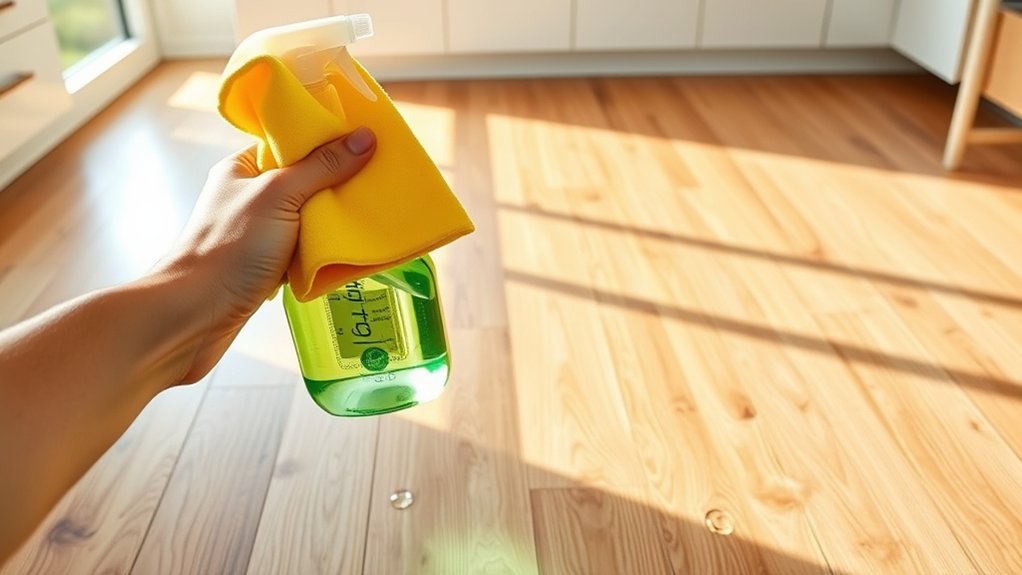
How safe is Pine-Sol for your wood floors? Pine-Sol is safe for sealed wood floors when you follow the diluted instructions carefully. Using it properly minimizes risks to protective finishes and keeps your floors looking great.
However, avoid using Pine-Sol on unsealed wood floors, as the moisture can cause warping and serious moisture damage.
Avoid Pine-Sol on unsealed wood floors to prevent warping and moisture damage.
Before cleaning sealed wood floors, testing on an inconspicuous area is recommended to guarantee no adverse effects.
Since Pine-Sol’s acidity can gradually degrade finishes, use it sparingly and rinse well after cleaning.
Also, avoid using Pine-Sol on waxed or visibly worn wood surfaces, as they’re more vulnerable.
These cleaning tips help you protect your floors while making the most of Pine-Sol safely.
When Should You Avoid Using Pine-Sol on Wood?
Although Pine-Sol can be effective for cleaning sealed wood floors, you should avoid using it on unfinished, waxed, or damaged wood surfaces.
Unfinished wood is especially vulnerable to moisture damage from Pine-Sol, which can cause swelling or deterioration.
Similarly, avoid Pine-Sol on waxed or oiled finishes because it may strip away protective coatings, leaving the wood exposed.
If your wood is worn or damaged, Pine-Sol can worsen these issues and dull its appearance.
Also, excessive water from Pine-Sol solutions poses risks like warping or discoloration, so use it sparingly.
Before applying Pine-Sol broadly, always test it on a small, inconspicuous area to verify compatibility with your wood finish and prevent unintended damage.
How to Dilute Pine-Sol Safely for Wood Floors
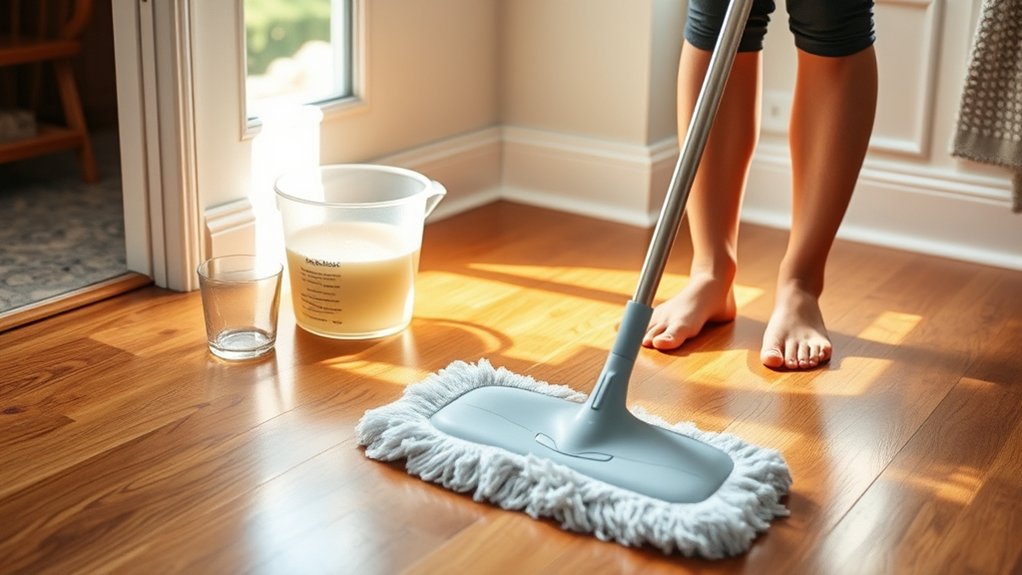
If you want to clean your wood floors safely with Pine-Sol, it’s important to dilute it the right way. You should use about ⅛ cup of Pine-Sol per gallon of warm water.
When you mop, make sure your cloth is just damp—not soaking wet. Too much moisture can actually damage the finish on your floors.
Keeping the cleaning solution light and avoiding any pooling of liquid will help protect the wood and keep it looking great.
Proper Dilution Ratios
When you dilute Pine-Sol correctly, you protect your wood floors while achieving effective cleaning. For hardwood floors, mix ⅛ cup of Pine-Sol with one gallon of warm water to create a safe-to-use cleaning solution. This proper usage guarantees the diluted solution cleans thoroughly without leaving residue or damaging the finish.
Avoid excessive dilution or concentration, as incorrect ratios increase risks like ineffective cleaning or buildup. Always test the diluted solution on an inconspicuous area first to check compatibility with your floor’s finish.
Remember, Pine-Sol isn’t safe to use on unfinished, waxed, or worn wood surfaces.
Following these guidelines helps you maintain your floors’ appearance and longevity while using Pine-Sol responsibly. It’s a simple step that makes a big difference in keeping your wood floors looking great.
Avoiding Excess Moisture
Since wood is highly sensitive to moisture, you’ll want to dilute Pine-Sol carefully to avoid damage. Mix ⅛ cup of Pine-Sol with a gallon of warm water to create a safe, diluted solution for hardwood floors.
Always use a damp mop, not a soaking wet one, to minimize moisture exposure during cleaning. Avoid letting Pine-Sol pool or sit on the surface, as excess moisture can cause damage and dull finishes.
For tough stains, you can apply Pine-Sol full-strength but rinse the area afterward to remove any residue. Regularly test a small, hidden spot before cleaning to make sure no adverse effects occur.
Step-By-Step Guide to Cleaning Wood Floors With Pine-Sol
Start by diluting ⅛ cup of Pine-Sol in one gallon of water to safely clean sealed wood floors.
Before you begin, test Pine-Sol on a small, hidden spot to verify compatibility with your hardwood’s finish.
Use a damp mop to clean, never a soaking wet one, to avoid moisture damage that can warp wood.
For regular cleaning, gently mop the floor with the diluted solution and let it dry.
If you encounter tough stains, apply Pine-Sol full-strength directly on the area, then immediately wipe it off with a clean, damp cloth to protect the finish.
Avoid using Pine-Sol on unsealed, waxed, or worn wood, since it can damage the surface.
Following these steps guarantees safe use and preserves your hardwood floors.
What Can Happen If You Use Pine-Sol on Wood Too Often?
Although Pine-Sol can effectively clean wood floors, using it too often can cause several issues. Repeated use may lead to residue buildup that dulls hardwood floors, requiring professional cleaning to restore their shine.
Frequent use of Pine-Sol can leave residue that dulls hardwood floors, needing professional restoration.
The glycolic acid in Pine-Sol can degrade protective finishes over time, making your floors more prone to scratches and stains. Excessive moisture from frequent cleaning can warp and discolor wood surfaces.
Moreover, long-term use of such cleaning products can void warranties, as many exclude damage caused by acidic cleaners. Ultimately, persistent overuse might force you into refinishing floors or even replacing them.
- Residue buildup dulls hardwood floors
- Protective finishes break down
- Excessive moisture causes warping and discoloration
- Flooring warranties can be voided
- Refinishing floors may become necessary due to damage
How to Prevent Pine-Sol Residue and Protect Your Wood Finish
To keep your wood free of Pine-Sol residue, it’s important to dilute the solution properly—just mix about ⅛ cup of Pine-Sol per gallon of water.
When you clean, use a damp mop rather than soaking the floor, because too much moisture can harm the wood’s finish.
Once you’re done cleaning, don’t forget to rinse the area right away with a clean, damp cloth.
This helps get rid of any leftover product and keeps your wood looking great.
Proper Dilution Techniques
When you dilute Pine-Sol correctly, mixing ⅛ cup into a gallon of warm water, you reduce the risk of residue buildup and protect your sealed wood floors.
Always follow the manufacturer instructions to guarantee proper usage and maintain the cleaning power without damaging your sealed hardwood.
Use a damp mop rather than a soaking wet one to limit moisture exposure, which can harm your wood finish.
Avoid overusing Pine-Sol to prevent dulling and residue formation.
- Dilute Pine-Sol precisely per manufacturer instructions
- Use a damp mop to minimize moisture exposure
- Spot clean stains with full-strength Pine-Sol, then rinse immediately
- Avoid soaking floors to protect sealed hardwood
- Rinse floors regularly to remove any leftover residue
Proper dilution keeps your wood clean and preserves its natural shine.
Just remember, a little goes a long way!
Immediate Rinsing Practices
Proper dilution of Pine-Sol helps prevent residue buildup, but rinsing immediately after cleaning is just as important to protect your wood finish.
After using Pine-Sol, you should immediately rinse the surface with a clean damp mop or cloth to remove any lingering cleaning agents. This step prevents residue buildup that can dull or damage your wood finish over time.
Avoid letting Pine-Sol sit on the wood, as extended contact increases risks of damage. Always test on a small area before full application to guarantee proper usage and compatibility with your wood surface.
Following these safe cleaning tips helps you maintain your wood’s appearance and integrity while effectively using Pine-Sol.
Immediate rinsing is key to preventing damage and preserving your wood finish. So, don’t skip it—it really makes a difference!
How to Maintain Hardwood Floors After Using Pine-Sol
Although Pine-Sol can effectively clean sealed hardwood floors, you’ll need to rinse the surface thoroughly with plain water afterward to remove any residue that might dull the finish.
To maintain hardwood floors after using Pine-Sol on hardwood floors, follow these steps to avoid potential damage and prolong their beauty.
Rinse using plain water immediately after cleaning to prevent dulling. Limit frequency of Pine-Sol use to minimize wear on the finish. Use full-strength sparingly on stubborn stains, then rinse promptly.
Maintain a cleaning routine with pH-neutral products designed for wood floors.
Regularly dust mop or vacuum to minimize dirt accumulation and reduce wet cleaning. This way, your floors stay looking great for longer.
Alternative Cleaners That Are Safer for Wood Floors
Since harsh cleaners like Pine-Sol can damage wood finishes over time, you’ll want to choose gentler alternatives specifically formulated for hardwood floors.
pH-neutral products, such as Bona Hardwood Floor Cleaner or Method Squirt + Mop, effectively clean without stripping protective coatings or causing dullness.
You can also use gentle options like diluted dish soap or a vinegar and water solution sparingly to avoid damage.
For daily upkeep, regular dust mopping with a microfiber mop helps capture dust and dirt without scratching, making it safer for wood floors.
These alternative cleaners and maintenance methods protect your floor’s finish while keeping it clean.
Opting for pH-neutral cleaners and gentle options guarantees long-lasting beauty and durability of your hardwood surfaces.
Frequently Asked Questions
Can Pine-Sol Be Used on Wood Furniture Besides Floors?
Yes, you can use Pine-Sol on sealed wood furniture if you follow proper dilution ratios, about ⅛ cup per gallon of water.
Always test product compatibility on a hidden spot first to protect the finish. This helps preserve the look and avoid surprises.
Use gentle application techniques to avoid damaging the surface protection.
For wood care, you might want to consider natural alternatives or eco-friendly options if you’re looking for safer cleaning methods.
Regular maintenance tips include wiping with a damp cloth and avoiding harsh chemicals.
This will help keep your furniture looking its best over time.
Does Pine-Sol Have a Strong Odor That Affects Indoor Air Quality?
Yes, Pine-Sol has a strong scent that can affect indoor air quality, especially if you don’t have good air circulation.
Its odor can stick around and might bother people who are sensitive to smells.
To reduce the impact, try opening windows or using fans to improve ventilation.
You could also add indoor plants or air purifiers to help absorb the odor.
If you clean often, you might want to consider natural alternatives.
This can help minimize exposure and keep your indoor air feeling fresher.
Is Pine-Sol Safe for Wood Floors With Pets or Children?
Yes, Pine-Sol is safe for wood floors when you follow safe cleaning practices, making it one of the pet-friendly cleaners you can trust.
To keep your wood floors in good shape, just be sure to dilute it properly and rinse well to avoid any residue.
If you’re looking for extra pet safety precautions or products that are child-safe, you might want to consider natural cleaning alternatives that include essential oils.
These can offer cleaning power with added benefits.
Using eco-friendly solutions is a smart move, too.
Plus, sticking to recommended cleaning frequencies helps keep your wood surfaces disinfected without causing any harm.
How Long Should You Wait Before Walking on Wood Floors After Pine-Sol Cleaning?
Think of your wood floor as a delicate garden. Rushing foot traffic is like trampling seedlings. You should wait at least 30 minutes after Pine-Sol cleaning before walking on it. This gives it enough time to dry properly and helps minimize moisture retention.
Make sure you use the right product dilution and apply it gently to protect the finish.
If you clean your floors often, be careful about residue buildup and whether your cleaner is compatible with the finish. If you’re unsure, consider trying alternative cleaners.
The most important thing is to prioritize protecting your floors. That way, you keep them looking pristine for years to come.
Can Pine-Sol Remove Tough Stains or Sticky Residues From Wood Surfaces?
Yes, Pine-Sol can remove tough stains and sticky residue from wood surfaces effectively when used correctly. For best cleaning effectiveness, dilute it properly and test finish compatibility first.
User experiences show it outperforms some natural alternatives, but safety precautions matter to prevent damage. Apply sparingly, avoid soaking the wood, and rinse after use.
Compared to other products, Pine-Sol offers strong stain removal but requires careful application methods to protect your wood’s finish.
Just take your time and treat your wood gently!
Conclusion
You can use Pine-Sol on sealed wood floors if you dilute it properly, but avoid it on unsealed wood to prevent damage. While some believe Pine-Sol is too harsh for wood, careful use actually maintains cleanliness without harm.
Just don’t overdo it. Frequent use can dull finishes and leave residue. For lasting wood beauty, consider gentler alternatives and always follow up with proper maintenance to keep your floors looking their best.