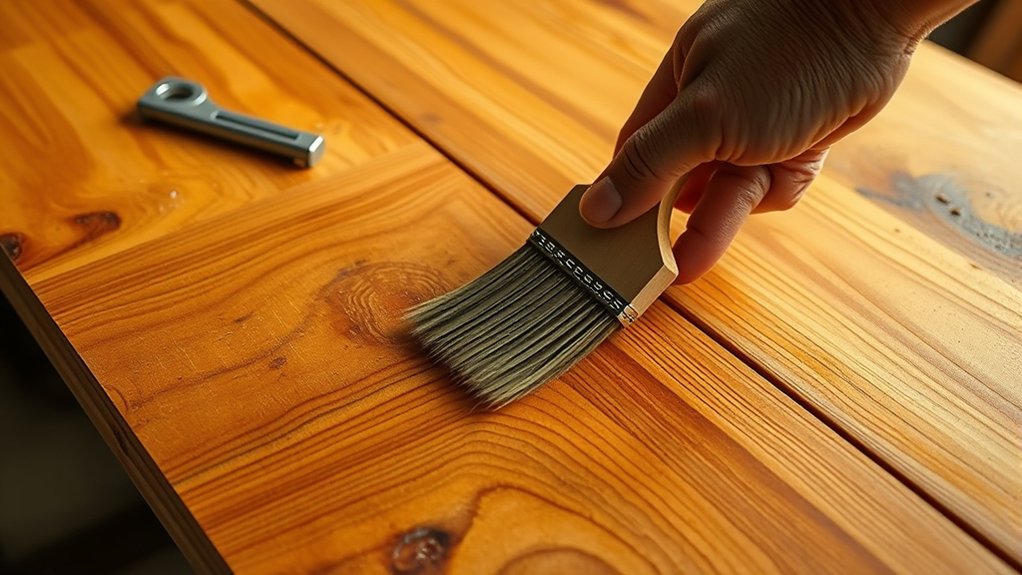
Can You Stain Teak Wood: Best Techniques For Rich Finish
You can stain teak wood to achieve a rich, durable finish by first thoroughly cleaning and lightly sanding the surface to remove old finishes and guarantee smoothness. Choose an oil-based stain for outdoor durability or a water-based stain for quick drying, applying with the correct brush in even strokes.
Let each coat dry fully, then protect the wood with a UV-blocking sealer. Proper preparation and protection are key for lasting beauty. There’s more to mastering the process for flawless results though.
Key Takeaways
- Properly clean and sand teak wood to remove dirt, grease, and old finishes before staining for an even, rich finish.
- Choose oil-based stains for durability and outdoor use, or water-based stains for quick drying and eco-friendliness.
- Test stain on a small wood area to ensure desired color and finish before full application.
- Apply stain with appropriate brushes in even strokes, allowing each coat to dry fully to avoid streaks and peeling.
- Protect stained teak with UV-blocking varnishes or sealers and reapply every 6-12 months for lasting beauty.
How to Prepare Teak Wood for Staining
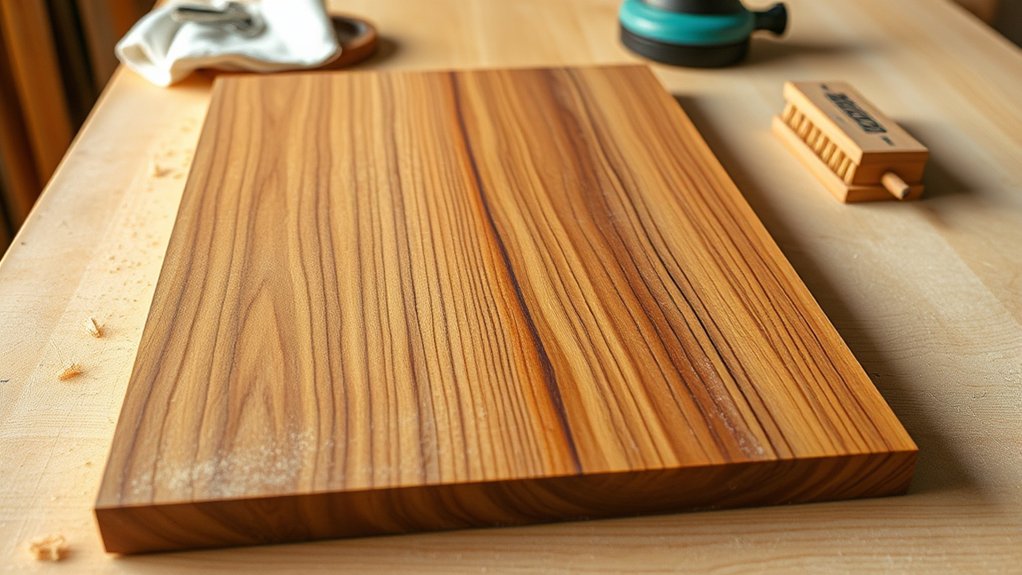
Start by thoroughly cleaning the teak wood surface with mild soap and water to remove dirt, dust, and grease. This step guarantees the wood is clean and ready for stain application.
If the teak has an existing finish, use a teak wood cleaner or stripper to prepare the surface by removing old coatings.
Next, lightly sand the teak with 220-grit sandpaper to smooth rough areas and open the wood pores, which enhances stain absorption.
Lightly sanding teak with 220-grit paper smooths rough spots and opens pores for better stain absorption.
After sanding, use a tack cloth or damp rag to eliminate all dust, maintaining a clean surface.
Finally, allow the teak wood to dry completely before staining. Moisture can interfere with stain adhesion and affect the finish quality, so thorough drying is essential to prepare the wood properly.
Choosing the Best Stain for Teak Wood
When selecting the best stain for teak wood, you’ll want to take into account the wood’s natural oils and exposure conditions. This helps guarantee ideal penetration and protection.
Oil-based stains deeply penetrate teak, enhancing durability and maintaining its beauty, especially outdoors. Water-based stains dry quickly and are eco-friendly, but they need careful surface prep.
Gel stains offer easy application on vertical or intricate surfaces. Teak-specific products include UV blockers and mildew inhibitors to protect the wood under harsh conditions. It’s always a good idea to test on a small area first to confirm the finish you want.
| Stain Type | Advantages | Best Use |
|---|---|---|
| Oil-Based | Deep penetration, durability | Outdoor teak furniture |
| Water-Based | Quick-dry, low odor | Indoor or well-prepared surfaces |
| Gel | Even application, drip-free | Vertical and intricate designs |
| Teak-Specific | UV/mildew protection | Outdoor, harsh exposure |
| Testing | Confirms finish accuracy | All types of wood |
How to Apply Teak Wood Stain Like a Pro
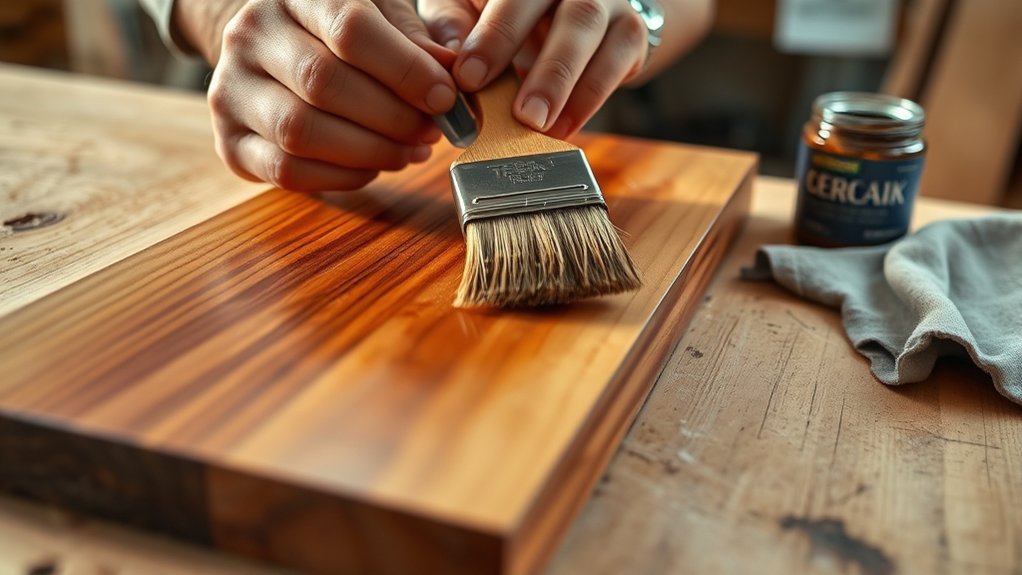
Before applying stain to your teak wood, you’ll need to clean the surface thoroughly and sand it lightly to open the pores for best absorption. This step guarantees your teak furniture absorbs the stain evenly.
Choose the proper type of stain. Oil-based stains penetrate deeply and enhance natural oils, while water-based stains dry quickly and have low odor.
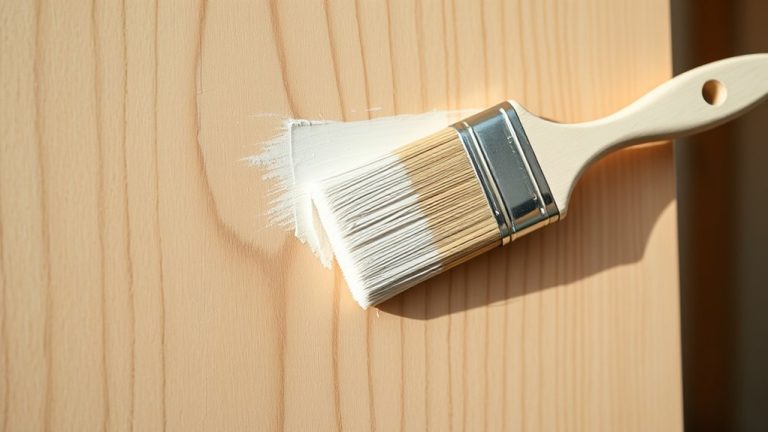
Use a natural-bristle brush for oil-based stains or a synthetic brush for water-based ones. Apply in even strokes to avoid streaking. Let each coat dry fully before adding another.
After the final layer, buff the surface with a soft cloth for a smooth finish.
To maintain your teak furniture’s rich appearance, clean it regularly with mild soap and water. And don’t forget to reapply protective coatings as part of proper care.
How to Get Natural or Darker Teak Wood Finishes
Achieving the perfect natural or darker teak wood finish requires selecting the right stain and applying it carefully to enhance the wood’s unique characteristics.
To get a natural color and grain, choose clear or lightly tinted oil-based stains that enhance the natural golden-brown tone without darkening the wood excessively.
For a darker finish, use oil-based stains formulated for deep penetration. These enrich the teak’s color while emphasizing its grain.
Before staining, prepare the teak surface by cleaning and lightly sanding to promote ideal absorption and smoothness.
Apply multiple thin coats of stain, allowing each to dry fully. This way, you can gradually build the desired richness and avoid overwhelming the wood.
Also, testing stains on a hidden area guarantees you achieve the exact finish you want. It’s a simple step that saves a lot of hassle later on.
Finishing Options That Bring Out Teak’s Natural Beauty
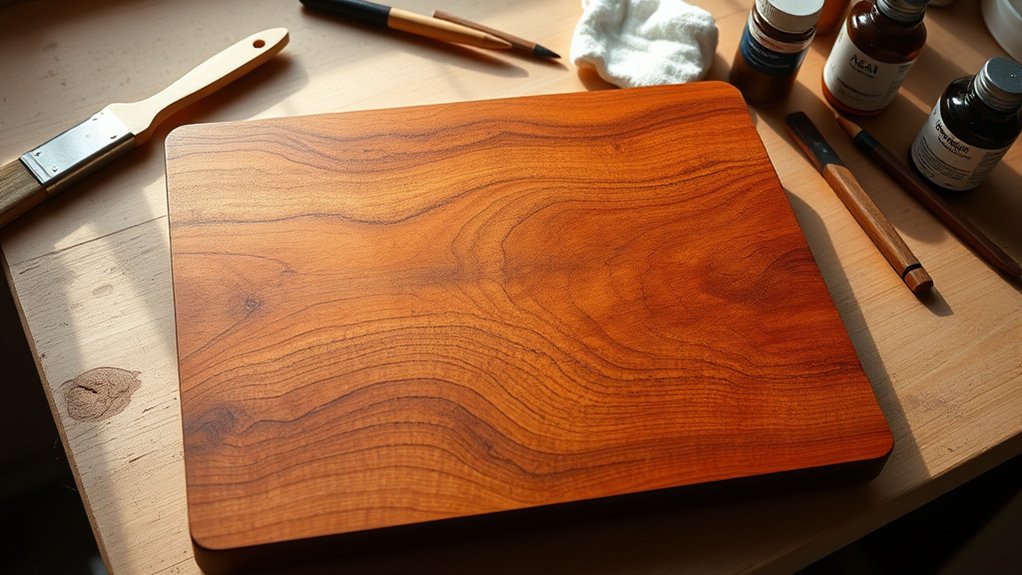
Although teak’s natural oils provide inherent protection, applying the right finishing options can greatly enhance its appearance and durability.
For your teak wood furniture, oil-based stains penetrate deeply, enhancing the natural grain while preserving the wood’s rich color. Semi-transparent stains offer subtle hues that showcase teak’s texture without masking it. Clear coats or varnishes further protect against UV rays, locking in warmth and preventing damage.
| Finish Type | Benefits | Application Tip |
|---|---|---|
| Oil-Based Stains | Deep penetration, color enhancement | Apply on clean, dry teak |
| Semi-Transparent | Enhances grain visibility | Use for balanced aesthetics |
| Clear Coats/Varnish | UV protection, moisture resistance | Reapply periodically for upkeep |
Choose protective finishes strategically to enhance the natural beauty and longevity of your teak wood furniture. It’s all about keeping your pieces looking great for years to come.
How to Protect Stained Teak Wood From UV and Moisture
To protect your stained teak wood from UV damage, it’s a good idea to apply a teak-specific varnish or sealer that contains UV blockers. These help prevent the wood from fading over time.
When it comes to moisture, look for water-resistant or waterproof products that can keep mold and mildew at bay.
Make sure to check your protective coating regularly and touch it up as needed. This way, you’ll keep your teak wood looking great and well-protected against the elements for a long time.
UV Protection Methods
When protecting stained teak wood from UV damage and moisture, you should use a high-quality, UV-resistant finish designed specifically for teak. This finish effectively shields the wood from harmful UV rays and reduces fading.
After staining, apply a clear topcoat containing UV blockers to enhance protection while preserving teak’s natural look.
For ongoing care, regularly reapply protective coatings every 6-12 months, especially on outdoor furniture exposed to sun and weather. You might also consider using a penetrating oil infused with UV inhibitors. This oil penetrates deeply to maintain rich color and provide essential moisture protection.
Plus, storing teak furniture indoors or under cover during harsh weather limits UV exposure and moisture buildup. This simple step helps extend the wood’s durability and keeps it looking great over time.
These UV protection methods really help your teak retain its rich finish for years to come.
Moisture Barrier Solutions
Since stained teak wood is naturally porous, applying a high-quality, teak-specific sealer or varnish is essential. This creates a durable moisture barrier that also boosts UV protection.
Proper surface preparation, like thorough sanding and cleaning, helps the protective coatings stick better and work more effectively.
Choose products with UV inhibitors to keep color fading and sun damage at bay. That’s especially important for outdoor teak furniture.
It’s also a good idea to pick breathable finishes. These allow trapped moisture to escape while still blocking water and UV rays.
Make sure to regularly check the wood and reapply protective coatings every 6 to 12 months, depending on how much exposure it gets. This helps maintain the stain’s look and keeps the moisture barrier strong.
A little upkeep like this will keep your teak finish looking rich and resilient over time.
Maintaining Your Stained Teak Wood Furniture Over Time
You should clean your stained teak wood furniture regularly using mild soap and water. This helps prevent dirt buildup and keeps the finish looking great.
It’s also a good idea to reapply a teak-specific protective coating every 1 to 2 years. Doing this will shield your furniture from UV damage and moisture.
On top of that, try to protect your furniture from extreme weather by covering it whenever possible.
And if any spills happen, be sure to address them quickly. Taking these simple steps will help extend the lifespan of your beautiful teak pieces.
Regular Cleaning Practices
Although stained teak wood furniture offers lasting beauty, maintaining its appearance requires regular cleaning with mild soap and warm water. This helps remove dirt and prevent buildup that can dull the finish.
You should avoid harsh chemicals or abrasive cleaners because they can strip the stain and damage the wood’s natural oils.
Use a soft cloth for cleaning and drying to prevent scratches and help maintain the wood’s integrity. And don’t forget to promptly wipe up spills to stop moisture from penetrating and harming the stain.
It’s also a good idea to periodically inspect your furniture for signs of wear or fading. This will let you know when it’s time to think about reapplying protective coatings.
Consistent cleaning with these methods ensures your stained teak keeps its rich finish and durability over time.
Protective Coating Reapplication
Regular cleaning helps preserve the rich finish of stained teak wood. But over time, protective coatings wear down and need to be reapplied to keep your furniture durable and looking great.
You should check your furniture regularly for signs of fading or damage. When you spot any, go ahead and reapply the protective coatings. For outdoor pieces, it’s a good idea to reapply UV-resistant sealers every 6 to 12 months to shield against sun and rain.
| Step | Recommendation |
|---|---|
| Clean Surface | Use mild soap and water |
| Prepare Wood | Lightly sand with 220-grit paper |
| Apply Coating | Follow manufacturers instructions |
Cleaning makes sure the stain sticks properly. Sanding helps restore smoothness to the wood. Always follow the manufacturer’s instructions for drying times and how to apply the coating to get the best protection possible.
Weather Damage Prevention
Since stained teak wood furniture faces constant exposure to sun, rain, and temperature fluctuations, taking proactive steps to prevent weather damage is essential.
Regularly clean your furniture with mild soap and water to remove dirt that accelerates weathering and degrades the stain.
Apply a UV-protective sealant every 6 to 12 months to shield the wood from harmful UV rays that cause fading and structural damage.
Use furniture covers during extreme weather to block moisture accumulation, which promotes mildew and finish deterioration.
Promptly wipe spills and standing water to prevent water stains and excess moisture absorption.
Inspect your furniture frequently for signs of wear or discoloration, and reapply stain or sealant as needed to maintain its protective barrier and rich appearance over time.
Mistakes to Watch Out For When Staining Teak Wood
When staining teak wood, you must avoid several common mistakes that can undermine your results. First, always prepare the wood by cleaning and sanding to guarantee even stain absorption. Next, check product compatibility; stains not made for teak often fail to adhere properly.
Avoid over-applying stain. Thin, even coats help prevent sticky surfaces and uneven color. Also, make sure to respect drying times between coats to avoid trapped moisture, which can cause peeling or bubbling.
Finally, choose stains with UV protection to maintain teak’s natural color and durability over time. Taking these steps will help you get the best finish possible.
| Mistake | Consequence |
|---|---|
| Skipping Preparation | Uneven, patchy finish |
| Ignoring Compatibility | Poor adhesion, reduced durability |
| Over-Applying Stain | Sticky surface, blotchy coloring |
Frequently Asked Questions
Can Teak Wood Be Stained Without Sanding First?
You can stain teak wood without sanding first, but expect lower stain absorption rates because of teak’s natural oil characteristics. These oils tend to repel water-based stains, which can cause uneven color.
For the best results, oil-based or penetrating stains work better without sanding. When applying, make sure to clean the wood thoroughly and use multiple thin coats.
That said, sanding does help optimize absorption and gives a more uniform finish.
To keep the wood looking great over time, regular oiling is a good maintenance tip to preserve the rich finish and protect the wood long-term.
How Long Does Teak Stain Take to Dry Completely?
Teak stain’s drying time depends on the type of stain you use and environmental factors like humidity and temperature.
Oil-based stains usually need about 24 to 48 hours to dry completely. Water-based stains, on the other hand, can dry in 1 to 2 hours if the conditions are just right.
You should always let each coat dry fully before applying another. For water-based stains, that means waiting 4 to 6 hours.
Oil-based stains take longer, so give them up to 24 hours to dry.
Keep in mind that drying times can change based on how thick the stain is and the humidity where you’re working.
Is Staining Teak Wood Safe for Indoor Furniture?
Think of staining teak wood like tuning a fine instrument; proper care guarantees harmony.
Yes, staining teak wood for indoor furniture is safe if you choose high-quality, low-VOC stains to protect indoor air quality. Teak wood benefits from excellent stain adhesion when prepped correctly, avoiding common issues.
Follow maintenance tips like periodic cleaning and reapplication to preserve the finish.
If you prefer, consider alternative finishes such as oil-based or water-based stains for durability and aesthetic appeal. It’s all about picking what works best for your space and style.
Can I Change the Stain Color Later on Teak Wood?
Yes, you can change the stain color later on teak wood, but you’ll need to take into account teak’s stain absorption rates carefully. Proper sanding guarantees better stain absorption and improves color matching techniques.
Choose stain color options that complement the wood’s natural oils to maintain wood finish longevity.
Regular teak wood maintenance, including cleaning and re-staining, helps preserve both appearance and durability. This makes future color changes smoother and more effective.
What Tools Are Best for Removing Old Stain From Teak?
You’ll want to balance precision and care when tackling stain removal techniques on teak.
Start with eco-friendly solvents or a teak-specific cleaner to strip old finishes gently.
Then, follow up with the best sanding methods, like fine 220-grit sandpaper or a power sander, to open wood pores without causing damage.
Hand sanding gives you more control, especially in intricate areas.
Always finish by preparing the surface for protective finishes.
This way, your teak wood care maintains its natural beauty and durability.
Conclusion
Staining teak wood transforms its golden grain into a rich, vibrant tapestry that catches the eye. By preparing the surface carefully, choosing the right stain, and applying it with precision, you reveal teak’s full potential.
Protecting and maintaining your work guarantees it stays radiant against sun and rain. With these expert techniques, your teak furniture won’t just age, it’ll glow, showcasing timeless beauty in every detail.