How Tight Should A Chainsaw Chain Be – Correct Tension Guide
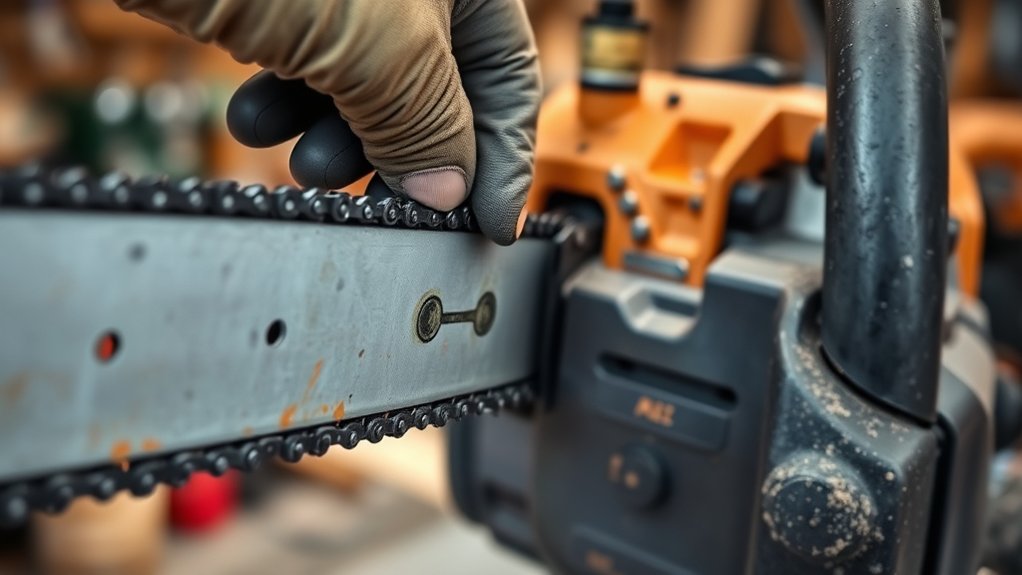
You should keep your chainsaw chain snug against the guide bar with slight slack that allows you to pull the chain away about a quarter inch before it snaps back into place. The chain should rotate smoothly by hand without sagging or excessive resistance.
Avoid overly tight chains to prevent friction and wear, and never let the chain get too loose to reduce kickback risks. Proper tension boosts safety and efficiency.
Explore key adjustment and maintenance tips to get it just right.
Why Chainsaw Chain Tension Matters for Safety and Performance
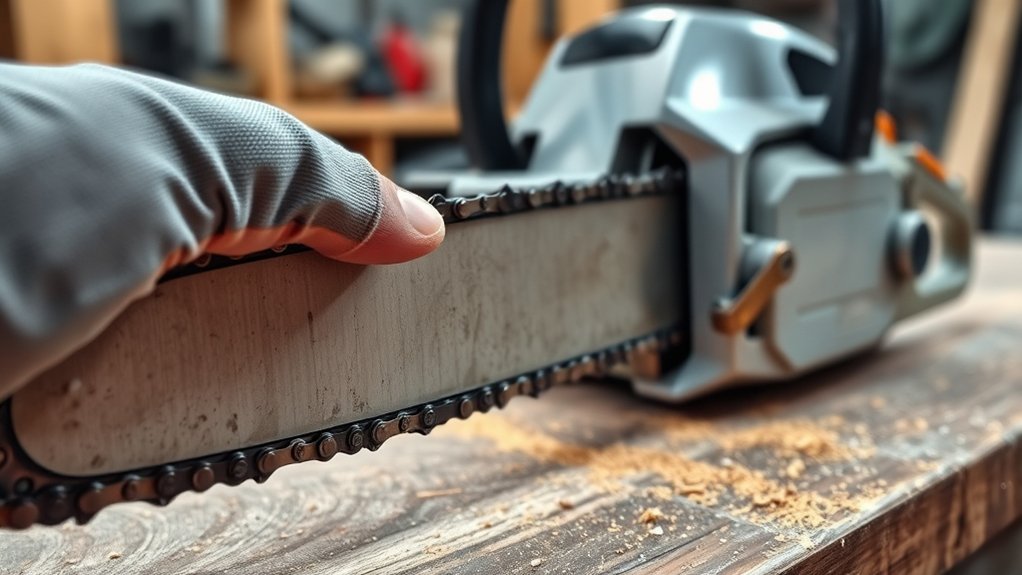
Maintaining proper chain tension is essential for ensuring both safety and peak performance when using a chainsaw. Incorrect tension compromises safety and performance by increasing the risk of kickback and chain derailment.
Proper chain tension is crucial to prevent kickback and chain derailment, ensuring safe and efficient chainsaw use.
If the chain is too loose, it may snap or come off during operation, endangering you and bystanders. Conversely, an overly tight chain causes excessive friction and overheating, potentially damaging the chainsaw’s components.
To avoid these issues, you need to regularly check the chain’s tension and tighten the chain as necessary. The chain should snap back into place with firm but not excessive tension.
This balance maximizes cutting efficiency, ensuring smoother cuts and extending the lifespan of both the chain and the saw itself.
Prioritizing proper chain tension directly protects your safety and optimizes performance. It’s a small step that makes a big difference.
What Happens If Your Chainsaw Chain Is Too Loose or Tight?
If your chainsaw chain isn’t properly tensioned, you’ll face specific mechanical and safety issues. Loose chains can derail during operation, increasing the risk of kickback and accidents. They also accelerate wear on the guide bar and other components, which shortens your chainsaw’s lifespan.
On the other hand, an overly tight chain creates excessive friction, making the chainsaw harder to operate and causing motor overheating. This could even lead to fire hazards.
Plus, a tight chain strains the clutch, bearings, and other parts, which puts your equipment at risk of mechanical failure.
So, maintaining the correct chain tension is crucial for safe, efficient cutting and for keeping your chainsaw in good shape. Regularly checking and adjusting your chain tension helps your chainsaw perform at its best without unnecessary wear or safety risks.
Always aim for a properly tensioned chain to avoid these problems.
How to Test Your Chainsaw Chain Tension: Snap-Back and Rotation Checks
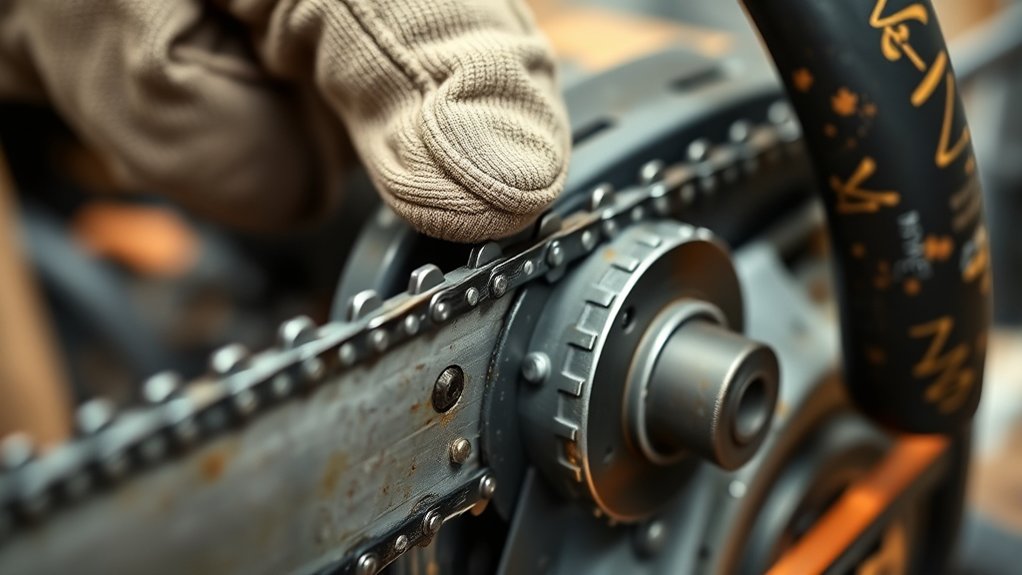
Although chain tension might seem straightforward, testing it accurately requires specific methods to guarantee safety and peak performance. You can perform two key checks: the snap-back test and the rotation test.
For the snap-back test, gently pull the chain from the guide bar and release it. It should snap back if chainsaw chain tension is correct.
In the rotation test, rotate the chain by hand. It should move smoothly with minimal resistance. Always refer to the manufacturer’s manual for exact tension adjustment specifications, as they vary by model.
| Test Type | Method | Desired Outcome |
|---|---|---|
| Snap-Back Test | Pull chain away, then release | Chain snaps back to guide bar |
| Rotation Test | Rotate chain by hand | Chain moves smoothly, minimal resistance |
| Sag Check | Inspect chain on guide bar | Chain sits snug with slight movement |
| Manual Reference | Consult manual | Follow model-specific tension guidelines |
How to Adjust Chainsaw Chain Tension: A Step-by-Step Guide
Before you start adjusting your chainsaw chain tension, make sure the saw is completely off and unplugged or disconnected from any power source. This is really important to keep things safe and avoid any accidents.
Once that’s done, find the tension adjustment points on your saw. You’ll also need to loosen the guide bar nuts a bit so the bar can move freely. This makes it easier to get the tension just right.
Now, go ahead and turn the tension screw to adjust the chain.
After that, do a quick snap test to check if the chain fits properly—not too loose, not too tight. This simple step helps ensure your chainsaw will run safely and smoothly.
Safety Precautions Before Adjustment
When adjusting your chainsaw chain tension, you’ll want to make certain the tool is completely powered down by turning it off and removing the battery or disconnecting the power source. Following key safety precautions is essential to avoid injury and damage.
First, remove the battery or unplug the chainsaw to guarantee no accidental starts. Wear protective gloves to shield your hands from the sharp chain teeth during handling.
Also, disengage the chain brake by pulling the handle toward you to allow safe tension adjustment.
Always consult your manufacturer’s manual for model-specific instructions and verify the chain is cool before adjusting. These steps protect you and maintain your chainsaw’s performance while you work on tension adjustments.
Locating Tension Adjustment Points
The tension adjustment points on your chainsaw are typically located on the side cover or near the front. They’re designed for easy access during maintenance.
To begin, use a scrench or the appropriate tool to loosen the guide bar nuts without fully removing them. This step prevents damage and allows the guide bar to move freely.
Next, identify the adjustment screw, which controls chain tension. Turn it clockwise to tighten and counterclockwise to loosen.
While adjusting, slightly lift the guide bar tip to make sure the chain becomes properly tensioned.
Always consult your chainsaw guide for model-specific details, as locations and mechanisms may vary.
Proper identification and use of these tension adjustment points guarantee safe, efficient operation. Plus, it helps extend the lifespan of your chainsaw’s chain and guide bar.
Testing Chain Tension Correctly
After you’ve located and adjusted the tension points on your chainsaw, it’s important to verify the chain tension accurately to ensure safe and efficient operation.
Testing chain tension correctly guarantees the chain is properly tensioned and ready for use.
Follow these steps:
- Perform a snap-back test by pulling the chain away from the guide bar and releasing it. The chain should snap back snugly without sagging.
- Rotate the chain by hand to confirm it moves freely with minimal resistance. This indicates proper adjustment.
- Use the pull test by gently pulling on the chain to verify it doesn’t disengage from the drive links. This confirms sufficient tension.
Always consult your manufacturer’s manual for model-specific guidelines during this adjustment process.
It’s a good idea to double-check before you start cutting.
Brand-Specific Tips for Chainsaw Chain Tension: Oregon Intenz and STIHL
Although chain tensioning principles remain consistent, Oregon Intenz and STIHL chainsaws require brand-specific approaches to guarantee peak performance and safety.
For Oregon Intenz guide bars, use a screwdriver or scrench in the Intenz slot at the designated adjustment points. Turn clockwise to tighten the chain, ensuring it fits snugly against the guide bar without slack.
With STIHL chainsaws, after releasing the chain brake, lift the guide bar tip and rotate the quick chain tensioner wheel clockwise to set proper tension rapidly.
For STIHL chainsaws, release the brake, lift the bar tip, and turn the tensioner wheel clockwise to tighten quickly.
Always adjust tension only when the chainsaw is cool to avoid inaccurate settings caused by heat expansion. Regularly check tension before use, as temperature fluctuations can alter chain tightness.
It’s a good idea to consult your chainsaw’s operator manual for model-specific instructions. That way, you can maintain safe and effective chainsaw operation without any hassle.
How to Avoid Common Chainsaw Chain Tension Mistakes
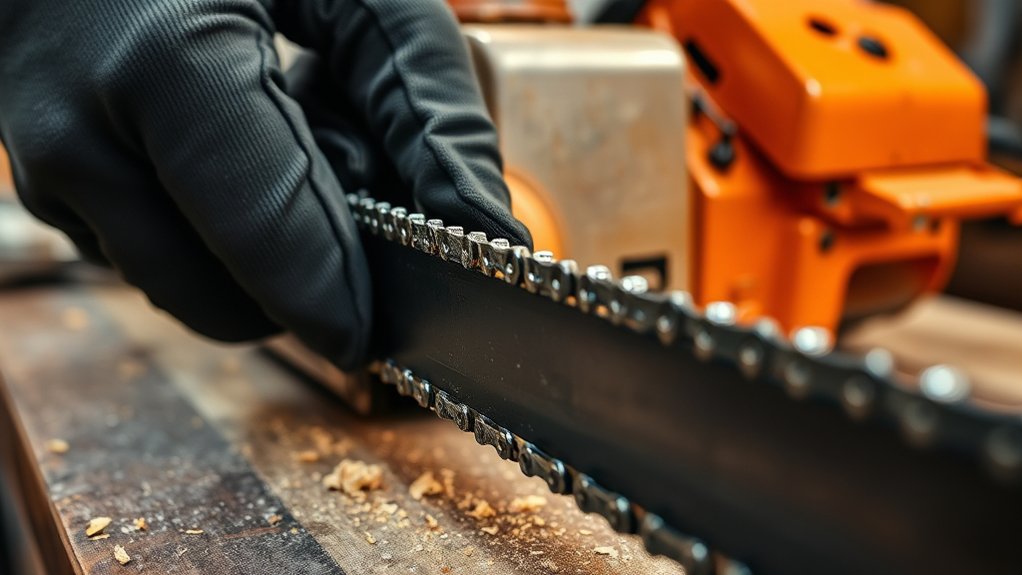
Maintaining correct chain tension on your Oregon Intenz or STIHL chainsaw means avoiding common mistakes that can compromise safety and performance.
To keep your chain correctly tensioned, follow these steps:
Always check tension when the saw is cool. Heat causes expansion that can mislead adjustments. Use the snap-back test by pulling the chain away from the guide bar. If it doesn’t snap back, it’s too loose.
Inspect the chain along the top for sagging. If it hangs away from the bar, tighten it properly. Turn the tensioning screw counterclockwise to loosen and clockwise to tighten.
Avoid over-tightening by confirming the chain rotates freely by hand. Over-tightened chains cause excessive friction and damage components.
Adhering to these practices guarantees ideal tension and safe chainsaw operation.
Maintenance Tips to Keep Your Chainsaw Chain Tension Just Right
You should check your chainsaw’s chain tension before each use to make sure it fits snugly, with just a little bit of slack on the guide bar.
It’s a good idea to adjust the tension regularly while you’re working because the chain can expand from the heat. This helps keep your cutting smooth and efficient.
Also, when you’re done, store your chainsaw in a dry place to prevent rust, which can mess up both the chain and the guide bar.
Regular Tension Checks
How often should you check your chainsaw’s chain tension to keep it operating safely and efficiently? You should regularly check chain tension before each use and every 30 minutes during operation to confirm safety and peak cutting performance.
Loose chains increase risks of kickback and derailment. To verify tension, gently pull the chain away from the guide bar; it should stay engaged and snap back if properly tensioned.
Inspect the chain for wear and adjust tension so it moves freely but remains snug without sagging. Always follow the manufacturer’s guidelines for specific tensioning procedures to maintain your chainsaw’s efficiency and lifespan.
Consistent tension checks help prevent accidents, improve cutting precision, and extend the tool’s durability. It’s a simple step that really makes a difference.
Proper Storage Practices
Although regular use demands frequent tension checks, proper storage plays an equally critical role in preserving your chainsaw’s chain tension. Before storing, always release the chain tension to prevent it from becoming permanently deformed.
Store the chainsaw in a dry, cool place to avoid rust and corrosion, which can affect the chain and guide’s condition.
Make sure the guide bar is clean and free from debris to keep it properly aligned and reduce wear on the tensioning mechanism. Loosen the bar nuts slightly so the guide bar can move freely when you adjust the tension by hand later.
Using a protective cover over the guide bar and chain prevents accidental damage and helps keep the chain correctly tensioned.
If you skip these steps, you might face premature wear and compromised cutting performance. So, it really pays off to take a little extra time with proper storage. Your chainsaw will thank you!
When and Why to Check Your Chainsaw Chain Tension Regularly
Because chain tension directly affects both safety and cutting efficiency, you should check it regularly before, during, and after using your chainsaw.
A loose chain increases the risk of kickback and can cause the chain around the bar to derail. This compromises both safety and cutting performance.
To maintain ideal tension, make sure to:
To maintain ideal tension, regularly check and adjust your chainsaw chain for optimal safety and performance.
- Check chain tension before each use to verify the chain is properly seated and neither too tight nor loose.
- Inspect tension during operation, especially within the first 30 minutes. Heat from friction causes the chain to stretch and sag.
- Assess tension after cutting sessions to adjust for chain expansion due to heat. This helps prevent premature wear on chainsaw components.
Regular checks help keep your chainsaw running smoothly, reduce vibration, and extend its lifespan.
It’s a simple step that really makes a difference.
Frequently Asked Questions
Can a New Chainsaw Chain Require Different Tension Than a Used One?
Yes, a new chainsaw chain often requires different tension than a used one because of chain wear and break-in.
You’ll notice that new chains need more frequent adjustments as they stretch and settle after installation.
It’s important to watch the tension indicators closely and follow the installation tips carefully.
Regular maintenance and tension checks are key to keeping your chainsaw safe and running smoothly.
By doing this, you can easily handle the changes in tension between new and worn chains.
It just takes a bit of attention and care to get it right.
Does Temperature Affect Chainsaw Chain Tension During Operation?
Yes, temperature fluctuations cause chain expansion, affecting chainsaw chain tension during operation. As the chain heats, it expands and loosens, reducing operational efficiency and increasing wear risks.
You should check tension regularly, especially after warming up.
Make sure to use safety precautions by allowing the saw to cool before adjusting tension. Following these maintenance tips guarantees peak performance, prolongs component life, and maintains safe operation throughout your cutting tasks.
How Does Chain Lubrication Impact Chain Tension and Performance?
Chain lubrication importance directly affects your chainsaw’s tension and performance. Proper oiling reduces friction, preventing premature chain stretch and ensuring consistent tension.
Follow oiling frequency guidelines to maintain smooth operation and avoid overheating.
It’s also a good idea to incorporate tension adjustment techniques during maintenance to compensate for minor chain elongation. Using performance optimization tips like manufacturer-recommended oils and regular lubrication checks can really help extend your chain’s life.
Sticking to these maintenance best practices keeps your chainsaw efficient and reliable. That way, you get the most out of your tool every time you use it.
Are There Special Tension Considerations for Different Types of Chainsaw Chains?
Yes, different chain types require specific tension adjustments to optimize performance and maintain safety.
Full chisel chains need tighter tension for effective cutting.
Low-profile chains are a bit more forgiving but still must be snug to prevent derailing.
Specialty chains demand precise tension according to manufacturer guidelines.
It’s a good idea to check your chain tension frequently.
Adjust based on chain thickness and material to keep things running smoothly and avoid wear or accidents.
Can Improper Chain Tension Void My Chainsaw Warranty?
Like a tightrope walker relying on balance, your chainsaw’s warranty terms depend on proper tension adjustment. If you neglect this, it can void coverage due to user negligence.
Manufacturers specify tension checks in user manuals, emphasizing maintenance practices to prevent chain wear and damage.
Failing to follow these guidelines often excludes repair claims. So, consistently maintain correct tension and document it to protect your warranty rights effectively.
It’s really about staying on top of the basics to keep your warranty intact.
Conclusion
You wouldn’t want your chainsaw chain sagging like a loose shoelace or gripping tighter than a bear trap. Both will ruin your cut and maybe your day.
Keeping the tension just right isn’t rocket science. But ignoring it turns your powerful tool into a frustrating, unsafe hassle.
So, test, adjust, and maintain regularly. After all, your chainsaw’s precision depends on a chain that fits like a glove. Not too loose, not too tight.