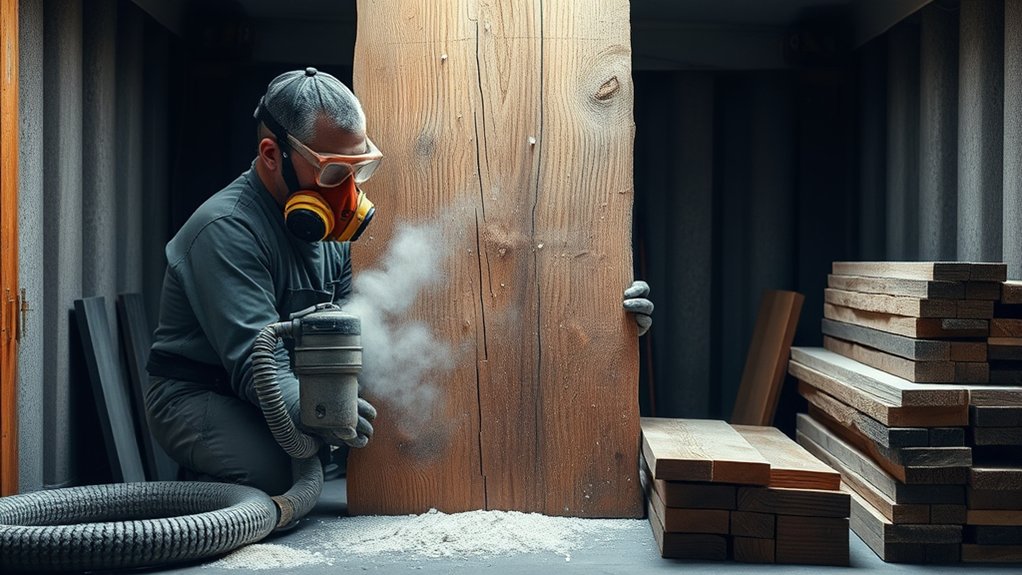
Can You Sandblast Wood: Pros, Cons And Proper Techniques
You can sandblast wood effectively to strip old finishes and reveal natural grain quickly, but you’ll need the right abrasive media and controlled air pressure (30–50 PSI) to avoid surface damage. Using softer abrasives like corn cob protects delicate woods, while safety gear is essential to prevent dust and particle injuries.
Proper technique guarantees a uniform, clean finish without harming the wood. Explore deeper guidance to master this efficient surface preparation method.
Key Takeaways
- Sandblasting wood efficiently removes old finishes while preserving grain using softer abrasives and proper air pressure settings.
- Benefits include reduced labor, uniform finish, and protection of wood texture, especially on softwoods and hardwoods.
- Risks involve potential surface damage, fine dust hazards, and the need for respiratory and eye protection.
- Select abrasive media and particle size based on wood type and project goals, using eco-friendly options when possible.
- Use controlled air pressure (30–50 PSI), appropriate nozzle size, consistent distance, and safety gear for best results.
What Is Sandblasting Wood and How Does It Work
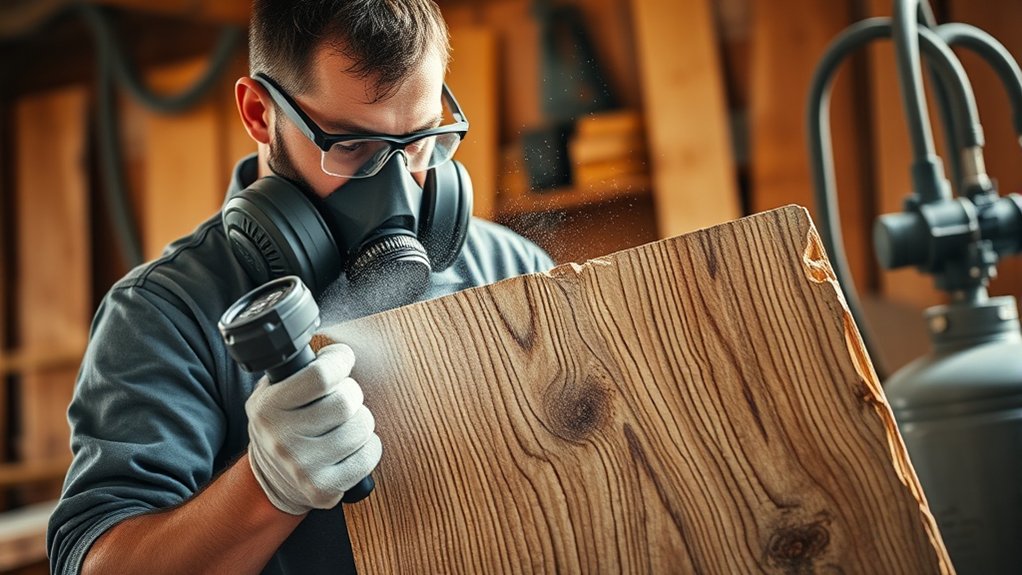
While traditional sanding can be time-consuming and uneven, sandblasting wood uses compressed air to blast abrasive materials like walnut shells or glass beads onto the surface. This efficiently removes old paint, varnish, and grime.
You’ll find this method faster and more uniform, especially on large wood surfaces such as decks and furniture.
Using softer abrasive materials preserves the natural grain and texture by preventing damage to wood fibers. Proper techniques, including maintaining air pressure between 30 to 50 PSI and selecting the right nozzle, are essential to protect the wood’s integrity.
Sandblasting also improves dust control compared to traditional sanding, minimizing airborne particles.
Key Benefits of Sandblasting Wood vs. Traditional Sanding
Sandblasting wood offers several advantages over traditional sanding that can really streamline your woodworking projects. It cuts down labor time significantly, making surface preparation faster, especially when you’re removing paint or chemical strippers from large areas.
Unlike traditional sanding, sandblasting wood delivers a more uniform finish by minimizing human error with automated abrasive media application. You’ll also find it less physically demanding, which is a big help when tackling intricate details or extensive wood restoration tasks.
Using softer abrasives like walnut shells protects the wood’s integrity while effectively stripping layers without causing damage.
Plus, integrated dust collection systems reduce airborne particles, creating a cleaner and safer workspace compared to manual sanding methods.
Drawbacks and Risks of Sandblasting Wood
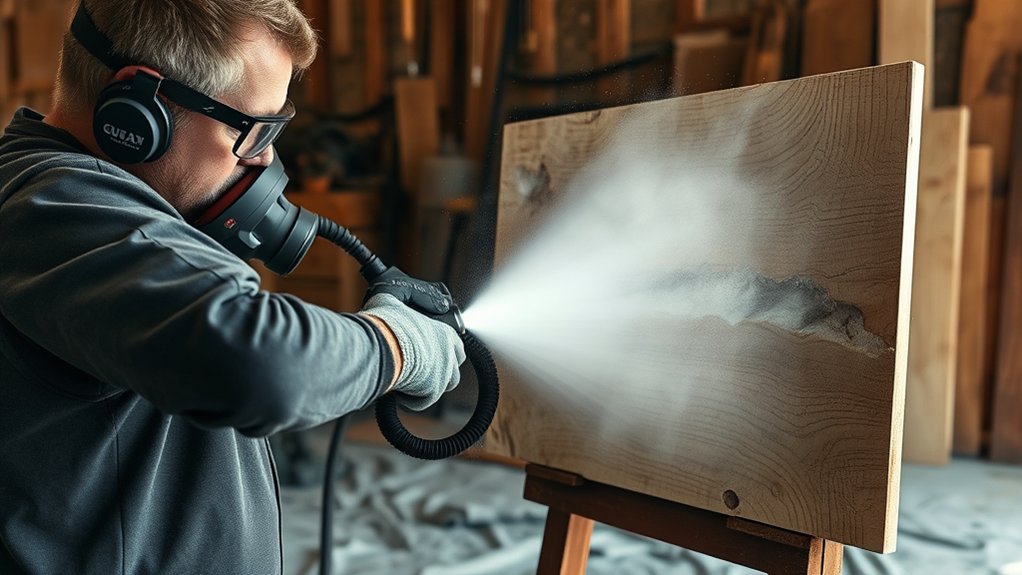
You’ve got to be careful when sandblasting wood because using the wrong pressure or technique can easily damage the surface and change how it looks.
It’s not just about the finish, either — the process kicks up a ton of dust. So, wearing the right safety gear is really important to keep yourself protected.
Plus, sandblasting isn’t something you can just jump into without some know-how and the proper equipment. If you’re not skilled, you might end up stripping away too much material or even ruining delicate types of wood.
Surface Damage Potential
Although sandblasting offers an efficient way to strip or texture wood surfaces, using excessive pressure can easily cause surface damage such as gouging or uneven textures. Soft woods are especially vulnerable, and improper techniques may cause splintering or eroded fibers.
Selecting the right abrasive media is vital. Gentler options like walnut shells reduce surface wear compared to harsher materials. Maintaining proper nozzle distance and angle prevents deep impressions.
But without professional oversight, you risk irreversible damage.
| Factor | Risk Level | Mitigation |
|---|---|---|
| Abrasive Media | High (harsh media) | Use gentle abrasives |
| Soft Woods | Very High | Lower pressure, expert help |
| Nozzle Distance | Moderate | Maintain ideal spacing |
Mastering these elements guarantees sandblasting enhances rather than harms your wood surfaces.
Health And Safety Risks
Because the process generates fine dust and airborne particles, you must protect your respiratory system with appropriate masks or respirators.
Sandblasting wood involves significant health and safety risks, including exposure to high noise levels that demand hearing protection to prevent auditory damage. The abrasive media used can cause skin irritation or injury, so wearing protective clothing and gloves is essential.
Furthermore, flying particles and ricocheting projectiles pose a serious risk of eye injury, making safety goggles or face shields mandatory.
To minimize these risks, you need proper training to handle equipment safely and select the correct abrasive media and pressure settings.
Prioritizing respiratory protection and thorough safety measures helps you avoid accidents and maintain a safe working environment during wood sandblasting.
Equipment And Skill Requirements
Managing the health and safety risks of sandblasting wood goes hand in hand with understanding the necessary equipment and skills. To sandblast effectively, you’ll need a sandblasting machine paired with a powerful air compressor and the right abrasive media.
You must have the skill and experience to adjust air pressure and nozzle settings accurately, or you risk damaging the wood. Awareness of different abrasives is crucial since using improper media can ruin softer wood surfaces.
Plus, wood dust produced demands proper safety equipment like respirators and goggles to protect your health. Keep in mind, sandblasting is physically demanding and requires disciplined maintenance.
Key considerations include selecting appropriate abrasive media, operating a sandblasting machine precisely, managing wood dust with safety equipment, understanding different abrasives’ effects, and applying proper techniques consistently. Taking the time to get these right can save you a lot of hassle down the road.
Which Wood Types Work Best for Sandblasting
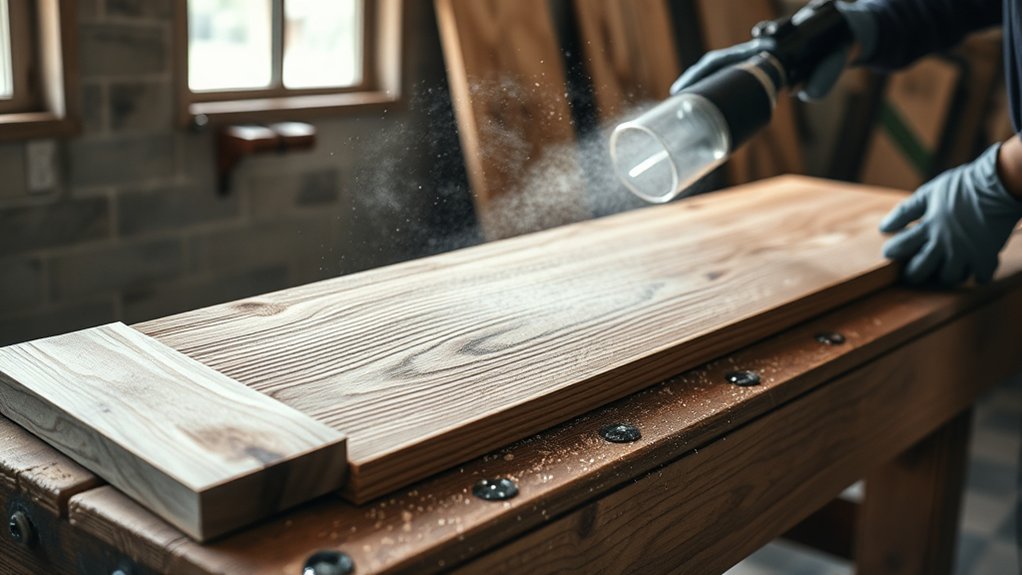
You’ll find that softwoods like pine and cedar work really well with sandblasting because their less dense structure makes surface cleaning easier and reduces the risk of damage.
On the other hand, hardwoods that have strong grain patterns, like oak, can also benefit since sandblasting helps bring out their natural textures.
Knowing these differences makes it easier to pick the right type of wood for your sandblasting project.
Hardwoods Versus Softwoods
While both hardwoods and softwoods can be sandblasted, their differing densities and fiber structures mean you’ll need to adjust your approach accordingly.
Hardwoods, being more durable, tolerate coarser abrasives and less surface preparation. Softwoods require gentler methods to avoid damage.
Consider these points when sandblasting:
- Hardwoods like oak withstand abrasive blasting better due to density.
- Softwoods such as pine need softer abrasives like walnut shells.
- Sandblasting enhances the grain of the wood in hardwoods effectively.
Softwoods risk uneven surfaces if blasted too aggressively. Proper surface preparation is crucial but less intensive for hardwoods.
Understanding these differences guarantees ideal texture enhancement and preserves the wood’s integrity during sandblasting.
It’s all about knowing your wood and treating it right!
Grain Texture Impact
Grain texture plays an essential role in determining which wood types respond best to sandblasting. When you sandblast wood, hardwoods like oak, maple, and cherry deliver superior results since they endure abrasive blasting without compromising grain integrity.
These wood types reveal enhanced grain highlighting, amplifying the natural beauty and texture.
Softer woods such as pine require careful adjustment of pressure settings to avoid surface damage.
Reclaimed wood benefits greatly from sandblasting, as it removes old paint and grime while preserving unique grain patterns. Proper surface preparation through sandblasting also boosts stain and finish adhesion, ensuring a durable, attractive outcome.
Understanding the grain texture impact helps you choose the right wood and abrasive blasting techniques to showcase wood’s inherent character effectively.
It’s all about matching the method to the wood type so you get the best results every time.
Picking the Right Abrasive Media for Your Wood Project
How do you choose the right abrasive media for your wood project? Selecting the proper abrasive media is essential for achieving the desired surface finish while preserving the wood’s integrity.
Soft abrasives like walnut shells excel in restoration work because they minimize damage. Consider these factors when making your choice:
- Media Type: Corn cob works well for gentle cleaning. Glass beads are great for smooth finishes, and aluminum oxide is perfect for aggressive paint removal.
- Particle Size: Finer particles give you a smooth texture, while coarser ones create a rustic look.
- Eco-Friendly Options: Baking soda is a good choice if you want to reduce environmental impact and health risks.
- Project Goals: Make sure to match the abrasive hardness and size to your restoration or finishing techniques.
- Combination Media: Sometimes using mixed abrasives can enhance both texture and aesthetics. It’s worth trying out!
Essential Safety Gear and Practices for Sandblasting Wood
Because sandblasting wood generates fine dust and flying debris, you need to prioritize safety by wearing proper protective gear.
Always use a respirator or face mask rated for dust protection to prevent inhaling harmful wood dust and particles. Protective goggles are essential to shield your eyes from debris and keep your vision clear.
Use a dust-rated respirator and protective goggles to safeguard your lungs and eyes from harmful wood debris.
Wear durable gloves and protective clothing to guard your skin against irritation from abrasive materials.
Make sure your workspace is well-ventilated or has a dust collection system to reduce airborne contaminants. It really helps to keep the air clean while you work.
Also, regularly inspect and maintain your sandblasting equipment, including nozzles and air pressure settings. This ensures everything runs safely and smoothly.
Following these safety practices will protect you and make your wood sandblasting project more effective.
Setting Air Pressure and Nozzle Size for Safe Sandblasting Wood
When sandblasting wood, setting the correct air pressure and selecting the appropriate nozzle size are essential to achieving a smooth finish without damaging the surface. Proper setting air pressure between 30–50 PSI guarantees safe sandblasting of wood surfaces by avoiding aggressive stripping.
Choosing a nozzle size from 1/8 to 1/4 inch allows better control with compressed air for delicate work. To enhance results, start at the lowest pressure and gradually increase to find the ideal setting. Use durable nozzle materials like ceramic or tungsten carbide for longevity.
Maintain consistent distance to improve uniformity of finish. You should also adjust nozzle size based on wood type and condition. Keep an eye on compressed air flow to avoid surface damage.
Following these guidelines assures precise, safe sandblasting with a uniform, high-quality finish.
Hiring a Professional vs. Doing It Yourself
Although sandblasting wood yourself might seem cost-effective, hiring a professional often delivers better results and reduces risks.
Professionals carefully select the appropriate abrasive media and pressure, ensuring the wood’s surface isn’t damaged. This is a common challenge in DIY attempts.
Experts choose the right abrasive and pressure to protect wood, a common hurdle for DIY projects.
They use specialized equipment and dust control systems, making the job faster, cleaner, and safer.
Without professional oversight, managing safety precautions like masks and protective gear can be less effective, increasing health risks.
Moreover, professionals provide a consistent, high-quality finish across large surfaces.
DIY efforts may struggle to achieve this because of uneven pressure or technique.
While hiring a professional costs more upfront, the time saved and superior quality of work usually justify the investment.
This is especially true for extensive or delicate sandblasting projects.
Frequently Asked Questions
How Do Weather Conditions Affect Sandblasting Wood Outdoors?
Weather humidity and temperature extremes directly affect your sandblasting results by causing abrasive clumping or equipment malfunctions.
Wind conditions can scatter dust particles, reducing precision and safety. You must guarantee surface moisture is minimal to avoid uneven finishes.
Seasonal considerations like UV exposure may degrade wood before blasting, so adjust equipment settings accordingly.
Always monitor weather to optimize performance and protect both your workpiece and gear during outdoor sandblasting.
Can Sandblasting Wood Be Used to Create Artistic Patterns?
You can use sandblasting for artistic designs, texture effects, and intricate pattern creation on wood. By selecting the right tools, choosing appropriate abrasive materials, and applying proper safety precautions, you’ll achieve precise results.
Experiment with finish options to highlight grain or create contrast. Consider project ideas like custom signage or decorative accents.
With careful tool selection and material choices, sandblasting transforms simple wood into stunning, textured art pieces.
What Is the Environmental Impact of Sandblasting Wood?
You can minimize the environmental impact of sandblasting wood by focusing on sustainable practices like careful material selection.
Opt for softer abrasives and explore recycling options to reduce waste. These small changes can make a big difference.
It’s also important to implement dust control measures to protect air quality and prevent harmful chemical exposure.
Proper containment helps manage water runoff and limits wildlife impact. Taking these steps really helps keep the surrounding environment safe.
By addressing these factors, you make sure sandblasting is safer for both the environment and nearby ecosystems.
And the best part? You don’t have to compromise on the results.
How Do You Prepare Wood Surfaces Before Sandblasting?
To prepare a wood surface before sandblasting, start with thorough dust removal to guarantee a clean base.
Take safety precautions like wearing protective gear and working in a ventilated area.
Select appropriate equipment and media types. Softer abrasives suit delicate finishes.
Adjust pressure settings carefully to avoid damage.
Plan your project by inspecting and sealing cracks. This helps assure a smooth surface finish.
Proper preparation guarantees effective, consistent results and preserves the wood’s integrity.
Are There Any Post-Sandblasting Treatments Needed for Wood?
Yes, you need post-sandblasting treatments for wood. Start by thoroughly removing dust to guarantee proper adhesion.
Then, use appropriate sanding techniques to smooth the surface and enhance the wood grain.
Next, apply wood conditioner to stabilize the wood.
After that, select suitable wood finishes and finishing products for surface protection.
Be sure to choose treatment options based on your project, and follow precise application methods to preserve appearance and durability effectively.
It really makes a difference in the final result!
Conclusion
When sandblasting wood, remember that “measure twice, cut once” applies just as well to preparation and technique. You can achieve impressive results with the right media, pressure, and safety gear. But it’s essential to understand the risks and wood types involved.
Whether you hire a professional or tackle it yourself, careful planning guarantees a smooth, damage-free finish. Approach sandblasting with respect and precision to bring out wood’s natural beauty effectively. It’s all about working smart and being patient.