Can You Burn Old Pressure Treated Wood – Risks And Safety Tips
You can’t burn old pressure-treated wood because it releases toxic chemicals like arsenic and chromium into the air. Inhaling the smoke can cause serious health issues, such as respiratory problems and even seizures.
Instead of burning it, make sure to dispose of it properly at a landfill that follows local regulations. Remember, not following the rules could lead to fines.
If you’re not sure about the best way to get rid of it or want to explore other options, you’ll find helpful tips and alternatives ahead.
What Is Pressure-Treated Wood and Why Is It Used?
Pressure-treated wood is a versatile construction material that goes through a chemical preservation process to boost its durability and resistance to decay. This process involves placing the wood in a vacuum chamber to remove air, then injecting preservation chemicals under high pressure.
Common treatments include chromated copper arsenate (CCA), ammoniacal copper zinc arsenate (ACZA), and pentachlorophenol. These chemicals protect the wood from termites and fungi, making it perfect for outdoor structures like decks and fences.
Pressure-treated wood uses chemicals like CCA and ACZA to resist termites and fungi, ideal for outdoor structures.
You’ll find that pressure-treated wood lasts much longer than untreated wood, often over 20 years, especially in places where moisture is common.
It’s especially popular with softwoods like pine and fir, which are more vulnerable to decay and need that extra protection.
The Dangers of Burning Pressure-Treated Wood
When you burn pressure-treated wood, you’re exposing yourself to a host of toxic chemicals that can severely impact your health and the environment.
The dangers associated with burning treated wood are significant and shouldn’t be ignored. Exposure releases arsenic, chromium, and copper into the air. A single CCA-treated board could contain enough arsenic to harm hundreds of adults.
The toxic ash poses additional health risks, including respiratory problems. All states prohibit burning treated lumber due to its dangers.
Smoke can lead to severe incidents such as disorientation and seizures, especially in children.
Burning treated wood is a decision that endangers both your well-being and the environment. It’s really important to recognize these health risks before you decide to burn any treated wood.
Health Risks Associated With Burning Treated Lumber
Burning treated lumber exposes you to serious health risks because toxic chemicals are released when it burns. Harmful substances like arsenic, chromium, and copper can get into your system, causing severe health problems. For example, a single 12-foot board of CCA-treated wood contains enough arsenic to potentially kill 250 adults. That really shows how dangerous this practice can be.
Symptoms from exposure to the ash include hair loss, severe nosebleeds, and headaches.
| Chemical | Health Risks | Exposure Source |
|---|---|---|
| Arsenic | Potentially fatal | Inhalation or skin contact |
| Chromium | Respiratory issues | Inhalation |
| Copper | Gastrointestinal distress | Skin contact |
Because of these risks, all 50 states prohibit burning pressure-treated wood. It’s just not worth the danger.
Identify Pressure-Treated Wood: Key Features to Look For
Identifying pressure-treated wood is essential for ensuring safe handling and disposal. To help you recognize this type of wood, look for the following key features:
Identifying pressure-treated wood is crucial for safe handling and disposal, ensuring your safety and the environment are prioritized.
- A distinct greenish hue, indicating the presence of treatment chemicals like CCA.
- Small, half-inch-long splits on the surface, suggesting chemical injection during treatment.
- Labels or markings on the end of the board indicating it’s pressure treated.
- A heavier feel compared to untreated wood of the same size.
There’s also the presence of CCA-treated wood, which includes arsenic, copper, and chromium. This raises some safety concerns you should be aware of.
If you’re uncertain about the wood’s treatment status, consider a laboratory chemical analysis for confirmation.
Always prioritize safety and avoid burning or improperly handling suspected pressure-treated wood.
How to Safely Dispose of Pressure-Treated Wood
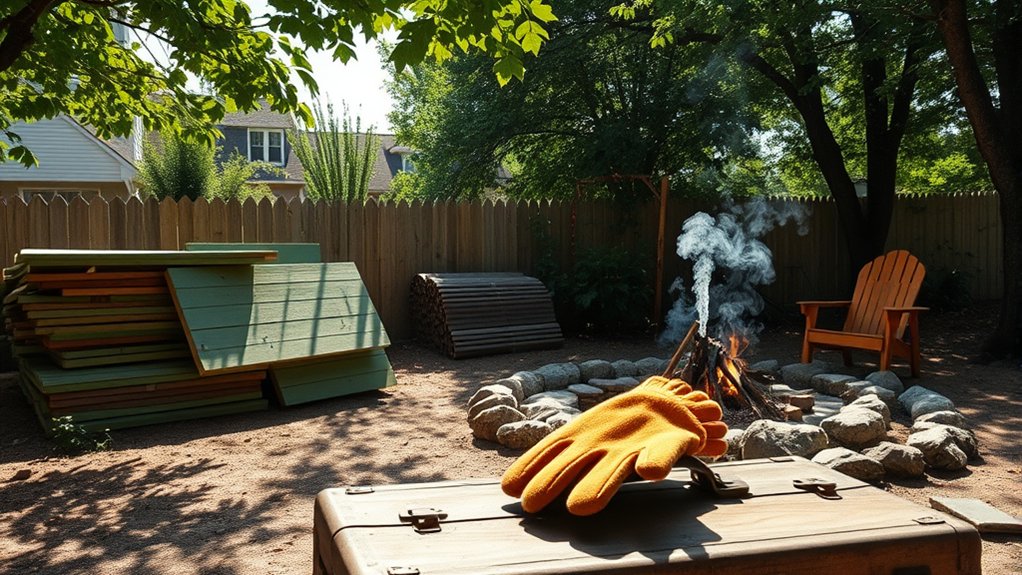
Because pressure-treated wood contains hazardous chemicals, it’s crucial to dispose of it safely to protect both your health and the environment.
Never burn pressure-treated wood, since it releases harmful substances like arsenic and chromium into the air.
The safest option for disposal is to take it to your local landfill or waste disposal center. These facilities follow specific protocols for managing hazardous materials, guaranteeing proper safety measures.
Be prepared for potential disposal fees, but remember, this is an investment in complying with environmental regulations and safeguarding public health.
If you’re unsure whether the wood is treated, treat it accordingly to avoid toxic exposure.
Always consult local guidelines to verify you’re following the correct procedures for disposal. It’s better to be safe than sorry when it comes to handling this kind of material.
What Can You Use Instead of Burning Treated Wood?
Instead of burning treated wood, you’ve got some safer and more eco-friendly options to consider.
For example, untreated wood like pine is a great choice since it doesn’t contain harmful chemicals and can be safely burned at outdoor events.
Plus, if you’re looking to get that wood-burned look or effect, there are cool techniques like using heat guns or scorch markers.
These let you achieve similar results without the dangers that come with treated lumber.
Untreated Wood Options
While burning pressure-treated wood poses significant health and environmental risks, there are several excellent untreated wood alternatives that you can use safely.
Opting for untreated wood minimizes these health risks and guarantees a cleaner burn.
Here are some great choices:
- Untreated pine wood for easy availability
- Hardwoods like oak and maple for longer burn times and pleasant aromas
- Recycled pallets made from untreated wood, just check for treatment markings
- Fallen branches or scrap lumber from untreated sources
- Bamboo, which is sustainable and provides a unique burning experience
Alternative Burning Techniques
When seeking alternatives to burning pressure-treated wood, you can explore various safe techniques that not only eliminate health risks but also enhance your creative projects.
One of the best options is using untreated pine, which is free from harmful chemicals. You can also utilize heat guns for controlled burning effects, which won’t release toxic fumes.
For decorative purposes, consider scorch markers to achieve desired designs without traditional burning methods. Experimenting with non-toxic materials, such as natural hardwoods or softwoods, can yield aesthetic results without compromising your health.
Joining woodworking communities will further equip you with insights and techniques for safe projects. This way, your creative endeavors remain both enjoyable and responsible while steering clear of alternative burning techniques involving treated wood.
Eco-Friendly Materials
If you’re looking to steer clear of burning pressure-treated wood, several eco-friendly materials provide great alternatives for your projects. Here are some options to take into account:
Pine wood is a clean-burning alternative free from harmful chemicals.
Untreated hardwoods like oak and maple offer longer burn times and higher heat outputs without toxic emissions.
Bamboo is a rapidly renewable resource that burns cleanly, making it ideal for outdoor projects.
Recycled or reclaimed wood are sustainable choices that help minimize waste and reduce the demand for new resources.
Natural firewood, seasoned logs from local sources, guarantees safe burning while supporting local economies.
These options give you peace of mind and help protect the environment.
Local Regulations for Treated Wood Disposal
Before you get rid of treated wood, it’s important to know the local regulations that tell you how to dispose of it safely.
Different places often have their own rules, like needing permits or using specific disposal sites.
If you don’t follow these guidelines, you might face fines and, more importantly, cause damage to the environment.
Local Disposal Regulations
Although it might seem convenient to burn pressure-treated wood, local disposal regulations often prohibit this practice because of the harmful chemicals released during combustion.
To guarantee responsible disposal, consider the following:
Many municipalities require disposal at designated landfills. Specific guidelines for handling treated wood often apply. Fees may be charged for proper disposal. Accurate identification of treated wood waste is essential.
Always check with local waste management agencies for updates. Familiarizing yourself with these local regulations and disposal guidelines is critical for protecting both the environment and your community.
Ignoring these rules can lead to serious health risks and legal penalties.
Permit Requirements Overview
When disposing of pressure-treated wood, you need to be aware that many municipalities mandate permits to secure safe and compliant handling of this hazardous material.
Permit requirements often stem from the potential release of toxic chemicals, including arsenic and chromium, when treated wood is burned or improperly discarded.
To confirm compliance with local regulations, it’s essential to check with your waste management agency for specific guidelines regarding the disposal of treated wood.
Some areas may provide designated drop-off locations or specialized facilities for hazardous materials.
Ignoring these permit requirements can lead to fines and heightened environmental risks.
Environmental Compliance Guidelines
Understanding local environmental compliance guidelines for disposing of pressure-treated wood is essential. Ignoring these rules can have serious repercussions. Proper disposal minimizes ecological impact and protects public health.
Here are key considerations:
- Check local regulations on treated wood disposal.
- Many areas prohibit burning pressure-treated wood due to toxic emissions.
- Most municipalities require treated wood to be taken to designated landfills.
Some regions may impose fees for disposal, so budget accordingly.
Being aware of local guidelines helps prevent illegal burning practices. Following these steps makes sure you’re doing your part for the environment and the community.
Resources for Safe Management of Pressure-Treated Wood
To safely manage pressure-treated wood, it’s important to consult your local waste management guidelines. Disposal regulations can differ greatly depending on your area. Many landfills provide specific services for pressure-treated wood, ensuring compliance with environmental regulations to prevent harmful chemical leaching.
Proper disposal is vital because it helps prevent toxic substances, like arsenic and chromium, from contaminating the environment. The Environmental Protection Agency (EPA) offers valuable resources that detail the health risks associated with pressure-treated wood and the safest disposal practices.
You might also want to check with local recycling centers. They may offer options for repurposing treated wood, which promotes responsible management and minimizes environmental impact.
Following these guidelines helps protect both your health and the ecosystem.
Frequently Asked Questions
Can I Recycle Pressure-Treated Wood Products?
You can’t typically recycle pressure-treated wood products because of the harmful chemicals they contain. Most recycling facilities don’t accept them, so it’s essential to check local wood disposal regulations.
Some regions might have specific recycling methods or programs that allow for non-consumable repurposing, like garden borders.
But you should always prioritize taking treated wood to designated landfills equipped to handle hazardous waste instead of trying to recycle it.
What Are Signs of Health Issues From Inhaling Treated Wood Smoke?
Inhaling smoke from treated wood can lead to serious health symptoms. You might experience respiratory issues, dizziness, headaches, and skin irritation shortly after smoke exposure.
Chronic inhalation could escalate these problems, making conditions like asthma or chronic bronchitis worse. If you notice hair loss or persistent nausea, those could also be signs of harmful effects.
Long-term exposure increases cancer risks, so it’s really important to avoid inhaling smoke from treated wood altogether for your health’s safety.
Better safe than sorry!
How Can I Identify Cca-Treated Wood Versus Other Treatments?
When it comes to identifying CCA-treated wood, you’ll want to put your detective hat on.
Start with visual identification methods like checking for a greenish hue or splits on the wood’s surface, which can hint at treatment types.
Hold it. If it feels unusually heavy, it’s likely treated.
For definitive answers, consider laboratory testing to confirm the presence of CCA or other chemicals.
Always handle unknown wood with caution!
Are There Alternative Uses for Old Pressure-Treated Wood?
Absolutely, you can creatively repurpose old pressure-treated wood for various outdoor projects.
Use it for garden borders or raised beds, guaranteeing you line them to prevent soil contamination.
Consider making outdoor furniture or decorative items for your yard, but remember to seal them well to minimize chemical leaching.
Always check local regulations regarding its use, as these guidelines guarantee you’re compliant and safe while maximizing the wood’s potential in new projects.
What Should I Do if I Accidentally Burn Treated Wood?
If you’ve accidentally burned treated wood, it’s essential to spring into action like a fireman at the first sign of smoke.
Evacuate the area immediately to avoid smoke exposure from toxic fumes. Monitor yourself for dizziness, headaches, or respiratory issues.
Reach out to local health authorities or poison control for emergency response.
Finally, dispose of the ash according to local regulations and wash your skin and clothing to eliminate any lingering residue.
Stay safe and take care of yourself!
Conclusion
Burning old pressure-treated wood isn’t just risky; it’s illegal in many areas because of the toxic chemicals it can release. Studies actually show that burning treated wood can emit harmful pollutants at levels that go beyond safety limits.
Instead of burning, think about safer ways to get rid of it, like recycling or reaching out to your local waste management services. Knowing the dangers and the rules around treated wood helps keep you and the environment safe.
So, always try to handle old treated wood carefully and choose safe disposal methods. It’s better to be cautious than to deal with health or environmental problems later on.