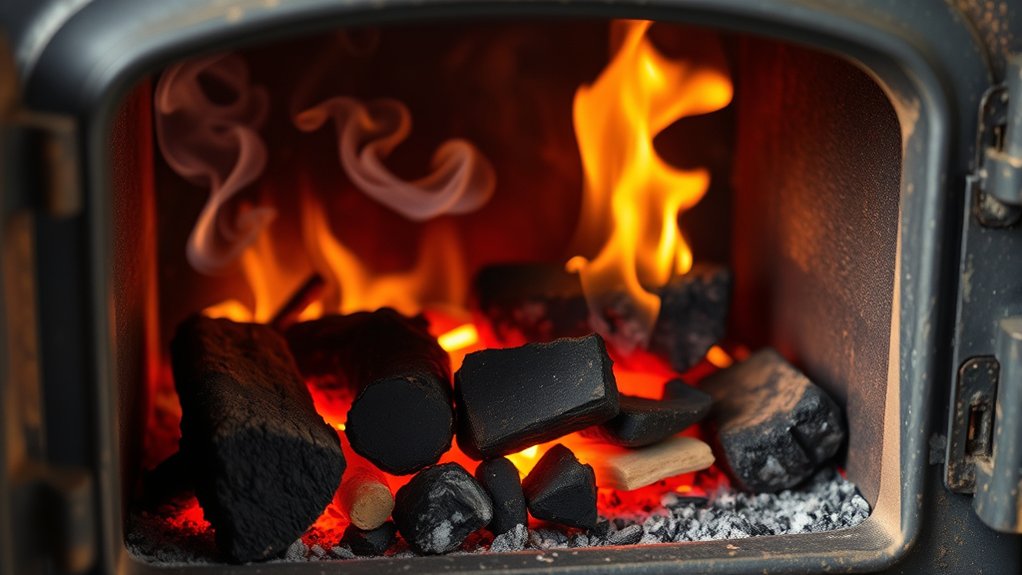
Can You Burn Charcoal In A Wood Stove: What Works And What To Avoid
You can burn charcoal in a wood stove, but it’s risky and needs caution. Charcoal burns much hotter than wood, which can cause damage and overheating. It also produces high levels of carbon monoxide, so you have to make sure there’s excellent ventilation and install detectors.
Fine charcoal ash can clog airflow, which reduces efficiency and increases fire hazards. It’s usually better to stick to properly seasoned wood for safer, cleaner heating.
Keep reading to learn how to protect your stove and home while heating effectively.
Can You Burn Charcoal in a Wood Stove? The Quick Answer
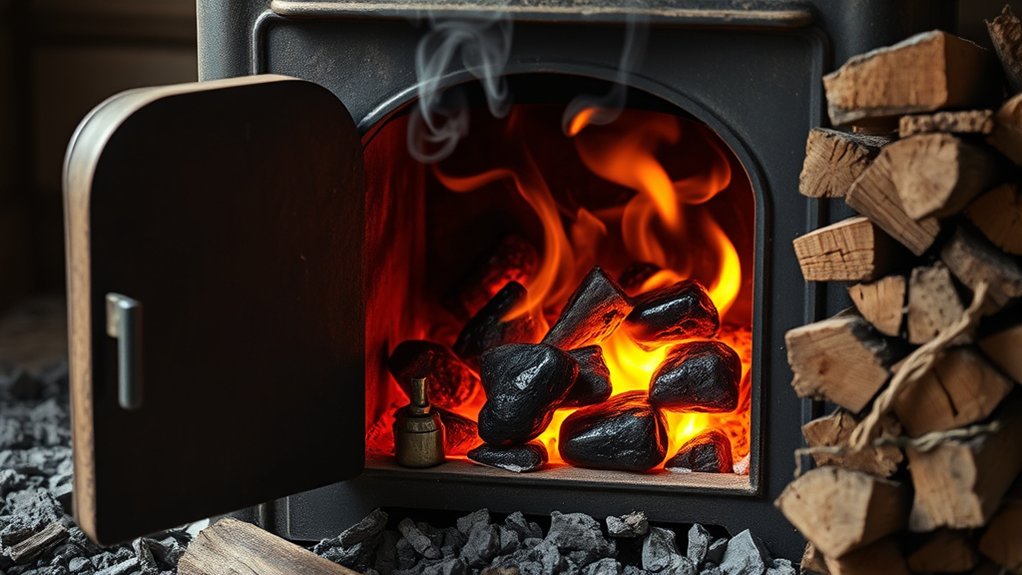
Can you burn charcoal in a wood stove safely? While it’s possible, burning charcoal in a wood stove carries significant safety risks you shouldn’t ignore.
Charcoal burns hotter than seasoned wood, which can cause your wood stove to overheat. This might damage the stove and increase the chance of fire hazards.
Furthermore, charcoal produces higher carbon monoxide emissions, posing serious health dangers if your stove isn’t properly ventilated.
The finer ash from charcoal can clog your stove and chimney, disrupting airflow and reducing combustion efficiency. This further raises safety concerns.
Manufacturers typically advise against burning charcoal in wood stoves because it can void warranties and lead to costly repairs.
If you decide to burn charcoal, you must maintain proper ventilation and closely monitor stove temperature to minimize these risks.
How Wood Stoves Are Designed for Safe Wood Burning
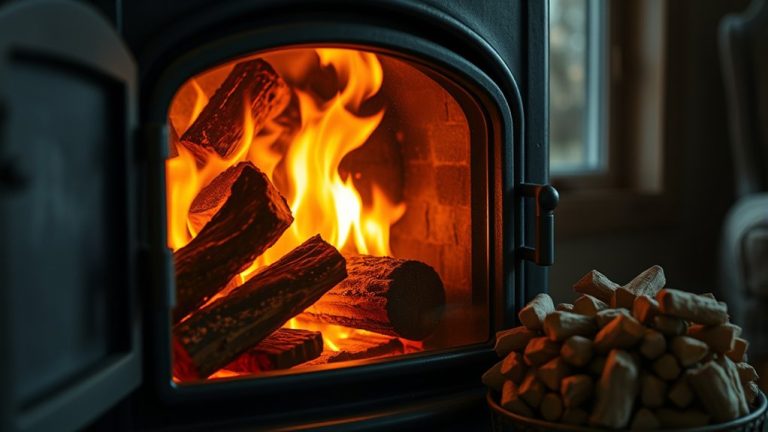
Your wood stove’s firebox and airflow controls work hand in hand to make sure your wood burns both efficiently and safely.
It’s really important to use properly seasoned wood that has low moisture content because this helps cut down on smoke and boosts the heat you get.
When you understand how these design features function, it becomes easier to keep your stove burning safely every single time you use it.
Firebox And Airflow
Many wood stoves feature a carefully designed firebox that maximizes combustion of seasoned wood, guaranteeing you get efficient heat while minimizing smoke.
The airflow in a wood-burning stove is precisely controlled, typically drawing air from above the firebox to promote complete burning and reduce harmful emissions like carbon monoxide.
Proper airflow supports a steady draft through the chimney, preventing smoke buildup inside your home and maintaining safe operation.
Remember, charcoal produces finer ash that can clog the stove’s airflow system, unlike wood ash designed to settle safely.
To keep your wood stove functioning properly, regularly inspect and clean the firebox, flue, and air passages.
This maintenance helps avoid dangerous blockages and guarantees you burn wood safely and efficiently every time.
Wood Combustion Requirements
Although wood stoves are versatile heating appliances, they’re specifically engineered to burn seasoned firewood with a moisture content below 20%. This guarantees efficient combustion and minimal smoke.
The combustion process in wood stoves depends on controlled airflow designed for wood, not burning charcoal, which alters combustion dynamics and can cause safety issues.
Wood stoves feature fireboxes sized for logs, promoting proper burning and ash management. Proper ventilation supports the upward flow of smoke and gases, preventing dangerous buildup.
To keep your stove safe and efficient, maintain it regularly by cleaning chimneys and checking for blockages.
Using seasoned wood as intended guarantees stable heat output, reduces emissions, and prevents damage. Burning charcoal, on the other hand, can disrupt this carefully balanced system.
Safety Hazards of Burning Charcoal in a Wood Stove
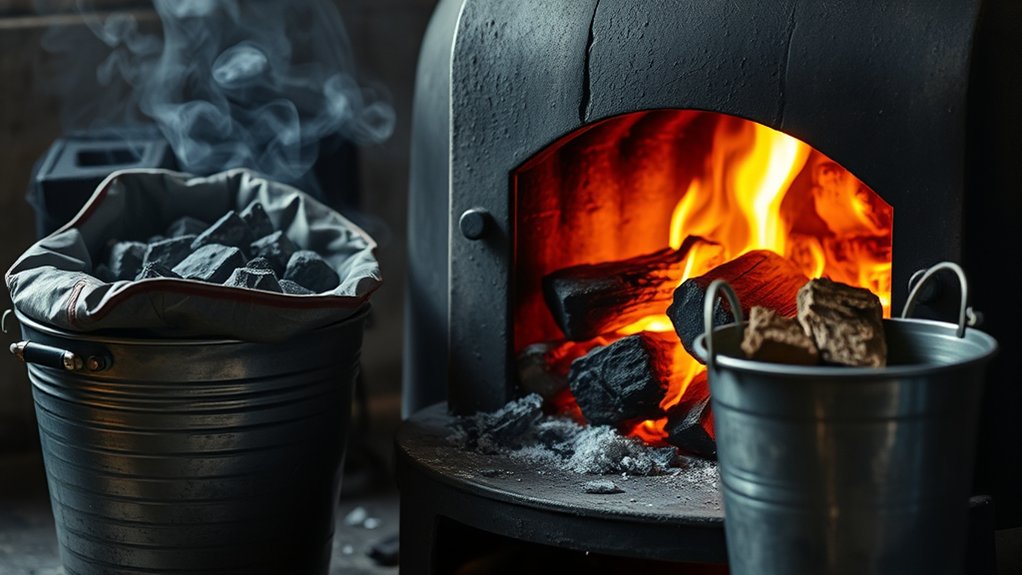
You should know that burning charcoal in your wood stove can produce dangerous levels of carbon monoxide, especially if your space isn’t well ventilated. This gas is colorless and odorless, so it can be really hard to detect without proper equipment.
On top of that, charcoal burns much hotter than wood. That means there’s a real risk of overheating, which can damage your stove over time.
So, it’s important to keep these hazards in mind. By understanding these risks, you can help keep your home safe and make sure your stove keeps working properly.
It’s always better to be cautious when it comes to fire and ventilation.
Carbon Monoxide Risks
When you burn charcoal in a wood stove, it produces high levels of carbon monoxide. This is a colorless, odorless gas that can quickly become deadly without proper ventilation.
Because of that, it’s really important to follow best practices to reduce emissions and stay safe.
Here’s what you should keep in mind:
- Always check that your stove has enough ventilation to prevent carbon monoxide buildup.
- Avoid burning charcoal indoors in enclosed spaces without good airflow.
- Use carbon monoxide detectors near your stove so you get early warning signs.
- Don’t forget to regularly inspect and maintain your stove to prevent leaks and harmful gas emissions.
Overheating And Damage
Beyond the risk of carbon monoxide poisoning, burning charcoal in a wood stove can cause serious overheating and physical damage. Charcoal burns at temperatures up to 1,100°C, which is way hotter than what most wood stoves can safely handle. This extreme heat can warp or crack parts of your stove, leading to costly repairs and possibly voiding your warranty.
Charcoal also produces fine ash that can clog your stove and chimney. When that happens, airflow gets restricted, and the risk of a chimney fire goes up. The combination of overheating and blocked ventilation makes things really dangerous and means you have to keep a close eye on your stove.
To keep your home safe, it’s best to avoid burning charcoal in a wood stove. Instead, stick to fuels that are designed for your stove. This will help prevent overheating, damage, carbon monoxide buildup, and the threat of chimney fires.
How Charcoal Affects Wood Stove Performance and Lifespan
Although charcoal may seem like a convenient fuel, burning it in a wood stove can severely impact both performance and lifespan.
Stove manufacturers design wood stoves specifically for wood burning, not charcoal burns that reach much higher temperatures.
Here’s how charcoal affects your stove: Excessive heat output can warp or damage stove components, reducing lifespan.
Charcoal produces fine ash that clogs airflow, causing inefficient combustion.
And because of increased carbon monoxide from charcoal, there are serious health risks without proper ventilation.
Plus, using charcoal often voids warranties since it disrupts the stove’s intended airflow and function.
So, to keep your wood stove safe and efficient, stick to well-seasoned wood and avoid burning charcoal altogether.
It’s really the best way to go.
Charcoal vs. Wood: Heat Output and Cost Comparison
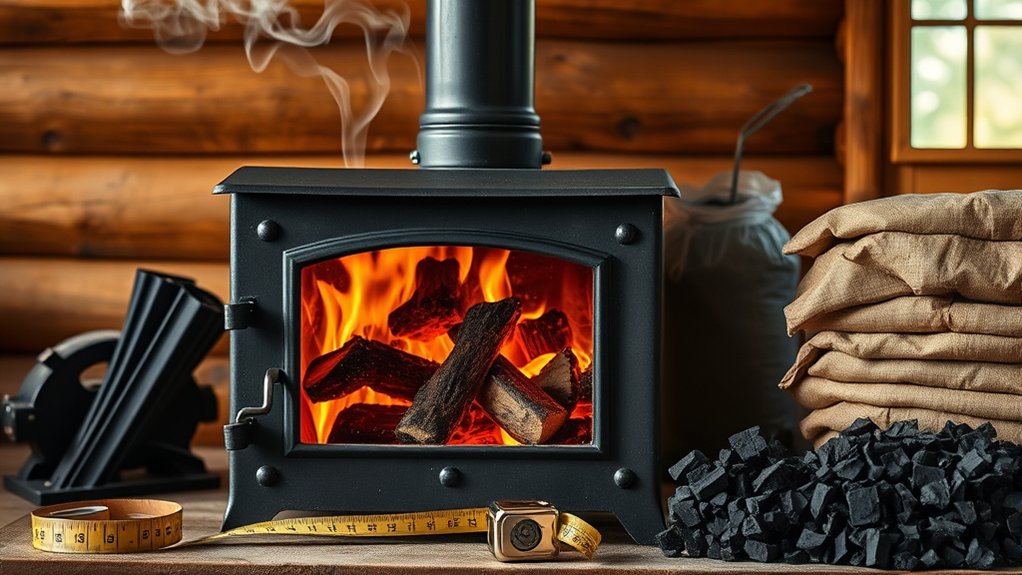
Since charcoal has a higher energy density than seasoned wood, you’ll get more heat per unit of fuel. This can reduce how often you need to refuel. Charcoal burns hotter than wood, reaching temperatures up to 1,100°C.
Charcoal’s higher energy density means more heat per fuel unit and less frequent refueling.
But this intense heat can damage wood stoves that aren’t built for it, so be cautious.
While charcoal’s efficiency is appealing, its higher cost compared to seasoned wood might offset any savings from using less fuel.
Also, burning charcoal indoors produces more carbon dioxide. This increases health risks if your ventilation isn’t adequate.
You should also know that charcoal leaves behind finer ash. This ash can clog your stove and chimney, which might lower heating efficiency.
Why Wood Is the Best Fuel Choice for Your Wood Stove
When you use seasoned wood in your wood stove, you guarantee ideal combustion and heat output because the moisture content stays below 20%.
Wood is the best fuel choice for your stove because it burns cleaner, producing fewer carbon emissions than charcoal, making it safer to burn indoors.
Seasoned wood provides a steady, controllable heat, which means you don’t have to refuel as often.
Plus, the wood ash is less dense and easier to manage, so it helps prevent stove and chimney clogging.
Using wood also follows manufacturer guidelines, which minimizes risks like overheating and carbon monoxide buildup.
You might wonder about charcoal, but it’s not safe to burn in a wood stove designed for wood.
Stick with wood to guarantee efficient, safe, and environmentally friendly heating.
How to Protect Your Wood Stove and Home From Damage
To protect your wood stove and home from damage, you need to follow the manufacturer’s guidelines carefully and make sure there’s proper ventilation. Burning charcoal in a wood stove isn’t always safe. It can void warranties and cause structural damage from overheating.
Always check that your stove is properly ventilated to prevent dangerous carbon monoxide buildup. Using a stove thermometer helps you keep an eye on the temperature, so you don’t let it get too hot and risk warping or melting parts.
Ensure proper ventilation and monitor stove temperature to prevent carbon monoxide buildup and overheating damage.
Make it a habit to inspect and maintain both your stove and chimney regularly. This helps reduce corrosive damage caused by charcoal byproducts.
If you do decide to burn charcoal, pick only high-quality, additive-free options to cut down on harmful emissions.
Following these steps will keep your stove and home safe and running efficiently. It’s all about being careful and staying on top of maintenance.
Frequently Asked Questions
Can Burning Charcoal in a Wood Stove Affect Indoor Air Quality?
Yes, burning charcoal in a wood stove can negatively affect indoor air quality by releasing indoor pollutants like carbon monoxide and particulate matter.
You’ll need proper ventilation to reduce these risks and prevent smoke inhalation.
Always use safety equipment such as carbon monoxide detectors and make certain your ventilation system is well-maintained.
Taking these precautions helps protect your health and keeps your indoor environment safer when using charcoal indoors.
What Are the Signs of Carbon Monoxide Poisoning From Charcoal Use?
You’ll notice carbon monoxide symptoms like headache, dizziness, nausea, and confusion if exposed to charcoal smoke dangers.
These symptoms can mimic the flu, so don’t ignore them.
To protect yourself, always follow safe ventilation practices when using charcoal indoors, and install carbon monoxide detectors.
Poisoning prevention tips include never burning charcoal in enclosed spaces and ensuring fresh air circulation to keep carbon monoxide levels low and your environment safe.
Are There Any Emergency Steps if Charcoal Smoke Fills the House?
If charcoal smoke fills your house, act fast like your life depends on it because it does!
Start with emergency ventilation tips: open all windows and doors to clear the air.
Evacuate everyone, especially kids and pets, following charcoal safety measures.
Don’t use electrical devices; turn them off to avoid sparks.
If anyone shows symptoms, provide first aid response and seek medical help immediately.
Finally, call a professional to inspect your stove and chimney.
Can Mixing Wood and Charcoal in a Stove Cause Damage?
Yes, mixing wood and charcoal in your stove can cause damage. Charcoal burns hotter than wood, which can make your stove’s materials warp or crack. That higher heat can really take a toll on your stove’s integrity.
Charcoal also affects how air flows inside the stove, which might lower how efficiently everything burns. So, even though charcoal burns hotter, it can actually mess with the overall burn efficiency.
You’ll want to be extra careful and keep an eye on the temperature to avoid overheating.
It’s best to avoid combining wood and charcoal to keep your stove safe, running smoothly, and to protect your investment.
What Alternatives to Charcoal Provide Similar Heat Without Risks?
When it comes to alternatives to charcoal, you don’t have to reinvent the wheel. Biofuel logs and pellet stoves offer consistent heat with minimal risk, making them safe choices.
Propane heaters and electric fireplaces provide clean, controllable warmth without combustion dangers.
These options help you avoid the pitfalls of charcoal while keeping your space cozy and safe.
Always prioritize fuels designed for your stove to prevent damage and hazards.
It’s all about finding what works best for your setup and peace of mind.
Conclusion
Think of your wood stove as a trusted old friend. It’s built for wood’s warm embrace, not charcoal’s fiery sting. Burning charcoal in it is like asking your friend to wear shoes two sizes too small. It’s uncomfortable, risky, and damaging over time.
Stick to wood to keep your stove safe, efficient, and long-lasting. Protect your home and your investment by honoring the stove’s true purpose. Some fires deserve careful tending, not shortcuts.