How Long Can A Wood Frog Hold Its Urine: Surprising Science Explained
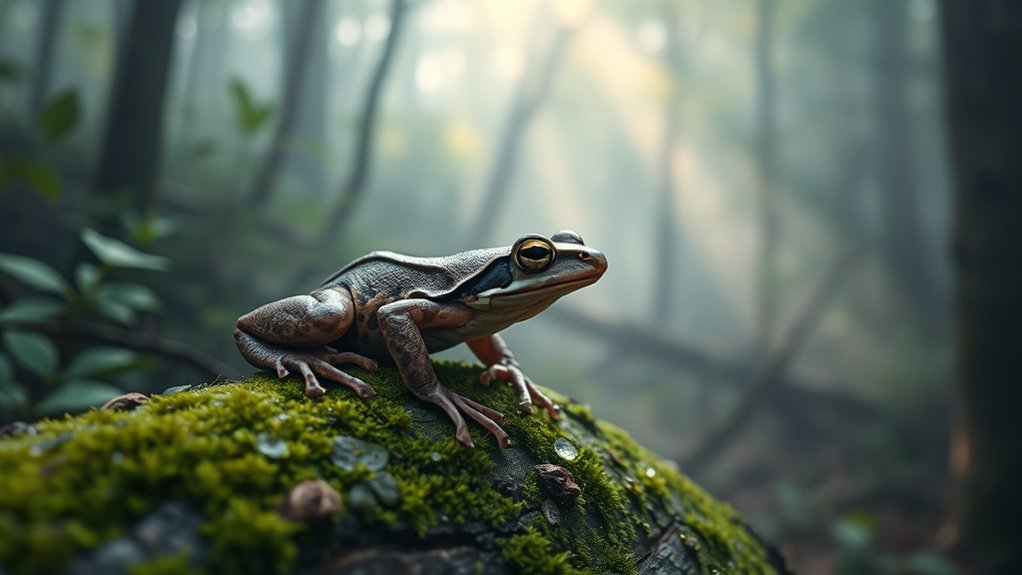
You can discover that wood frogs hold their urine for up to eight months during hibernation by recycling urea through gut microbes. This process turns urea into nitrogen, preventing urination and protecting cells from freezing damage. The retained urea acts as a cryoprotectant, stabilizing proteins and membranes when the frog’s body freezes solid.
This unique adaptation lets them survive suspended animation in extreme cold. Exploring further reveals how their physiology manages freeze tolerance and rapid recovery. It’s pretty amazing how these frogs pull off such a cool survival trick!
How Long Can a Wood Frog Hold Its Urine During Hibernation?
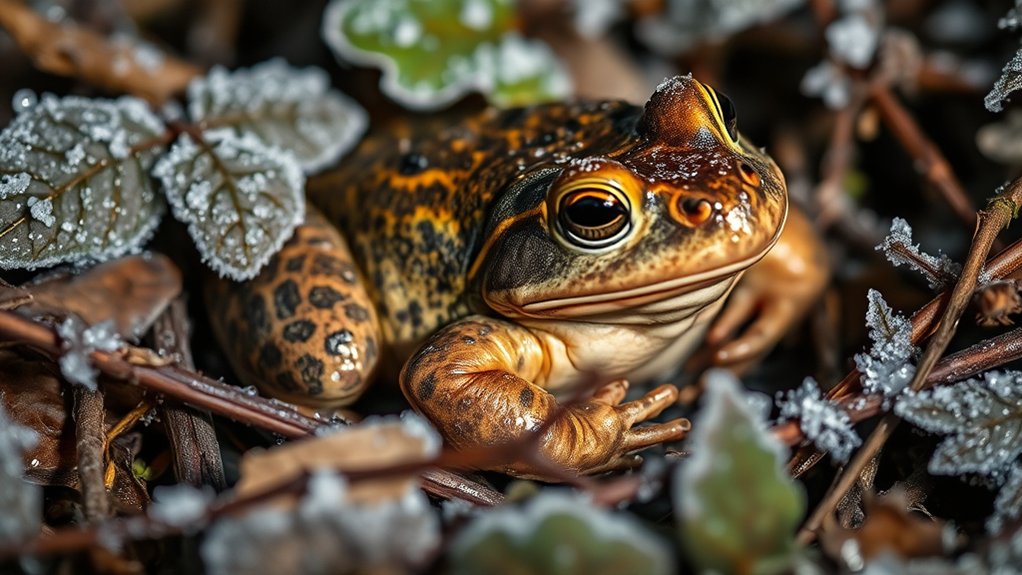
During this extended period, their bodily functions, including circulation, basically stop, making them seem like “the living dead.”
This amazing ability lets wood frogs recycle urea, which is the main waste product in urine, through gut microbes. By turning urea into nitrogen, they protect their cells and tissues from damage caused by freezing temperatures.
Holding onto urea not only saves energy but also acts as a cryoprotectant, helping to keep their tissues safe during extreme cold.
Understanding how wood frogs can hold their urine for so long shows just how uniquely adapted they’re to survive harsh winter conditions with very little physiological activity.
Why Do Wood Frogs Retain Urea Instead of Urinating?
You might’ve noticed that wood frogs hold onto urea instead of just letting it go through urination. That’s because they actually recycle the urea with the help of gut microbes.
These microbes convert urea into nitrogen, which plays a key role in keeping their bodies running during hibernation.
Plus, keeping urea around isn’t just about recycling—it acts like a natural antifreeze. It helps protect their cells from damage when temperatures drop and they freeze.
On top of that, by holding onto urea, wood frogs slow down their metabolism, which means they save energy until it gets warm again. Pretty clever, right?
Urea Recycling Mechanism
Because wood frogs spend up to eight months in hibernation, they’ve developed a remarkable urea recycling mechanism that prevents them from urinating during this period. This process involves gut microbes converting urea back into useful nitrogen compounds, conserving crucial resources while metabolic activity slows dramatically.
The urea recycling mechanism also allows urea to serve as a cryoprotectant, stabilizing cells and tissues against freezing damage. This adaptation is essential for maintaining physiological balance throughout prolonged dormancy.
Think about how this mechanism helps the wood frog survive without waste elimination for months. It also protects its cells against harsh freezing conditions and conserves nitrogen for metabolic needs. All of this helps the frog sustain its health until the spring thaw.
This urea recycling mechanism really shows nature’s precision in extreme survival strategies.
Survival Benefits of Retention
The wood frog’s ability to retain urea instead of urinating plays a significant role in its survival during extended periods of dormancy. By holding urine for months without urinating, the frog gains substantial survival benefits of retention. The retained urea acts as a cryoprotectant, safeguarding cells and tissues against damage during freezing temperatures.
Furthermore, gut microbes recycle urea, providing essential nitrogen to sustain metabolic functions while the frog remains inactive. This process minimizes dehydration risk and conserves energy reserves, allowing the wood frog to endure harsh winter conditions without frequent hydration.
It’s pretty amazing how this retention helps the frog manage tough environments. Such retention enables the frog to survive prolonged dormancy, demonstrating an extraordinary adaptation that supports survival in diverse and extreme environments.
Retaining urea is critical for the wood frog’s resilience and metabolic balance during dormancy. It’s a clever survival strategy that really shows how nature finds ways to keep life going.
How Do Wood Frogs Survive Being Frozen?
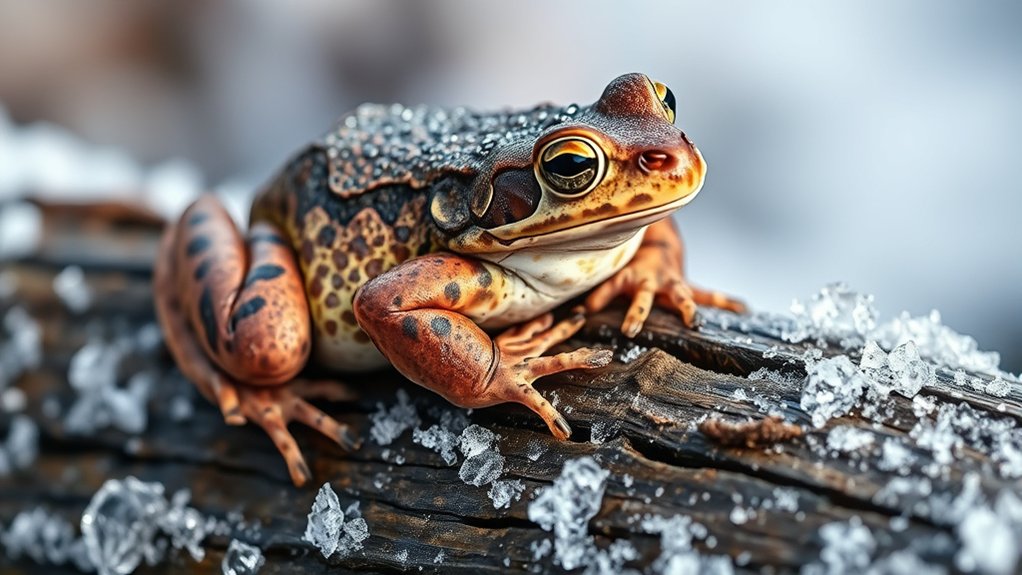
You might be wondering how wood frogs manage to survive being completely frozen solid during winter.
Well, their bodies actually produce glucose, which acts like a natural antifreeze to protect their cells from ice damage. At the same time, ice forms safely around their organs without causing harm.
Then, when the temperatures start to rise, their heart and brain kick back into action. This lets them recover and move around again within just a few days.
It’s pretty amazing how they can go through this freeze-thaw cycle and come out just fine!
Freeze Tolerance Mechanisms
Although freezing temperatures would be lethal to most animals, wood frogs have evolved remarkable mechanisms that let them survive being frozen solid for weeks. Their freeze tolerance mechanisms involve producing glucose in the liver, which acts as a cryoprotectant, preventing ice from forming inside their cells. Ice forms only in the abdominal cavity and around organs, protecting essential tissues.
During this state, their heart and blood circulation stop, effectively suspending life functions. Upon thawing, the heart restarts first, then the brain activates, followed by leg movement, enabling full recovery within days. These adaptations not only fascinate scientists but also inspire medical research.
- Surviving temperatures as low as −16°C for up to two months
- Halting heart function and circulation without damage
- Using glucose to shield cells from ice damage
- Resuming normal activity after suspended animation
Physiological Adaptations Explained
When wood frogs face freezing temperatures, their bodies trigger a suite of physiological adaptations that halt essential functions while preventing cellular damage. Their heart stops beating, and blood circulation ceases, allowing ice to form safely outside cells.
You’ll find that wood frogs produce high concentrations of glucose, which acts as a cryoprotectant by preventing ice crystals from forming inside their cells.
Furthermore, they recycle urea from their urine during hibernation, aiding in nitrogen retention and further protecting cellular integrity.
These physiological adaptations enable wood frogs to survive extended freezing periods at temperatures as low as –16°C. Through these precise mechanisms, their bodies endure suspended animation, effectively avoiding tissue damage while frozen solid.
This remarkable strategy showcases nature’s ability to adapt to extreme environmental stress. It’s pretty amazing how these frogs can just pause their life processes and come back to normal once it warms up again. Nature really knows how to handle some tough situations!
Thawing and Recovery Process
As temperatures rise, wood frogs start a carefully coordinated thawing process that brings their essential functions back to life. During thawing, their heart begins beating again even before all the ice has melted, which helps restore blood circulation.
Soon after, the brain wakes up, allowing the frog to move and act normally. This whole process takes about two days, even though the frogs have been frozen for months at temperatures as low as minus 16 degrees Celsius.
What’s really amazing is how their unique adaptations, like producing glucose, protect their cells from damage caused by ice. This is what helps them survive such harsh conditions.
You can really appreciate the marvel of this thawing and recovery process:
- Heartbeats returning while there’s still ice
- Brain resuming function in just minutes
- Complete revival within a couple of days
- Cells being protected from freezing damage
It’s this precise coordination that lets wood frogs survive extreme cold and pick up life right where they left off.
How Does Urea Protect Wood Frog Cells in Freezing Temperatures?
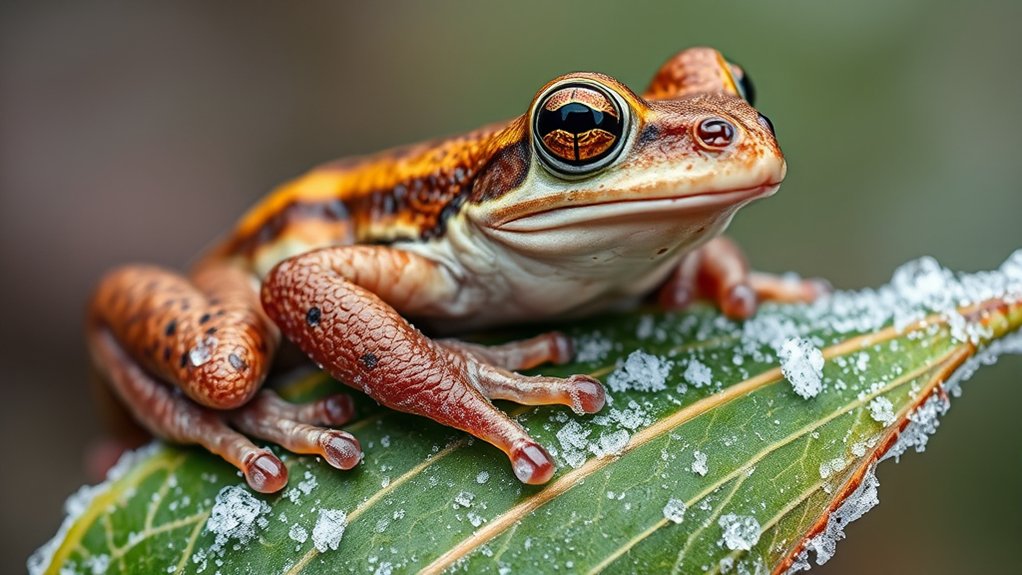
Because wood frogs can freeze solid during hibernation, they rely on urea to protect their cells from damage. Urea acts as a cryoprotectant, preventing ice crystals from forming inside the cells. These ice crystals would otherwise cause mechanical injury.
By holding their urine for up to eight months, wood frogs accumulate high concentrations of urea in their bodies. This urea interacts with cellular components to stabilize proteins and membranes. It helps maintain integrity at temperatures as low as minus 16 degrees Celsius.
Plus, gut microbes help break down urea into usable nitrogen, which supports cellular function even when the frog is frozen.
This mechanism also allows the frog to depress its metabolism, conserving energy throughout extended freezing periods.
How Do Wood Frogs Resume Normal Functions After Thawing?
Although still partially frozen, the wood frog’s heart starts beating first, jump-starting circulation and helping the body wake up slowly. This beating heart moves blood gently through the body, delivering oxygen and nutrients that cells need to recover.
Next, the brain switches back on, bringing neural control and coordination back online. Muscle function returns last, with leg movements showing that thawing is almost complete.
The brain reactivates, restoring control, followed by muscle movement signaling the near end of thawing.
This step-by-step process makes sure cells don’t get damaged even though the frog was frozen.
You’ll be amazed at how quickly normal functions come back:
- The heart’s early blood flow kickstarts recovery.
- Brain activity returns, bringing control back.
- Muscle movement follows, letting the frog move.
- Soon, the frogs can breed and take advantage of early spring.
This perfect timing lets wood frogs thrive after freezing without any lasting harm.
How Do Wood Frog Adaptations Compare to Other Hibernators?
When you compare wood frogs to other hibernators, their adaptations stand out for their remarkable tolerance to freezing. Unlike most hibernating mammals that enter torpor without freezing, the wood frog can survive being frozen solid at temperatures as low as minus 16 degrees Celsius. During this state, its heart and blood circulation halt completely. This ability is rare among hibernators.
The wood frog also recycles urea in its urine as a cryoprotectant, protecting tissues from ice damage. This strategy is uncommon in other species. Furthermore, it produces glucose to prevent cellular injury during freezing.
These adaptations enable the wood frog to resume normal activity within just two days of thawing, which is faster than many hibernators. This combination of physiological mechanisms makes the wood frog uniquely equipped for extreme cold survival. Pretty impressive, right?
What Does Scientific Research Reveal About Wood Frog Survival Mechanisms?
Scientific research reveals that wood frogs use a mix of biochemical and physiological tricks to survive extreme cold and long stretches without peeing.
In winter, these frogs actually stop their circulation and heart function when temperatures drop to as low as minus 16°C. They basically enter a frozen state.
They can hold their urine for up to eight months, recycling urea into nitrogen with help from gut microbes. Urea is key here because it acts as a cryoprotectant. That means it stops ice from forming inside their cells and protects their tissues.
What’s really amazing is that wood frogs can get back to normal activity within just two days after thawing.
These survival strategies during their winter hibernation have even sparked medical research into preserving organs and treating diabetes.
- Withstand freezing solid without cellular damage
- Hold urine for months, recycling toxic compounds
- Use urea to protect cells from ice
- Rapidly regain function after thawing
Frequently Asked Questions
Can Wood Frogs Hold Urine Outside of Hibernation Periods?
You can expect wood frogs not to hold urine outside of hibernation periods because their urine composition during active times reflects normal amphibian excretion.
When they’re active, wood frogs process waste regularly, so they don’t retain urine long-term.
Their urine composition changes only during hibernation, allowing them to recycle urea efficiently.
What Triggers Wood Frogs to Finally Release Their Stored Urine?
You’ll find that wood frogs release their stored urine when rising temperatures trigger metabolic activity, restarting kidney function.
The urine composition, rich in urea accumulated during hibernation, signals the need for excretion as waste products build up. This process aligns with their reproductive cycle, ensuring they’re physiologically prepared for mating.
Do Wood Frogs’ Urine Retention Abilities Vary by Age or Size?
You won’t see any age impact on wood frogs’ urine retention abilities because these traits remain consistent regardless of how old or large the frog is.
Whether juvenile or adult, all wood frogs hold urine up to eight months due to their specialized physiology.
This uniformity highlights an evolved survival strategy where age or size doesn’t influence their capacity to recycle urea and endure freezing conditions effectively.
How Does Holding Urine Affect Wood Frogs’ Hydration Levels?
Holding urine directly supports wood frogs’ hydration strategies by conserving water during hibernation.
When you observe this process, you’ll see that urine retention prevents water loss, maintaining cellular hydration and protecting tissues.
Also, gut microbes recycle urea, helping you retain nitrogen and reduce dehydration.
This precise balance guarantees wood frogs stay hydrated despite frozen conditions.
It really shows how their hydration strategies effectively adapt to extreme environmental stress.
Are There Predators Attracted to the Urine Released by Wood Frogs?
Yes, predators are attracted to the urine released by wood frogs. When the frogs finally urinate after months, the decomposing urea emits ammonia, which acts as a chemical signal.
This Predator Attraction draws birds and mammals that hunt frogs or scavenge.
You should note that this timing coincides with the frogs’ awakening and breeding season, increasing their vulnerability.
Understanding this interaction is essential for studying wood frog ecology and predator-prey dynamics.
Conclusion
Isn’t it fascinating how wood frogs can hold their urine for months during hibernation, using urea to protect their cells from freezing damage? This remarkable adaptation allows them to survive extreme cold by effectively pausing bodily functions until spring.
By understanding these mechanisms, you gain insight into nature’s ingenuity and resilience. So, what other secrets might these tiny hibernators hold that could inspire advances in science and medicine?