Can You Cut Meat On A Wood Cutting Board: Safety Tips
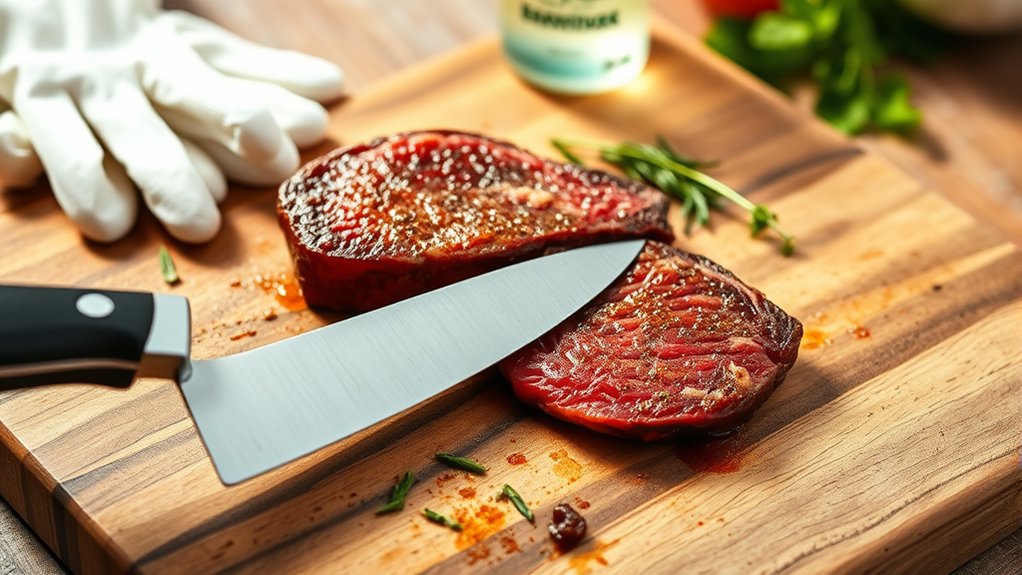
You can cut meat on a wood cutting board if you keep safety in mind. Use hardwood boards like maple or walnut, which resist bacteria better. Always designate a board just for raw meat to prevent cross-contamination.
Clean it immediately with hot, soapy water followed by a bleach solution. Regularly oil and inspect your board for damage to avoid bacteria buildup. Taking these precautions helps keep your food safe.
And there are more tips to guarantee proper care and hygiene.
Is It Safe to Cut Meat on a Wood Cutting Board?
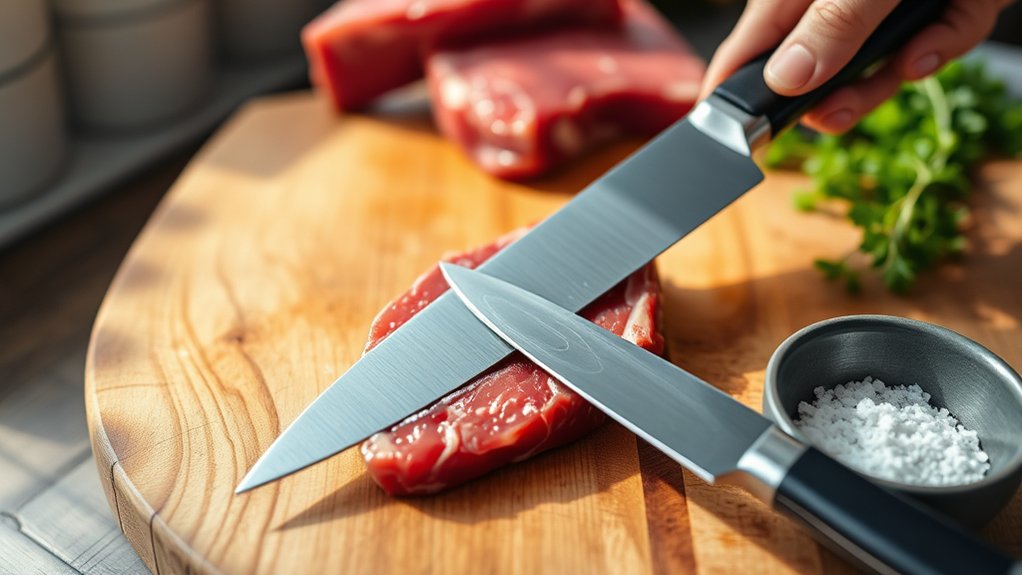
Wondering if it’s safe to cut meat on a wood cutting board? The answer is yes, but only if you follow strict cleaning and maintenance routines.
Wood cutting boards, especially those made of hardwoods like maple, have natural antibacterial properties that can help reduce harmful bacteria such as Salmonella and E. coli.
However, raw meat can harbor pathogens, so you must prevent cross-contamination by designating separate boards for meat and other foods.
After each use, thoroughly wash the board with hot, soapy water. Then, treat it regularly with food-safe mineral oil to maintain its surface and avoid bacteria settling in cracks.
With proper care, wood cutting boards can be as safe as plastic ones. You just need to be diligent to avoid foodborne illness risks.
Which Wood Cutting Board Is Best for Meat?
Choosing the right wood cutting board for meat plays a key role in maintaining food safety and board durability. For meat cutting, hardwoods like maple and walnut are your best bet due to their density and natural antibacterial properties.
These wooden boards resist moisture absorption better than softer woods, which reduces bacterial growth. Bamboo, a harder and less porous option, also works well for cutting raw meat since it absorbs minimal moisture.
Wooden boards like bamboo absorb less moisture, helping to reduce bacterial growth when cutting raw meat.
Always select wood cutting boards with smooth surfaces to limit knife marks where bacteria can hide. Regularly treat your board with food-safe mineral oil to keep it from cracking.
Using a dedicated wood or a nonporous board for cutting raw meat helps preserve the board’s integrity and guarantees safer handling. It’s definitely worth having a separate board just for meat to avoid any cross-contamination.
Trust me, it makes the whole process cleaner and safer.
Prevent Cross-Contamination When Using Wood Boards
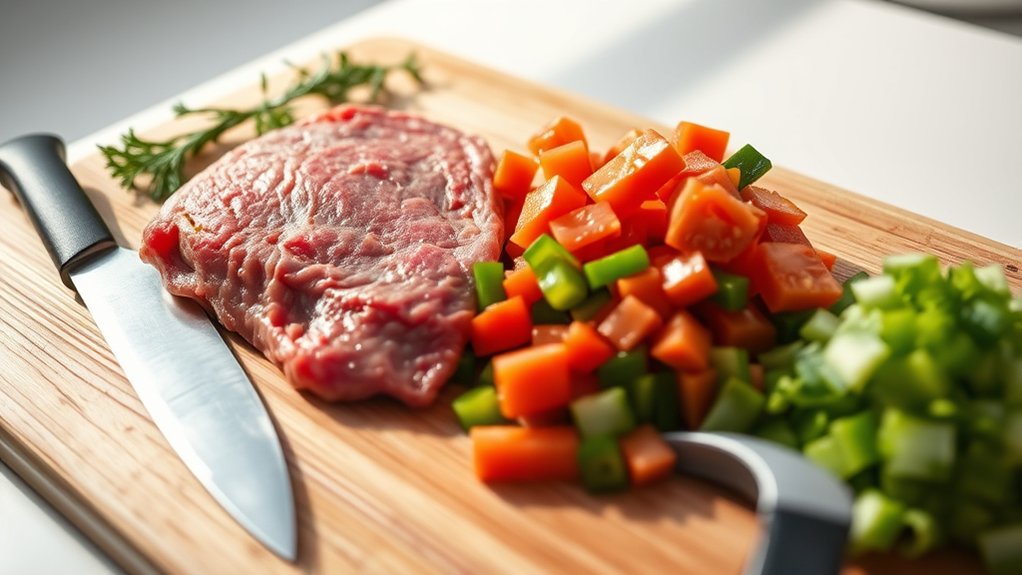
You should always use a designated wooden cutting board just for raw meat to avoid cross-contamination.
After you’re done, make sure to clean it thoroughly with hot, soapy water. Then, sanitize it with a bleach solution right away to keep things safe.
Also, keep an eye on your boards for any grooves or damage.
These little cracks can hide bacteria, so if you notice any, it’s best to replace the board to keep your kitchen safe and hygienic.
Separate Boards For Meat
Using separate wooden cutting boards for different types of raw meat is essential to prevent cross-contamination and keep your kitchen safe. Always designate specific wooden cutting boards exclusively for raw meat, and consider using separate boards for poultry, red meat, and seafood. This helps minimize bacterial transfer between meat types and other foods.
Regularly inspect your wooden cutting boards for deep grooves or wear. These spots can harbor harmful bacteria, so it’s important to catch them early.
After each use, clean and sanitize your wooden cutting boards thoroughly, especially those used for raw meat.
To reduce risks even more, try a two-board method: one board strictly for raw meat and another for fruits and vegetables.
Proper Cleaning Practices
Separating wooden cutting boards for different types of meat is a strong first step, but keeping them clean is just as important to stop cross-contamination.
Always wash your wooden cutting boards with hot soapy water right after you use them to get rid of harmful bacteria. Then, sanitize them using a bleach solution. Use one tablespoon of bleach per gallon of water to help reduce bacterial growth even more.
Avoid soaking your boards or putting them in the dishwasher. Doing that can damage the wood and create grooves where bacteria love to hide.
To keep your boards in good shape, apply food-safe mineral oil regularly. This helps stop moisture from getting in and prevents bacteria from building up.
So remember: clean your boards immediately after using raw meat, sanitize them with bleach regularly, avoid soaking or dishwasher washing, and oil your boards to keep the wood strong.
Taking these steps will help prevent bacterial growth and keep your cutting boards safe to use.
Inspect Boards Regularly
While proper cleaning is essential, regularly inspecting your wooden cutting boards plays a crucial role in preventing cross-contamination. You should check for deep grooves, cracks, or splintering because these can trap bacteria and make it hard to sanitize effectively.
Pay close attention to boards used for raw meat. Make sure they stay in good condition and are clearly marked or stored separately from those used for produce or ready-to-eat foods.
After each use, wash and sanitize your board thoroughly with hot, soapy water to get rid of bacteria.
It’s also a good idea to treat your boards regularly with food-safe oils. This helps keep the surface intact and reduces bacterial growth.
How to Clean and Sanitize Wood Cutting Boards
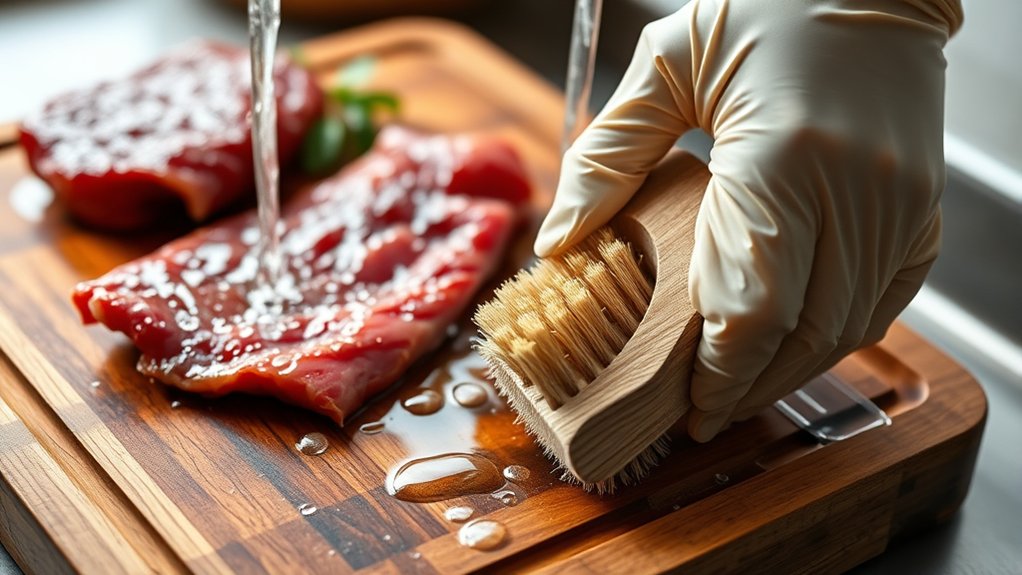
To keep your wood cutting board safe and hygienic, clean it immediately after use with hot, soapy water. This helps remove food particles and prevents bacterial growth.
Clean your wood cutting board immediately with hot, soapy water to remove food particles and prevent bacteria.
When you’re dealing with raw meat, it’s especially important to sanitize your wood cutting boards properly to avoid cross-contamination.
You can sanitize by soaking the board in a bleach solution. Just mix 1/2 tablespoon unscented bleach with 1 quart of water and let the board soak for several minutes. Then, rinse it thoroughly to make sure all the bleach is gone.
Always air dry your board to prevent moisture retention because that encourages bacteria.
Here are some key cleaning tips to keep in mind:
- Wash wood cutting boards immediately after use
- Sanitize with a diluted bleach solution
- Rinse well to remove any bleach residue
- Air dry completely before storing
- Replace boards that have deep grooves or show excessive wear
Following these steps helps keep your wood boards safe and durable for a long time.
How to Maintain and Oil Your Wood Cutting Board
You should clean your wood cutting board with hot, soapy water, but try not to soak it since that can cause damage.
After each cleaning, it’s a good idea to apply a food-safe mineral oil regularly—say, every few weeks or whenever the board starts to look dry.
Doing this helps keep it from cracking.
If you stick to this routine, your board will stay smooth and safe for all your food prep.
Cleaning Techniques
Three essential steps keep your wood cutting board safe and durable: cleaning, sanitizing, and oiling.
For cleaning wooden cutting boards, use hot, soapy water immediately after use. Avoid soaking it to prevent warping.
To sanitize, mix 1/2 tablespoon of unscented bleach with 1 quart of water. Soak the board briefly, then rinse thoroughly. This process helps eliminate germs effectively.
After cleaning, air dry the board upright to prevent moisture buildup and bacterial growth.
- Clean with hot water and soap promptly
- Avoid submerging to protect the wood
- Sanitize with a diluted bleach solution
- Air dry upright after washing
- Sand lightly if surface roughens
Following these techniques keeps your board hygienic and helps it last longer.
It’s a simple routine that really makes a difference!
Oiling Frequency
Oiling your wood cutting board every 2 to 4 weeks keeps it well-conditioned and prevents cracking. For effective maintenance, use a food-safe mineral oil or a specialized cutting board oil. Apply a generous amount, letting it soak in for 15-30 minutes before wiping off excess.
This oiling process maintains the board’s moisture, creating a protective barrier that reduces moisture absorption and minimizes bacterial growth. If your wooden cutting board sees heavy use or starts drying out, increase oiling frequency or lightly sand the surface before reapplying oil.
Avoid vegetable oils, as they can go rancid, causing unpleasant odors and flavors.
Regular oiling is crucial to prolong your board’s lifespan and guarantee a safe, hygienic cutting surface. It’s really worth making this a habit!
When Should You Replace Your Wood Cutting Board?
Several clear signs indicate when it’s time to replace your wood cutting board.
Wooden cutting boards can develop issues that compromise hygiene and safety over time. You should replace your board if you notice deep grooves or excessive wear that harbor bacteria.
Also, cracks or splits can trap moisture and bacteria. Signs of warping might affect the board’s stability and cleanliness.
Cracks, splits, and warping can trap bacteria and compromise your cutting board’s stability and cleanliness.
Rough or splintered surfaces can hold onto food particles, which isn’t good. If your board is showing general aging after several years of use despite maintenance, it might be time to get a new one.
Ignoring these signs increases the risk of bacterial contamination. So, it’s smart to regularly inspect your board to make sure it’s still safe for food prep.
Replacing your wooden cutting board when these problems show up helps keep a clean, secure surface for cutting meat and other foods.
It’s a simple step that makes a big difference in your kitchen hygiene.
Using Separate Wood Cutting Boards for Meat and Other Foods
Although it might seem convenient to use one wooden cutting board for all your food prep, separating boards for raw meat and other foods greatly reduces the risk of cross-contamination.
Designate one wooden cutting board exclusively for raw meat and another as a cutting board for fresh produce or other foods.
After using the meat board, always clean it promptly with hot, soapy water and sanitize it to eliminate bacteria trapped in knife grooves.
Opt for hardwoods like maple or bamboo for your meat board, as they naturally inhibit bacterial growth.
Remember, maintaining separate boards and properly sanitizing them guarantees better food safety.
Replace any wooden cutting board showing deep cuts or wear, as these can harbor bacteria and compromise hygiene.
Frequently Asked Questions
Can Wood Boards Cause Knife Dulling Faster Than Plastic?
No, wood boards don’t cause knife dulling faster than plastic; in fact, they’re gentler on your blades.
To keep your knives sharp, focus on proper knife maintenance and board care by regularly oiling your wood board and avoiding deep grooves.
Use careful cutting techniques during meat preparation to minimize wear.
Also, maintain strict hygiene practices to prevent bacteria buildup in scratches, ensuring both your board and knives stay in good condition longer.
Are Wooden Cutting Boards Dishwasher Safe?
You shouldn’t put wooden cutting boards in the dishwasher because the heat and moisture damage wood grain types, causing warping and cracks.
For proper wood board maintenance, hand wash with hot, soapy water and dry immediately to guarantee cutting board hygiene.
Regular board seasoning with food-safe mineral oil protects your board.
Also, safe knife choices help prevent deep grooves that harbor bacteria, keeping your wood board both durable and sanitary.
How Long Does a Wood Cutting Board Typically Last?
A wood cutting board typically lasts 5 to 20 years, depending on factors like the type of wood and how well you take care of it. Hardwoods such as maple or walnut tend to be more durable and can stand up to regular use better.
You can really extend the life of your board by seasoning it regularly with oil. This helps keep it from drying out and cracking.
Plus, proper cleaning and drying are key to reducing bacteria growth and keeping your board safe to use.
If you start to see deep grooves or cracks that don’t go away even with good care, it’s probably time to replace the board. Those spots can harbor bacteria and become a health risk over time.
Can You Use Lemon or Vinegar to Disinfect Wood Boards?
You can use lemon or vinegar for a gentle touch on your wood board, but don’t rely on them alone to fight bacteria growth.
These natural cleaning methods help with odors and mild stains, yet they mightn’t fully disinfect.
Depending on wood types, excessive use could harm your board’s surface.
For best food safety, combine these with regular hot, soapy water washes and occasional sanitizing treatments.
These are great maintenance tips to keep your board safe and lasting.
Is It Safe to Cut Cooked Meat on the Same Wooden Board?
Yes, you can safely cut cooked meat on the same wooden board if you follow strict wood board hygiene practices.
To minimize cross contamination risks, thoroughly wash and sanitize the board after handling raw meat. Use proper cutting techniques and clean your knife between tasks.
Adhering to food preparation guidelines guarantees cooked meat safety, preventing harmful bacteria transfer and keeping your meals safe and delicious.
Regular board maintenance also supports hygiene.
Just make sure to stay consistent with these habits, and you’ll be good to go!
Conclusion
You might think cutting meat on wood boards is a recipe for disaster, but with the right precautions, it’s perfectly safe! Choose a dense, hardwood board, keep cross-contamination in check, and clean it thoroughly every time.
Don’t skip oiling to maintain its integrity, and replace it when it’s worn out. Using separate boards for meat and other foods isn’t just smart, it’s essential to protect your health and keep your kitchen safe!