Can Wood Melt: Science Behind Wood Behavior
You can’t melt wood like metals or ice because its complex molecular structure breaks down chemically before it can liquefy. When heated, wood goes through a process called pyrolysis between 500-600°F. During this, cellulose and lignin decompose into gases, liquids, and solids instead of turning into a melt.
Oxidation speeds up this breakdown, which stops wood from turning into a liquid phase. While lignin can soften under certain conditions, wood as a whole just resists melting. It’s pretty interesting when you think about how wood changes with heat.
If you dig deeper into this process, you’ll find out the exact ways wood transforms thermally. It’s not just about heat; it’s about how the different parts of wood react and break down over time.
Why Wood Doesn’t Melt Like Metals or Ice
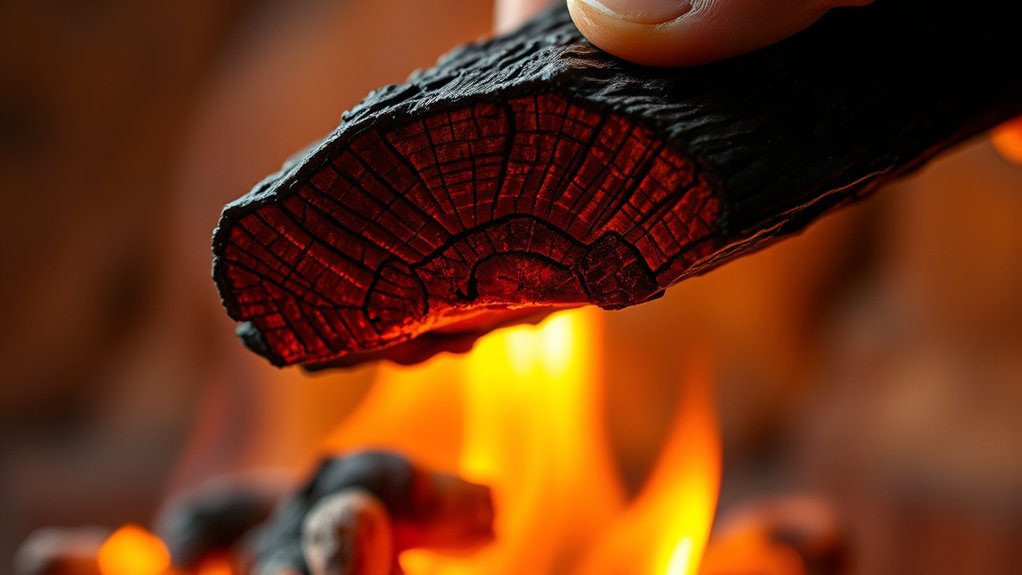
Although metals and ice convert into liquids upon heating, wood behaves differently because its molecular structure breaks down chemically rather than melting. When you heat wood, it doesn’t shift to a liquid state; instead, it undergoes combustion or pyrolysis, decomposing into gases and solids.
The cellulose and lignin in wood might break apart under high temperatures around 500-600°F, releasing volatile compounds rather than melting. Even in conditions like a vacuum, where oxidation is limited, wood still fails to melt due to its complex, long-chain organic molecules.
While experimental techniques such as friction welding can cause lignin to soften mechanically, this isn’t melting in the traditional sense.
The Role of Wood’s Molecular Structure in Heat Response
The inability of wood to melt like metals or ice stems directly from its molecular architecture. Wood’s molecular structure consists mainly of long-chain organic polymers such as cellulose and lignin, which are intricately intertwined. This entanglement prevents these molecules from reorganizing into a liquid phase when heat is applied.
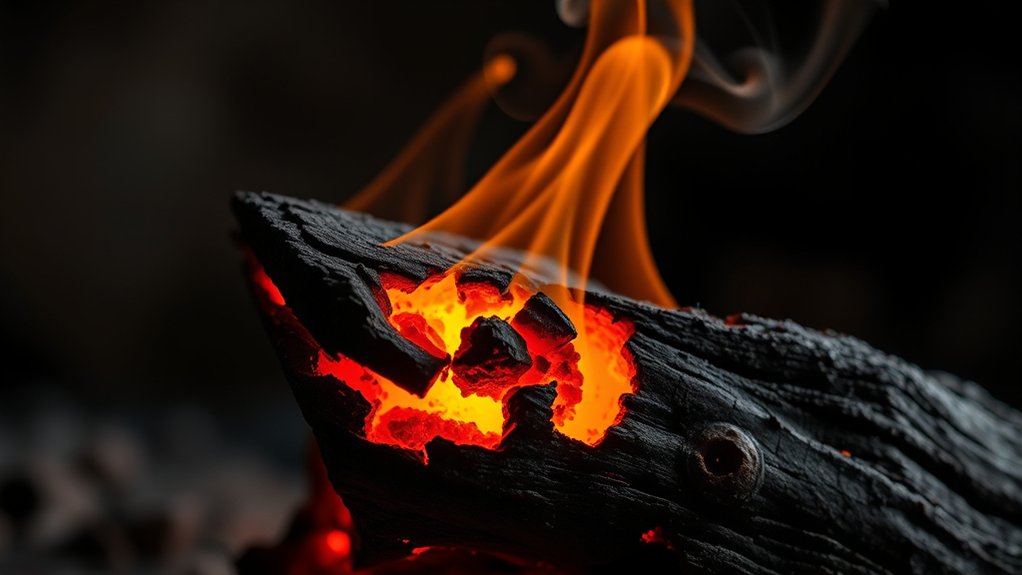
Instead of melting, wood undergoes thermal decomposition. The chemical bonds within cellulose and lignin weaken and break, resulting in the formation of charcoal, water vapor, and various gases. The complexity of these molecular interactions guarantees that wood’s molecular structure resists liquefaction.
Even at extreme temperatures, the molecular breakdown dominates, forbidding change into a liquid state.
How Oxidation Prevents Wood From Melting
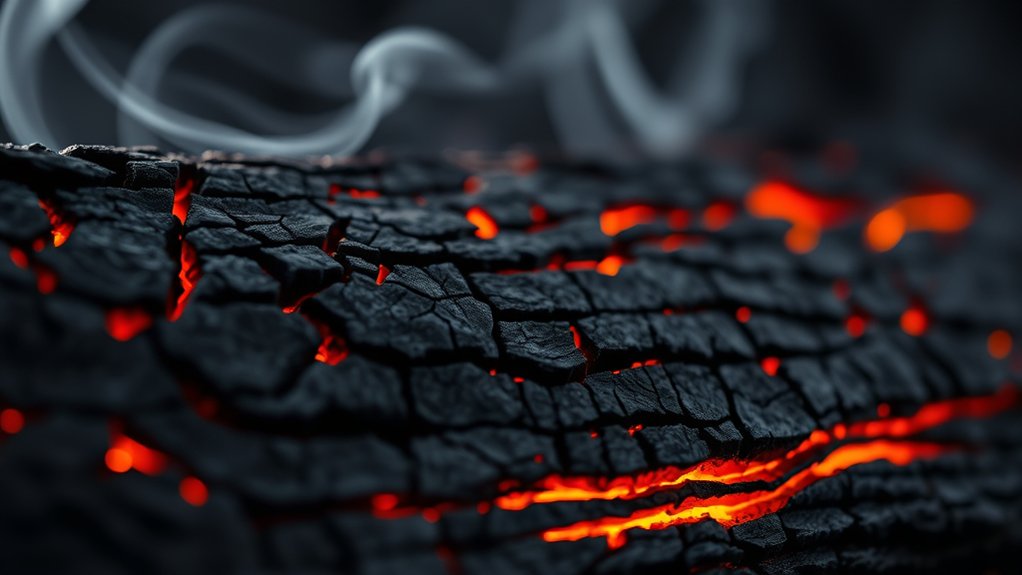
When you heat wood in the presence of oxygen, oxidation reactions quickly break down its molecular structure, stopping it from turning into a liquid. Oxidation takes over the thermal response by irreversibly decomposing cellulose and lignin, which are the main parts of wood. This chemical process speeds up as the temperature rises, leading to combustion instead of melting.
Rather than melting, wood releases gases and forms char because of oxidative degradation. Its structure falls apart, and molecular bonds break, making melting impossible.
Even without oxygen, wood’s complex molecules still prevent it from becoming liquid and instead favor decomposition.
Thermal Breakdown of Wood When Heated
As you increase the temperature of wood, its initial response involves evaporating its moisture content before reaching critical pyrolysis temperatures around 500 to 600°F.
During this phase, thermal breakdown progresses as the cellulose and lignin components begin to degrade chemically. You’ll observe wood fibers fragmenting into smaller organic compounds rather than melting, producing charcoal, carbon dioxide, and volatile gases such as methane and methanol.
Cellulose and lignin degrade chemically, breaking wood into smaller compounds and releasing charcoal and gases.
The molecular structure of wood lacks a defined melting point, so even under vacuum conditions where oxidation is limited, thermal breakdown continues without liquid formation.
This decomposition releases over 100 chemicals, signifying a complex chemical change distinct from melting.
Understanding this thermal breakdown clarifies why wood combusts or chars instead of melting. It really highlights wood’s unique thermal behavior, which comes from its molecular composition and structural integrity.
What Is Pyrolysis and How Does It Affect Wood?
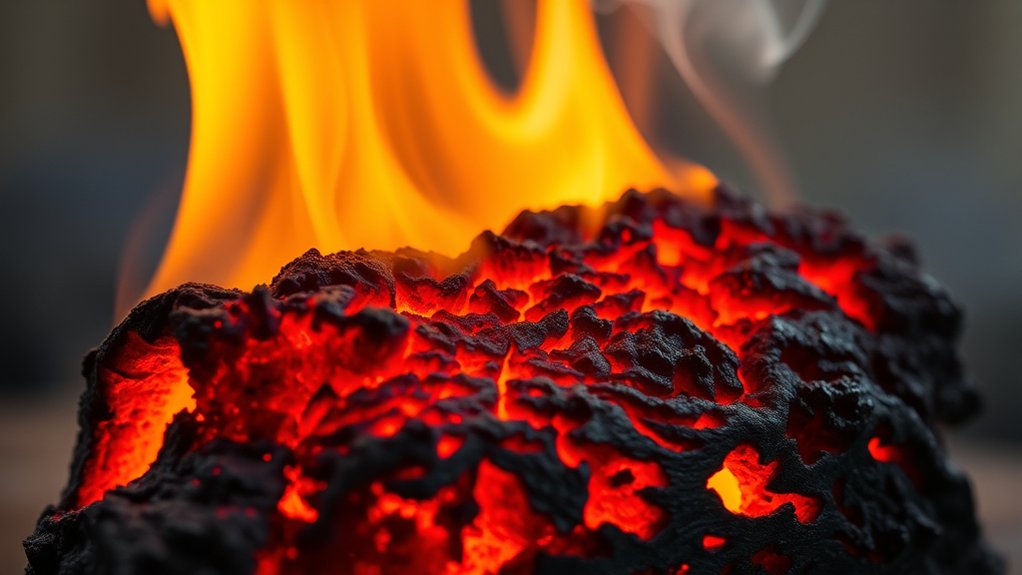
When you heat wood between 500 and 600°F without oxygen, pyrolysis kicks in.
It’s a complex chemical breakdown happening right before your eyes. You’ll notice the wood decomposing into gases like methane and methanol, along with tar and charcoal residues.
This process really changes the wood’s structure, affecting both its physical and chemical properties in a big way.
Pyrolysis Temperature Range
Although pyrolysis occurs without oxygen, it plays a critical role in transforming wood at temperatures between 500-600°F (260-315°C). This pyrolysis temperature range initiates thermal decomposition, breaking wood into gases, liquids, and solids.
You’ll notice the process is endothermic, absorbing heat to sustain itself.
Key points about the pyrolysis temperature range include:
- Wood chemically decomposes into over 100 compounds within this range
- The structure irreversibly changes, producing charcoal and volatile gases
- Heat absorption during pyrolysis enables continuous breakdown
- Absence of oxygen prevents combustion, focusing on decomposition
Understanding this pyrolysis temperature range helps you grasp how wood’s physical and chemical properties evolve during thermal exposure without burning.
It really sets the stage for further chemical transformations.
Chemical Changes During Pyrolysis
Because pyrolysis involves heating wood to around 500-600°F, it triggers a complex chemical breakdown that fundamentally alters the wood’s molecular structure.
During pyrolysis, the wood decomposes thermally, releasing up to 100 chemicals such as methane and methanol. This exothermic process generates heat, sustaining itself and accelerating decomposition.
You’ll notice that pyrolysis transforms wood into charcoal, water, and various gases, none retaining the original chemical composition. The physical structure of the wood fibers changes irreversibly, preventing the material from returning to its initial state.
Understanding these chemical changes during pyrolysis is essential since they explain why wood can’t melt but instead chemically degrades.
This transformation marks a significant shift in wood behavior under high heat, driven by the fundamental reactions inherent in pyrolysis.
It’s pretty fascinating when you think about how heat can change wood so completely, right?
Melting Wood in Vacuum or Controlled Environments
Even under a vacuum where oxidation is eliminated, wood won’t melt like conventional materials because of its complex molecular structure dominated by cellulose and lignin.
When you try melting wood in controlled environments, you’ll notice a few things. High temperatures cause the wood to decompose into gases and charcoal instead of melting. Water and other volatile compounds evaporate, leaving behind chemically altered residual structures.
Also, carbon’s melting point is around 3500°C, which is way higher than the conditions needed for any thermal melting of wood.
Mechanical processes like friction welding might melt lignin, but not the entire wood matrix. So, melting wood remains pretty elusive since its long-chain organic polymers break down instead of liquefying.
In other words, you just can’t get a traditional liquid phase with wood, even in a vacuum or specially controlled environments. The chemical breakdown happens first and overrides any melting behavior.
Experiments Showing Melting in Wood Components
Previous findings highlight that wood as a whole resists melting because it decomposes at high temperatures. However, experiments reveal that lignin, a primary wood component, can soften and flow under specific conditions, showing a kind of melting. For example, controlled friction welding heats lignin enough to melt and fuse wood pieces, creating strong bonds.
Research shows wood undergoes pyrolysis near 500-600°F (260-315°C), where components break down rather than melt. Although conventional melting isn’t observed, high-pressure environments might theoretically enable melting of wood components and change their physical structures.
These experiments confirm that while wood itself doesn’t melt in the usual sense, its components—especially lignin—can melt under extreme heat and pressure.
Why Wood Decomposes Instead of Melting
You’ll notice that when wood is heated, its complex chemical structure breaks down instead of melting. This happens because the heat causes the cellulose and lignin—the main components of wood—to lose their structure.
Chemical Breakdown Mechanism
Although wood is exposed to increasing heat, it never melts like many synthetic polymers or metals. Its primary components, cellulose and lignin, consist of long-chain organic molecules that break down chemically rather than converting into a liquid state. The chemical breakdown mechanism explains why wood decomposes instead of melting.
When heated, wood undergoes pyrolysis around 500-600°F, which initiates molecular degradation.
Key aspects of this chemical breakdown mechanism include:
Long polymer chains fragment into smaller organic compounds rather than forming a melt.
Oxidation reactions in oxygen-rich environments produce gases and solid residues like charcoal.
Even under vacuum, the molecular structure prevents melting, causing decomposition.
Also, released chemicals during breakdown include methane and methanol, which show chemical transformation.
This precise molecular disintegration prevents wood from exhibiting a reversible melting phase.
Structural Integrity Loss
The complex molecular architecture of wood, dominated by cellulose and lignin, prevents it from undergoing a conventional melting process when heated.
Instead, as temperature rises, you witness structural integrity loss due to irreversible molecular bond breakdown. Wood doesn’t convert into a liquid; it decomposes through pyrolysis around 500-600°F, releasing gases and chemicals.
Oxidation further drives this process, disrupting chemical integrity and preventing melting. Even in oxygen-limited environments, wood disassociates into smaller organic compounds and charcoal rather than melting.
So when you heat wood, you’re not melting it — you’re causing its structure to collapse chemically and physically.
The loss of structural integrity results in combustion or charring, which highlights why wood decomposes instead of liquefying under heat.
Frequently Asked Questions
Can Wood Be Chemically Treated to Enable Melting?
You can chemically treat wood to modify its structure, but true melting mechanisms don’t apply here. Treatments like acetylation or furfurylation alter lignin and cellulose, enhancing durability.
However, they don’t enable wood to reach a liquid state. Instead, these modifications cause irreversible changes or decomposition when heated.
Does the Type of Wood Affect Its Heat Resistance?
Yes, the wood species you choose directly affects its heat resistance. Different wood species have unique compositions of cellulose, lignin, moisture, and extractives.
These differences influence how they respond to heat.
For instance, hardwood species like oak generally resist heat better than softwoods because they’ve higher density and lower moisture content.
Also, species rich in natural oils or resins offer better thermal protection.
How Does Moisture Content Influence Wood’s Thermal Behavior?
Moisture effects greatly influence wood’s thermal behavior by increasing heat absorption as water evaporates near 100°C. You’ll notice that higher moisture content delays pyrolysis by absorbing heat during evaporation, slowing decomposition onset.
On the other hand, low moisture content enhances thermal conductivity, which means heat transfers faster through the wood.
Moisture also changes the decomposition pathways, affecting gas emissions like methane.
Understanding these moisture effects is essential if you want to accurately predict how wood responds to thermal exposure and fire behavior. It really makes a big difference in how wood heats up and breaks down.
Are There Industrial Uses for Wood’s Thermal Decomposition?
You mightn’t expect that wood’s breakdown leads to charcoal production, yet that’s a key industrial use. By thermally decomposing wood, industries create charcoal, which serves as both a fuel and a reducing agent in metallurgy.
This process also produces activated carbon for purification systems.
Can Synthetic Materials Mimic Wood’s Melting Properties?
Yes, synthetic alternatives can mimic wood’s melting properties effectively.
You’ll find that thermoplastic lignin and wood-plastic composites are engineered to exhibit melting and reshaping behavior at controlled temperatures.
These materials combine wood fibers with polymers, enabling precise thermal phase changes unlike natural wood.
By using synthetic alternatives, you can process, recycle, and mold materials with wood-like aesthetics while benefiting from predictable melting points.
This enhances manufacturing flexibility and sustainability.
Conclusion
You can’t melt wood like metals or ice because its molecular makeup requires it to break down instead of turning into a liquid. Wood’s fibers are woven tightly and respond to heat by oxidizing and breaking down through a process called pyrolysis, rather than melting.
Even in vacuum conditions, wood’s complex compounds tend to burn up instead of melting together. When you understand how wood behaves under heat, it becomes clear why it breaks down thermally instead of melting. This shows how wood acts differently from molten metals, which flow easily when heated.