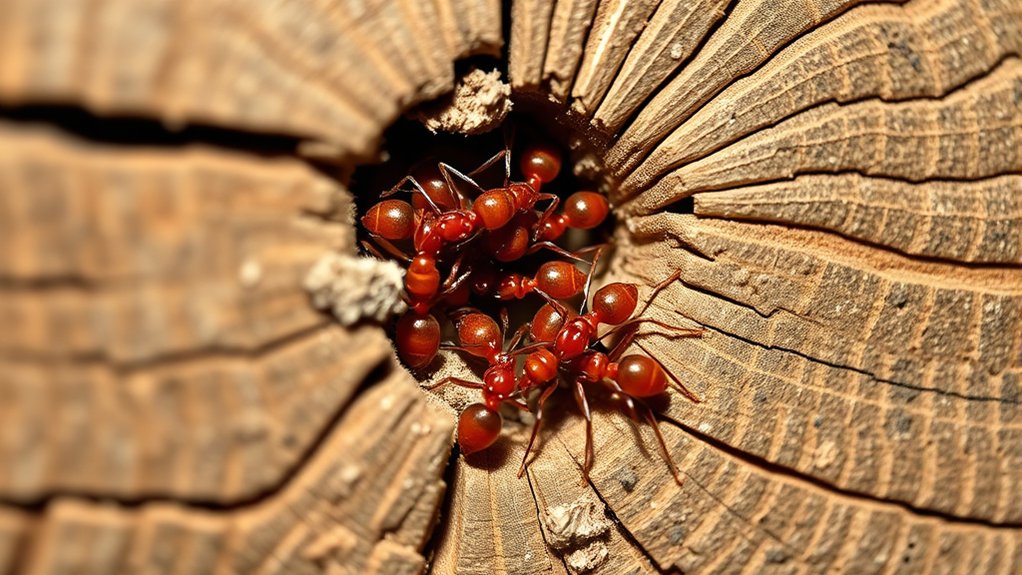
Can Ants Eat Wood: Facts About Wood Damage And Prevention
Carpenter ants don’t eat wood but tunnel through moist or decaying timber, causing structural damage without consuming it. You’ll notice smooth, clean galleries and sawdust-like frass containing insect parts as signs of their activity. Unlike termites, which eat wood extensively, carpenter ants weaken wood by hollowing it out.
They’re attracted to moisture from leaks or rot, so controlling dampness and sealing entry points helps prevent infestations. Keep monitoring for rustling sounds or winged ants indoors to guarantee early detection and effective management.
More details explain how to distinguish and handle these wood-invading insects.
Who Are Carpenter Ants and How Do They Damage Wood?
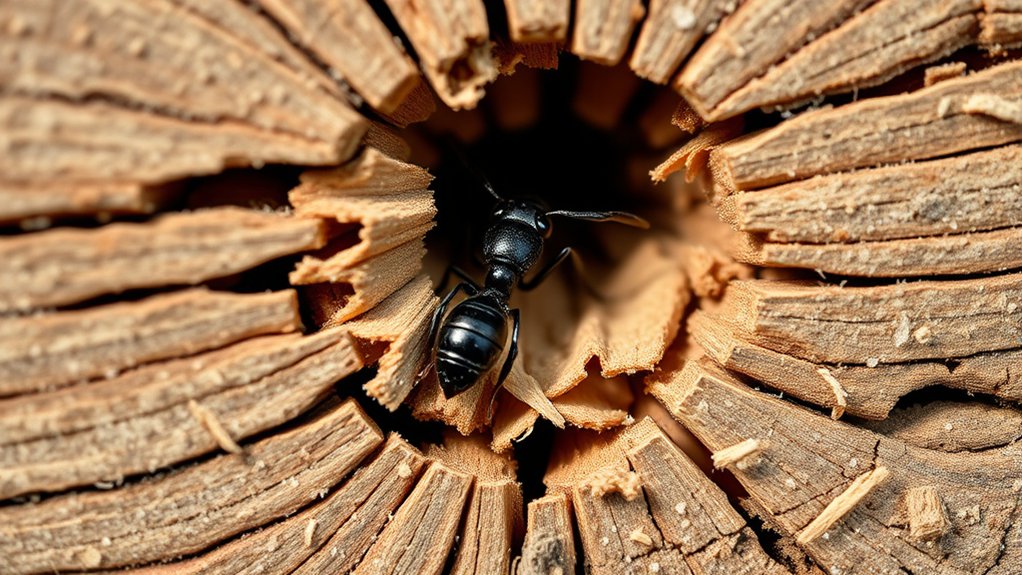
Carpenter ants, belonging to the genus Camponotus, are large insects that can measure from ¼ to ¾ inch in length and are usually black or dark brown. You’ll recognize carpenter ants by their size and color.
They cause damage by tunneling through wood, primarily in moist or decaying timber, without consuming it. This tunneling weakens wood structures, leading to potential structural damage over time.
You might notice signs of carpenter ant infestations such as fine sawdust-like frass near entry points or faint rustling noises inside walls, especially at night.
Because damage often indicates moisture problems, addressing these underlying issues is critical.
If you suspect an infestation, prompt pest control services are essential to mitigate damage and protect your property’s structural integrity.
Don’t wait too long to get help because the damage can get worse.
Do Carpenter Ants Eat Wood or Just Damage It?
Although many people assume these ants consume wood, they actually don’t eat it. Instead, they excavate wood to build their nests. They prefer moist or decaying timber where tunneling is easier.
Carpenter ants cause damage by creating galleries inside the wood, which can weaken structural components over time. Unlike termites, carpenter ants don’t digest wood. Their damage results from physical excavation during nest construction.
When you detect a carpenter ant infestation, it often signals underlying moisture problems in the wood. You may notice fine sawdust-like frass pushed out of galleries, a byproduct of their chewing activity.
Understanding that carpenter ants damage wood through excavation rather than consumption helps you target prevention efforts toward moisture control and timely repairs. This way, you can avoid extensive structural impairment.
Signs of Wood Damage Caused by Carpenter Ants
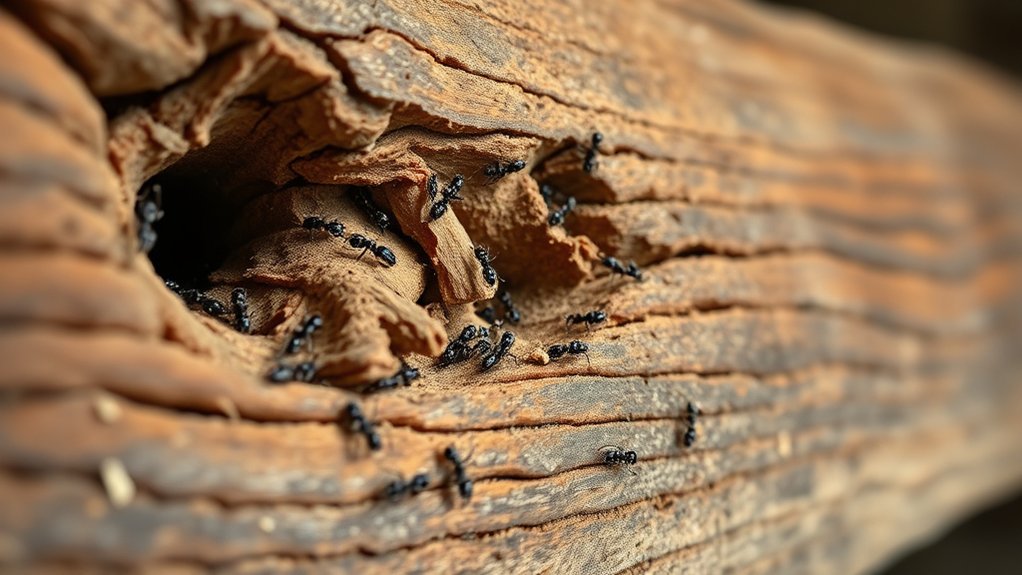
Recognizing the signs of wood damage caused by these ants can help you identify an infestation early and assess the extent of structural harm.
Carpenter ants create tunnels and galleries in moist or decaying wood, leading to wood damage without actually consuming the material.
Key signs of wood damage include piles of sawdust-like frass beneath wooden structures, which usually means there’s nesting activity nearby.
You might also hear rustling noises within walls, especially at night, which signals an active colony.
Another clue is hollow-sounding wood when tapped, caused by smooth, clean tunnels and galleries inside.
You may even notice winged carpenter ants indoors during spring, which suggests a nest is close by.
Detecting these signs promptly can really help with effective pest management and prevent further structural deterioration.
How Carpenter Ant Damage Differs From Termite Damage
Understanding the differences between damage caused by carpenter ants and termites is vital for accurate identification and effective treatment. Carpenter ants don’t eat wood. Instead, they excavate smooth, clean galleries within moist or decaying wooden structures to build nests inside.
In contrast, termites actively consume wood, resulting in more extensive, chaotic damage often accompanied by mud tubes.
Carpenter ant damage appears as hollowed-out tunnels lined with sawdust-like frass containing insect parts. Termite frass is granular and includes digested wood.
Recognizing these distinctions helps you accurately assess infestations. Early detection of carpenter ant frass and activity, such as rustling sounds, is essential to prevent structural weakening.
Understanding these differences guides you in choosing appropriate control measures tailored to the specific pest affecting your wooden structures.
How Moisture and Wood Condition Attract Carpenter Ants
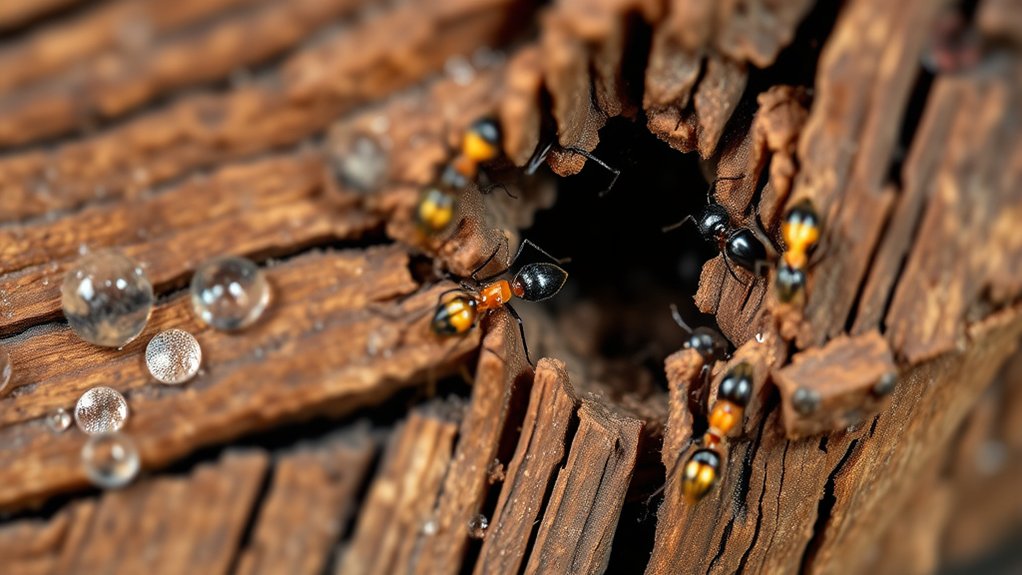
Carpenter ants establish nests by excavating wood that has been softened by moisture, making water-damaged timber their preferred habitat.
Moisture plays a critical role in attracting carpenter ants, as rotting wood provides easier tunneling for nesting without the need to consume the wood.
You should note the following factors that influence carpenter ant attraction:
- Presence of moisture from leaks or high humidity softens wood, facilitating nesting.
- Rotted or discolored wood signals potential infestation sites.
- Plumbing and roofing leaks create conducive environments for carpenter ants.
- Wood damage due to water increases vulnerability to ant colonization.
Understanding these moisture-related conditions helps you identify risks of carpenter ant wood damage.
It also informs prevention strategies to protect your property effectively.
How to Prevent Carpenter Ant Damage at Home
To keep carpenter ants from damaging your home, start by controlling moisture. Fix any leaks you find and make sure water drains away properly from your house.
Next, take care of the wood around your home. Get rid of any rotting material and seal up cracks where ants might want to nest.
It’s also a good idea to check things regularly. By inspecting your home often and cleaning up quickly when you spot trouble, you’ll catch problems early and keep ants out.
Moisture Control Strategies
Since moisture creates an ideal environment for wood-damaging ants, controlling humidity and water exposure is crucial to prevent infestations. Effective moisture control helps deter carpenter ants from establishing nests in your home, which means less wood damage.
To achieve this, you should keep indoor humidity below 50% to reduce moisture that attracts carpenter ants. Fix leaks promptly in roofs, plumbing, and basements to eliminate water sources.
Also, make sure there’s proper ventilation in crawl spaces and attics to minimize moisture buildup.
Don’t forget to seal entry points by caulking cracks and gaps—this helps prevent ants from accessing damp wood.
Wood Maintenance Tips
Managing moisture is only part of the strategy to protect wooden structures from ant damage. To prevent carpenter ants effectively, you need to regularly check wood for signs of water damage. Damp or rotting wood attracts infestations, so keep an eye out for that.
Seal cracks and entry points around windows, doors, and foundations to reduce access. Also, maintaining proper drainage and making sure gutters are clean helps prevent moisture buildup near wood. This way, you minimize favorable conditions for carpenter ants.
Store firewood and wooden materials away from your home to eliminate potential nesting sites. These wood maintenance tips work hand in hand with moisture control as part of an integrated pest control approach.
When to Call a Pro for Carpenter Ant Control
How can you tell when it’s time to call a professional for carpenter ant control? Recognizing signs of infestation early is critical to prevent structural damage.
Carpenter ants don’t eat wood but create galleries in moist timber, compromising its integrity.
You should seek professional help if you notice small piles of sawdust (frass) near wooden structures.
Or if you hear rustling noises inside walls, which usually means active ant activity.
Seeing winged carpenter ants indoors is another red flag—it often signals a nearby colony.
Also, if ants keep coming back or you see them all over despite your DIY pest control efforts, it’s time to call in the pros.
Professionals can locate nests accurately and eliminate colonies more effectively than typical home methods.
When you spot these signs, don’t wait. Getting timely help from pest control experts is the best way to minimize damage and keep your home structurally safe.
Frequently Asked Questions
Can Carpenter Ants Damage Furniture as Well as Structural Wood?
Yes, carpenter ants can damage both furniture and structural wood because they like to nest in wood. Their behavior involves chewing on moist or decayed wood to make galleries. This chewing can cause damage to furniture, and you might even notice piles of sawdust as a sign.
To catch an infestation early, it’s a good idea to inspect areas that are vulnerable on a regular basis. Prevention is key, so try to reduce moisture in wood and seal any entry points the ants might use.
If you do find damage, it’s important to act quickly. Repairing the affected wood or replacing it helps keep the structure strong and prevents further problems.
Do Carpenter Ants Pose Any Health Risks to Humans?
You won’t face significant health concerns from carpenter ant behavior since they don’t sting or transmit diseases.
However, their infestation signs, like wood shavings and moisture damage, suggest potential mold growth, which can affect indoor air quality.
To minimize risks, take preventative measures such as reducing moisture and food access.
If you spot an infestation, explore treatment options promptly.
And honestly, consider professional pest control for effective eradication and ongoing monitoring.
How Long Does It Take for Carpenter Ants to Create Noticeable Damage?
You might expect slow damage, but carpenter ants can create noticeable destruction within just a few months.
Depending on colony size and nest locations, especially in moist wood types, damage signs like wood shavings appear 6 to 12 months into infestation stages.
Early detection is key.
Prevention methods like regular inspections can stop extensive damage and costly repairs.
Keep an eye out, carpenter ants work faster than you’d think.
Are There Natural Remedies to Repel Carpenter Ants From Homes?
Yes, you can use natural repellents to deter carpenter ants. Essential oils like peppermint, tea tree, or citrus disrupt their scent trails.
Vinegar solutions also mask food odors, making your home less attractive.
Sprinkling diatomaceous earth causes dehydration upon contact, effectively reducing their numbers.
Boric acid mixed with sugar water attracts and kills ants with minimal toxicity.
Plus, garlic spray can repel ants by emitting a strong odor that interferes with their navigation.
Can Carpenter Ants Survive in Dry, Well-Maintained Wood?
You’d think carpenter ants love dry, well-maintained wood, but ironically, they don’t. Their behavior depends heavily on wood moisture levels.
Moist, decaying wood suits their nesting preferences best. Dry wood simply doesn’t support their colonies, especially during seasonal activity peaks.
Conclusion
Understanding carpenter ants is essential. They don’t eat wood like termites but hollow it out to build nests, leaving telltale tunnels and smooth galleries. You’ll notice moisture-damaged wood inviting these silent architects.
So, keeping your home dry is your first line of defense. Spotting their unique damage early can save you from costly repairs.
When the signs multiply, don’t hesitate. Call a pro to dismantle their hidden strongholds and protect your wood’s integrity.