Where Can You Find Petrified Wood: Locations And Buying Options
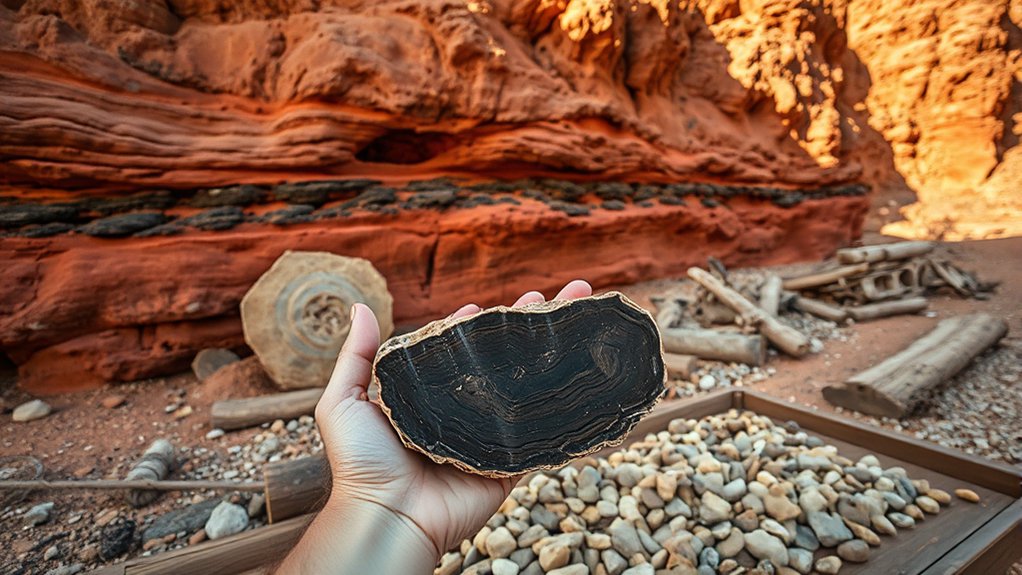
You can find authentic petrified wood near Arizona’s Petrified Forest National Park, but collecting there is prohibited. Instead, check out reputable shops along Historic Route 66 like Jack Rabbit Trading Post, Rainbow Rock Shop, and Yellowhorse in Lupton. These places offer both polished and natural specimens, all with certificates of authenticity.
Prices vary widely depending on the size and finish of the piece. The staff at these shops are usually pretty knowledgeable and can help you pick out quality specimens. If you want detailed guidance on identification, pricing, and shipping, there’s more information available beyond this summary.
Key Takeaways
- Petrified wood is prominently found at Arizona’s Petrified Forest National Park, known for Late Triassic fossils, though collecting there is prohibited.
- Shops like Jack Rabbit Trading Post and Rainbow Rock Shop on Historic Route 66 offer diverse, authentic petrified wood specimens for purchase.
- Yellowhorse in Lupton specializes in high-quality, often polished petrified wood combined with Native American crafts.
- Prices vary widely, starting around $79 for small polished pieces and reaching over $3,000 for larger, detailed specimens.
- Authenticity can be verified through certificates and features like preserved tree rings and fossilized insect traces in the wood.
Where to Find Petrified Wood Near Petrified Forest National Park
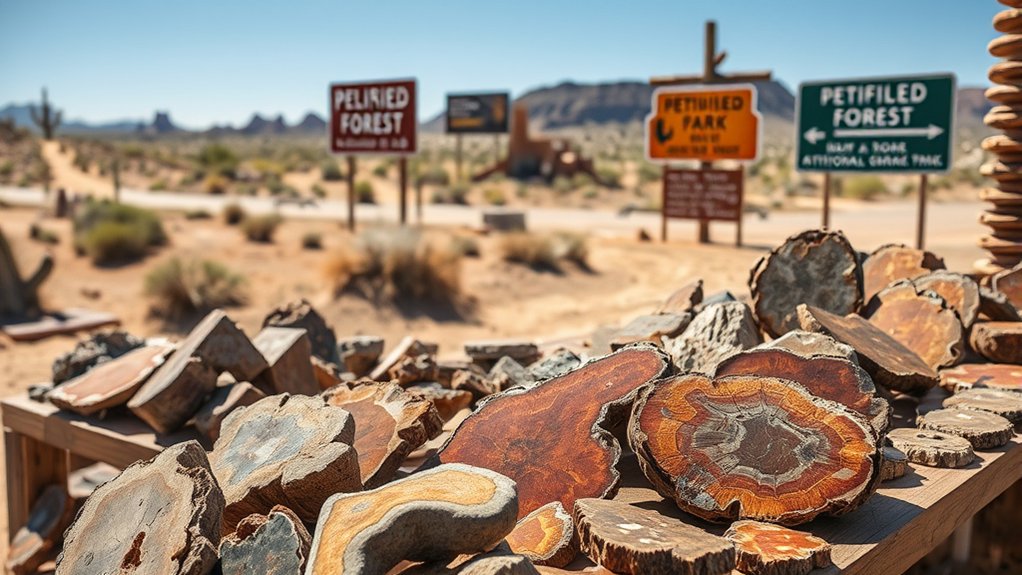
If you’re looking to find petrified wood near Petrified Forest National Park in Arizona, several key locations offer high-quality specimens. The park itself showcases over 200 Late Triassic plant species, providing an educational context for your search.
While collecting within the park is prohibited, you can find petrified wood for sale at nearby establishments. The Jack Rabbit Trading Post and Rainbow Rock Shop in Holbrook provide a diverse selection of petrified wood items suitable for collectors.
Along Historic Route 66, local artisans present unique petrified wood products reflecting regional geological heritage. You’ll find plenty of interesting pieces to choose from.
Furthermore, Yellowhorse in Lupton is recognized for quality petrified wood for sale, recommended by community members.
These sites collectively offer reliable access to authentic petrified wood specimens without violating preservation regulations. So, you can enjoy collecting without any worries.
Top Petrified Wood Shops and Trading Posts in Arizona
You’ll find quite a few reputable shops and trading posts in Arizona that offer a wide range of petrified wood specimens. The prices and availability can vary quite a bit depending on where you go.
For example, places like the Jack Rabbit Trading Post, Rainbow Rock Shop, and Yellowhorse are known for their unique local selections. These spots come highly recommended by the community, so you can trust that you’re getting quality pieces.
It really helps to get a feel for the pricing structures and what each spot has in stock before making a purchase. That way, you can make informed decisions and find the best deals on the specimens that catch your eye.
Popular Shops Overview
Several top shops and trading posts in Arizona provide prime opportunities to acquire authentic petrified wood specimens.
The Jack Rabbit Trading Post on Historic Route 66 offers diverse petrified wood from Arizona, alongside local crafts and souvenirs. They’ve knowledgeable staff ready to help you find what you need.
Rainbow Rock Shop in Holbrook specializes in a broad selection of petrified wood specimens and geological gifts. They cater to both collectors and tourists, making it a great stop for everyone interested in these natural treasures.
Yellowhorse in Lupton emphasizes authenticity and quality. They feature both polished and natural petrified wood, ideal for enthusiasts looking for something special.
Recommendations from Petrified Forest National Park employees often guide visitors to these reputable shops. This ensures you get access to verified, high-quality petrified wood from Arizona.
Community feedback consistently highlights these establishments for their extensive inventories and reliable sourcing.
These shops are essential destinations for anyone seeking genuine petrified wood in the region.
Unique Local Offerings
Exploring Arizona’s top petrified wood shops reveals unique local offerings that combine geological significance with cultural heritage.
At the Jack Rabbit Trading Post along Historic Route 66, you’ll find an extensive selection of petrified wood and geological souvenirs.
The Rainbow Rock Shop in Holbrook specializes in diverse petrified wood specimens, appealing to geology enthusiasts.
Yellowhorse in Lupton integrates authentic Native American crafts with petrified wood items, offering a cultural-geological fusion.
These locations are highly recommended by locals and visitors alike, thanks to positive shopping experiences. Shop owners and staff actively engage with customers, providing detailed insights on petrified wood origins and characteristics.
This community involvement really enriches your understanding and appreciation of the geological artifacts you’re exploring or purchasing.
It’s not just about buying a souvenir; it’s about connecting with the story behind each piece.
Pricing And Availability
Although availability can fluctuate, key Arizona shops like Yellowhorse in Lupton and Jack Rabbit Trading Post consistently offer a broad range of petrified wood specimens.
Pricing varies considerably, influenced by size, polish, and intricacy. Polished pieces often start around $79, while larger, more detailed examples can reach $3,150.
Local shops source many items from Petrified Forest National Park, guaranteeing authenticity. Rainbow Rock Shop in Holbrook also provides a diverse selection, appealing to collectors and tourists alike.
When considering pricing and availability, keep in mind:
- Price ranges reflect specimen size and finish quality
- Inventory depends on seasonal and park sourcing
- Knowledgeable staff assist with selection and valuation
- Shops maintain a balance between tourist demand and collector needs
This approach guarantees you access quality petrified wood with transparent pricing.
How to Identify Authentic Petrified Wood Specimens
When you examine petrified wood specimens, focus on the preservation of fine details such as tree rings and cellular structures. These features indicate the permineralization process that replaces organic material with minerals like silica.
Authentic petrified wood often shows unique features like insect holes or traces of ancient burrowing animals, which confirm genuine fossilization.
Look for insect holes or burrowing traces as clear signs of genuine petrified wood fossilization.
Observe the color variations. Earthy tones are common, while vibrant hues usually result from trace metals incorporated during fossilization. These colors can serve as indicators of authenticity.
Always verify that specimens come with a certificate of authenticity or specimen card to confirm their origin.
It’s also helpful to familiarize yourself with benchmark locations, like Petrified Forest National Park in Arizona. Knowing what high-quality petrified wood looks like will help you spot authentic pieces and avoid imitations.
Understanding Petrified Wood Prices and Value
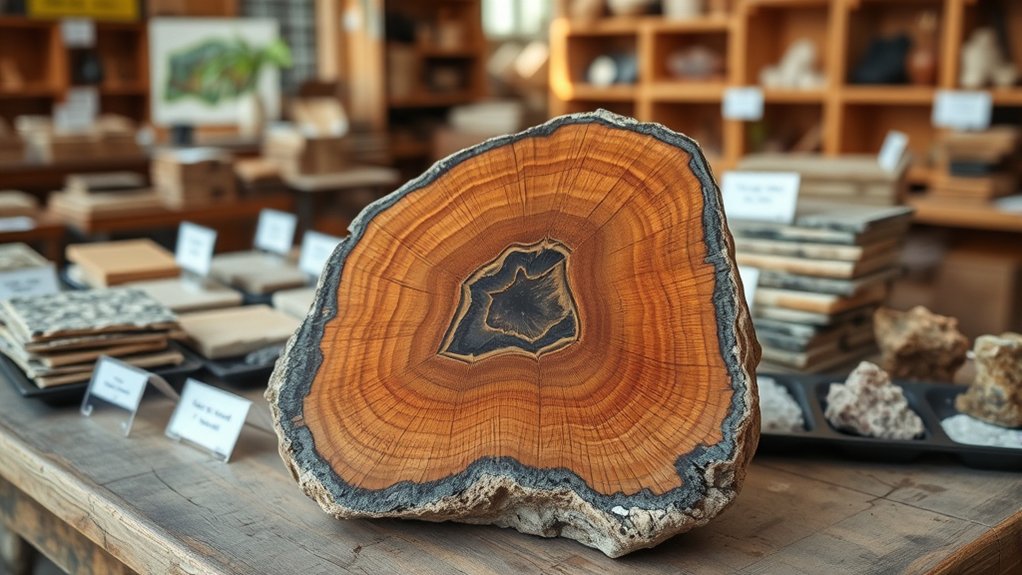
Several factors influence the price and value of petrified wood, ranging from its size and origin to its age and coloration.
When evaluating petrified wood, you must consider:
- Size and weight: Larger specimens generally command higher prices, with slabs ranging from $22.50 to over $3,150 depending on rarity.
- Age and origin: Older petrified wood, such as pieces from the Devonian period, holds greater value due to scarcity.
- Coloration: Vibrant colors caused by trace metals increase aesthetic appeal and price compared to typical earth tones.
- Processing costs: Polishing can add $1–2 per square inch, affecting the final retail price.
Typically, prices average around $2 per pound when sold by private landowners.
But unique characteristics can substantially elevate value. Understanding these factors helps you make informed purchasing decisions.
Buying Polished vs. Natural Petrified Wood
Two primary forms of petrified wood are available for purchase: polished and natural.
Polished petrified wood undergoes a meticulous process that enhances its vibrant colors and intricate patterns, making it ideal for display and decorative use. Each polished specimen comes with a certificate of authenticity, verifying its genuineness and unique characteristics.
In contrast, natural petrified wood retains its raw texture and unaltered geological features. This appeals to collectors who prioritize authenticity.
Price differences are notable; polished pieces range from $79 to over $3,150 depending on size, quality, and rarity. Natural petrified wood starts at approximately $22.50, often offering a more affordable option.
Both types are accessible through locations like Petrified Forest National Park, shops along Historic Route 66, and specialized online retailers.
How to Ship and Handle Petrified Wood Safely
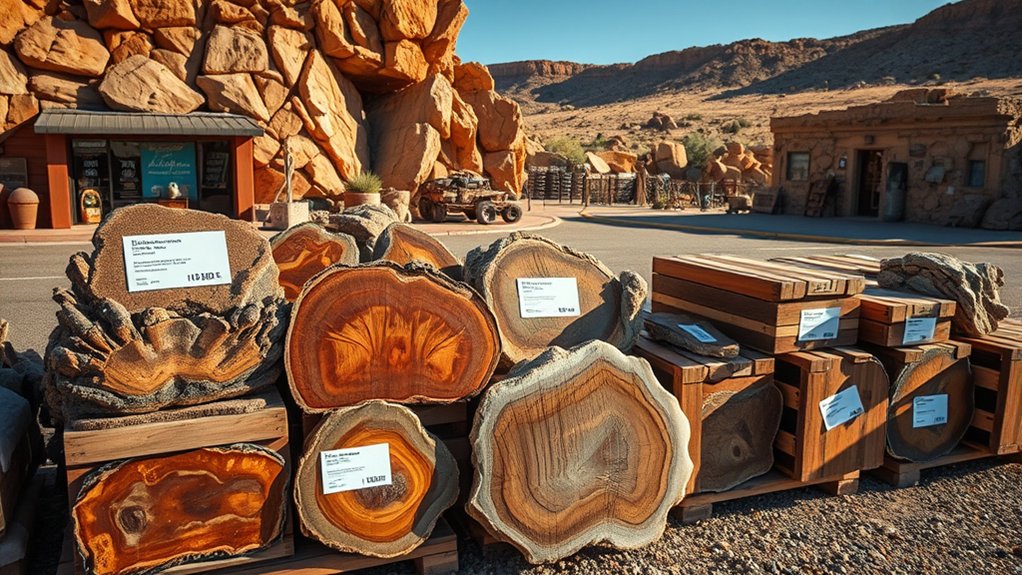
Although petrified wood is durable, you need to package it securely with bubble wrap or foam to prevent damage during transit. This is especially important for heavier specimens weighing up to 28 pounds.
Use sturdy boxes designed to support the specimen’s weight and size, making sure there’s enough cushioning to absorb shocks.
Also, think about environmental factors. Temperature and humidity can affect petrified wood integrity, particularly pieces from tropical regions. If you have heavier items that require shipping supplements, it’s a good idea to get quotes in advance to avoid unexpected costs.
Always include a certificate of authenticity to verify the origin and quality. This not only protects the piece but also enhances its value.
Here are some key handling tips to keep in mind:
- Secure wrapping with bubble wrap or foam
- Use robust, appropriately sized boxes
- Account for climate factors during shipping
- Provide authenticity documentation with shipment
Unique Petrified Wood Collectibles and Souvenirs
You can find unique petrified wood collectibles and souvenirs at various shops near Petrified Forest National Park, such as Yellowhorse in Lupton and the Jack Rabbit Trading Post.
These retailers offer a diverse selection of petrified wood products, including polished slabs, decorative furniture, and even petrified dinosaur poop. So, there are both traditional and novel options to explore.
Local artisans contribute craftsmanship that highlights the geological history embedded in each piece.
Prices range from approximately $79.00 for smaller polished items to over $3,000 for larger specimens. Many shops provide authenticity certificates to verify that you acquire genuine petrified wood with verified historical significance.
When selecting collectibles, consider the balance between aesthetic appeal, size, and provenance.
That way, you can guarantee a valuable addition to your collection.
Other Petrified Wood Locations Worth Visiting
You can explore petrified wood sites all over the world, and each one has its own unique environment and geological story.
For example, Arizona is famous for its Late Triassic fossils, while Namibia features tree deposits from the Permian period.
Visiting these places lets you see petrified wood that’s not only different in age but also in the minerals and colors that make each piece special.
It’s a fascinating way to get a glimpse into ancient ecosystems and how they’ve been preserved through time.
Global Petrified Wood Sites
While the Petrified Forest National Park in Arizona remains a premier destination for Late Triassic petrified wood, several other global sites offer equally significant fossilized wood deposits that deserve some attention. Each location gives us unique insights into different geological periods and paleoenvironments.
Take the Paleorrota Geopark in Brazil, for example. It features Permian-Triassic petrified wood linked to diverse fossil assemblages, which are essential for paleontological research.
Then there’s Khorixas in Namibia, where Permian petrified wood is preserved in alluvial soils, shining a light on ancient ecosystems.
Down under in Chinchilla, Australia, you’ll find Jurassic petrified wood with distinct red hues that are valuable to both collectors and scientists.
In India, the National Fossil Wood Park and Akal Fossil Wood Park showcase Miocene and Jurassic fossilized wood, respectively, representing significant geological heritage.
Exploring these sites really broadens your understanding of how petrified wood is spread across the globe and why it’s scientifically important.
Unique Preservation Environments
Although many well-known sites preserve petrified wood through mineral replacement in sedimentary rock, some locations reveal unique preservation environments that offer distinct scientific insights. For example, Khorixas in Namibia exhibits Permian trees fossilized within alluvial soil, demonstrating preservation outside typical sedimentary contexts.
The Petrified Forest National Park in Arizona contains Late Triassic petrified wood embedded in the Chinle Formation, alongside over 200 plant species. This provides extensive paleoecological data.
In Brazil’s Paleorrota Geopark, the Permian-Triassic boundary fossils, including petrified wood, coexist with significant vertebrate remains like Staurikosaurus, highlighting ecosystem diversity.
Australia’s Chinchilla site is known for Jurassic petrified wood with striking red hues, indicating unique mineralization processes. Meanwhile, India’s National Fossil Wood Park preserves Miocene and Jurassic petrified wood, offering broad temporal insights.
Visiting these sites really enriches your understanding of varied petrified wood preservation modes worldwide.
Frequently Asked Questions
What Is the Geological Process Behind Petrified Wood Formation?
You’d understand that the geological process behind petrified wood formation involves permineralization, where minerals replace organic wood tissue while preserving cellular structure.
When trees in Petrified Forests die, they’re rapidly buried under sediment or ash, which limits oxygen and stops decay.
Mineral-rich water then seeps in, depositing silica and other minerals that gradually fossilize the wood over time.
This exact environment makes sure petrification happens slowly but thoroughly.
It’s pretty fascinating how nature preserves such detailed structures for millions of years.
Can Petrified Wood Be Legally Collected From Public Lands?
You can’t legally collect petrified wood from most public lands because there are strict regulations in place to protect these resources.
National parks and forests have rules that prohibit taking petrified wood, and if you break them, you could face significant fines.
There are only a few places where limited collection is allowed, and even then, you usually need a special permit.
These permits are rare and very tightly controlled.
So, the best way to enjoy petrified wood is to see it where it naturally occurs or buy it from authorized vendors who follow the law.
That way, you stay on the right side of the rules and help protect these amazing natural treasures.
How Long Does It Take for Wood to Become Petrified?
The time frame for wood to become petrified typically spans thousands to millions of years. This process involves permineralization, where mineral-rich water infiltrates and replaces organic material, gradually turning it to stone.
Factors like temperature, pressure, and silica concentration affect the rate.
But here’s the thing — fossilization requires extensive geological periods. Sometimes it can take over 390 million years. This reflects the slow transformation from organic wood to durable petrified fossil.
Are There Any Health Risks Associated With Handling Petrified Wood?
You don’t face significant health risks when handling petrified wood because it’s a solid mineralized material.
However, for health safety, you should be cautious during sanding or polishing, as fine silica dust may be released, posing respiratory hazards. Wearing a mask minimizes inhalation risks.
Always wash your hands afterward to avoid skin irritation or dust contamination.
And it’s a good idea to source petrified wood from reputable vendors. This helps guarantee safe handling without exposure to harmful treatments.
What Are Common Uses for Petrified Wood Beyond Decoration?
You’ll find practical applications for petrified wood in construction, where its durability supports structural integrity.
It’s also used in crafting kitchenware, like cutting boards and coasters, due to its resilience.
Furthermore, artisans incorporate it into jewelry, highlighting its unique patterns.
In educational settings, you can utilize petrified wood to demonstrate geological processes and fossilization.
This makes it a valuable tool beyond mere decoration.
Conclusion
If you’re exploring petrified wood, know that the Petrified Forest National Park in Arizona alone houses over 200 million years of fossilized history. Whether you’re buying polished pieces or natural specimens, understanding authenticity and value is essential.
With proper handling and shipping, you can safely add these unique collectibles to your collection. Keep in mind, other global locations offer remarkable finds too. This makes petrified wood a fascinating and accessible geological treasure for enthusiasts like you.