Can Rustoleum Be Used On Wood: Application Tips And Results
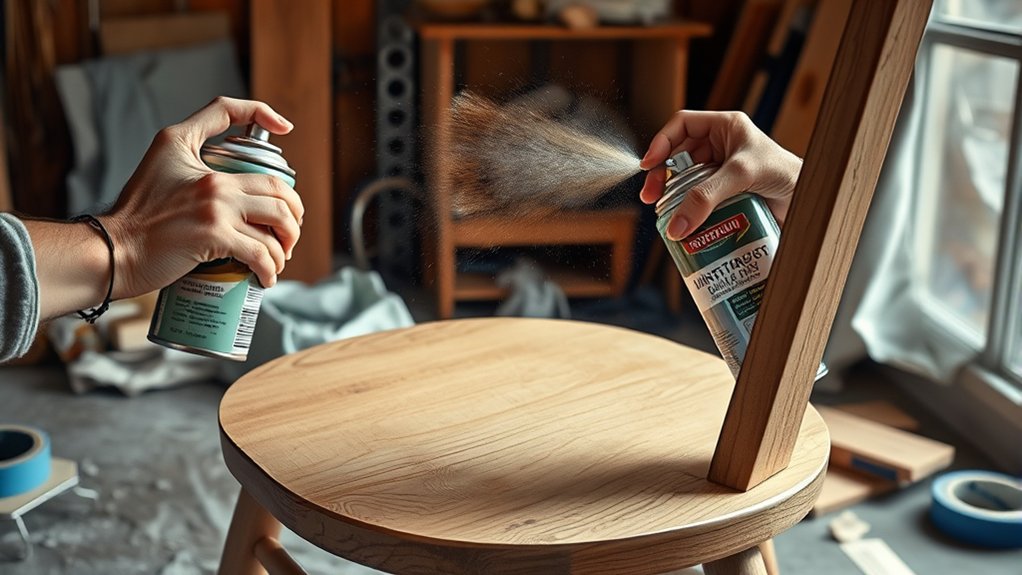
You can definitely use Rust-Oleum on wood for a durable, long-lasting finish. Start by cleaning and sanding the surface, then apply a Rust-Oleum primer to seal and improve paint adhesion.
Spray several light coats from 10-12 inches away, allowing each to dry fully to avoid drips. Finish with a clear topcoat for extra protection.
Following these steps gives you a smooth, weather-resistant result. Keep going to uncover tips on maintenance, safety, and fixing common issues.
Key Takeaways
- Rust-Oleum is ideal for wood, providing durable, long-lasting protection for both indoor and outdoor projects.
- Proper preparation includes cleaning, sanding, and priming wood to ensure paint adhesion and prevent color bleed.
- Apply several light coats from 10-12 inches away, allowing 20-30 minutes drying time between coats to avoid drips and bubbling.
- Finish with a clear topcoat for extra durability, choosing UV-resistant options for outdoor wood surfaces.
- Use protective gear and work in a well-ventilated area to ensure safety during application.
Why Use Rust-Oleum on Wood?
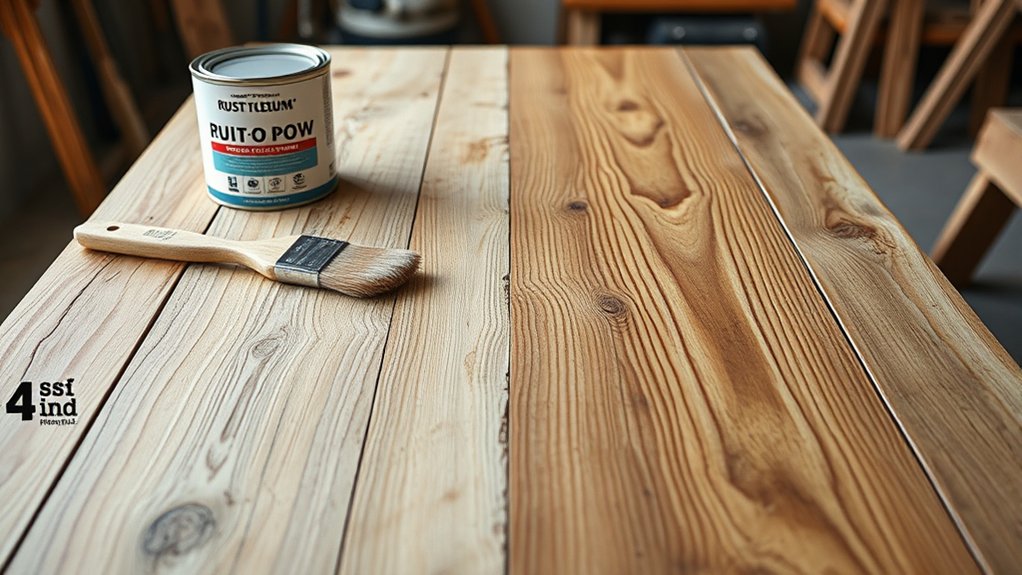
Although you might find many paint options for wood, Rust-Oleum stands out because it offers durable, oil-based products designed specifically to protect and enhance wooden surfaces.
When you use Rust-Oleum, you get long-lasting protection that resists wear and weather. This makes it ideal for both indoor and outdoor wood projects.
Their primers, like Zinsser Bulls Eye 1-2-3, improve paint adhesion and prevent color bleed, giving you a smoother, more professional finish.
Rust-Oleum’s 2X Ultra Cover spray paint dries quickly and comes in many colors. It’s super easy to transform wood furniture and other items with it.
The oil-based formula also contains rust-preventive additives, adding an extra layer of defense to your wood.
Choosing Rust-Oleum Products for Wood
When selecting Rust-Oleum products for wood, you’ll want to think about the specific finish and durability you need for your project.
Rust-Oleum offers oil-based paints that provide excellent adhesion and protection for a wood surface. These are ideal if you want a longer-lasting finish.
Applying a primer first helps prevent color bleed-through and enhances paint adhesion. To get the best results, apply multiple light coats and let each one dry fully before adding the next.
Here are some Rust-Oleum options to consider for your wood project:
- 2X Ultra Cover Spray Paints for smooth, even coverage
- Zinsser Bulls Eye 1-2-3 Primer to improve adhesion and durability
- Chalked Paint line for a vintage, ultra-matte finish
Choosing the right product will make sure your wood looks great and stands the test of time.
Preparing Wood for Rust-Oleum
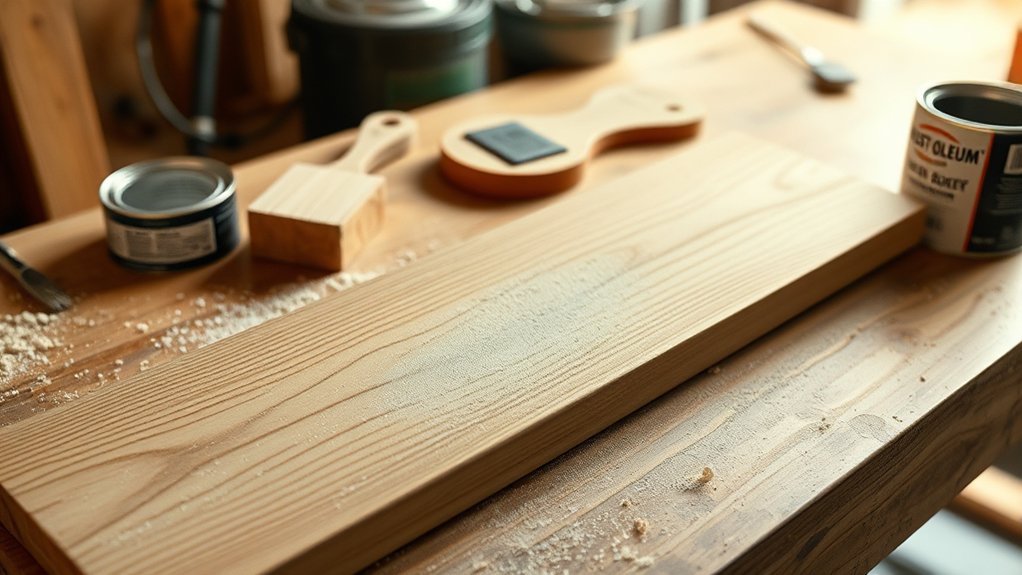
Before you start painting, remove any hardware like handles or knobs from the wood to create a clean surface.
Next, clean the wood thoroughly using a degreaser such as Krud Kutter to eliminate dirt, grease, and residue that can interfere with paint adhesion.
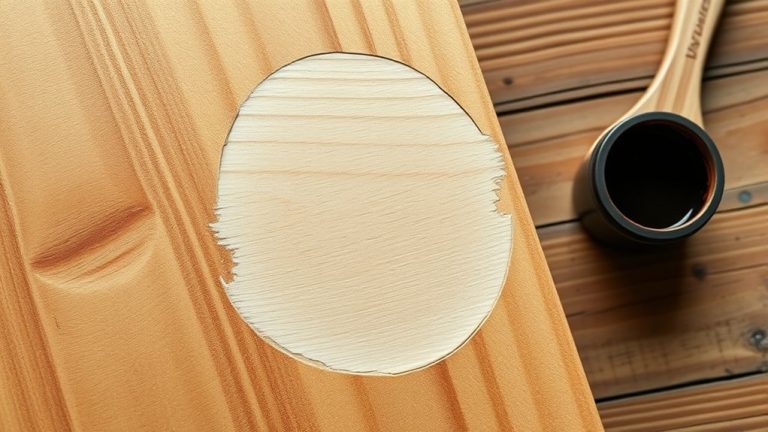
Once the surface is clean and dry, lightly sand the wood with fine-grit sandpaper to smooth out imperfections and help the paint grip better.
Be sure to wipe away all sanding dust with a lint-free cloth.
Then, apply a coat of Rust-Oleum primer to seal the wood and prevent bleed-through.
This guarantees a more even finish.
Finally, allow the primer to dry completely before painting to achieve the best results and longer-lasting spray paint on your project.
Priming Wood for a Smooth Finish
Since wood is porous, applying a primer like Rust-Oleum 2X Ultra Cover is essential to seal the surface and prevent the paint from soaking in unevenly.
Priming wood not only creates a smooth finish but also helps spray paint adhere better, reducing peeling and chipping.
Before applying your topcoat, let the coat of paint primer dry completely according to the label instructions.
For best results, lightly sand the primed surface to create an even smoother base. If needed, apply additional coats of primer to guarantee good results.
Remember these key points:
- Use Rust-Oleum 2X Ultra Cover for effective priming wood
- Allow full drying time before painting
- Lightly sand between coats for a flawless finish
How to Apply Rust-Oleum Spray Paint on Wood
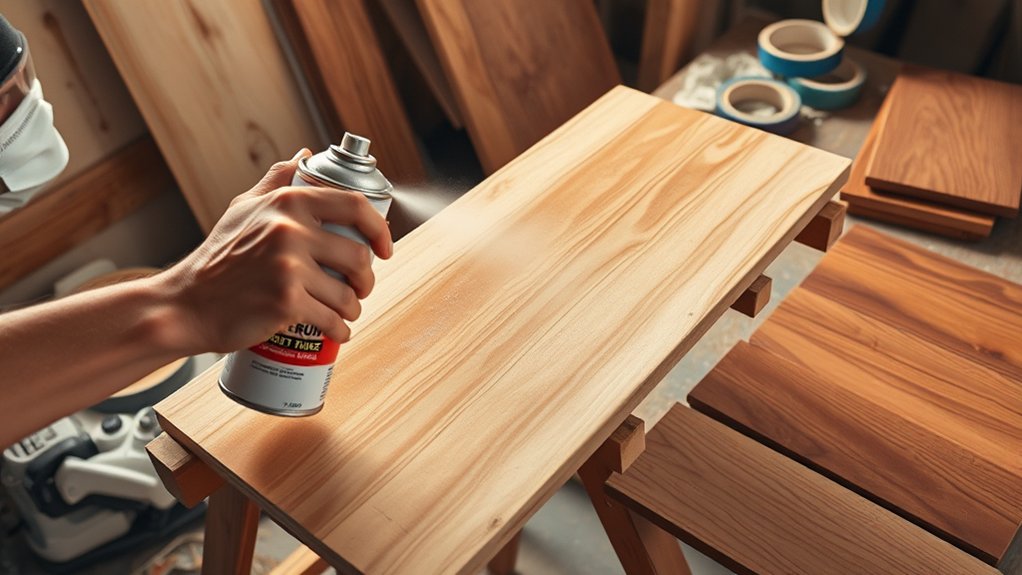
Before you start spraying Rust-Oleum on wood, make sure the surface is clean, sanded, and dust-free for the best results. It really makes a difference!
Applying a primer is a good idea too because it helps the paint stick better and gives you a smoother finish.
When you’re ready to spray, hold the can about 10-12 inches away from the wood. Try to apply several light coats instead of one heavy one, and be sure to let each coat dry before you add the next. This way, you’ll get a nice, even look.
Surface Preparation Steps
Although applying Rust-Oleum spray paint on wood may seem straightforward, preparing the surface properly is essential to achieve a smooth, durable finish.
Start your surface prep by removing all hardware and thoroughly cleaning the wood to eliminate dirt and grease.
Next, lightly sand the surface with fine-grit sandpaper to create a texture for better paint adhesion.
After sanding, wipe away all sanding dust with a lint-free cloth to avoid imperfections.
Clean the wood using a degreaser to remove contaminants.
Sand lightly and remove sanding dust before painting.
Verify the surface is dry before you apply a coat of Rust-Oleum primer.
Allow proper drying time between coats, and finish with a clear topcoat for lasting protection.
Taking these steps really helps your paint job look great and last longer.
Primer Application Benefits
When you apply a coat of Rust-Oleum primer to wood, you improve the paint’s adhesion and prevent the wood’s natural color from bleeding through. Using Rust-Oleum 2X Ultra Cover Spray Primer guarantees a smooth finish on wood surfaces.
Before priming, lightly sanding the wood enhances adhesion even more. Always allow the primer to dry completely before painting to avoid peeling or uneven coverage. Working in a ventilated area protects you from fumes.
| Step | Benefit | Tip |
|---|---|---|
| Lightly sanding | Improves surface texture | Use fine-grit sandpaper |
| Apply primer coat | Enhances adhesion | Hold can 10-12 inches away |
| Allow to dry | Prevents peeling | Wait 30 minutes minimum |
| Use Rust-Oleum 2X | Smooth, long-lasting finish | Ideal for all wood surfaces |
Spray Painting Techniques
Shake the Rust-Oleum spray paint can thoroughly to blend the pigments and solvents evenly.
Before you spray paint wood, make sure the primer is dry to guarantee proper adhesion. When you apply the paint, hold the can 10-12 inches from the surface and use light, even strokes.
Multiple thin coats are also available to build up color and extra durability without drips. Allow 20-30 minutes drying time between coats for the best results.
Work to guarantee good ventilation and wear protective gear.
Follow these spray painting techniques:
- Apply a Rust-Oleum primer first for better adhesion and to prevent bleeding.
- Use several light coats rather than one heavy coat to avoid uneven texture.
- Maintain consistent distance and motion to achieve a smooth finish.
Protecting Rust-Oleum Painted Wood
To keep your Rust-Oleum painted wood looking its best, applying a clear topcoat is essential. It helps enhance durability and shields the finish from chips, scratches, and everyday wear.
You can choose from Rust-Oleum’s clear coat options like matte or gloss to match the look and protection level you want. Just make sure the paint is fully dry before you apply the topcoat so it sticks properly.
Select matte or gloss clear coat to suit your style, ensuring paint is fully dry before application.
If you’re working with outdoor wood, pick a UV-resistant clear coat. This will protect your wood from sun damage and fading over time.
Regular maintenance really matters too. Clean your painted wood gently with a mild degreaser to keep the finish looking fresh and to extend its life.
Fixing Common Rust-Oleum Painting Issues
Although Rust-Oleum is designed for easy application, you might run into common issues like peeling, bubbling, or uneven coverage if the surface isn’t properly prepared or the conditions aren’t ideal.
To fix these problems, focus on proper surface prep, use a primer, and apply coats correctly. Here’s how you can tackle common issues effectively:
Confirm the wood is clean, dry, and lightly sanded to improve adhesion and prevent peeling.
Apply a Rust-Oleum primer to seal the wood, which helps avoid color bleed and gives you smooth coverage.
Use multiple light coats instead of one heavy coat, allowing 20-30 minutes drying time between coats to reduce bubbling and drips.
Finally, finish with a clear topcoat to protect your work and extend durability.
This extra step really helps keep your paint job looking fresh for longer.
Rust-Oleum Safety and Cleanup Tips
When using Rust-Oleum, make sure you’re working in a well-ventilated area to keep those fumes at bay.
It’s also a good idea to wear protective gear like gloves, safety glasses, and a mask to keep your skin and eyes safe.
You’ll want to store your Rust-Oleum products away from heat sources and open flames since they can be a fire hazard.
Once you’re done painting, clean up any spills right away.
And don’t forget to dispose of all materials safely, following your local regulations.
This way, you’ll keep your workspace and the environment safe and sound.
Ventilation And Airflow
Since Rust-Oleum spray paints release strong fumes, you should always work in a well-ventilated space with open windows, doors, or fans to boost airflow. Choosing a ventilated area helps minimize inhaling harmful chemicals and reduces health risks from prolonged exposure.
Keep your workspace free of clutter and flammable materials to reduce fire hazards linked to aerosol cans. Also, wear a mask rated for organic vapors to protect your lungs. Remember to take regular breaks outside for fresh air.
Once done, properly dispose of used containers and rags to prevent environmental contamination.
To maintain safety and efficiency:
- Work in a ventilated area with fans or open windows
- Keep your workspace free of clutter and flammables
- Dispose of used containers according to local rules
Protective Gear Usage
Wearing the right protective gear is vital for safely using Rust-Oleum spray paints. Always put on gloves to protect your skin from harmful chemicals and paint overspray. Safety glasses shield your eyes from airborne particles and accidental splashes.
A mask is important to prevent inhaling fumes, especially in a well-ventilated area where fresh air helps minimize fume concentration. Avoid working near heat sources to reduce fire risks.
If paint contacts your skin, wash it off immediately with water to prevent irritation. Using the proper protective gear not only keeps you safe during application but also guarantees a smoother cleanup process.
Following these precautions lets you focus on achieving great results while maintaining your health and safety. It’s all about staying safe so you can enjoy your project without any worries.
Safe Disposal Practices
Although disposing of Rust-Oleum products may seem straightforward, following proper safe disposal practices is essential to protect both your health and the environment.
Improper handling of leftover paint, used rags, and spray cans can lead to environmental harm and potential hazards. Always check your local disposal guidelines to handle these materials correctly.
Here are key tips for safe disposal practices:
- Dispose of completely empty Rust-Oleum spray cans in regular trash only if allowed by local regulations.
- Donate or use leftover paint for smaller projects instead of discarding it, reducing waste.
- Store used rags soaked with paint thinner or mineral spirits in a sealed metal container to prevent fire risks.
Following these steps helps you safely manage hazardous materials and minimize environmental impact.
It’s all about being careful and responsible, so you keep yourself and the planet safe.
Frequently Asked Questions
Can Rust-Oleum Be Used on Outdoor Wooden Furniture?
Yes, you can use Rust-Oleum on outdoor wooden furniture for excellent outdoor durability and weather resistance.
Start with thorough surface preparation by cleaning and drying the wood completely. Apply a primer for better adhesion, then choose your preferred color options.
Make sure to follow the recommended drying times between coats to avoid peeling. Use Rust-Oleum’s water-resistant topcoats to protect against UV damage and scratches. This will help keep your furniture looking great for longer.
To maintain your furniture, clean it regularly and touch up any chips promptly. That way, your outdoor wooden pieces will stay in good shape season after season.
How Long Does Rust-Oleum Take to Fully Cure on Wood?
Rust-Oleum usually takes about 24 hours to fully cure on wood, but drying time depends on environmental factors like humidity and temperature.
For best paint adhesion and finish durability, start with thorough surface preparation. Clean and sand the wood well.
Use thin, even coats and allow proper drying between applications.
After curing, try to avoid heavy use for 48 hours. You might also want to consider a clear topcoat to protect the finish longer. It really helps keep things looking great!
Is Rust-Oleum Safe for Wooden Toys or Children’s Furniture?
Yes, Rust-Oleum offers non-toxic options that meet safety standards, making it suitable for wooden toys and children’s furniture.
You’ll want to choose water-based paints with low VOCs for child safety and guarantee the finish durability by applying a clear, non-toxic topcoat.
Pay attention to paint texture for smooth application, use recommended methods, and follow clean up tips with soap and water.
Always let the paint fully cure before use to keep things safe. That way, you make sure everything is good to go for the kids!
Can Rust-Oleum Be Applied Over Previously Painted Wood Without Sanding?
Yes, you can apply Rust-Oleum over previously painted wood without sanding, but surface preparation is key.
Make sure to clean the surface thoroughly to guarantee paint adhesion.
Using a primer is often necessary, especially for glossy finishes. It helps improve bonding and prevents bleed-through.
Choose your color carefully and apply thin, even coats with proper application techniques.
Allow adequate drying times between coats to get a smooth, durable finish that lasts.
What Storage Conditions Extend the Shelf Life of Rust-Oleum Paint?
You might think storing Rust-Oleum is simple, but shelf life depends on careful storage.
Keep your paint in a cool, dry spot between 40°F and 90°F for temperature stability. Seal the container tightly to prevent air exposure, and control humidity to avoid degradation.
Watch for expiration signs like thickening or separation.
Follow these storage tips to preserve paint quality and guarantee it’s ready for your next project. Taking these steps really helps keep your paint fresh and usable when you need it.
Conclusion
Using Rust-Oleum on wood is a smart choice for durable, attractive finishes. Did you know Rust-Oleum spray paints can cover up to 25% more surface than some competitors? That means fewer cans and less effort for your projects.
By properly prepping and priming your wood, you’ll get smooth, long-lasting results. Just follow safety tips and cleanup guidelines to keep your workspace safe and your finish flawless every time.