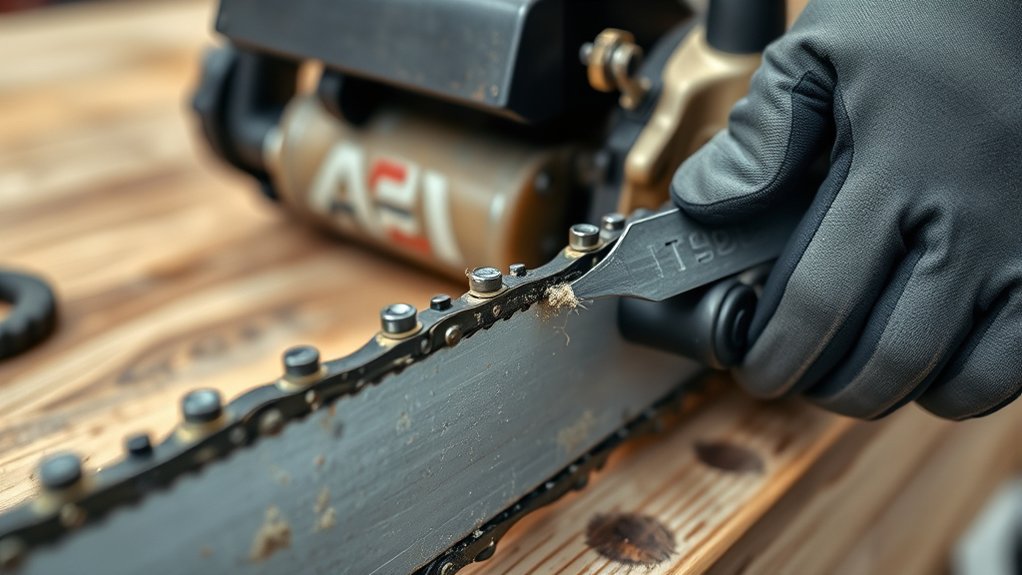
How Often Sharpen Chainsaw – Timing Guide For Better Cutting
You should sharpen your chainsaw chain after about every six hours of cutting or two full tanks of gas to keep it performing efficiently and safely. Watch for signs like fine sawdust, uneven cuts, or increased vibration, which indicate dullness.
Use the right round file and maintain consistent tooth angles, filing depth gauges as needed. Regular sharpening extends chain life and improves control.
Keep going to discover precise sharpening steps and maintenance tips that optimize your chainsaw’s cutting power.
How to Recognize When Your Chainsaw Needs Sharpening
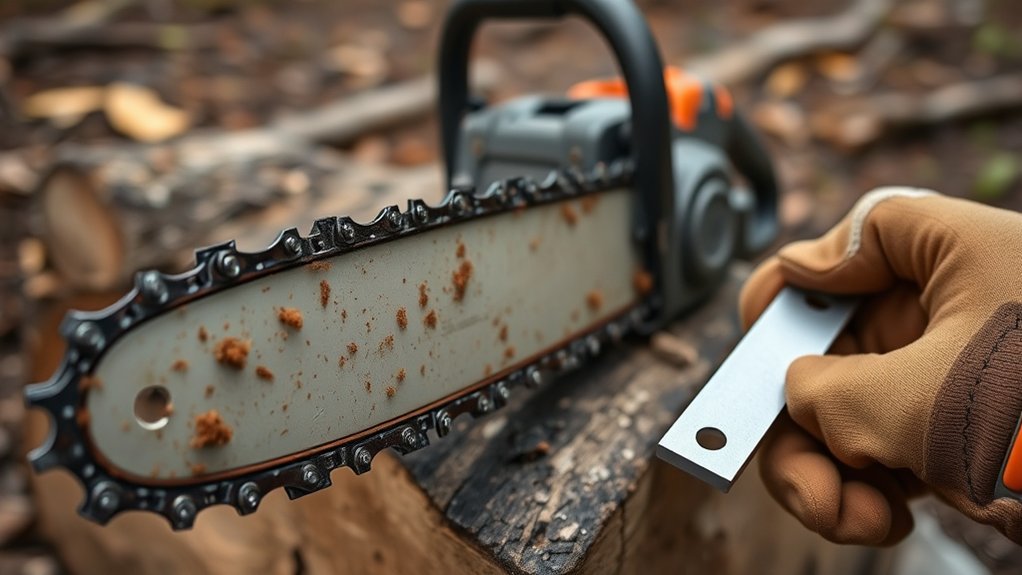
How can you tell when your chainsaw needs sharpening? One key sign is when the saw produces fine sawdust instead of large chips, which usually means the chain is dull.
A dull chainsaw chain often creates fine sawdust rather than large, clean chips while cutting.
If your chainsaw pulls to one side, uneven cutting teeth are likely the cause, and that’s a clear signal you need to sharpen the chain.
Increased vibration or chattering during use also points to dullness. You might notice smoke even though you’ve properly lubricated the chain—that’s another sign it isn’t cutting efficiently.
It’s a good idea to check the depth gauge regularly too; if it’s too high, it can reduce cutting performance.
If you find it difficult to control or position the saw, that further confirms the chain has lost its sharpness.
Catching these signs early helps keep your chainsaw cutting smoothly and safely. So, when you notice any of these issues, it’s time to sharpen your chain.
How Often Should You Sharpen Your Chainsaw Chain?
Noticing signs like fine sawdust or uneven cuts means it’s time to sharpen your chainsaw chain. Typically, you should sharpen the chain after about every 6 hours of cutting or after two tanks of gas for consistent performance.
Use a proper file to maintain the teeth at the correct angle, ensuring efficient cutting.
Regularly inspect for crooked cuts, increased vibration, or reduced cutting speed. These indicators signal dull teeth needing immediate attention.
Keep in mind, chains can be sharpened between 5 to 10 times before replacement becomes necessary, depending on the chain’s quality and wood type.
Staying proactive with sharpening preserves cutting efficiency and reduces wear. This way, you can work safely and effectively without interruptions.
Just keep an eye on those signs and give your chain some love when needed!
What Affects How Often You Need to Sharpen Your Chainsaw
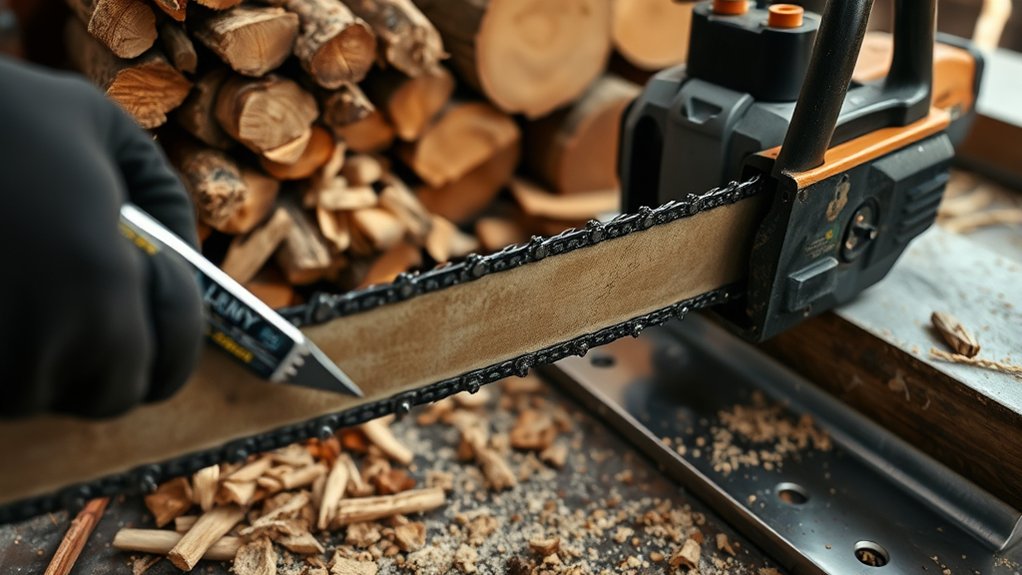
How often you need to sharpen your chainsaw really depends on the type of wood you’re cutting.
Harder woods tend to dull the chain much faster than softer ones.
Plus, how often you use your chainsaw plays a big role too—the more you cut, the quicker you’ll need to sharpen it.
On top of that, the quality and design of the chain itself also affect how long it stays sharp before it needs some maintenance.
Wood Type Impact
Because the type of wood you cut directly affects your chainsaw’s chain wear, understanding this factor is essential for maintenance scheduling.
Hardwoods, being denser, dull your cutting edges faster. This means you’ll need to sharpen your saw more frequently, often every few hours or after 1-2 tanks of gas.
Softer woods allow longer intervals between sharpenings since they put less strain on the chainsaw. Moreover, chainsaw chains come in different sizes and designs suited for specific wood types.
For example, ripping chains cut along the grain and generally stay sharper longer in softwood.
Crosscutting hardwoods dull chains rapidly due to increased resistance and abrasive particles like dirt or sap embedded in the wood.
By matching chain type and sharpening frequency to the wood you tackle, you maintain peak cutting efficiency and extend chain life.
It really pays off to pick the right chain for the job!
Cutting Frequency
The frequency with which you need to sharpen your chainsaw depends largely on how often and intensively you use it. Your chainsaw’s cutting frequency varies with factors such as wood hardness and environmental conditions.
To maintain peak performance, watch for signs to sharpen, like fine sawdust instead of wood chips. Use tools like the STIHL 2-IN-1 FILE to guarantee precision during maintenance.
Consider these points to determine your sharpening frequency:
Harder woods require more frequent sharpening, sometimes every few hours. Softer woods allow longer intervals between sharpening. Continuous cutting may extend sharpening intervals up to a full day.
Dirt and debris accelerate chain dulling. User habits, such as sharpening every three tanks of gas, influence timing. So, adjust sharpening frequency based on these practical indicators.
Chain Quality
Although you might focus on cutting habits, the quality of your chainsaw chain plays an essential role in determining how often you’ll need to sharpen it. Chains made from premium materials endure cutting stress better, so the best saw chains become dull less quickly.
The type of grind also matters: square grinds maintain their edge longer than round grinds, reducing sharpening frequency.
Task-specific chains wear differently, so consider your typical use when choosing chain quality. To maximize chain life, regularly file at regular intervals and sharpen the teeth before they become noticeably dull.
Proper lubrication and tensioning further extend chain durability.
Understanding these factors helps you optimize maintenance schedules and avoid premature sharpening. This way, you ensure efficient, safe cutting performance every time.
Best Tools for Sharpening Your Chainsaw
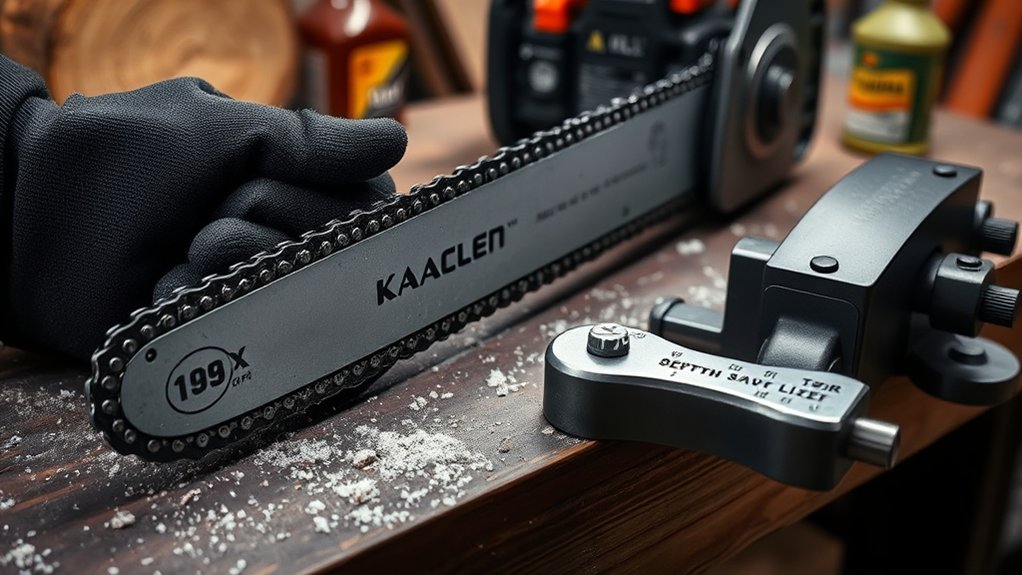
To sharpen your chainsaw effectively, you’ll need the right tools. Start with round and flat files that match your chain’s pitch number.
One handy option is the STIHL EasyFile 2 in 1 File Guide. It’s great because it files both the teeth and depth gauges at the same time, helping you get consistent results.
Also, don’t forget to check your files for wear before you begin.
And to keep the angles just right while sharpening, it’s best to secure your chainsaw in a vise.
Essential Sharpening Tools
- A round file matched to your chain’s pitch for accurate tooth sharpening
- A filing gauge to measure and maintain consistent tooth height
- The STIHL EasyFile 2-in-1 File Guide, which streamlines filing cutting teeth and depth gauges simultaneously
- High-quality files to verify sharpness and even wear
- Protective gloves and a secure vice for safety and stability during sharpening
Regularly inspect your round file’s condition and use the filing gauge to keep tooth height uniform.
These tools help guarantee efficient, safe, and professional sharpening every time you service your chainsaw.
File Types And Sizes
Anyone serious about chainsaw maintenance knows that selecting the correct file type and size is essential for effective sharpening. Chainsaw files come in sizes matching your chain pitch, which is indicated on the depth gauge. Using the right size guarantees precision.
Round files sharpen cutting teeth, while a flat file adjusts the depth gauge. Each tool serves distinct roles, making it important to use both correctly.
The STIHL EasyFile 2 in 1 File Guide streamlines this process by combining both functions. It allows you to sharpen cutting teeth and depth gauges simultaneously, saving time and effort.
High-quality chainsaw files maintain chain performance with durability and consistency. Regularly inspect your files because worn-out ones cause uneven teeth and reduce cutting efficiency.
How to Sharpen Your Chainsaw Chain Step-by-Step
Begin by gathering all essential materials, including a round saw chain file, a filing gauge, and protective gloves.
First, clean the chainsaw chain and inspect it for any damage. Use the filing gauge to mark a master tooth, ensuring consistent cutter length.
When you sharpen a chainsaw, file the cutting edge at a 90-degree angle to the guide bar, using forward strokes only. Make sure to maintain uniformity by matching the number of strokes on each cutter.
Check for a reflective edge, which indicates correct sharpening.
Remember to use the right tools throughout the process.
Here are the key steps to sharpen a chainsaw chain:
- Clean and inspect the chain
- Mark a master tooth with the filing gauge
- File cutters at a precise 90-degree angle
- Count uniform filing strokes
- Check depth gauge alignment for safety
How to Adjust Depth Gauges for Safer, Efficient Cutting
Although sharpening the cutters is essential, you must also adjust the depth gauges afterward to maintain safe and efficient cutting performance.
Use a filing gauge to check the depth gauge setting. If the depth gauge protrudes beyond the gauge, file the depth gauge horizontally until it’s flush with the filing surface.
This guarantees the cutting teeth engage wood properly without excessive force. Regularly inspect the depth gauges after each sharpening, as they can become too high and increase kickback risk.
Ensuring correct depth gauge height prevents excessive force and reduces the risk of dangerous kickback.
When you adjust depth gauges, work carefully to avoid contact with freshly sharpened teeth, preserving their sharpness and cutting efficiency.
Proper depth gauge setting balances safety and performance, making your chainsaw cuts smoother and more controlled.
How to Maintain Sharp Chainsaw Teeth Between Sharpenings
Consistently maintaining your chainsaw teeth between full sharpenings guarantees peak cutting performance and extends the life of the chain.
After every tank of fuel, lightly sharpen the chainsaw chain using a round file and filing gauge to preserve uniform cutter length. Always inspect and clean the chain to remove debris and resin buildup from cutting clean wood, which dulls teeth prematurely.
Proper lubrication reduces friction and overheating, preventing accelerated dullness.
Store your chainsaw in a dry environment and avoid contact with dirt or hard surfaces to protect sharpness.
Sharpen cutters after each use with a filing gauge.
Clean the chain thoroughly to remove resin and debris.
Lubricate the chain consistently during operation.
Store the chainsaw dry and off dirty surfaces.
Check and adjust the depth gauge periodically for safety.
Tips to Extend Your Chainsaw Chain’s Life Between Sharpenings
Five key practices can considerably extend your chainsaw chain’s life between sharpenings.
First, clean the chainsaw chain regularly to remove sawdust and debris that accelerate dullness.
Next, always tension the chain properly; a loose chain increases friction, causing premature wear.
Monitor the depth gauge closely and file it as needed to maintain peak cutting efficiency.
To avoid one-sided wear, rotate the chainsaw bar periodically, ensuring even use of the chain’s teeth.
Also, steer clear of cutting through dirt or nails, which can damage the chain rapidly.
Proper lubrication with high-quality bar and chain oil reduces overheating and wear.
Finally, store your chainsaw with the chain covered and dry to prevent rust.
These steps complement your chainsaw sharpening routine and help maximize chain longevity and cutting performance.
Frequently Asked Questions
Can I Sharpen My Chainsaw Chain Without Removing It?
Yes, you can sharpen your chainsaw chain without removing it by using DIY sharpening methods. Just make sure the chain is secured with proper tension before you start.
Then, apply sharpening techniques using a round file or a chainsaw sharpener.
It’s a good idea to compare different sharpening tools to find the one that suits you best. Also, keep an eye on the chain wear indicators so you know when maintenance is needed.
Following these chain maintenance tips will help guarantee efficient cutting.
Plus, it’ll prolong the life of your chain while you sharpen it in place safely and effectively.
How Do I Store My Chainsaw to Keep the Chain Sharp Longer?
Oh sure, just toss your chainsaw in a swamp and expect a sharp chain!
For proper storage, keep it in a cool, dry spot with excellent humidity control to prevent rust.
Use a protective cover to shield the chain and bar from dust.
Follow a strict cleaning routine, removing debris after use.
Manage fuel by emptying or stabilizing it before storage.
Doing these things will help ensure your chainsaw stays sharp and ready for action longer.
What Safety Gear Is Recommended When Sharpening a Chainsaw Chain?
When sharpening chainsaw chains, you should always wear protective equipment like gloves, safety goggles, and a dust mask. These help guard against cuts, flying debris, and inhaling particles.
It’s also important to implement safety precautions by selecting the right tools for efficient sharpening techniques and chain maintenance. Steel-toed boots protect your feet from slipping tools.
And if you’re using power tools, wearing hearing protection reduces noise risks.
Following these safety measures guarantees precise, safe sharpening. Plus, it helps prolong your chain’s lifespan.
Can a Dull Chainsaw Chain Damage the Chainsaw Motor?
Yes, a dull chainsaw chain can damage the chainsaw motor by increasing motor strain due to reduced cutting efficiency. When the chain gets worn out, the motor has to work harder than usual. This extra effort can lead to overheating and even premature failure.
To avoid this, it’s important to keep up with regular maintenance like timely sharpening and inspecting the chain. If you ignore safety concerns during operation or sharpening, it only makes the motor work harder and shortens the tool’s lifespan.
How Do Different Chain Types Affect Sharpening Frequency?
Different chain designs impact sharpening frequency based on cutting performance and wood types. For example, standard chains dull faster with crosscutting, while ripping chains last longer cutting with the grain.
Safety chains need more frequent sharpening due to their protective design, whereas skip chains reduce friction and extend intervals.
Use precise sharpening techniques tailored to your chain type and follow maintenance tips like cleaning debris regularly to optimize cutting efficiency and chain longevity.
Taking care of your chain properly can make a big difference in how often you need to sharpen it. So, keep an eye on your chain’s condition and sharpen it as needed to get the best results.
Conclusion
You should sharpen your chainsaw chain every 5 hours of use to keep it running at its best and stay safe. A dull chainsaw can cut up to 30% less efficiently, which means more fuel burned and extra wear on your tool.
If you catch the signs early and sharpen it properly, including adjusting the depth gauge, you’ll get cleaner cuts and longer use out of your chain. Regular maintenance doesn’t just make your chain last longer—it also keeps your chainsaw safer and working better.
Keep it sharp, and your chainsaw will do the same!