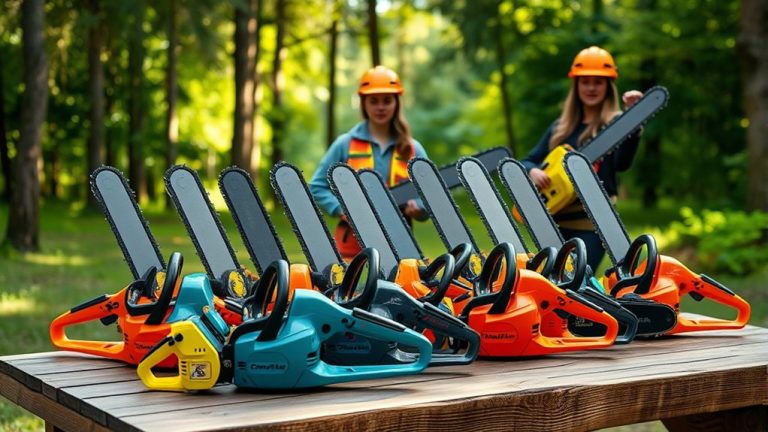
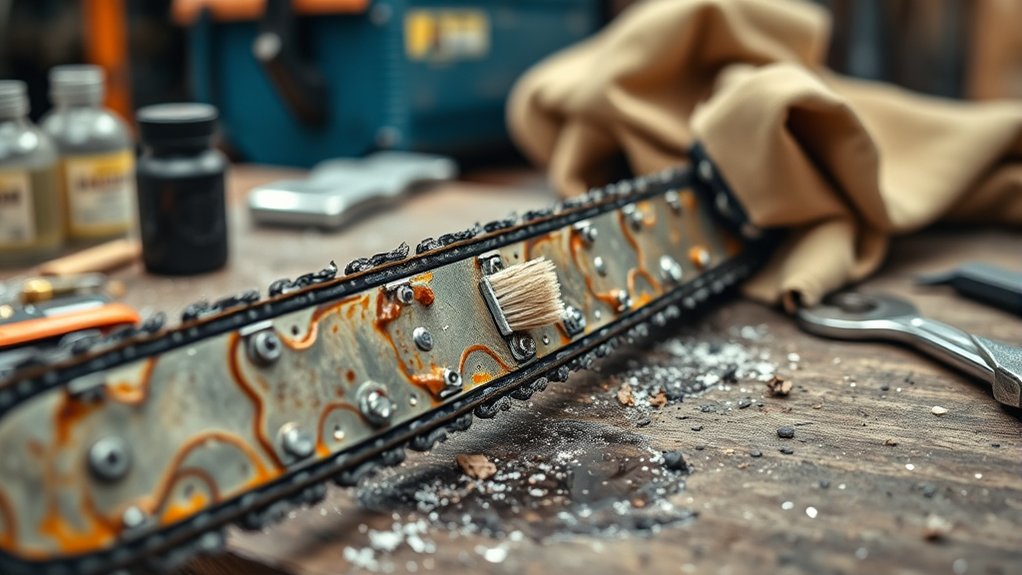
How To Clean A Chainsaw Blade – Maintenance Tips For Longer Life
To clean your chainsaw blade, first make sure the saw is powered off and the chain brake is engaged. Remove the chain and guide bar carefully. Then soak the chain in a degreaser to dissolve resin and grime.
Clean and dry everything thoroughly before applying a light coat of oil. Use a dressing tool to remove burrs from the guide bar. Don’t forget to regularly check the chain tension for safe operation.
Proper upkeep really extends your chainsaw’s life. And there’s more to master if you want to get peak performance from your tool.
Prepare Your Chainsaw for Safe Cleaning
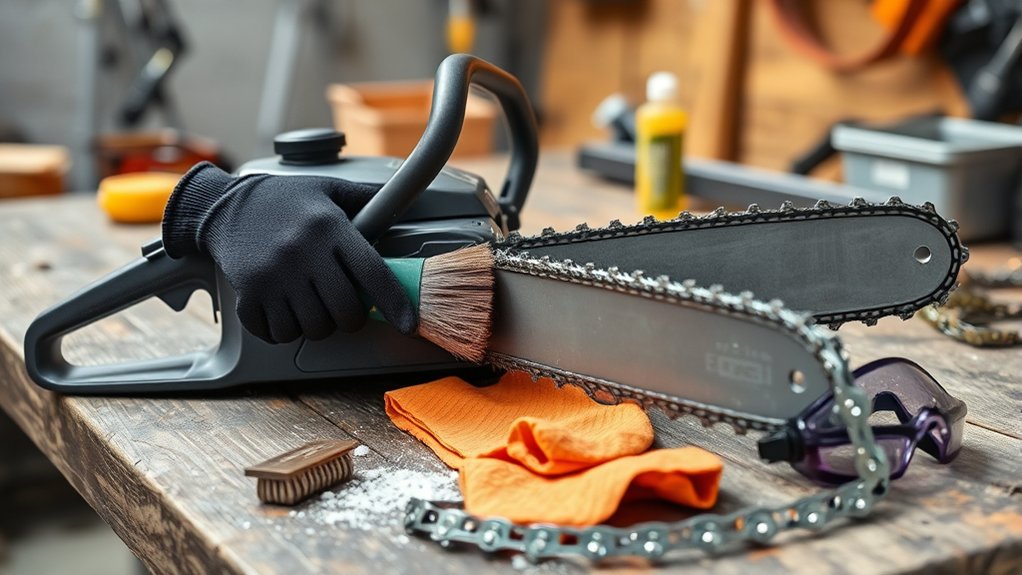
Before you start cleaning, make certain your chainsaw is completely powered down. Unplug electric models or remove their batteries. For gas chainsaws, turn off the engine and engage the chain brake.
To prepare your chainsaw for safe cleaning, place it on a flat, stable surface like a workbench. This guarantees stability and makes it easier to access all parts during maintenance.
Always wear appropriate protective gear, including work gloves and safety glasses. This will shield you from sharp edges and debris.
Be sure to consult the chainsaw’s instruction manual for specific safety protocols and recommended protective equipment. Taking these steps prevents accidental starts and protects you from injury while cleaning.
Preparing your chainsaw properly lays the foundation for effective, safe maintenance procedures.
Remove and Inspect the Chainsaw Chain
Once you’ve confirmed the chainsaw is off and the chain brake engaged, you can safely remove the chain for inspection.
Begin by loosening the nuts or screws securing the guide bar. Then, carefully remove both the bar and chain according to the manufacturer’s instructions.
Next, inspect the chain thoroughly. Look for dull or damaged teeth, burrs, and any cracks that could compromise cutting efficiency or safety.
Also, check the guide bar for bends or pushed-out edges that could affect chain alignment.
This inspection is a critical part of chainsaw maintenance. It helps you identify parts that need repair or replacement before cleaning.
Doing this regularly guarantees peak performance and extends the lifespan of your chainsaw components.
Clean the Chainsaw Chain Using Proper Tools and Solvents
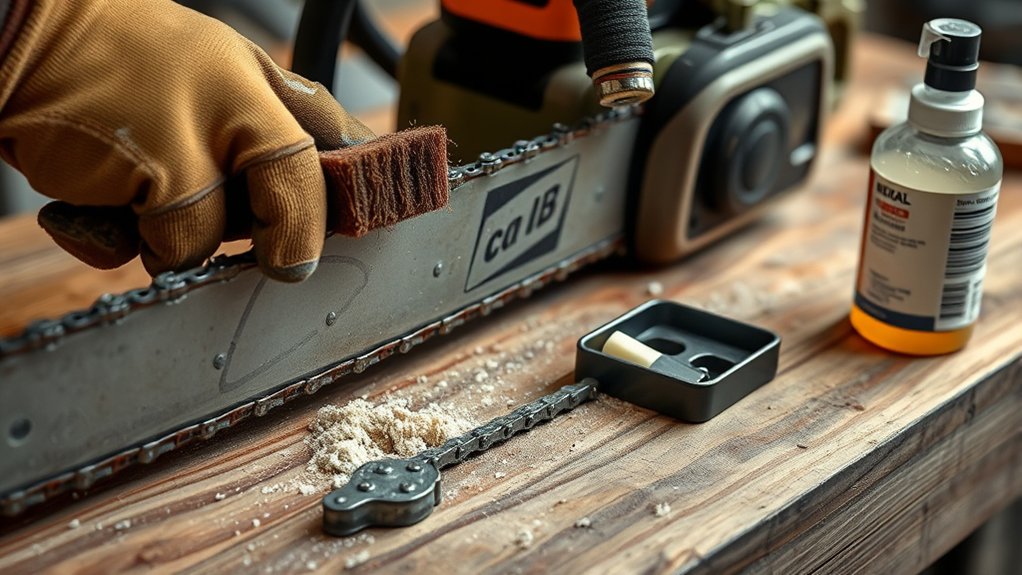
You’ll want to have some specific tools on hand, like a file gauge and a guide bar dressing tool, to really clean the chain properly.
It’s also a good idea to pick out a high-quality degreaser—that way, you can soak the chain and break down all the resin and grime that builds up.
Start by taking the chain off the chainsaw, then give it a good soak in the degreaser.
While it’s soaking, you can clean out the oil channels to make sure everything flows smoothly.
After that, take a close look at the teeth to check for any damage or wear.
Once you’ve inspected everything, rinse the chain well and dry it thoroughly.
Finally, don’t forget to apply a light coat of oil to keep the chain running smoothly and prevent rust.
It’s a bit of a process, but taking these steps will help your chainsaw work better and last longer.
Essential Cleaning Tools
Three essential tools will make cleaning your chainsaw chain more efficient and thorough: a high-quality resin solvent, a wire brush, and a file gauge.
Use the resin solvent to break down stubborn grime and sap buildup. Soak the chain for 10-15 minutes before rinsing.
The wire brush effectively dislodges debris from the chain’s links and teeth. This helps maintain smooth operation.
To guarantee proper lubrication, use the file gauge to clean the oil outlet channel and groove. This step is critical for consistent oil flow.
Don’t forget to clean the air vents around the chain area. This prevents overheating.
Always wear protective gloves when handling these tools and solvents to safeguard your hands during maintenance.
These tools keep your chainsaw operating at peak performance and extend its service life. They make the whole cleaning process easier and more effective.
Effective Solvent Choices
Selecting the right solvent is essential for effectively breaking down sap, resin, and grime on your chainsaw chain. Choosing effective solvent choices optimizes cleaning and prolongs chain life.
Use a high-quality resin solvent to dissolve tough buildup, guaranteeing sharp cutting performance.
WD-40 Specialist Degreaser is ideal for penetrating grime on both the chain and guide bar. For best results, soak the chain in degreaser for 10-15 minutes before rinsing and drying thoroughly.
Remember these maintenance tips:
- Apply resin solvent to target stubborn sap and resin.
- Soak chain in degreaser to loosen grime efficiently.
- Dry chain completely to prevent rust and guarantee lubrication.
These steps guarantee thorough cleaning and keep your chainsaw running smoothly and lasting longer.
Step-by-Step Cleaning Process
Start by powering off your chainsaw and disconnecting it from any power source to confirm safety before dismantling the chain and guide bar.
Next, soak the chain in a high-quality degreaser for 10-15 minutes to loosen dirt and resin buildup.
After soaking, use a wire brush or a specialized cleaning tool to scrub the chain and guide bar, paying close attention to the groove and oil channels to guarantee efficient chain oil flow.
Rinse both components thoroughly with clean water and hang them to dry completely to prevent rust formation.
Finally, apply a light coat of chain oil on the dried chain and guide bar before reassembling. This process confirms smooth operation and extends the lifespan of your chainsaw blade.
Clean the Guide Bar and Sprocket Thoroughly
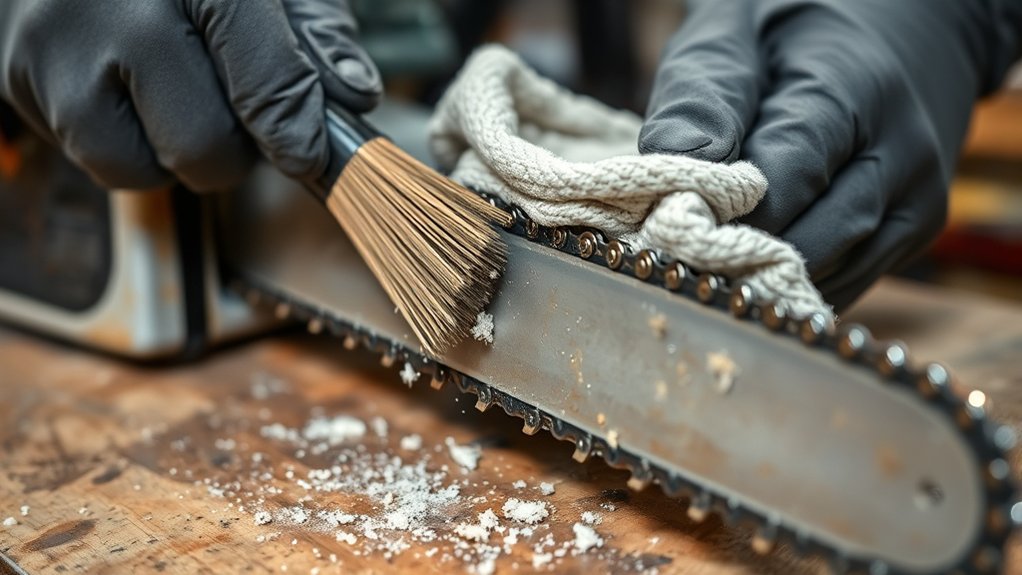
Remove sawdust and debris from the guide bar and sprocket using a damp cloth or light brush to keep everything running smoothly.
To clean the guide bar thoroughly, take it off the chainsaw first. Then, use a brush to get rid of any grime and sawdust, especially around the sprocket and oil inlet holes.
Make sure the oil tank is supplying lubricant properly by clearing out these holes.
Here are some key steps to follow:
- Check the guide bar for any cracks, bends, or pushed-out edges that could mess with cutting efficiency.
- Use a small tool to clear the oil holes so lubrication doesn’t get blocked.
- Lubricate the roller tip where the chain meets the bar to cut down on friction and wear.
Doing this regular maintenance helps your guide bar and sprocket last longer and keeps your chainsaw performing at its best.
Sharpen the Chainsaw Chain
Keep your chainsaw cutting efficiently by regularly sharpening the chain, especially after heavy use or refueling.
To sharpen the chainsaw chain, use a round file or specialized sharpener, maintaining the correct filing angle, usually around 30 degrees. File each tooth evenly with three to six strokes, alternating sides to guarantee uniform sharpness.
Make sure to pay close attention to the chain’s depth gauges. These should be filed down every third sharpening to maintain the ideal height for effective cutting.
Operating with a dull chain increases resistance, causes fatigue, and raises the risk of kickbacks, which can compromise safety and engine performance.
Consistent sharpening preserves cutting efficiency, reduces engine wear, and improves control.
Remove Burrs From the Guide Bar and Check Chain Tension
You should regularly inspect the guide bar for burrs. If you find any, use a dressing tool to carefully remove them.
After that, check the chain tension by pulling the chain away from the bar. It should snap back into place without being too loose or too tight.
If needed, adjust the tension screw to keep the chain properly aligned. This helps prevent damage and keeps everything safe while you work.
Guide Bar Burr Removal
Regularly inspect the guide bar for burrs and damage. These imperfections can hinder cutting performance and speed up chain wear. To keep everything working at its best, you need to remove dirt and burrs from the guide bar regularly.
Use a guide bar dressing tool to carefully file down any burrs. This helps create a smooth surface so the chain can run efficiently.
Here’s how to do it:
- Clean the guide bar thoroughly to get rid of dirt and debris.
- Use the dressing tool to gently remove any burrs or rough edges.
- Check the chain tension by pulling the chain away from the guide bar; it should snap back quickly.
Doing this regularly helps prevent uneven wear and extends the life of both the guide bar and the chain. It’s a simple step that really makes a difference.
Chain Tension Adjustment
Two critical steps guarantee your chainsaw runs smoothly and safely: removing burrs from the guide bar and adjusting the chain tension.
First, inspect the guide bar carefully for any burrs. Use a guide bar dressing tool to remove them. This prevents uneven wear on both the bar and chain.
Next, check the chain tension by pulling the chain away from the bar. It should snap back without slack. If it’s too loose, it risks flying off and causing damage. If it’s too tight, it may overheat and wear prematurely.
Use the tension adjustment screw near the base of the guide bar to set the proper tightness.
Regularly performing these chain and bar maintenance steps guarantees peak performance. Plus, it extends the lifespan of your chainsaw.
Clean and Maintain Chainsaw Battery and Fuel Systems
Although maintaining the chainsaw blade is essential, cleaning and maintaining the battery and fuel systems guarantee your saw operates efficiently and reliably.
Maintaining the battery and fuel systems ensures your chainsaw runs efficiently and reliably every time.
For battery-powered chainsaws, regularly clean battery contacts with a damp cloth to ensure peak connectivity.
Also, store battery packs separately from the chainsaw and charger to prevent damage and drainage.
For gas chainsaws, empty the fuel tank after each use to avoid carburetor clogging and fuel degradation.
Use high-quality fuel mixed with a fuel stabilizer to prevent varnish buildup and prolong fuel shelf life.
Moreover, clean the air filter frequently to avoid debris accumulation that reduces engine performance.
Focus on these three critical maintenance steps:
- Clean battery contacts and store batteries separately
- Empty fuel tank and use fuel stabilizer
- Maintain a clean air filter for peak airflow
Store Your Chainsaw Properly to Extend Its Lifespan
When you’re finished using your chainsaw, storing it properly plays an essential role in extending its lifespan. First, clean the entire unit thoroughly, removing sawdust, sap, and oil residue to prevent buildup that can impair performance.
Next, lubricate the chain and bar with fresh bar oil to protect against rust and guarantee smooth operation. Store your chainsaw in a clean, dry place away from moisture and extreme temperatures. These conditions can damage components, so it’s best to keep it safe and dry.
If you plan to store it for an extended period, drain the fuel tank or add a fuel stabilizer to maintain gasoline quality and prevent carburetor issues.
Finally, check the chainsaw periodically for wear or damage, making sure it’s always ready for immediate use.
Proper storage is critical to preserving your chainsaw’s functionality and longevity. Taking these simple steps really makes a difference and keeps your tool in top shape for years to come.
Frequently Asked Questions
Can I Use Household Cleaners to Clean My Chainsaw Chain?
You shouldn’t use household cleaners to clean your chainsaw chain. These products often contain harsh chemicals that can accelerate chain rust and damage metal components.
Instead, focus on cleaning your chain frequently with specialized degreasers or resin removers. This helps protect your chain’s integrity better than any household cleaner could.
After cleaning, make sure to rinse thoroughly and dry completely to prevent rust buildup.
Proper maintenance with the right products will extend your chain’s lifespan much more effectively.
How Often Should I Replace the Chainsaw Chain Entirely?
Imagine your chainsaw struggling through wood, its chain dragging and dull. You should replace the chain entirely every 5 to 10 hours of heavy use or when chain replacement signs appear.
Look out for worn rivets, stretched links, or teeth under 1/8 inch.
Combine this with proper chain tensioning techniques and follow sharpening frequency guidelines to keep cutting smooth and safe.
Don’t ignore cracks or excessive burrs. They’re clear signals for immediate replacement.
What Are the Signs of a Damaged Guide Bar?
When performing your guide bar inspection, watch for cracks, bends, or pushed-out edges. These wear indicators signal damage you don’t want to ignore.
Check the chain groove for excessive wear or grooves that affect tension and cutting.
Rounded or worn guide bar tips also mean it’s time for a replacement. Blocked oil holes can reduce lubrication and speed up wear.
Keeping up with regular maintenance helps you catch these signs early. That way, you can prolong your chainsaw’s performance and keep it safe to use.
It’s all about staying on top of things before small issues become big problems.
Is It Safe to Clean a Hot Chainsaw Blade Immediately After Use?
You shouldn’t clean a hot chainsaw blade immediately after use. It’s like trying to tame fire with bare hands.
Make sure to prioritize cleaning safety by allowing the blade to cool properly for at least 10-15 minutes. This helps prevent burns and avoids thermal shock that can warp the chain or guide bar.
Try to include this cooling period in your maintenance routine. It’s a simple step that protects your chainsaw’s components and helps extend its lifespan safely and effectively.
Can Improper Chain Lubrication Cause Engine Damage?
Yes, improper chain lubrication can cause engine damage. When chain lubrication effects aren’t properly managed, increased friction generates excessive heat, stressing engine components and accelerating wear.
To guarantee engine wear prevention, you need to stick to regular maintenance practices, including checking oil levels and keeping the chain well-lubricated. This reduces binding and overheating, maintaining smooth operation and extending your chainsaw’s engine life.
Neglecting lubrication risks costly repairs and performance issues. So, it’s really worth taking the time to keep your chain properly lubricated.
Conclusion
By regularly cleaning and maintaining your chainsaw blade, you can greatly extend its life. Studies show that proper upkeep can increase blade longevity by up to 50%.
Don’t skip important steps like sharpening the chain and checking its tension. These simple actions help prevent wear and keep your chainsaw performing at its best.
Also, pay close attention to the guide bar and sprocket to ensure smooth operation. With consistent care, your chainsaw will stay reliable, safe, and efficient for years to come.