What Size Chainsaw Do I Need – Right Size Buying Guide
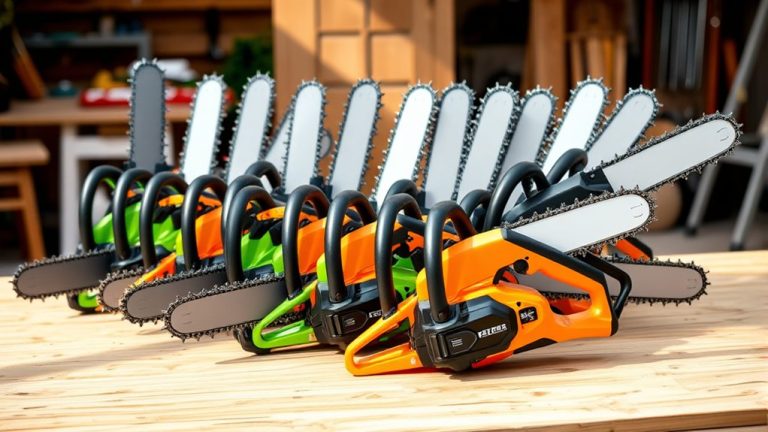
You should choose a chainsaw with a guide bar at least 2 inches longer than the wood diameter you plan to cut. For pruning, pick a 10-14 inch bar. For firewood, 16-20 inches works best. And for felling large trees, go beyond 20 inches.
Electric models suit light tasks, while gas chainsaws handle heavier cutting. Matching size to your task guarantees safety and efficiency.
Keep exploring to fine-tune your choice based on power, type, and maintenance needs.
How to Choose the Right Chainsaw Size for Your Needs
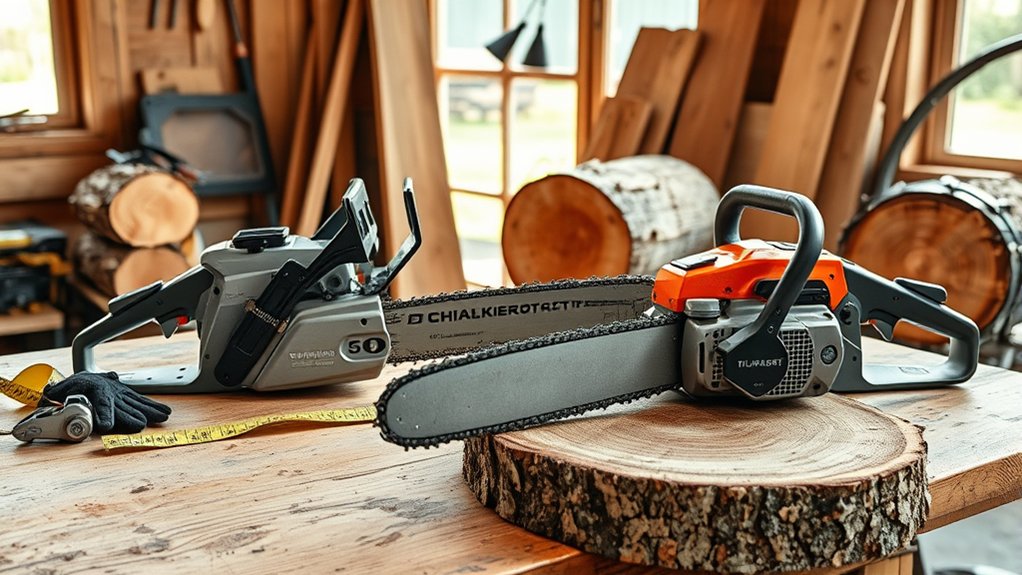
When choosing the right chainsaw size for your needs, start by determining the guide bar length based on the specific tasks you’ll perform.
For pruning, select a bar length between 10-14 inches. For cutting firewood, opt for 16-20 inches. And for felling large trees, choose bars longer than 20 inches.
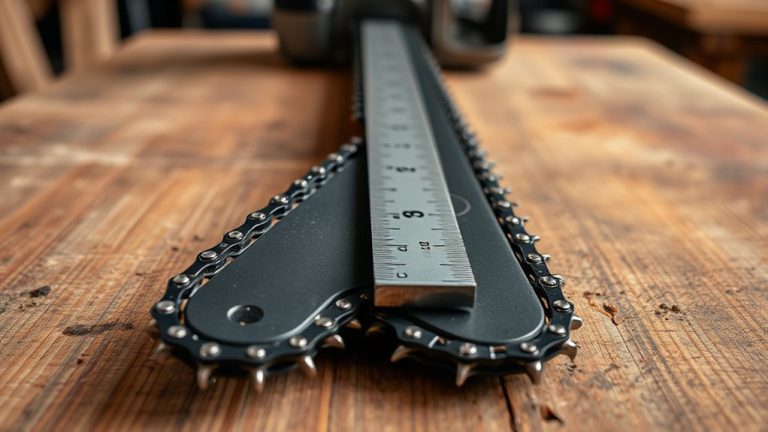
Make sure the chainsaw bar length is at least 2 inches longer than the wood’s diameter to maximize efficiency and safety.
Choose a chainsaw bar at least 2 inches longer than your wood’s diameter for optimal safety and performance.
Also, factor in the type of wood. Softwoods demand less power than hardwoods.
Think about your experience level too. Beginners will benefit from lighter, smaller chainsaws.
Finally, decide between gas, electric, or battery-powered models based on how intense the task is and your maintenance preference.
This approach helps you pick the perfect chainsaw for your specific needs.
How Chainsaw Guide Bar Length Affects Cutting Power
Your chainsaw’s guide bar length directly affects how much you can cut and how well it works. If you’re doing light tasks, shorter bars are usually the way to go.
But when you’re tackling bigger trees, longer bars give you the power you need.
That said, longer bars need a stronger engine and a bit more control to handle safely.
A good rule of thumb is to pick a bar that’s at least two inches longer than the diameter of the wood you’re cutting. This helps you get the best performance and stay safe while working.
Guide Bar Length Basics
Chainsaws typically feature guide bars ranging from 10 to 36 inches, and selecting the appropriate length directly influences your cutting power and task efficiency.
The guide bar length determines your saw’s cutting capability and the types of jobs it can handle efficiently.
Shorter bars between 6 and 14 inches offer superior control and maneuverability, ideal for pruning and light tasks.
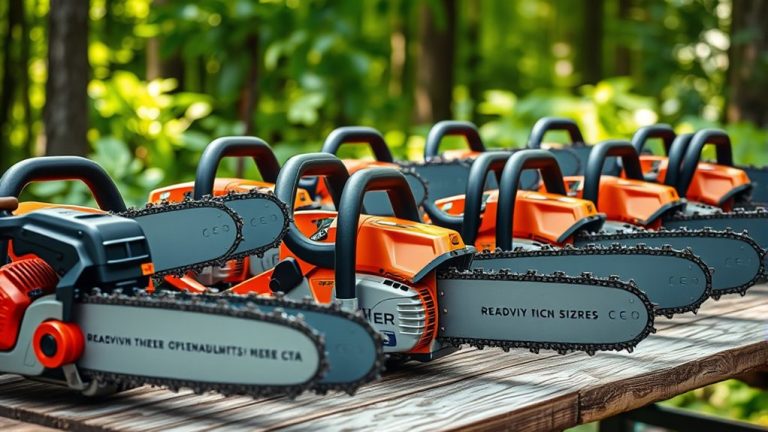
Medium bars, around 16 to 20 inches, provide a balanced combination of power and precision, suited for firewood and felling small to medium trees.
For heavy-duty applications, bars longer than 20 inches require more powerful engines and greater user skill.
To guarantee efficient cutting and minimize kickback risk, choose a guide bar at least 2 inches longer than the wood’s diameter.
This balance optimizes cutting capability without compromising safety.
Impact On Cutting Power
Although longer guide bars demand more engine power and skill, they greatly enhance cutting power by enabling deeper cuts in a single pass. When selecting chainsaw size, the guide bar length directly impacts cutting power and efficiency.
Longer bars (20 inches or more) excel at felling large trees, while shorter bars offer maneuverability but require multiple passes on thick wood.
| Guide Bar Length | Cutting Power Impact |
|---|---|
| 6-14 inches | High maneuverability; suitable for small tasks |
| 15-19 inches | Balanced power; handles medium branches |
| 20+ inches | Maximum cutting power; ideal for large trees |
Choosing an appropriate guide bar length guarantees peak cutting power and reduces strain on your chainsaw during operation. It’s all about matching the bar to the job so you get the best results without overworking your saw.
Choosing Bar Length
How do you determine the ideal guide bar length for efficient cutting? The bar length directly impacts the maximum wood diameter your chainsaw can handle. When choosing a chainsaw, aim for a bar at least 2 inches longer than the wood you plan to cut.
For cutting firewood or trees up to 16 inches in diameter, a medium-sized bar length of 18 to 20 inches offers the best balance between power and control.
Shorter bars, usually 10 to 14 inches, excel at pruning and small branches. They make maneuvering easier for lighter tasks.
Conversely, bars longer than 20 inches provide the depth and cutting power needed for felling large trees.
But keep in mind, they can be harder to control and might increase risk if they’re too big for the job.
Picking the right bar length helps improve both safety and cutting efficiency.
Key Factors: Wood Type, Task, and User Experience
When selecting a chainsaw, you must consider the type of wood, the specific task, and your own experience level to guarantee peak performance and safety.
Wood type directly influences the power and bar length required. Softwoods demand less power, while hardwoods require a longer bar and stronger engine for effective cuts.
The type of wood determines the necessary chainsaw power and bar length for efficient cutting.
Your cutting tasks also dictate size. Pruning calls for a lightweight model with a 10-14 inch bar. Felling larger trees needs 20+ inches for deep cuts. For firewood, an 18-20 inch bar balances efficiency and control.
User experience is critical. If you’re a beginner, opt for lighter chainsaws to maintain control and reduce fatigue.
Experienced users can handle heavier, more powerful units that match demanding cutting tasks and tougher wood types.
Best Chainsaw Sizes for Homeowners and Small Jobs
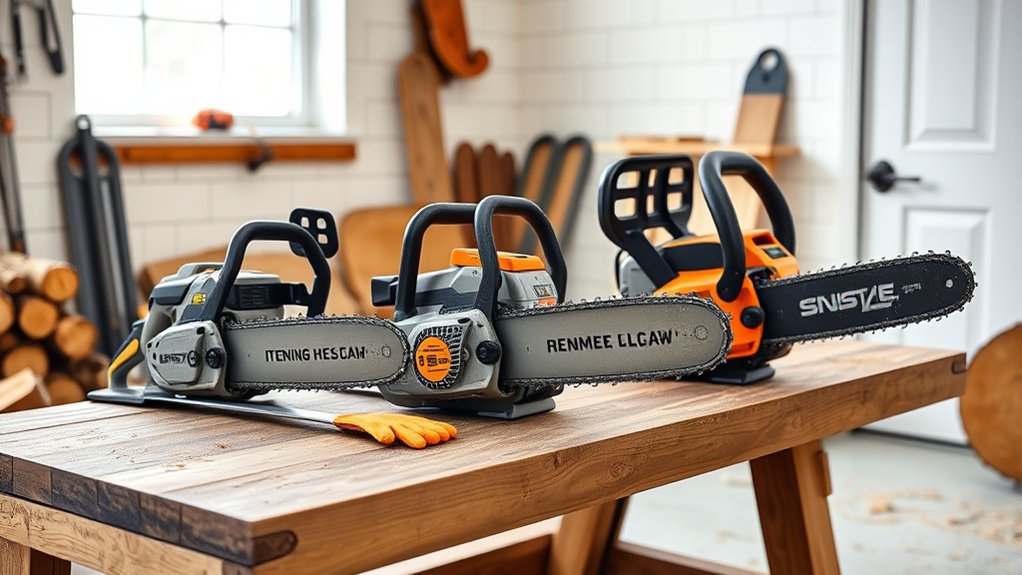
If you’re a homeowner working on small jobs, a chainsaw with a 10-14 inch bar length is usually your best bet. It strikes a great balance between being easy to handle and having enough cutting power.
For trees up to about 14 inches in diameter, a 14-inch chainsaw will do the trick. But if you need to cut slightly larger branches, going for a 16-18 inch bar can help without making the saw too hard to control.
Basically, you want to match the size of your chainsaw to the job at hand—and also consider how comfortable you’re using it.
That way, you’ll get the best results safely and efficiently.
Ideal Bar Length
Choosing the right chainsaw bar length directly impacts your efficiency and control during small-scale cutting tasks. For homeowners, the ideal bar length typically ranges from 10 to 14 inches. This makes a small chainsaw perfect for cutting small branches, pruning, and limbing.
This size offers lightweight maneuverability and reduces fatigue, allowing precise cuts. If you need to cut branches or small trees up to 12 inches in diameter, a 16-inch bar provides the necessary power while maintaining control.
When selecting bar length, verify it’s at least two inches longer than the diameter of the wood for effective cutting and fewer passes. Sticking to these guidelines helps you optimize performance and safety during your home maintenance tasks without overextending your equipment.
Task-Specific Chainsaws
Although chainsaws come in various sizes, selecting one that matches your specific tasks guarantees efficiency and safety. For homeowners and small jobs, task-specific chainsaws simplify work and reduce fatigue.
A chainsaw size with a 10-14 inch guide bar excels in pruning and limbing, providing maneuverability on small branches. For light tasks, a 14-inch chainsaw is convenient, while a 16-inch model effectively handles trees up to 12-14 inches in diameter.
When cutting firewood, opt for an 18-20 inch bar length to balance power and control, guaranteeing efficient log slicing.
Generally, a chainsaw size between 14 and 20 inches covers most homeowner needs, including trimming, felling small trees, and cutting firewood.
Always verify the bar length exceeds wood diameter by at least two inches for ideal cutting performance. This little check makes a big difference in how smoothly your saw works.
User Experience Levels
When you’re new to using chainsaws, selecting the right size directly impacts both safety and efficiency. For homeowners handling small-scale tasks like pruning and limbing, a chainsaw with a 10-14 inch guide bar offers superior maneuverability and reduces fatigue.
If you plan to cut small trees or firewood up to 14 inches in diameter, an 18-inch bar provides the necessary power without excess weight.
Considering user experience, electric chainsaws are ideal for beginners due to their lighter weight and simpler maintenance compared to gas models.
A 14-inch chainsaw strikes a balance between versatility and ease of handling, making it a smart choice for most homeowners.
Regular maintenance, including chain sharpening and bar cleaning, remains essential to guarantee safety and maintain peak performance.
Recommended Chainsaw Sizes for Farm and Ranch Work
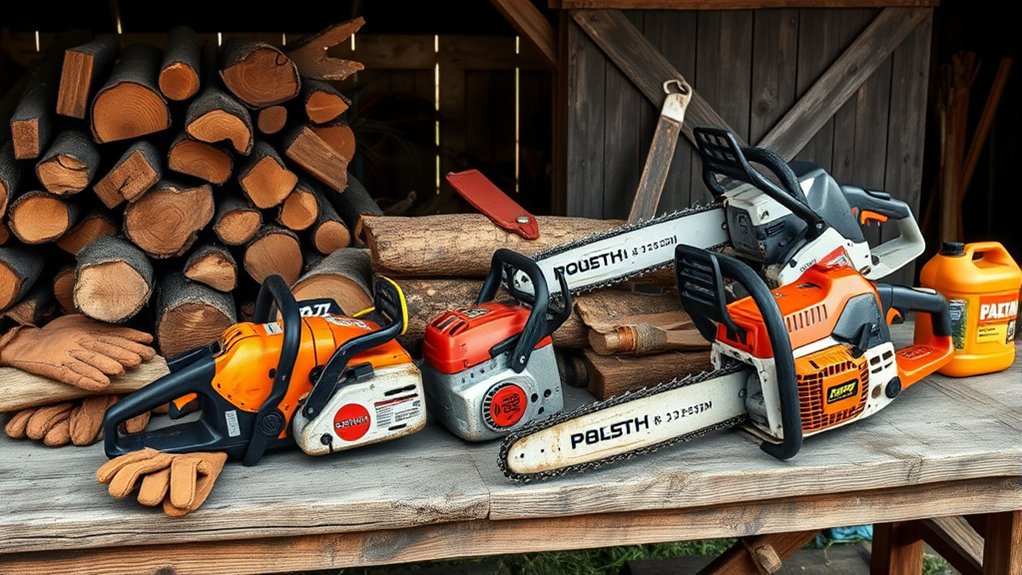
An 18 to 20-inch guide bar length offers the perfect balance of power and control for farm and ranch work. It lets you cut firewood and manage medium-sized trees efficiently.
When selecting recommended chainsaw sizes for this application, medium-sized chainsaws like the MS 271 FARM BOSS® 18 are built for durability and consistent performance. These chainsaws handle wood up to 16 inches in diameter, making them versatile for routine property maintenance.
You’ll benefit from a tool that balances power with manageable weight, which guarantees safety and ease of use, no matter your experience level.
To keep your chainsaw running at its best and extend its lifespan, regularly sharpen the chain and keep an eye on oil levels.
Choosing the right medium-sized chainsaw means efficient, reliable work across typical farm and ranch tasks. It’s all about having the right tool for the job without any hassle.
Selecting Large Chainsaws for Professional and Heavy-Duty Use
Choosing large chainsaws with guide bar lengths of 20 inches or more equips you to tackle professional and heavy-duty tasks such as felling large trees and cutting logs exceeding 18 inches in diameter.
Large chainsaws with 20-inch bars handle heavy-duty tasks like felling big trees and cutting thick logs.
In professional settings, large chainsaws deliver the power and cutting depth necessary for demanding applications, guaranteeing efficiency and precision.
These tools require advanced skills and training to operate safely and effectively, given their size and power.
Professional-grade models, like STIHL’s MS 500i, feature robust engineering designed to endure frequent, high-volume cutting, typical in logging and land clearing.
When selecting large chainsaws, prioritize durability, power output, and ergonomic design to optimize performance in heavy-duty tasks.
This approach guarantees you handle tough jobs confidently while maintaining safety and productivity on the job site.
Gas, Electric, and Battery Chainsaws: Size and Power Differences
Although gas, electric, and battery chainsaws all serve cutting purposes, their size and power characteristics differ considerably to match specific task demands.
Gas chainsaws feature guide bars from 12 to 36 inches and higher engine power measured in cubic centimeters (cc), making them ideal for heavy-duty work like felling large trees.
Electric chainsaws typically have shorter guide bars, ranging from 10 to 18 inches, and are rated in amps, suited for lighter tasks such as pruning.
Battery chainsaws offer portability with guide bars between 10 and 16 inches, balancing light to medium cutting needs while providing zero emissions.
When choosing chainsaw size, consider the wood diameter and task intensity. Gas chainsaws handle larger diameters efficiently, whereas electric and battery models are designed for smaller, less demanding jobs.
Essential Maintenance Tips to Keep Your Chainsaw Cutting Smoothly
To keep your chainsaw cutting smoothly, you need to perform regular maintenance that focuses on the key parts affecting how well it works and how safe it is.
Taking care of your chainsaw’s maintenance means it will run efficiently and you’ll avoid unnecessary downtime.
Here are some essential tips to help you out:
- Regularly sharpen the chainsaw chain to keep cutting efficient and make your work easier.
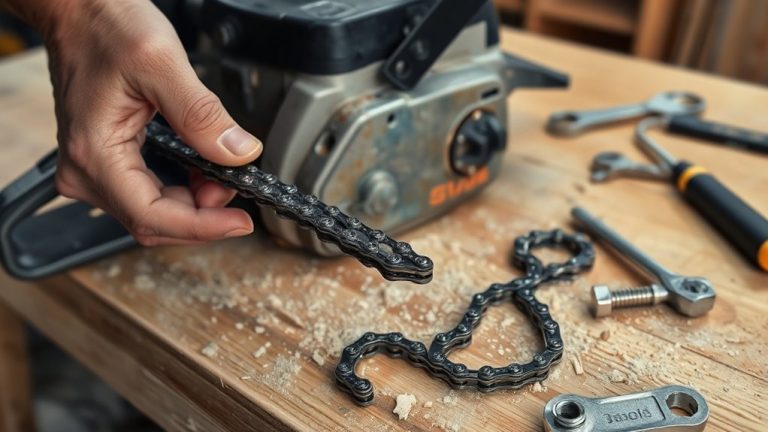
- Clean the guide bar groove and chain sprocket after each use to stop debris from building up and slowing down the chain.
- Check and maintain proper oil levels before every use. This ensures good lubrication and helps reduce wear on both the chain and bar.
- Inspect the spark plug now and then, and tighten all nuts and bolts. This prevents them from loosening because of vibration and keeps the engine running smoothly and safely.
Frequently Asked Questions
How Do I Safely Transport and Store a Chainsaw?
To safely transport your chainsaw, always use proper transportation methods like placing the bar cover on and securing it in a padded container to prevent movement. This helps avoid any accidental damage during transit.
When it comes to storing your chainsaw, keep it in a dry, ventilated area away from sunlight and out of children’s reach. This keeps it safe and in good condition.
Also, remember to remove the fuel before long storage and fully discharge electric models.
These simple steps not only guarantee safety but also help prolong your chainsaw’s lifespan effectively.
What Safety Gear Is Essential When Operating a Chainsaw?
Think of your chainsaw safety gear as armor that shields you from unseen dangers. You must wear protective equipment: safety goggles to guard your eyes, hearing protection to prevent noise damage, cut-resistant gloves for secure handling, steel-toed boots for foot safety, and chainsaw chaps to stop accidental leg injuries.
Combine this with thorough operator training, and you’ll respect both the power of the tool and the importance of your own protection.
Taking these steps seriously helps you stay safe and confident while working. It’s all about protecting yourself so you can get the job done right.
How Long Does a Chainsaw Bar Typically Last Before Replacement?
A chainsaw bar typically lasts between 1 to 3 years, depending on bar wear and how often you use it. To extend its life, follow maintenance tips like regular cleaning, proper lubrication, and keeping the chain tensioned correctly.
Replacement indicators include bending, scoring, or uneven wear on the bar rails. If you spot these signs, it’s time to replace the bar to maintain safe, efficient cutting performance.
Taking care of your bar really helps keep your chainsaw working smoothly.
Can I Customize or Upgrade My Chainsaw’s Bar Length?
If you upgrade your chainsaw bar length like a homeowner switching from 16″ to 20″, you must check bar compatibility options carefully.
Changing the bar impacts performance. A longer bar demands more engine power and affects balance.
Maintenance tips include replacing the chain to match the new bar length and pitch.
Always consult your manufacturer’s specs to avoid safety issues or voiding warranties. This way, you ensure ideal and safe operation.
What Environmental Considerations Affect Chainsaw Usage and Disposal?
You should minimize your chainsaw’s environmental impact by choosing electric models over gas-powered ones, as they emit fewer pollutants.
Follow proper disposal methods for oil, batteries, and worn parts to prevent contamination. Regular maintenance guarantees efficient fuel use, reducing emissions.
Embrace sustainable practices by selecting sustainably sourced wood and participating in recycling programs for batteries and components.
These steps help you reduce your ecological footprint and support responsible forest management. Taking these simple actions makes a big difference for the environment.
Conclusion
Choosing the right chainsaw size is like picking the perfect key. It opens up efficiency and safety tailored to your task.
Whether you’re trimming branches with a compact electric model or tackling heavy logs with a powerful gas saw, matching the guide bar length and power to your wood type and experience guarantees smooth, effective cuts.
Keep your chainsaw sharp and well-maintained to maximize performance. This way, every cut turns into a precise, reliable stroke of craftsmanship.