Can Epoxy Be Used On Wood – Benefits And Applications Explained
Yes, epoxy can be used on wood, and it offers some pretty great benefits. It creates a strong, durable bond that boosts the wood’s structural integrity and helps it last longer. Plus, the glossy finish really brings out the natural grain, and you can even get it in different colors.
Epoxy also acts as a protective shield against moisture, scratches, and stains. It’s UV-resistant too, which means it won’t yellow over time.
To get the most out of epoxy, you’ll want to make sure you apply it properly and prep the surface well. There are lots of tips and creative ways to use epoxy on your wood projects, so it’s worth exploring those to make your work stand out.
What Is Epoxy Resin and How Does It Work With Wood?
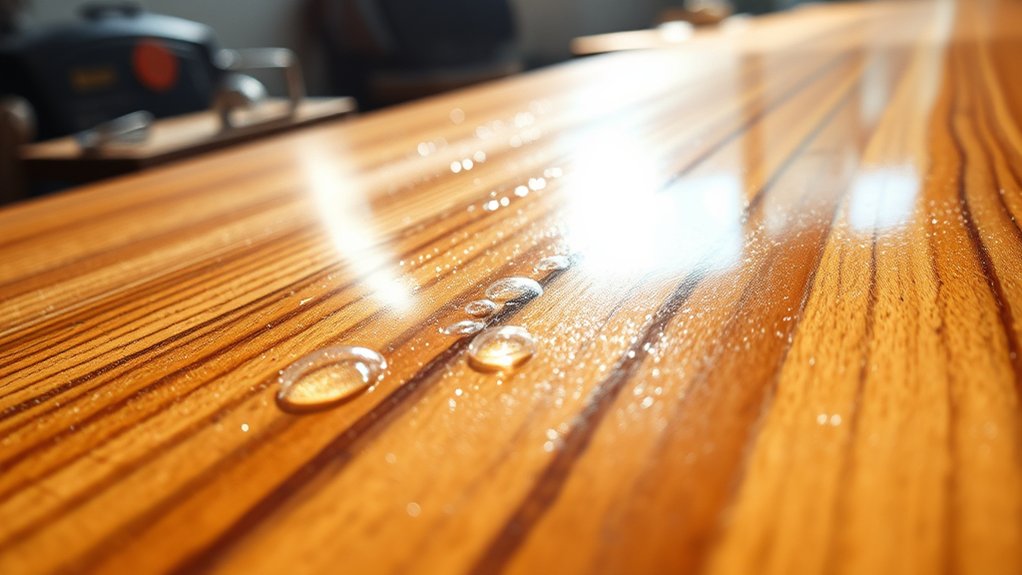
Epoxy resin is a powerful bonding agent that works by combining two components, a resin and a hardener, to create a strong, durable material ideal for woodworking projects. This two-component system forms a rigid bond with various types of wood.
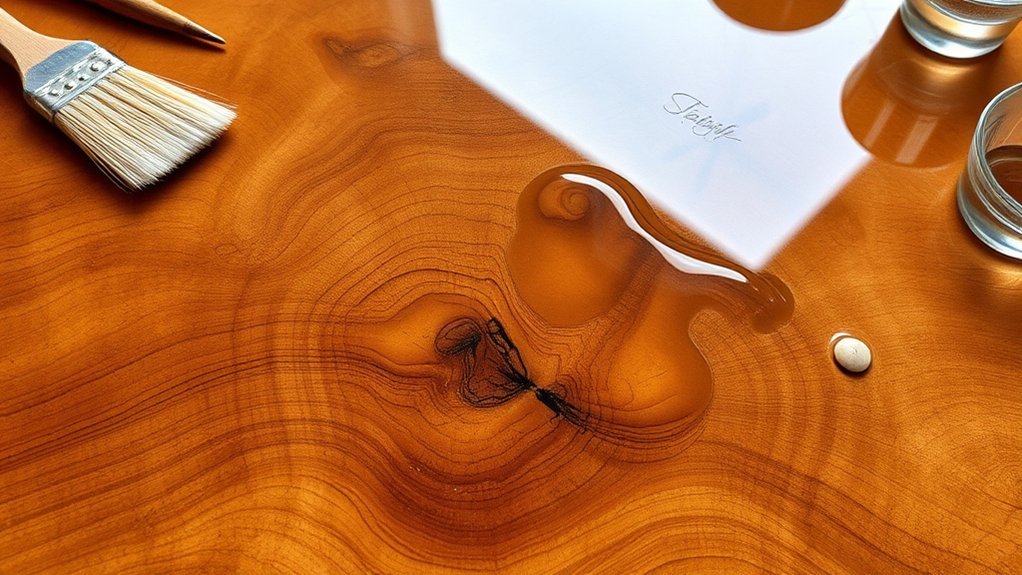
It enhances the wood’s natural beauty while providing a clear finish that showcases the grain.
The curing process usually takes between 24 to 72 hours. When it’s done, you get a moisture-resistant and impact-resistant layer.
Plus, epoxy can fill gaps, cracks, and voids in wood, which helps stabilize imperfections and improve structural integrity.
You can choose from different types of epoxy, including clear, colored, and UV-resistant options, depending on what you need.
Using epoxy means your woodworking projects won’t just look great—they’ll also be built to last.
How Epoxy Resin Boosts Wood Projects
Epoxy resin really gives your wood projects a major boost by making them stronger and more durable. This means they can handle wear and moisture much better.
Plus, it makes your project look great with a shiny, glossy finish that brings out the natural beauty of the wood. It also fills in cracks and gaps, so everything looks smooth and polished.
On top of that, epoxy creates a protective, non-porous surface that’s super easy to clean. It helps keep dirt and stains away, so your wood project stays looking fresh for longer.
Enhanced Durability And Strength
When you incorporate epoxy resin into your wood projects, you enhance durability and strength considerably. This strong bond not only resists wear and tear but also guarantees longevity in your furniture and structures.
Thanks to its waterproof nature, epoxy protects wood from moisture damage, preventing issues like warping and rot, whether indoors or outdoors.
With a hardness rating reaching up to 98 on the Shore scale, epoxy offers superior impact and scratch resistance compared to traditional finishes.
Plus, it enhances the structural integrity of weak or damaged wood by filling voids and cracks, effectively reinforcing fragile areas.
Its chemical resistance protects surfaces from spills and staining. This means you’ll have fewer repairs and less maintenance to worry about over time.
It really is a game-changer for keeping your wood projects looking great and lasting longer.
Aesthetic Appeal And Variety
Wood projects transform dramatically with the addition of epoxy resin, elevating their aesthetic appeal and versatility. This material provides a transparent, glossy finish that enhances the natural wood grain and colors underneath, making your creations truly stand out.
With epoxy resin available in vibrant colors, you can explore artistic designs that suit both functional and decorative applications. Using clear epoxy provides a refined look, while allowing flexibility in achieving a desired matte finish through sanding.
Furthermore, the incorporation of colored and UV-resistant resins guarantees the vibrant aesthetics remain intact over time, resisting yellowing.
Protective Qualities Of Epoxy
The remarkable aesthetic appeal of your wood projects is complemented by the protective qualities that epoxy resin offers. This material serves as a protective barrier, delivering superior protection against impacts and scratches with a hardness rating of 98 on the Shore scale.
Its non-porous surface effectively seals the wood, preventing moisture absorption that can lead to decay and extending the life of your projects.
Plus, epoxy resin reinforces structural integrity by filling voids and cracks, so you can confidently use weaker wood species. Coupled with its impressive chemical resistance, epoxy protects against spills and harsh cleaners.
Finally, the high-gloss finish not only enhances visual appeal but also makes cleaning simple. It resists stains and dirt accumulation, keeping your projects looking great for longer.
Types of Epoxy Resin: Choosing the Right Product for Your Needs
Choosing the right epoxy resin for your woodworking project is essential, as it impacts both the aesthetics and durability of your finished piece. There are several types of epoxy to take into account.
Clear Epoxy Resin offers a transparent finish, enhancing the wood’s natural beauty. It’s ideal for countertops.
If you want to add artistic flair, Colored Epoxy Resin comes in various hues for creative designs.
For outdoor projects, you’ll want to pick UV-Resistant Epoxy Resin to prevent yellowing over time.
Deep Pour Epoxy works best when filling larger gaps or creating stunning river tables.
Finally, consider UltraClear Epoxy Resins if you want a glass-like finish that resists yellowing.
When working with epoxy resin, choosing the right type really makes a difference in success and longevity.
Essential Steps to Prepare Your Wood for Epoxy Application
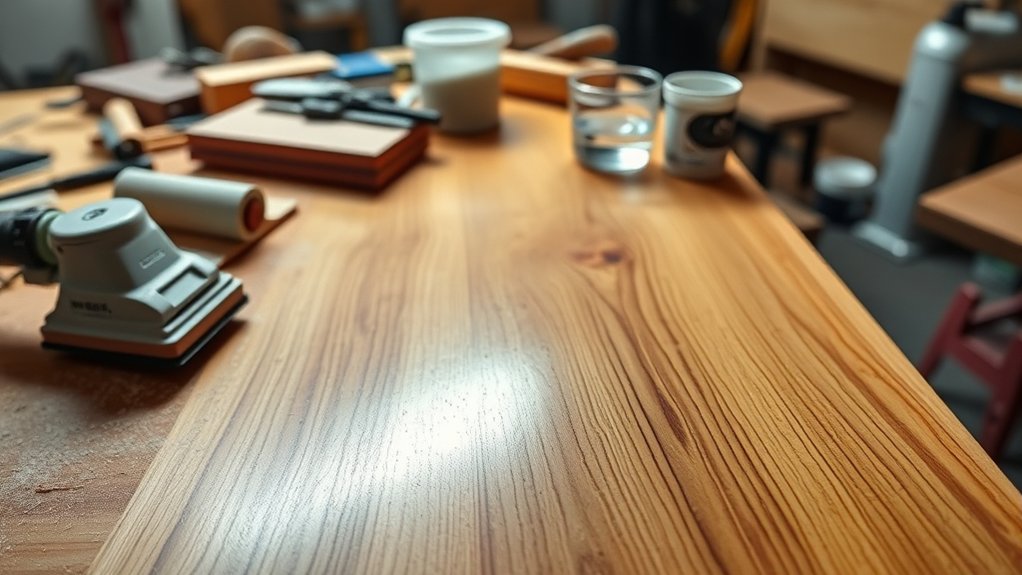
Before you apply epoxy, make sure to clean the wood surface thoroughly. This helps get rid of any dirt or contaminants that might mess with the adhesion.
Next up, sanding is key. Proper sanding not only smooths out the surface but also ensures the epoxy sticks well.
Taking care of these steps will really set you up for a successful epoxy application.
Surface Cleaning Techniques
To kick off the surface cleaning process for your wood before applying epoxy, start by eliminating any dirt, dust, or contaminants. Use a vacuum or soft brush, as these surface cleaning techniques guarantee ideal adhesion for the epoxy resin application.
Afterward, wipe down the wood with a damp soft cloth, making sure no residues remain that could interfere with the epoxy bond. This step is essential because any leftover debris risks damaging the epoxy.
If there are holes or gaps, fill them with a compatible wood filler for a seamless finish.
Finally, consider applying a seal coat of epoxy to enhance the surface. This will minimize air bubbles during curing and improve the overall appearance of your project.
Proper Sanding Methods
After guaranteeing your wood surface is clean and free of contaminants, proper sanding methods are essential for achieving strong epoxy adhesion.
Start with coarse sandpaper (80-120 grit) to eliminate imperfections, then shift to finer grits (220-320 grit) to minimize scratches and guarantee smooth epoxy resin surfaces. Always sand in the direction of the wood grain to avoid damaging fibers and to maintain a seamless appearance.
Once sanding is complete, thoroughly clean the surface with a vacuum or a clean cloth to remove all dust and debris. Any contaminants can interfere with the epoxy’s curing process.
For highly porous woods, consider applying a seal coat of epoxy to prevent air bubbles. This will assure a flawless final finish in your project.
How to Get the Perfect Mix With Epoxy Resins
Achieving the perfect mix with epoxy resins hinges on a few essential steps. First, follow the manufacturers’ instructions for the correct resin-to-hardener ratio, typically between 1:1 and 2:1.
Use a clean, disposable mixing cup for accurate measuring or mixing and to minimize contamination.
Stir the mixture thoroughly for at least one minute, scraping the sides and bottom of the cup to guarantee you achieve the desired blend without unmixed resin. Unmixed resin can affect curing time, so it’s really important to get this right.
Mix in a well-ventilated area with a stable temperature between 70°F and 80°F. This helps promote ideal curing and reduces the risk of air bubbles.
Stir slowly to avoid introducing excess air, ensuring your epoxy resins are ready to apply to wood effectively.
Application Techniques for Epoxy Resin on Wood Surfaces
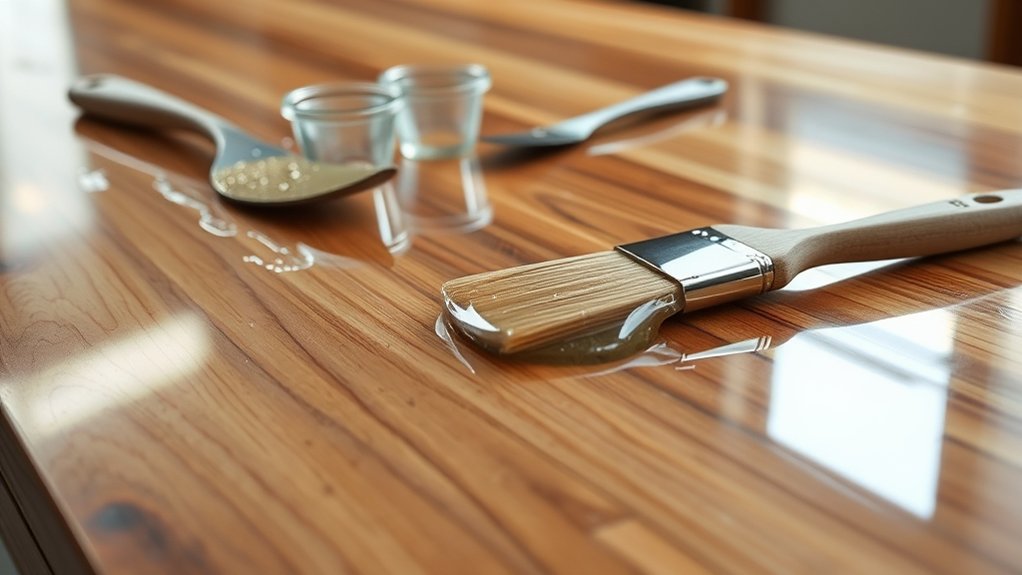
When applying epoxy resin to wood surfaces, it’s essential to choose the right technique to guarantee the best results.
For smooth finishes on flat areas, the pouring method allows the epoxy to self-level, creating an even layer. Alternatively, the spreading technique involves using a brush or spreader, providing precise control for intricate designs and edge work in your woodworking projects.
Before you start, confirm proper surface preparation by cleaning, sanding, and filling gaps to achieve a strong bond.
Remember, curing time generally ranges from 24 to 72 hours, so consider environmental factors like temperature and humidity to ensure ideal results.
Troubleshooting Epoxy Issues on Wood and Solutions
Even with the right application techniques, issues can still pop up during the curing process of epoxy on wood. You might run into air bubbles, yellowing, or incomplete curing. These problems can be frustrating, but there are ways to handle them.
To keep things smooth, make sure you stick to the correct mixing ratios. Mix the epoxy slowly and thoroughly to avoid trapping air. Using a heat gun can help release any air bubbles before you pour the epoxy.
If you notice yellowing, especially on outdoor projects, it’s a good idea to switch to UV-resistant epoxy. And if you spot any imperfections after curing, don’t worry—you can sand down the affected area and apply fresh epoxy to fix it.
| Issue | Solution |
|---|---|
| Air bubbles | Use a heat gun or torch |
| Yellowing | Use UV-resistant epoxy |
| Imperfections | Sand and reapply fresh epoxy |
Creative Ways to Use Epoxy Resin in Your Wood Projects
Epoxy resin opens up a world of creative possibilities for your wood projects, allowing you to merge functionality with stunning aesthetics. One popular application is crafting river tables, where you fill gaps between wooden slabs with colored epoxy. This not only enhances durability but also adds a striking visual appeal.
You can also apply epoxy to furniture accents, like chair legs or tabletops. It gives them a modern touch while reinforcing their structural integrity. Plus, it’s a great way to refresh old pieces.
For wall art, combine epoxy resin with wood to create unique, vibrant designs that highlight natural patterns. It’s a fun way to make your decor stand out.
And don’t forget jewelry! Pendants and other pieces can be crafted using molds filled with epoxy resin, showcasing intricate designs.
Lastly, use epoxy as a protective topcoat for wooden surfaces. It provides a glossy, seamless finish that not only looks great but also protects against moisture and scratches.
Frequently Asked Questions
How Long Does It Take for Epoxy to Cure on Wood?
Epoxy typically takes 24 to 72 hours to cure on wood, but this can vary based on epoxy types and wood preparation.
Temperature effects and humidity impact the cure time considerably. Ideal conditions range from 70°F to 80°F.
During curing stages, make sure to follow safety precautions.
Also, consider troubleshooting tips if you’re facing delays. It’s all about patience and the right environment.
After 48 to 72 hours, you’ll likely achieve full hardness and chemical resistance.
This ensures a successful application that lasts. Just give it the time it needs!
Can Epoxy Resin Be Safely Used Outdoors on Wood?
“Don’t put all your eggs in one basket.” Yes, you can safely use epoxy resin outdoors on wood. Just make sure to opt for UV-resistant epoxy to prevent discoloration.
It’s important to properly prepare the wood surface for the best adhesion.
Epoxy offers excellent moisture barrier properties, which makes it ideal for outdoor projects like furniture and fixtures.
Also, consider epoxy color options to enhance the aesthetic appeal.
Finally, keep long-term maintenance in mind. Regular cleaning helps guarantee lasting durability against the elements compared to polyurethane.
Is Epoxy Resin Food-Safe for Wooden Kitchen Items?
Yes, epoxy resin can be food-safe for wooden kitchen items if it meets epoxy safety standards and adheres to food contact regulations.
Focus on low-VOC varieties to help reduce toxicity concerns.
Make sure you follow the curing process carefully, allowing the epoxy to cure completely. This usually takes about 48 to 72 hours.
For regular maintenance, cleaning with mild soap is a good way to keep things hygienic.
If you’re unsure about epoxy, consider alternative finishes.
That said, many users have reported great results using food-safe epoxy.
Can I Sand Epoxy After It Has Cured?
Absolutely, you can sand epoxy once it’s fully cured. For ideal results, consider utilizing effective epoxy sanding techniques, and choose the best sandpaper grades, starting coarse and moving to fine.
Be mindful of common sanding mistakes, such as rushing the process. Always prepare your epoxy surface properly, and use appropriate sanding tools for a flawless finish.
Don’t forget your sanding safety tips. Wear a mask and goggles, and clean up thoroughly post-sanding to maintain a pristine workspace.
What Tools Do I Need for Applying Epoxy to Wood?
To apply epoxy to wood, you need mixing cups for accurate mixing ratios, stirring sticks, and safety equipment like gloves, goggles, and respirators.
Surface preparation involves sandpaper for a rough texture, which helps with adhesion.
You might also want to consider a flux welding brush for more precise application techniques.
Plastic packaging tape can be used as a mold release agent.
As you finish, explore color options and keep troubleshooting tips handy. That way, you’re ready for any unexpected issues during curing conditions.
Conclusion
Incorporating epoxy resin into your wood projects can greatly enhance durability and aesthetics. Did you know that epoxy can increase wood’s resistance to water and damage up to 50%? By choosing the right type and following proper application techniques, you’ll open up endless creative possibilities.
Whether you’re repairing, finishing, or creating unique pieces, epoxy resin not only protects but also elevates your work. So, immerse yourself and explore the transformative impact of epoxy in your woodworking endeavors!