
Can Dogs Eat Wood: Risks And Safety Tips
You shouldn’t let your dog chew or eat wood because it can cause serious issues like splinters, choking, digestive blockages, or exposure to harmful chemicals. Dogs often chew wood out of boredom, teething, or curiosity, but it’s risky.
Look for signs like drooling, vomiting, or lethargy to catch problems early. Offering safe chew toys and training your dog can prevent this behavior and keep them safe.
Keep exploring to find effective prevention and care tips.
Common Reasons Dogs Chew and Eat Wood
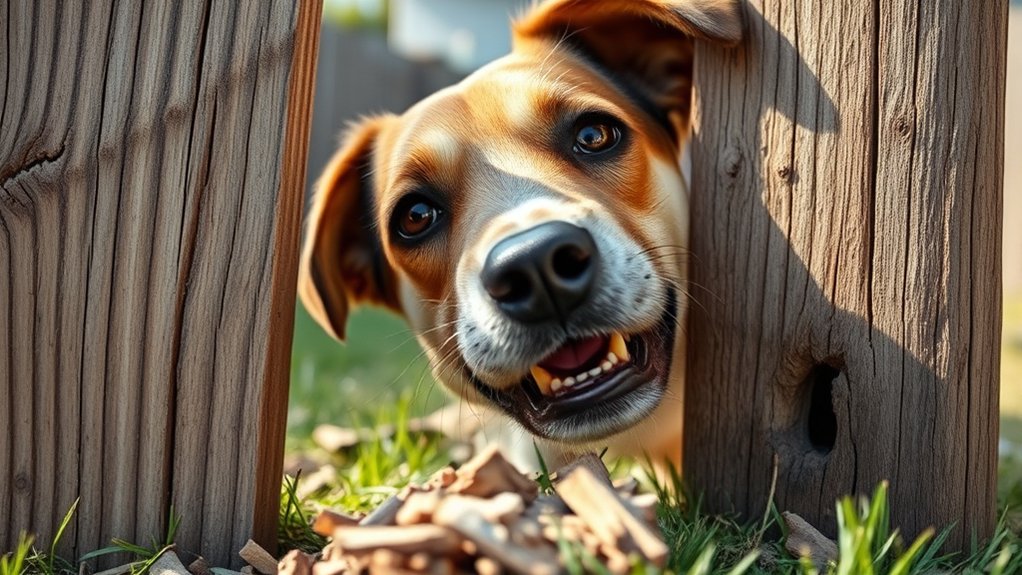
Although you might find it frustrating, dogs chew and eat wood for several natural reasons.
Dogs chewing and eating wood is a natural behavior driven by various instinctive reasons.
Puppies, especially during teething, chew wood to soothe sore gums as their teeth develop. Beyond teething, dogs chew wood out of curiosity, exploring different textures in their environment.
When they’re bored or lack mental stimulation, chewing wood becomes a way to relieve stress and engage their minds.
Sometimes, dogs chew wood to grab your attention, learning that this behavior prompts a reaction from you. Environmental factors, like wood chips in mulch, can also tempt dogs to chew and ingest wood.
Understanding these reasons helps you address the habit effectively.
Keep mental stimulation high and follow safety tips to protect your dog while managing their chewing behavior.
Why Eating Wood Can Harm Your Dog
If your dog eats wood, you need to be aware of the serious health risks involved. The risks of wood include splinters that can injure your dog’s mouth, throat, or digestive tract. Digestive issues like vomiting or blockages may develop, sometimes requiring emergency care.
Treated or painted wood may contain harmful chemicals that pose toxicity risks. Choking risk is high, as wood pieces can get stuck in the throat, causing breathing difficulties. Frequent chewing can also lead to dental problems like cracked teeth.
Understanding these risks helps you keep your dog safe.
| Risk | Potential Harm |
|---|---|
| Splinters | Mouth, throat, stomach, intestinal injury |
| Digestive Issues | Vomiting, diarrhea, blockages |
| Harmful Chemicals | Toxicity from treated or painted wood |
| Choking Risk | Airway obstruction |
| Dental Problems | Broken or cracked teeth |
How to Tell If Your Dog Has Eaten Wood
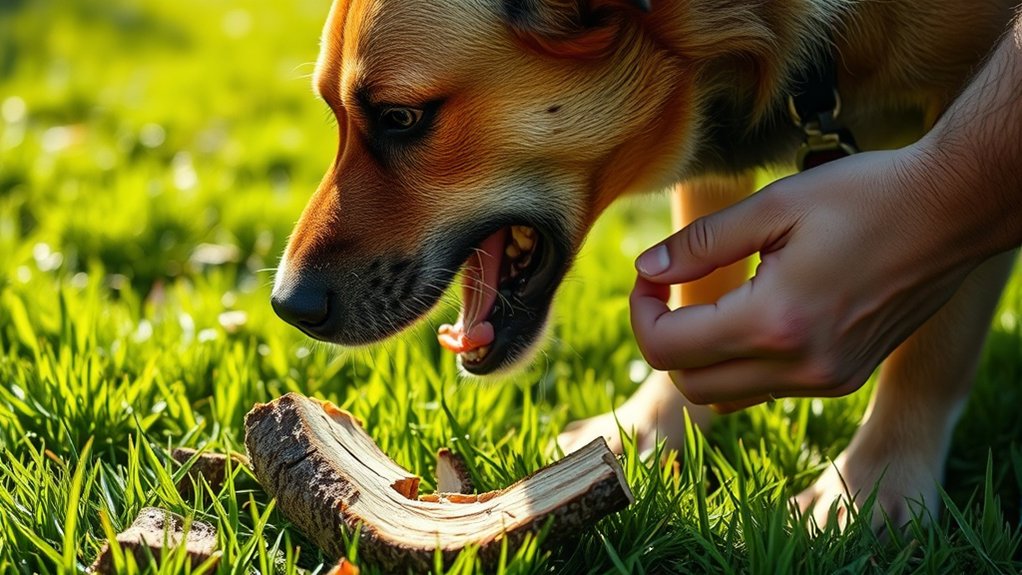
If you see your dog drooling a lot or pawing at their mouth, they might’ve eaten some wood.
You’ll want to keep an eye out for other changes too, like vomiting, loss of appetite, or if they seem unusually tired.
And don’t wait around—if your dog starts showing signs of pain, has trouble breathing, or their belly looks swollen, get in touch with your vet right away.
Recognizing Physical Symptoms
When your dog has eaten wood, recognizing the physical symptoms early can make all the difference in their recovery.
Watch for excessive drooling or pawing at the mouth. These often signal discomfort.
Vomiting, gagging, or retching suggest irritation within the digestive system. A loss of appetite and lethargy are common symptoms of gastrointestinal distress.
Signs of abdominal pain, such as whining or a swollen belly, indicate serious issues like an intestinal blockage.
If you notice any signs of distress, don’t hesitate to contact your veterinarian immediately.
Prompt intervention is vital to prevent complications and guarantee your dog’s safety.
Staying alert to these symptoms helps you act quickly and protect your dog’s health effectively.
Behavioral Changes To Watch
Recognizing changes in your dog’s behavior can help you figure out if they’ve eaten wood, even before physical symptoms show up.
Behavioral changes like excessive drooling or pawing at the mouth might mean they’re uncomfortable because of wood ingestion.
You might also see signs of stomach trouble such as vomiting, gagging, or retching. A loss of appetite and feeling tired often come along with these symptoms, letting you know your dog isn’t feeling well.
Keep an eye out for abdominal pain, which could look like whining, pacing, or a swollen belly.
These signs suggest your dog might be in distress from eating wood.
Not every behavioral change means you need to rush to the vet, but if your dog is in severe pain, having trouble breathing, or their symptoms don’t go away, get professional help right away to keep them safe and healthy.
When To See Vet
Because wood ingestion can lead to serious health issues, you should promptly consult a veterinarian if your dog shows signs like excessive drooling, pawing at the mouth, vomiting, or lethargy.
If your dog swallows wood, the dangers include damage to the stomach or intestines and potential blockages that might require emergency veterinary care.
Watch closely for these warning signs:
- Persistent coughing or difficulty breathing
- Signs of abdominal pain, like whining or a swollen belly
- Gagging, retching, or vomiting
- Loss of appetite and unusual lethargy
- Pawing at the mouth or excessive drooling
Recognizing these symptoms early can save your dog’s life.
Use positive reinforcement to prevent your dog from chewing wood and keep them safe. If you suspect wood ingestion, don’t hesitate to see a vet immediately.
What to Do If Your Dog Eats Wood
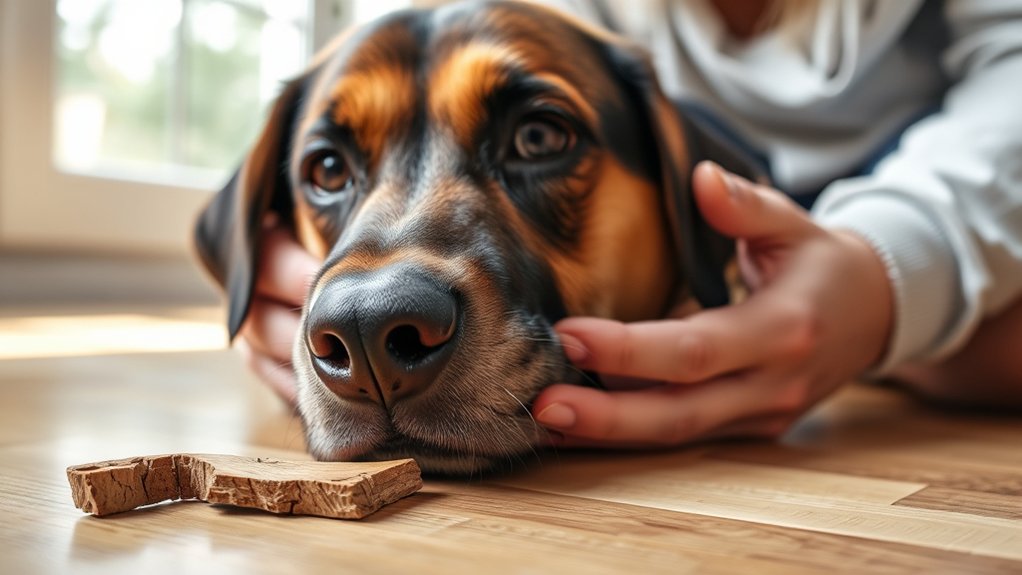
If your dog eats wood, you should immediately contact a veterinarian, especially if you suspect the wood is lodged in their throat. This can cause choking or obstruction, which is really serious. Keep an eye out for symptoms like excessive drooling, vomiting, or gagging. These might signal that their digestive tract is irritated.
Swallowed wood can lead to some serious health issues, including intestinal blockages that might need surgery. If your dog starts showing signs of abdominal pain or becomes lethargic, don’t wait—get veterinary care right away.
| Situation | What You Feel |
|---|---|
| Dog chews wood again | Frustration & Concern |
| Signs of distress | Fear & Urgency |
| Vet intervention needed | Hope & Relief |
Act quickly to protect your dog’s health. Also, try to prevent future incidents by offering safe chew toys instead.
Effective Ways to Prevent Your Dog From Eating Wood
Although stopping your dog from eating wood can feel challenging, taking proactive steps can make a big difference in their safety and well-being.
To prevent wood chewing, you need to supervise your dog closely, especially outdoors, so you can step in quickly. Training commands like “leave it” offer clear boundaries, while pet-safe deterrent sprays make wood less appealing.
Providing a variety of chew toys keeps your dog engaged and helps reduce boredom, which is a common cause of unwanted chewing.
Regularly rotating these toys ensures your dog stays interested in safe chew alternatives.
Supervise your dog to catch wood-chewing early. Use training commands to enforce good behavior. Apply deterrent sprays on wood surfaces. Offer durable chew toys to combat boredom. Rotate toys to maintain interest in safe chew alternatives.
Safe Chew Toy Alternatives to Wood for Dogs
When you want to protect your dog from the dangers of chewing wood, offering safe alternatives is crucial. Choose safe chew toy alternatives like durable rubber or nylon toys designed to withstand aggressive chewing without splintering.
Natural chew treats, such as bully sticks and dental chews, provide satisfying alternatives that also promote dental health by reducing plaque and tartar buildup.
Natural chew treats like bully sticks support dental health by reducing plaque and tartar buildup.
Interactive toys, including puzzle feeders, engage your dog mentally and physically. This helps reduce boredom that often leads to destructive chewing.
Toys infused with flavors like peanut butter or chicken can make these alternatives more enticing, encouraging your dog to choose them over wood.
Regularly rotating these toys keeps your dog interested. It also guarantees they always have safe, stimulating options to chew on.
This way, you’re keeping both their mind and body happy while protecting your home.
When to Contact a Veterinarian About Wood Ingestion
You should contact a veterinarian promptly after your dog swallows wood, even if they seem fine at first.
Dogs chewing wood can cause splinters that lead to serious internal injuries or intestinal blockage. Watch closely for any signs of vomiting or digestive distress, as these symptoms may not appear immediately.
If your dog eats wood, early veterinary assessment can prevent complications. It’s always better to be safe and get a professional opinion right away.
Seek veterinary care if you notice:
- Excessive drooling, gagging, or pawing at the mouth
- Signs of vomiting, loss of appetite, or lethargy
- Whining or a swollen belly indicating abdominal pain
- Bloody stool or severe discomfort
- Any unusual behavior or symptoms after wood ingestion
Prompt action can protect your dog’s health and prevent life-threatening issues.
Don’t hesitate to reach out to your vet if you’re worried at all.
Frequently Asked Questions
Can Certain Dog Breeds Be More Prone to Eating Wood?
Yes, certain dog breeds are more prone to eating wood due to breed differences and behavioral traits. Breeds with strong chewing habits, like Labradors, often target specific wood types.
Environmental factors and anxiety levels also influence this behavior.
You can manage it using proper training techniques that address boredom and stress. Understanding your dog’s unique personality helps you redirect their chewing to safer alternatives.
This way, you protect both them and your home.
Does Age Affect a Dog’s Likelihood to Chew on Wood?
Age factors do influence chewing habits, especially during puppy development when teething causes strong urges to chew.
As your dog grows into adulthood, chewing may lessen but can persist due to boredom or habit.
Senior dogs might still chew wood, often without major dental health issues.
Understanding these age-related behaviors helps you provide suitable chew toys and prevent unsafe wood chewing throughout your dog’s life.
Are There Any Natural Remedies to Discourage Wood Chewing?
About 70% of dogs chew on inappropriate items like wood at some point. You can use taste deterrents like citrus sprays or apple cider vinegar as natural remedies.
Offering wood alternatives such as durable chew toys combined with training techniques and behavioral solutions helps redirect their urge.
Incorporate environmental enrichment and routine distractions to keep your dog engaged. These methods work together to reduce wood chewing and promote healthier habits.
It’s all about giving your dog better options and keeping them busy!
Can Wood Splinters Cause Long-Term Health Issues in Dogs?
Yes, wood splinter injuries can cause long-term health issues in your dog. Splinters might lead to gastrointestinal blockages or infections that need quick vet intervention.
Chewing wood also raises dental damage risks, like broken teeth.
If your dog frequently eats wood, it could signal behavioral concerns that need prevention strategies. Watch for signs like vomiting or lethargy.
Make sure to consult your vet promptly to keep your furry friend safe and healthy.
How Does Diet Influence a Dog’s Chewing Behavior?
Like a plant craving sunlight, your dog’s chewing instincts thrive on proper nutrition. Nutritional deficiencies can push them to chew wood for boredom relief or to ease anxiety triggers.
A balanced diet supports dental health and reduces destructive chewing.
Combine this with training techniques and environmental enrichment to redirect behavior. You’ll help your dog stay healthy, happy, and focused on appropriate chew toys, not risky wood fragments.
Conclusion
If your dog chews wood out of boredom, anxiety, or curiosity, you need to address the cause, the risk, and the remedy. You need to recognize the signs, act quickly if ingestion happens, and seek veterinary help when necessary.
You also want to provide safe alternatives, create engaging environments, and keep a close eye on your pup. By understanding the risks and taking proactive steps, you’re protecting your dog’s health, happiness, and safety every step of the way.