Can You Clean Wood With Vinegar: Best Practices
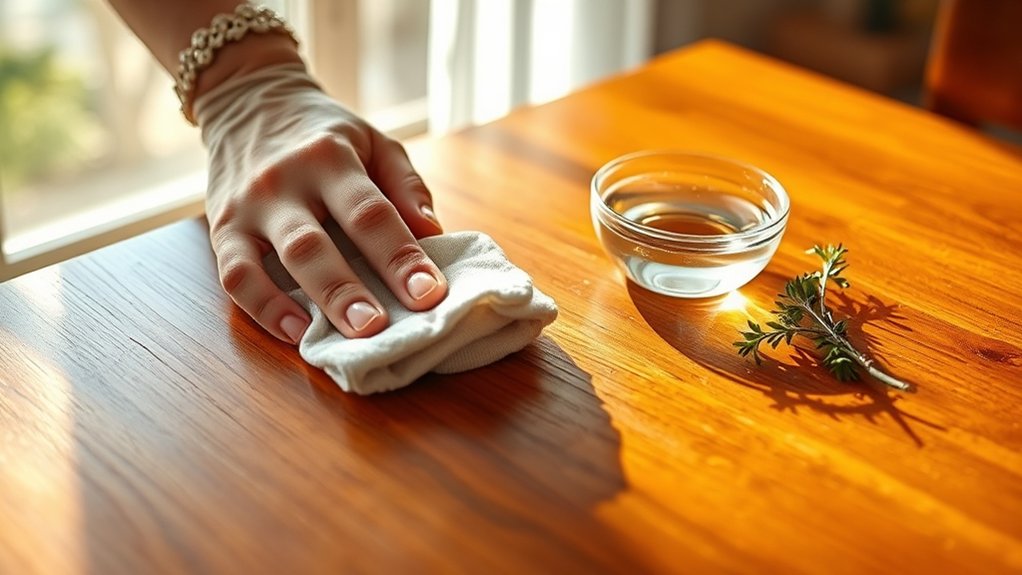
Yes, you can clean wood with vinegar safely by mixing equal parts white vinegar and water. Always dust the surface first, spray lightly, and wipe gently along the grain using a soft microfiber cloth to avoid scratches.
Make sure to test the solution on a hidden spot before using it all over. Also, avoid excess moisture to protect the wood’s finish.
If you have tougher stains or want to try other methods, there are gentle options to keep your wood looking its best. You can explore how to maintain and restore wood furniture effectively.
Why Vinegar Works for Cleaning Wood Furniture
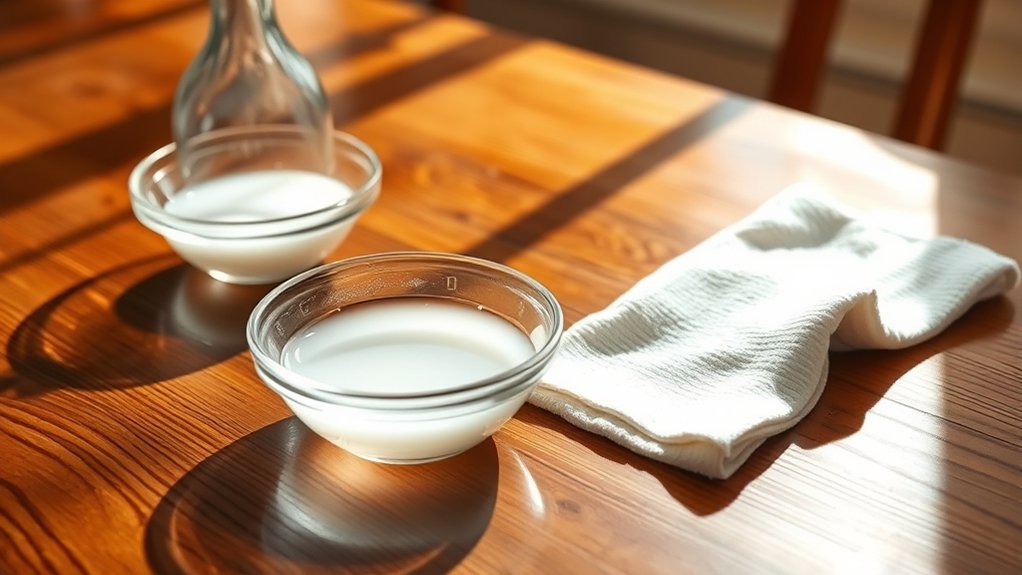
Although you might doubt it at first, vinegar works exceptionally well for cleaning wood furniture because it acts as a mild acid that dissolves dirt and grime without harming the surface.
Vinegar gently cleans wood furniture by breaking down dirt and grime without damaging the surface.
When you use vinegar, you’re relying on a natural disinfectant that kills bacteria and germs safely, ensuring your wood stays hygienic.
It’s an eco-friendly choice that replaces harsh chemical cleaners, making it safer for both your home and the environment.
Regular cleaning with vinegar not only keeps your wood clean but also helps preserve its beauty and longevity.
Just remember to test vinegar on a small, hidden spot first to avoid any unexpected damage.
This way, you maintain clean wood furniture effectively and responsibly.
Preparing Wood Furniture for Vinegar Cleaning
Before you start cleaning, go ahead and remove dust from your wood furniture using a dry microfiber cloth. This helps avoid scratches.
Next, it’s a good idea to test the vinegar solution on a small, hidden spot first. That way, you can make sure it won’t damage or discolor the wood.
Taking these simple steps not only protects your furniture but also makes your cleaning safer and more effective.
Dust Removal Techniques
Start by using a dry microfiber cloth to gently dust your wood furniture. It traps dust effectively without scratching the surface.
Begin at the top and work your way down, making sure any fallen dust is collected.
For intricate areas, use a soft-bristled brush or a vacuum with a brush attachment to remove buildup. Regular dusting at least once a week prevents dirt accumulation. Plus, it makes applying vinegar-based cleaning solutions more effective.
Always clear loose debris before you start cleaning to avoid scratching the wood during the process. Proper dust removal prepares your furniture well.
This way, vinegar solutions can work efficiently without damaging the surface. Taking a little time with this careful preparation is key to maintaining your wood’s natural beauty.
It really makes a difference in keeping your furniture looking great.
Vinegar Test Spots
When you’re ready to clean your wood furniture with vinegar, always test the solution on a small, hidden spot first. This step guarantees your vinegar solution won’t damage the wood. Use a cotton swab or cloth to apply vinegar to the test spot, wait a few minutes, then wipe it off.
Check for discoloration or damage before you clean your wood entirely. Avoid vinegar on unsealed wood, as it can cause harm. If the test spot shows damage, choose a safer cleaning method.
| Step | Action | Purpose |
|---|---|---|
| 1 | Select hidden spot | Prevent visible damage |
| 2 | Apply vinegar solution | Test reaction |
| 3 | Wait a few minutes | Allow vinegar to act |
| 4 | Wipe clean | Assess results |
| 5 | Inspect for damage | Decide to proceed or not |
Step-by-Step Guide to Cleaning Wood With Vinegar
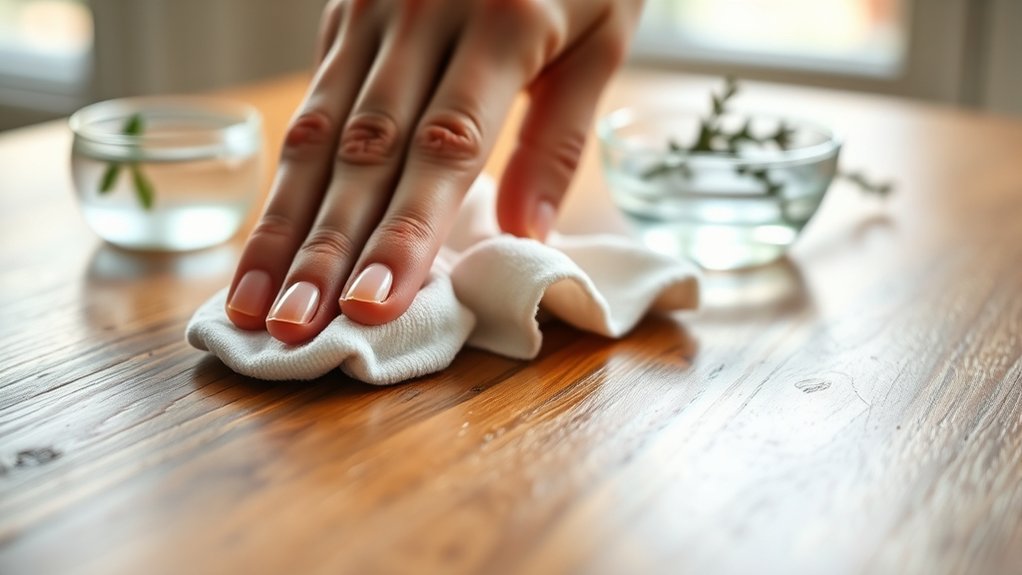
First, start by giving your wood surfaces a quick dusting or a vacuum to get rid of any loose dirt.
Next, mix equal parts white vinegar and water in a spray bottle—that’s going to be your cleaning solution.
Then, take it slow: test the solution on a small, hidden area first to make sure it won’t harm the finish.
Once you’re good, spray the mixture lightly onto the wood and wipe it down gently. This way, you keep the finish safe while effectively removing grime.
Preparing Wood Surfaces
Before applying any vinegar solution, you’ll want to remove dust and loose debris from the wood surface using a dry microfiber cloth to prevent scratches.
Next, test a vinegar and water mixture on a small, hidden area of your wood furniture to guarantee it won’t cause damage.
Protect the floor beneath your furniture with a drop cloth or newspaper to catch any drips during cleaning.
Make sure the wood is free from dirt and loose particles to allow the vinegar and water solution to work effectively.
Finally, gather all necessary cleaning supplies like a spray bottle and microfiber cloth before you start.
Proper preparation guarantees your cleaning process goes smoothly and keeps your wood furniture safe and looking great.
Vinegar Cleaning Process
With your wood surface prepped and protected, you can create a simple cleaning solution by mixing equal parts white vinegar and water in a spray bottle.
Before applying the mixture, dust the wood with a dry microfiber cloth to avoid scratches. Lightly spray the water and vinegar solution onto the surface, but don’t saturate it. This will safely dissolve dirt and grime.
Let it sit for a few minutes. Then gently wipe the wood following its grain using a microfiber cloth. This method guarantees effective cleaning of wood without damaging the finish.
Always test the vinegar solution on a small, hidden area first to confirm it’s safe to use on your specific wood type.
This step-by-step vinegar cleaning process is both practical and reliable for maintaining wood surfaces.
Protecting Wood Finishes During Vinegar Cleaning
Although vinegar is an effective natural cleaner, you need to protect your wood finishes by diluting it properly and using the right techniques. Always dilute vinegar with water in a 1:1 ratio to prevent damage to the finish, as undiluted vinegar can be too harsh.
Before you use the vinegar solution, test it on a small, hidden area to verify it won’t discolor or harm the wood.
When you clean, use a soft microfiber cloth to avoid scratching the surface. Limit moisture by wringing out the cloth well, since excess water can warp wood or damage finishes.
Which Woods to Avoid Cleaning With Vinegar
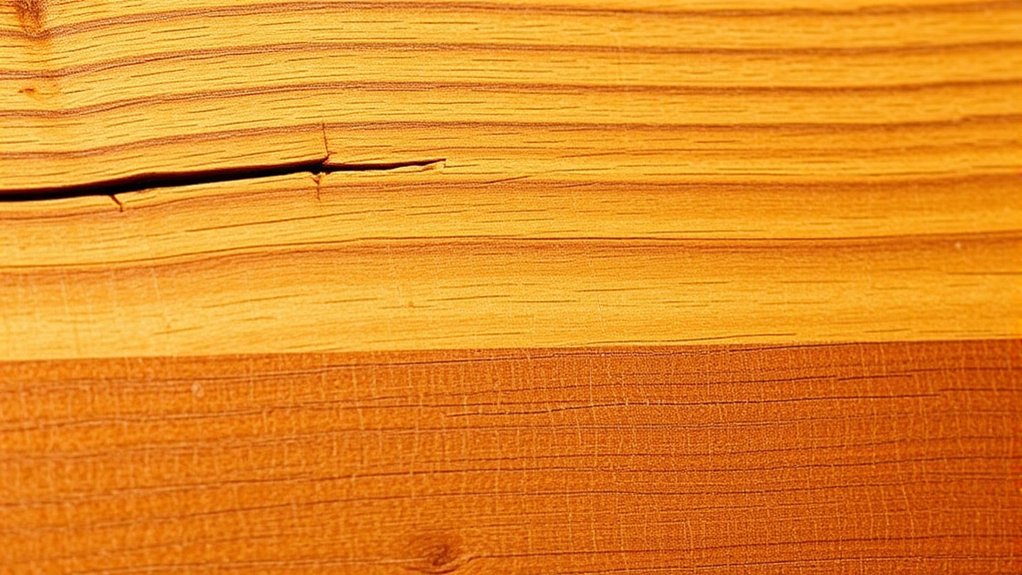
Since vinegar is acidic, you should avoid using it on certain types of wood to prevent damage. Unsealed wood is especially vulnerable because vinegar can penetrate and weaken the wood fibers.
Vinegar’s acidity can damage unsealed wood by penetrating and weakening its fibers.
Similarly, softwoods like pine may discolor or suffer damage if not properly sealed. You also want to steer clear of exotic hardwoods, such as teak and mahogany. Their natural oils can be stripped away by vinegar, compromising their appearance and durability.
Avoid vinegar on waxed or oiled surfaces too, since it can dissolve protective finishes and leave wood dull.
To be safe, always test vinegar on a small, hidden spot before applying it broadly. This way, you can protect your wood while still benefiting from vinegar’s cleaning power.
Recommended Frequency for Cleaning Wood With Vinegar
Regularly cleaning your wood furniture with vinegar helps maintain its appearance and prevents dirt buildup. You should clean wood with a diluted vinegar and water solution at least once a month to keep grime and dirt from settling in.
For high-traffic areas, cleaning bi-weekly is ideal to protect the wood’s finish and avoid scuffing.
Don’t skip weekly dusting; it helps you spot any dirt or stains early. Always test your vinegar solution on a hidden spot first to verify it won’t damage the wood.
Sticking to this schedule not only keeps your wood looking fresh but also prolongs its life by preventing damage from accumulated dirt and grime.
This routine is simple, effective, and safe when done correctly. It’s an easy way to keep your wood looking great without much hassle.
Just remember to be gentle and consistent!
Removing Stubborn Stains and Residue With Vinegar
When stubborn stains and residue won’t budge with regular cleaning, vinegar can be your go-to solution. Its mild acidity helps remove stubborn stains without harming the wood when diluted. Mix equal parts vinegar and water, apply to the stain, let it sit, then gently wipe with a soft cloth following the wood grain.
For persistent spots, just repeat as needed. Always test first on a hidden area to make sure it won’t damage the finish.
| Stain Type | Vinegar Solution Ratio | Application Method |
|---|---|---|
| General grime | 50/50 vinegar & water | Apply, wait, wipe with soft cloth |
| Grease residue | 50/50 vinegar & water | Damp cloth scrub, repeat passes |
| Tough stains | 50/50 vinegar & water | Soak, gentle wiping along grain |
Alternatives to Vinegar for Cleaning Delicate Wood Furniture
Although vinegar is a popular choice for cleaning wood, it’s not always the best option for delicate furniture. Instead, try a mixture of olive oil and lemon juice to clean and condition surfaces gently while enhancing shine and protecting the finish.
Avoid vinegar on delicate wood; use olive oil and lemon juice for gentle cleaning and shine.
For regular cleaning, a Castile soap solution, just a few drops in warm water, works well without leaving residue.
If you encounter tough stains, apply a baking soda paste with a soft cloth to lift dirt safely without scratching.
Also, using a dry microfiber cloth can effectively remove dust without any liquid cleaners.
These alternatives help you maintain your delicate wood’s beauty without risking damage from harsh or acidic substances like vinegar.
Frequently Asked Questions
Can Vinegar Damage Wood if Left on Too Long?
Yes, vinegar can damage wood if left on too long. The vinegar concentration effects are significant. Undiluted vinegar breaks down the wood finish, dulling or discoloring surfaces.
To protect your wood, follow cleaning frequency recommendations carefully. Use diluted vinegar solutions and wipe promptly. Always limit contact time to just a few minutes to avoid warping or swelling, especially on unsealed wood.
It’s also essential to test a small area first for safety. This way, you can see how your wood reacts before applying vinegar more broadly.
Is Vinegar Safe for Antique Wood Furniture?
Did you know 75% of antique wood finishes can be damaged by harsh cleaners? When it comes to antique wood preservation, vinegar isn’t the safest choice unless you use proper vinegar dilution ratios, usually one part vinegar to ten parts water.
Even then, test a small spot first.
For better results, rely on alternative cleaning methods like specially formulated wood cleaners. They protect your furniture’s finish and keep it looking timeless without risk.
It’s always better to be safe than sorry with antiques.
Can Vinegar Remove Mold From Wood Surfaces?
Yes, vinegar can remove many mold types from wood surfaces because of its antifungal properties.
You’ll find vinegar effective in treating surface mold by penetrating wood fibers and inhibiting regrowth. Before full wood treatment, test a small area to avoid damage.
Apply a vinegar-water mix, let it sit 30 minutes, then wipe clean. For stubborn mold, repeat as needed.
But if the infestation is severe, you might need professional help.
How Does Vinegar Compare to Commercial Wood Cleaners?
You want natural alternatives, effective cleaning, and gentle acid strength. Vinegar delivers all three better than many commercial wood cleaners.
It cleans thoroughly without harsh chemicals, avoiding residue buildup common with oils or waxes. Its acid strength tackles germs and grime while being safe on various wood types, including unsealed or waxed surfaces.
Plus, it’s eco-friendly and cost-effective.
Can Vinegar Cleaning Affect Wood’s Natural Scent?
Yes, vinegar cleaning can actually support wood scent preservation if you use it right. Its mild acidity helps neutralize odors without harming the natural oils that give wood its unique aroma.
Be careful with vinegar absorption effects. Always dilute it to avoid damaging finishes or stripping essential oils.
Adding a few drops of essential oils can enhance the scent while cleaning, ensuring your wood stays fresh and naturally fragrant. It’s a simple trick that really works to keep that lovely wood smell intact.
Just remember, a little goes a long way!
Conclusion
You might think vinegar is just a kitchen staple, but it’s a powerhouse for cleaning wood. It works like a magic elixir that revives your furniture’s glow. Just prepare properly, protect finishes, and avoid delicate woods.
If you do that, you’ll transform dull surfaces into shining masterpieces. Use vinegar wisely, and your wood will thank you by looking fresher than ever. Skip it, and your furniture might start begging for a miracle cleaner instead!