Can An Angle Grinder Cut Wood: Tools And Safety
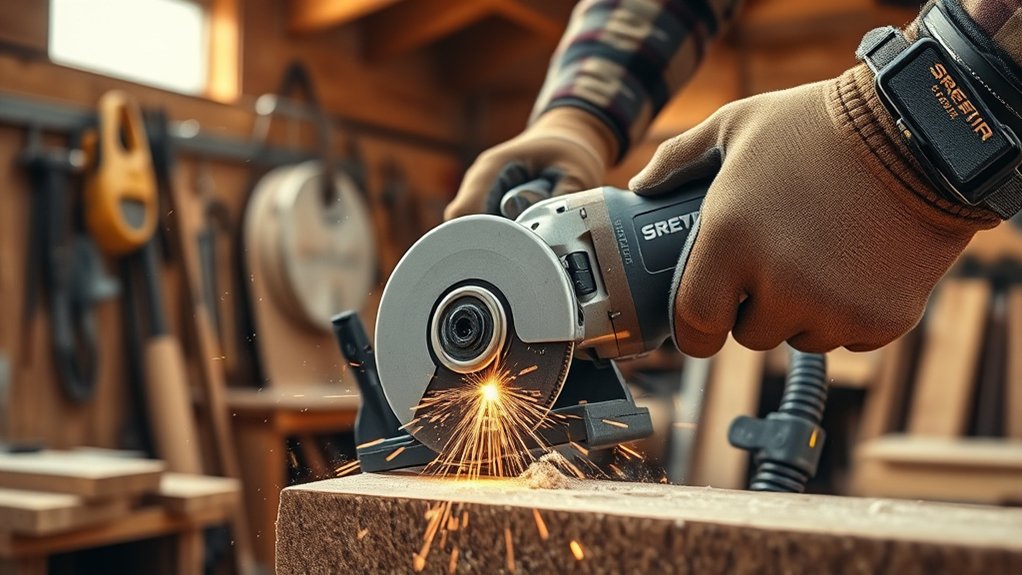
You can cut wood with an angle grinder, but only if you use discs specifically made for wood and follow strict safety steps. Avoid circular saw blades to reduce kickback risks and always clamp your wood securely.
Use light pressure and maintain a firm grip to stay in control. Angle grinders aren’t ideal for precise cuts, so knowing when to switch tools is key.
Learn practical tips and precautions to handle this tool safely and effectively. It’s all about working smart and staying safe.
Should You Use an Angle Grinder to Cut Wood?
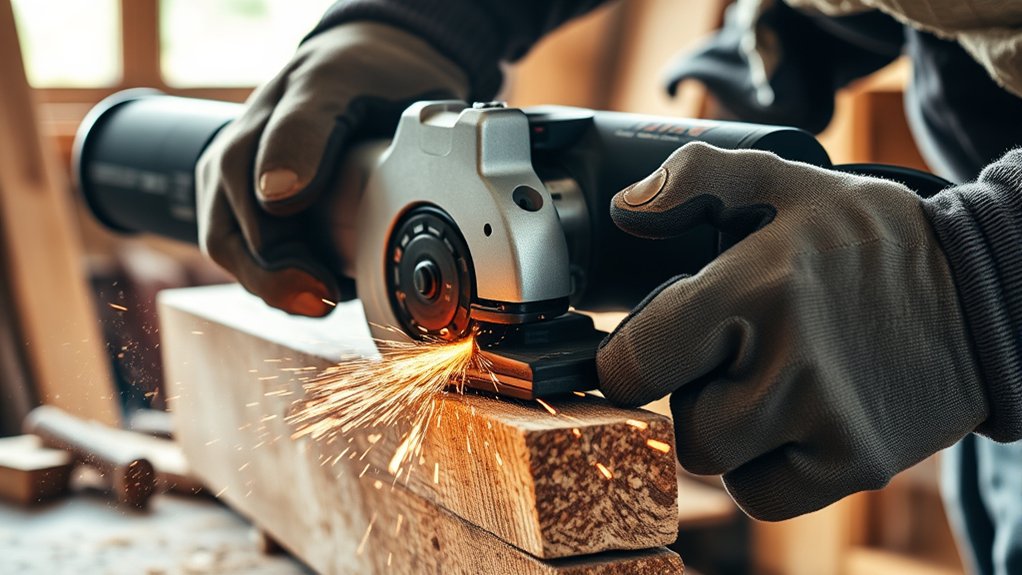
Why should you think twice before using an angle grinder to cut wood? While an angle grinder can cut wood, it’s not the ideal cutting tool for most woodworking tasks. You must use discs specifically designed for wood; never attach circular saw blades to an angle grinder.
When you use an angle grinder to cut, kickback becomes a serious hazard, so it’s important to make shallow cuts and apply light pressure to keep control. Always follow safety precautions like wearing protective gear and securely clamping the wood before starting.
Although you can use an angle grinder for rough shaping or small cuts, it’s safer and more efficient to choose tools like circular saws or jigsaws for precision work.
Why Angle Grinders Are Risky for Wood Cutting
Because angle grinders spin at extremely high speeds, often between 10,000 and 12,000 RPM, they can be especially dangerous when cutting wood. You risk severe kickback, which may cause you to lose control and suffer serious injury. Using circular saw blades on angle grinders is prohibited due to instability and a high chance of blade jamming.
Many users underestimate these dangers, ignoring essential safety measures like securing the workpiece and wearing protective gear. It’s important to understand these risks before you start cutting.
| Risk | Consequence | Reality Check |
|---|---|---|
| High RPM kickback | Loss of control | Leads to severe injuries |
| Improper blades | Blade jamming | Manufacturer warnings |
| Lack of awareness | Unsafe handling | Only 3 of 15 knew risks |
Respect these risks before cutting wood with angle grinders.
Which Blades Should You Use on Wood?
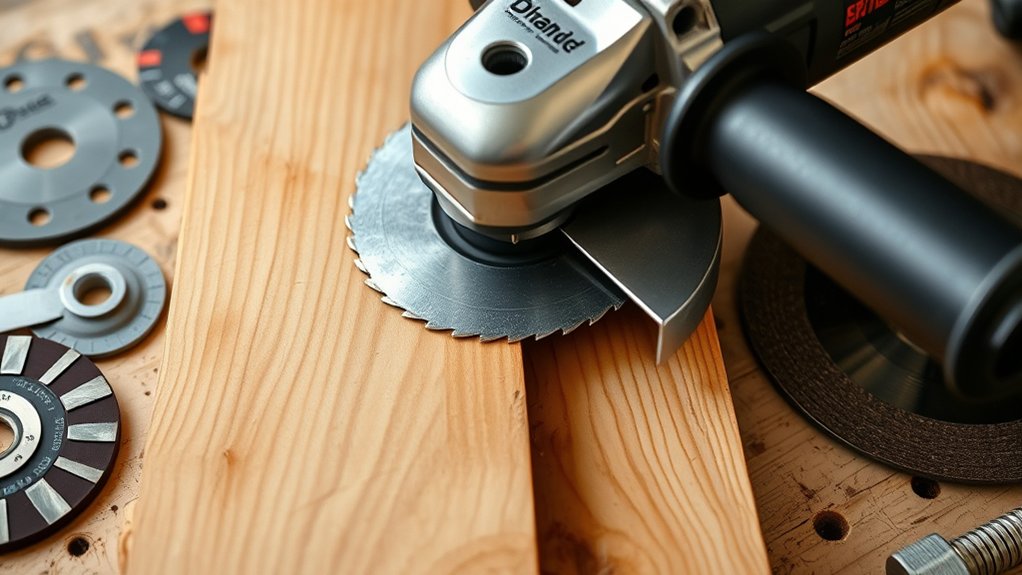
Choosing the right blade for cutting wood with an angle grinder is essential for safety and effectiveness. You should use wood-cutting discs specifically designed for angle grinders. They’ve fewer teeth and larger gaps, which reduce binding and boost cutting efficiency.
Avoid circular saw blades on angle grinders because they’re unstable and can cause dangerous kickback. For shaping and sanding wood, flap discs offer excellent control and lower the risk of injury.
Always check that your disc matches your grinder’s RPM to prevent overheating and other hazards. Before each use, inspect your blades for wear or damage. Worn discs increase the risk of kickback and reduce performance.
Following these guidelines guarantees you’ll cut wood safely and efficiently with your angle grinder.
Key Safety Tips to Prevent Kickback and Injuries
A key step to prevent kickback and injuries when using an angle grinder on wood is to always secure the material firmly before cutting. This keeps the wood stable and helps you cut safely without any unexpected movements.
To prevent kickback and keep control, follow these safety tips:
- Use wood-cutting discs designed for angle grinders. Avoid using improper blades because they increase the risk of accidents.
- Maintain a firm two-handed grip on the grinder for better stability, especially when making shallow cuts.
- Apply light pressure and let the grinder do the work. This helps reduce strain and prevents kickback.
Also, regularly check the grinder, disc, and guard for wear or damage.
Doing these simple things will help you operate the grinder more safely and cut down the chances of injury when working with wood.
Cut Wood With an Angle Grinder: Step-By-Step
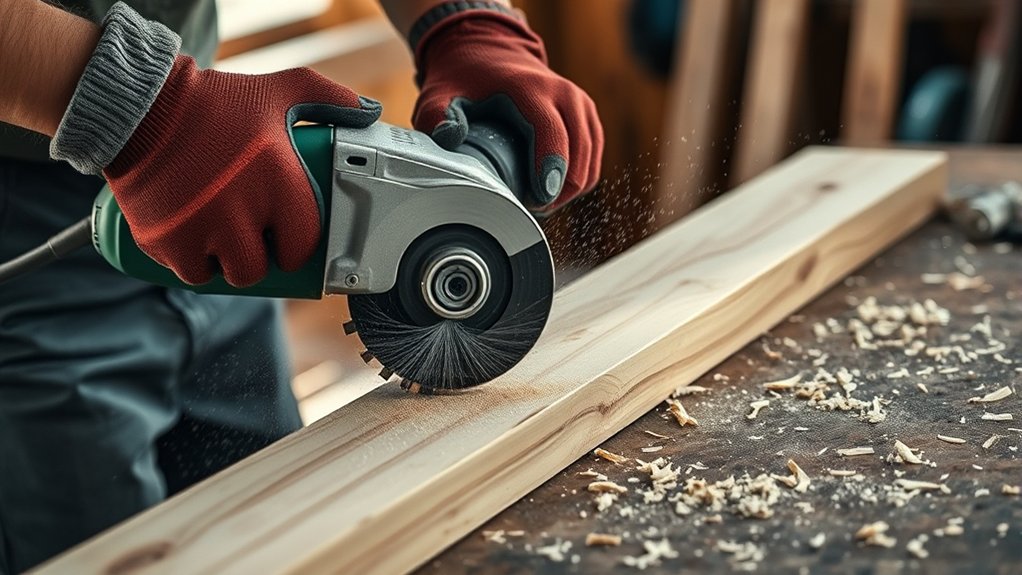
Start by securely clamping the wood to a stable surface to prevent any movement while you cut.
Attach a wood-cutting disc designed for power tools to your angle grinder. Never use a metal disc for wood, as it’s unsafe.
Always use a wood-cutting disc with your angle grinder; metal discs are unsafe for cutting wood.
Wear safety goggles, gloves, a dust mask, and hearing protection before turning the grinder on.
Inspect the tool and disc for damage to guarantee safe operation. If your grinder has adjustable speed, start at a lower RPM to maintain control.
Position the grinder at the cutting line, apply light pressure, and make shallow passes rather than forcing the tool through the wood.
This approach minimizes kickback and improves cutting precision. It keeps your work safe and efficient.
Common Wood-Cutting Issues With Angle Grinders and Solutions
Although angle grinders can handle wood cutting in rough shaping tasks, you’ll likely face some common issues that affect safety and performance. To work effectively, focus on these points:
- Kickback risk: Avoid deep cuts and apply light pressure to reduce sudden tool jerks that cause loss of control. It’s better to take your time rather than rush through a cut.
- Blade compatibility: Use only discs designed for angle grinders. Never attach circular saw blades, as they cause instability and dangerous jams. Sticking to the right blade keeps things safer and smoother.
- Safety gear importance: Always wear goggles, gloves, and a dust mask to protect against flying debris and high-speed disc hazards. It might feel like a hassle, but it’s worth it for your safety.
Additionally, clamp your wood securely to maintain control and prevent accidents.
Keeping these solutions in mind helps you cut wood safely and efficiently with an angle grinder.
When to Choose Safer Wood Cutting Tools Instead of an Angle Grinder
When you need precise, clean cuts in wood, relying on safer tools like circular saws or jigsaws makes a big difference. These power tools are specifically designed for woodworking, providing accuracy and control that an angle grinder simply can’t match.
Use an angle grinder only for rough cuts or emergency shaping, where precision isn’t essential.
Reserve angle grinders for rough cuts or emergency shaping when precision is not required.
For regular woodworking projects, safer alternatives like table saws or dedicated wood-cutting tools offer greater stability and greatly reduce risks. Angle grinders increase the chance of kickback and loss of control, which can lead to serious injuries, including finger amputations.
Choosing the right tool not only improves your work quality but also keeps you safe.
Frequently Asked Questions
Can an Angle Grinder Be Used to Carve Wood Shapes?
Yes, you can use an angle grinder to carve wood shapes by choosing the right angle grinder accessories, like flap or carving discs.
To master wood carving techniques, secure your wood firmly and use both hands for better control.
Always follow safety precautions. Wear goggles, gloves, and a dust mask to protect yourself from debris and dust.
Apply light pressure and make shallow passes to avoid kickback and guarantee precise, safe carving.
It really helps keep things under control and makes the process smoother.
How Do Angle Grinder Dust Levels Compare to Other Wood Tools?
Dust dangers dominate when you compare angle grinder dust levels to other wood tools. Unlike tools with dedicated dust collection systems, grinders often generate greater quantities of fine, harmful particles.
This wood dust hazard demands your attention because grinder performance comparison shows it can exceed dust from table saws.
To protect yourself, you’ll need effective dust control, proper safety gear, and good ventilation to manage these risks confidently and consistently.
It’s really about being proactive and making sure you’re prepared every time you use a grinder. Taking these steps can make a big difference in keeping you safe on the job.
What Maintenance Is Required for Wood-Cutting Blades on Grinders?
You should regularly inspect wood-cutting blades for damage and dullness.
Use blade sharpening techniques like honing or grinding to keep them sharp. It really helps to understand your blade material types, such as carbide or steel, since maintenance varies.
Clean blades after each use to prevent resin buildup.
Also, check mounting compatibility to avoid accidents. It’s a good habit to inspect blades before every job.
When blades are worn, replace them to guarantee safety and cutting efficiency.
Keeping up with maintenance frequency tips will make your work safer and smoother.
Can Cordless Angle Grinders Effectively Cut Wood?
You might think a cordless angle grinder could cut through wood like a hot knife through butter, but it’s not quite that simple.
While cordless grinders offer impressive angle grinder versatility and can really help with small, rough cuts in woodworking, their power and battery life do limit how long you can use them.
You’ll need to follow strict safety precautions, like wearing PPE and using light pressure. This helps avoid kickbacks and makes sure your wood cutting is safe and effective.
Are There Specific Brands Recommended for Wood-Cutting Angle Grinders?
You should consider brands like Makita, DeWalt, and Bosch for reliable brand performance when cutting wood with an angle grinder.
These brands offer excellent blade compatibility with wood-cutting discs, ensuring safety and efficiency.
Milwaukee’s adjustable speed models also get great user reviews for control.
For budget options, Ryobi works but may lack durability.
Always check user reviews to confirm the grinder suits your wood-cutting needs and handles the discs properly.
It’s a good way to make sure you’re getting the right tool for the job.
Conclusion
Using an angle grinder to cut wood is like wielding a double-edged sword. You can get the job done, but only if you respect the tool and take every safety precaution seriously. Choose the right blade, stay alert to kickback risks, and follow step-by-step procedures carefully.
When in doubt, don’t hesitate to pick safer, more specialized tools. Your hands and woodwork will thank you for it. Safety isn’t just a tip; it’s your best cutting companion.