Can You Put Salt On A Wood Deck: Effects Explained
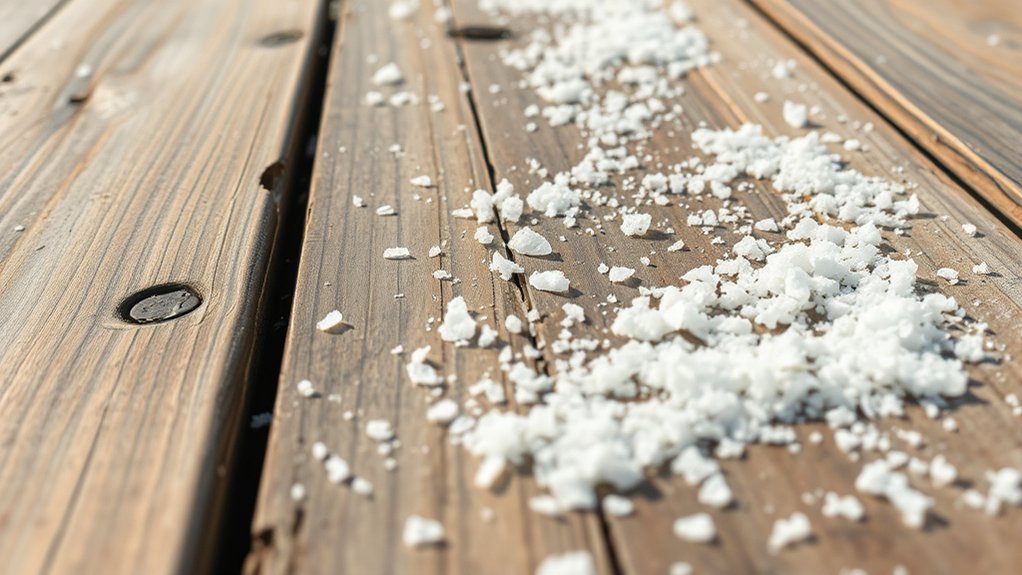
You shouldn’t put salt on a wood deck because it draws moisture into the wood, causing swelling, cracking, and speeding up decay. Salt also breaks down sealants and finishes, making your deck more vulnerable to damage from water and sunlight.
Over time, this weakens the wood fibers and ruins the deck’s appearance. Plus, salt can corrode metal fasteners, which risks safety.
To protect your deck this winter, understanding safer alternatives and maintenance tips will help you keep it in great shape.
Salt Damage to Wood Decks
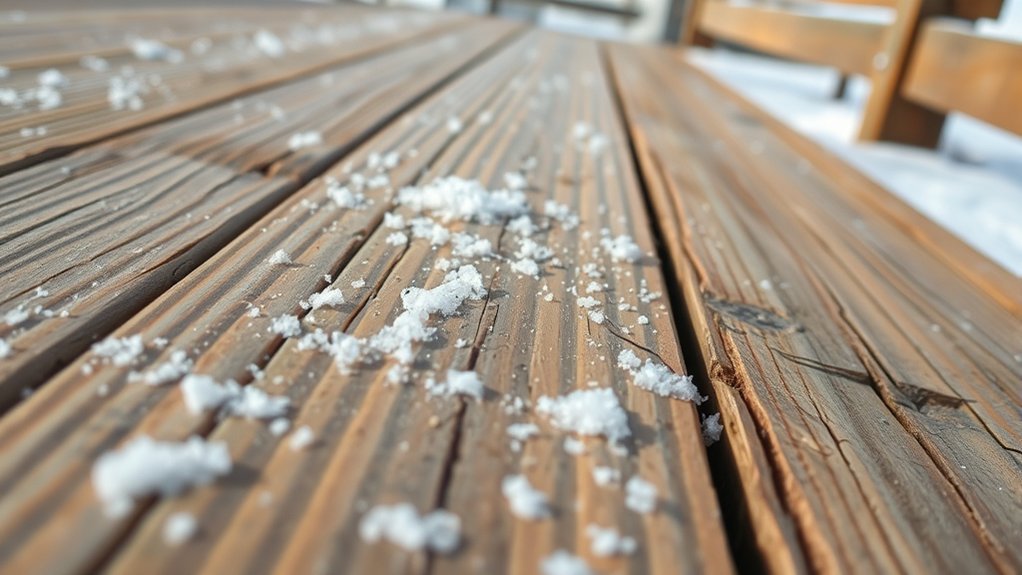
Although salt is effective for melting ice, it can cause serious damage to your wood deck. Salt damage happens because salt draws moisture into the wood, leading to swelling, cracking, and potential decay over time.
When you use ice melt products containing salt, prolonged exposure weakens the wood fibers, which cuts down your deck’s lifespan considerably.
Salt residue also breaks down sealants and finishes, leaving the wood vulnerable to more moisture and UV damage. This often results in tough stains and discoloration, which can really ruin your deck’s appearance.
Plus, the freeze-thaw cycle combined with salt exposure can make warping and structural problems worse.
How Salt Hurts Composite Decks
You mightn’t realize it, but salt can actually cause surface discoloration and leave stubborn residue on your composite deck.
It’s not just a little cosmetic issue—over time, salt that gets trapped in the grooves can lead to staining.
And that’s not all; it can even weaken the deck’s structural integrity.
Surface Discoloration Issues
When salt settles on your composite deck, it can cause noticeable surface discoloration that leaves the material looking faded and worn.
Salt residues penetrate the grooves and joints of composite decks, making it tough to remove them completely. Over time, this leads to splotchy patches that detract from your deck’s appearance.
The harsh chemicals in salt not only change the color but can also weaken the deck’s structural integrity if exposure continues.
To maintain your deck’s look and durability, it’s essential to clean off salt residues regularly. This prevents discoloration and reduces the risk of mold and mildew growth, which thrive in trapped salt deposits.
Being proactive keeps your composite deck looking great and extends its lifespan.
Residue And Staining
Since salt often settles into the grooves and joints of composite decks, it leaves behind stubborn residues that stain the surface and are tough to remove. When salt lingers on composite materials, it can cause discoloration, making your deck look faded and neglected over time.
This staining doesn’t just affect appearance; it also traps moisture, which encourages mold and mildew growth if you don’t clean regularly. Removing these salt deposits often requires specialized cleaning solutions because ordinary washing mightn’t be enough.
To protect your composite deck from salt damage, you should rinse and sweep it frequently, especially during the winter months. Doing this helps minimize residue buildup and keeps your deck looking its best for years.
Structural Integrity Loss
Although salt might seem like a harmless way to keep your composite deck ice-free, it can actually cause serious damage over time.
Salt compromises the structural integrity of composite materials by penetrating grooves and joints. It promotes mold and mildew growth if not cleaned regularly.
This moisture retention weakens the deck, making it more prone to warping and deterioration. Over time, salt exposure accelerates the breakdown of composite materials, reducing your deck’s lifespan considerably.
The damage can lead to costly repairs or even the need for full replacement of affected sections.
To protect your deck’s structural integrity, avoid using salt as a de-icer. Instead, opt for safer alternatives that won’t degrade your composite materials.
It’s a simple way to keep your deck looking great and lasting longer.
Salt Damage to Metal Fasteners
You should know that salt speeds up rust and corrosion on the metal fasteners holding your deck together.
This kind of damage can weaken railings and supports, which is a serious safety risk.
So, it’s a good idea to regularly check for any signs of corrosion.
That way, you can catch problems early before they compromise your deck’s structure.
Corrosion Risks To Hardware
When salt from ice melt products settles on your wood deck, it doesn’t just affect the wood. It also speeds up rusting on metal fasteners and screws. This increases corrosion risks, which can weaken essential hardware like railings, hangers, and brackets.
Over time, salt exposure causes discoloration, flaking, and gradual degradation of these metal fasteners. This makes deck maintenance more challenging and costly. If you don’t address salt buildup promptly, you might face repairs or replacements sooner than expected.
To protect your deck’s hardware, inspect metal components regularly, especially after winter. Catching corrosion early helps prevent further damage and keeps your deck safe and sturdy.
Effective deck maintenance means staying on top of these corrosion risks to extend the life of your metal fasteners.
Structural Integrity Concerns
Salt not only accelerates corrosion on your deck’s metal hardware but also poses serious threats to the overall structural integrity. Sodium chloride, the main ingredient in common salt, speeds up rust formation on screws, hangers, and brackets, weakening these essential components over time.
As corrosion progresses, you might notice sagging railings or unstable support structures, which can increase safety risks.
Because salt-induced damage often develops gradually, regular inspection is really important to catch problems early.
Ignoring corrosion can lead to costly repairs or even structural failure.
To protect your deck’s longevity and safety, consider limiting salt use and exploring alternative de-icing methods. Taking these steps helps maintain your deck’s structural integrity and prevents premature damage from sodium chloride exposure.
Visible Signs of Salt Damage on Your Deck
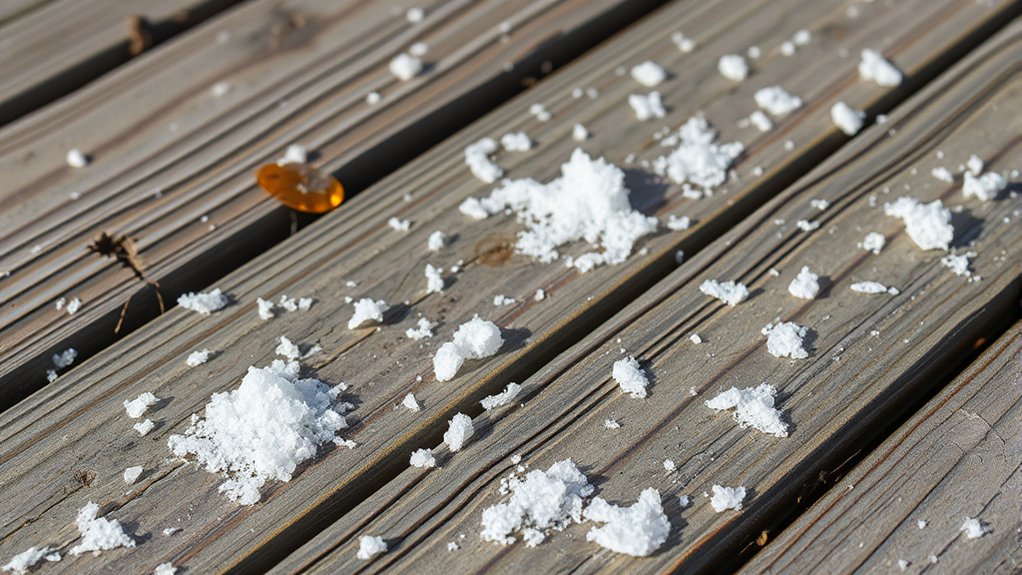
Visible signs of damage from salt on your wood deck often show up as swelling, cracking, and uneven surfaces that create safety concerns.
Salt draws moisture from the wood, causing it to dry out and become brittle, which leads to these visible defects.
You might also notice tough stains and discoloration that don’t wash off easily.
That’s a clear sign of salt’s corrosive effects.
Over time, salt breaks down the wood’s finish, making your deck look worn and aged.
These issues usually become more noticeable during warmer months when cracks and splotchy patches appear, revealing underlying damage.
If you spot any of these signs, it’s a strong indication that salt has compromised your deck’s wood.
You’ll want to address it to prevent further deterioration.
Safe Ice Melt Alternatives for Wood Decks
If you’ve noticed damage from salt on your wood deck, you’ll want to switch to safer ice melt options that protect your deck while keeping it slip-free.
Look for ice melters like magnesium chloride and calcium magnesium acetate, which are safe for wood and environmentally friendly. These alternatives are less corrosive and won’t degrade your deck’s surface.
Urea-based products also melt ice effectively without harming wood or composites.
For added traction without any chemical impact, consider using sand. Pet-safe ice melters, such as Safe Paw, minimize harm to both animals and your deck.
Remember to sweep and rinse your deck after winter weather to prevent residue buildup.
Choosing these safer ice melters helps you maintain your deck’s integrity throughout the cold months. It’s a simple way to keep your deck looking great and safe to walk on.
Salt-Free Snow and Ice Removal Tips for Decks
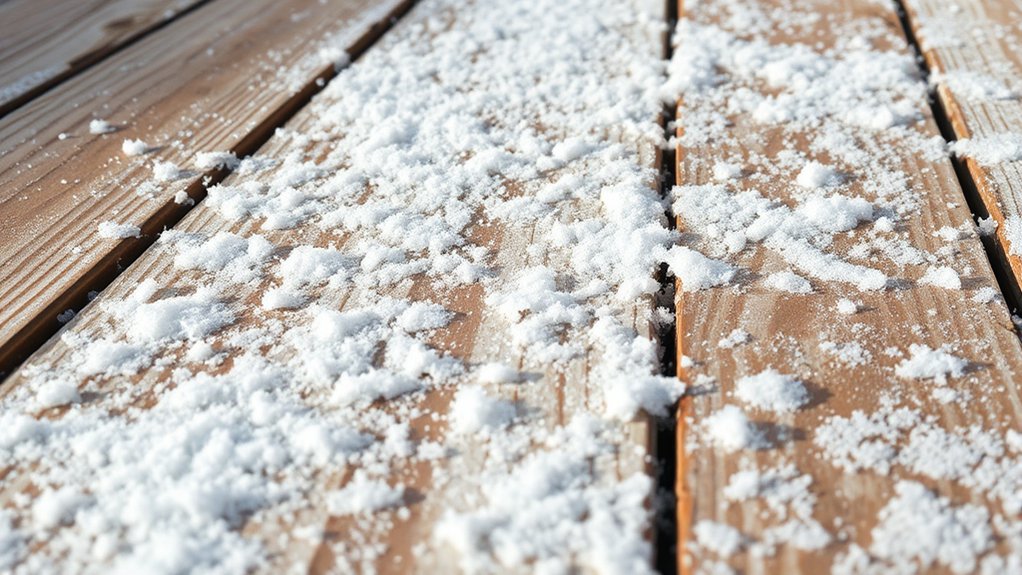
When removing snow and ice from your wood deck, choosing gentle tools and techniques helps prevent damage. Use a soft broom or leaf blower to clear light snow without scratching the surface.
For heavier snow, a plastic shovel works best. Just shovel parallel to the boards to avoid gouging.
Instead of salt, spread sand for traction. It’s safe for pets and won’t corrode or damage your deck. If you want to use a de-icer, pick one specifically labeled safe for wood decks. This helps protect the finish and prevent deterioration.
Don’t forget to regularly clean grooves and joints to avoid moisture buildup. Moisture can lead to mold and mildew, so keeping those areas clear is key.
These salt-free tips keep your deck safe and looking great all winter long.
Protecting Your Wood Deck During Winter
Keeping your wood deck safe during winter goes beyond choosing the right snow removal methods. Start by applying a high-quality sealant to repel water and prevent ice formation. This helps extend your deck’s life.
Regularly check for ice buildup around posts to catch moisture problems early. Also, clear gutters and downspouts to avoid water pooling. Water pooling can cause rot and decay, so maintaining proper drainage is key to protecting the wood’s integrity.
When removing snow or ice, use plastic shovels or brooms to avoid damaging the surface. If you need to use ice melt salt, pick one that’s safe for concrete, wood, and composite decking. This way, you minimize harm.
These simple steps help preserve your wood deck through harsh winters without compromising its appearance or structure. Taking care now means you’ll enjoy your deck for many seasons to come.
When to Call a Professional for Deck Repairs
As you inspect your wood deck, spotting significant cracking, warping, or discoloration signals the need to call a professional for a thorough evaluation and repairs.
Using corrosive ice melt can accelerate hidden damage, compromising your deck’s structural integrity. A professional evaluation helps identify issues you might miss.
Know when to seek expert help:
- You see rust or corrosion on metal fasteners. This weakens the deck’s safety.
- Damage looks widespread or deep, beyond simple DIY fixes.
- You’ve regularly used corrosive ice melt and want to assess long-term effects.
Timely professional repairs protect your deck and prevent costly replacements later.
Early repairs save your deck from extensive damage and expensive future replacements.
Don’t wait. Address problems early to keep your wood deck safe and sturdy.
Frequently Asked Questions
Can Salt Harm Plants Near My Wood Deck?
Yes, salt can harm plants near your wood deck by affecting plant health and soil quality.
When salt leaches from your deck, it increases soil salinity, which disrupts water and nutrient absorption. This can stress or even kill your plants.
Salt also impacts your deck maintenance because it can degrade the wood over time.
To protect both your plants and your deck, it’s a good idea to use pet-safe, environmentally friendly ice melts. These options help preserve soil quality and support healthy plant growth.
Does Salt Affect the Color of Wood Decks Permanently?
Imagine your wood deck like a faded painting. Salt acts like harsh bleach and permanently alters its colors. Yes, salt can cause lasting discoloration, making wood deck maintenance tougher.
To protect your deck’s look, try salt alternatives like sand for traction.
If salt damage happens, color restoration might need professional help since salt residues can seep deep into the wood. Regular cleaning helps but won’t fully undo salt’s permanent effects.
How Quickly Does Salt Damage Appear on Wood Decks?
You’ll start seeing salt concentration effects on your wood deck within a few weeks, especially during winter weather impacts.
Salt draws moisture out, causing surface stains and swelling quickly.
If you don’t prioritize wood deck maintenance, these damages worsen with temperature changes, leading to cracking and warping.
Acting fast and limiting salt use helps protect your deck’s longevity and appearance in cold months.
Can Sealing My Deck Prevent Salt Damage Entirely?
Think sealing your deck can prevent salt damage entirely? Not quite.
While sealing techniques are essential deck maintenance tips that create a strong moisture barrier, they don’t guarantee total protection, especially with frequent salt exposure or harsh winters.
For effective winter preparation, regularly reapply high-quality sealants and inspect your deck.
This proactive approach helps minimize damage and extend your deck’s life.
But no seal is completely foolproof against salt’s effects.
Is Salt Damage Covered by Home Insurance Policies?
Salt damage usually isn’t covered by home insurance policies because most have clauses excluding damage from improper maintenance or corrosive salt types.
When you file a claim, insurers often require thorough damage assessments proving you maintained your deck properly.
To avoid surprises, check your policy’s wording carefully.
It’s a good idea to talk with your insurance agent about coverage options.
That way, you’ll know exactly what salt-related damage your policy covers and how to protect your wood deck.
Conclusion
You definitely don’t want to treat your wood deck like a salt mine. Salt can cause more damage than a thousand winter storms combined. It eats away at the wood, ruins metal fasteners, and leaves ugly stains.
Instead, use safe ice melt alternatives and follow salt-free snow removal tips to protect your deck. If you notice damage, don’t hesitate to call a professional. Taking these steps keeps your deck sturdy and beautiful, no matter the season.