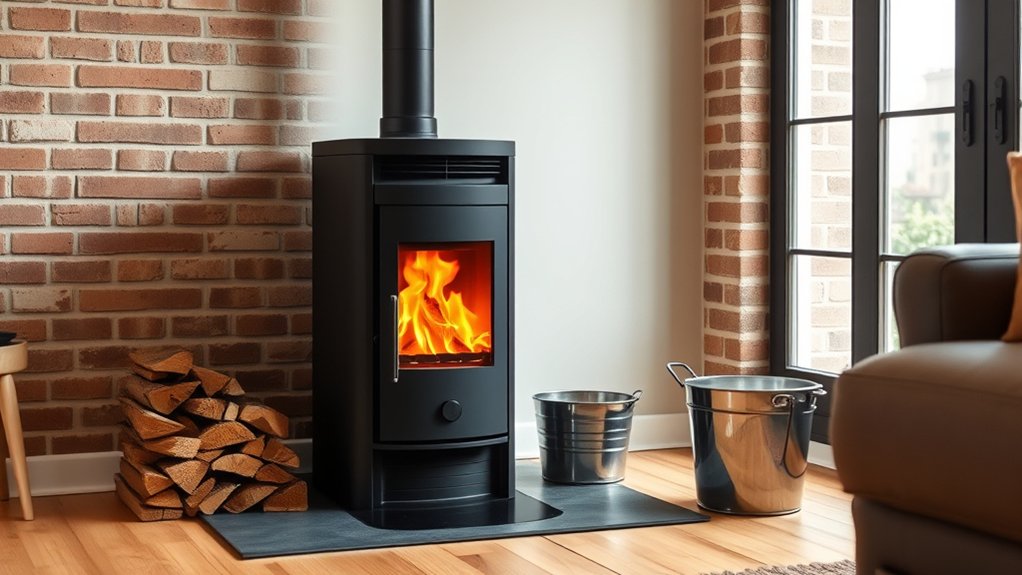
Can You Burn Wood In A Pellet Stove: What You Need To Know
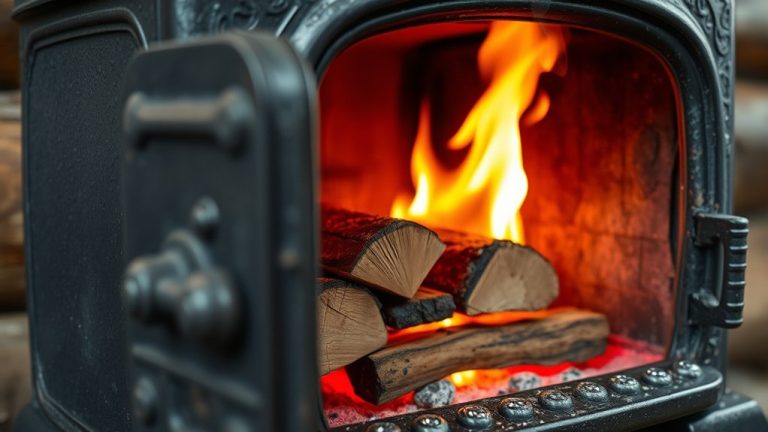
You shouldn’t burn regular wood in a pellet stove because these stoves are engineered specifically for uniform wood pellets. This design ensures consistent fuel delivery and ideal combustion. Using wood can damage components like the auger and blower, cause excessive ash, and release harmful fumes.
That risks both your health and safety. Plus, it can void your warranty and create insurance issues. Proper pellets like EnPlus A1 help maximize efficiency and safety.
If you want to understand the full implications and alternatives, keep exploring the technical details and best practices. There’s a lot to learn about how to get the most out of your pellet stove safely.
Key Takeaways
- Pellet stoves are designed exclusively for uniform wood pellets and burning wood logs can damage the feeding and combustion systems.
- Using wood instead of pellets risks warping stove components, increasing maintenance, and reducing appliance lifespan.
- Burning treated or scrap wood releases toxic fumes that pose serious health and indoor air quality hazards.
- Employing wood in pellet stoves often voids warranties, violates safety regulations, and may invalidate insurance coverage.
- Proper use of certified low-moisture pellets ensures efficient combustion, less ash, and safer, cleaner stove operation.
Why Pellet Stoves Only Burn Wood Pellets
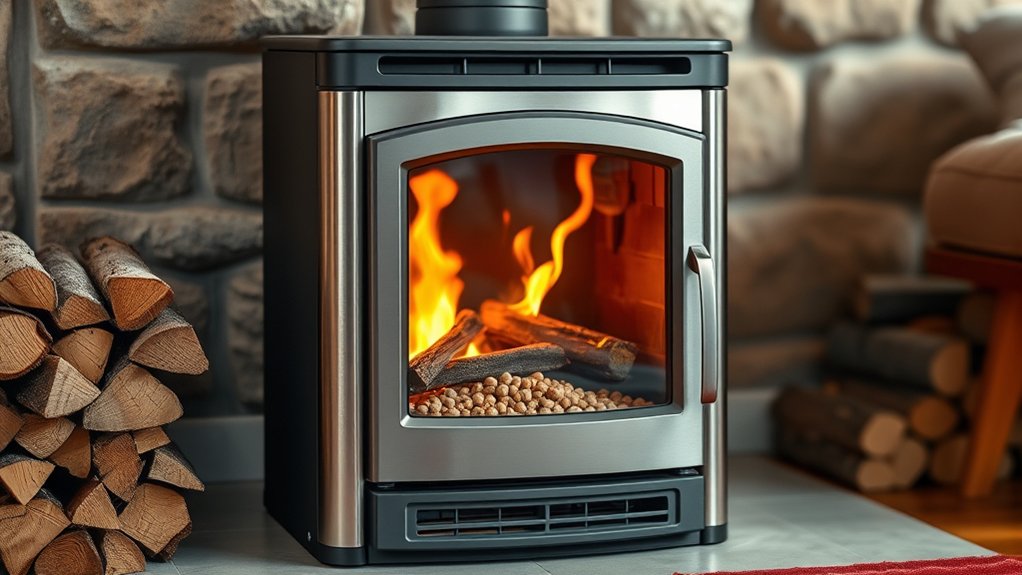
Because pellet stoves rely on an automated feeding system calibrated specifically for uniform wood pellets, they can’t efficiently burn irregular fuels like logs. This system controls the fuel delivery rate based on the consistent size and density of quality pellets, ensuring ideal combustion.
When you try to burn wood that isn’t pelletized, the stove’s feed mechanism jams or delivers fuel unevenly, disrupting the burn process.
Pellet stoves are engineered with blowers and exhaust systems designed for the combustion properties of pellets, which differ greatly from traditional firewood.
Using anything other than a quality pellet compromises combustion efficiency, increases emissions, and risks damaging the appliance.
The Risks of Burning Wood in Pellet Stoves
While pellet stoves are made specifically for burning uniform wood pellets, using regular wood in these appliances can cause serious issues.
Burning wood messes with the mechanical feeding system designed for pellets. This leads to inefficient combustion and more emissions.
Using wood disrupts the pellet stove’s feeding system, causing poor combustion and increased emissions.
You also risk damaging important parts like the burn pot and combustion chamber. Plus, burning wood, especially treated wood or plywood, releases harmful fumes that can be bad for your health.
On top of that, misuse can void your warranty and cause insurance and safety problems.
Here are some risks to keep in mind:
- Appliance damage from improper combustion
- Inefficient burning causing excess smoke and emissions
- Exposure to toxic fumes from non-pellet wood materials
- Voided insurance coverage and legal safety liabilities
How Wood Damages Pellet Stove Components
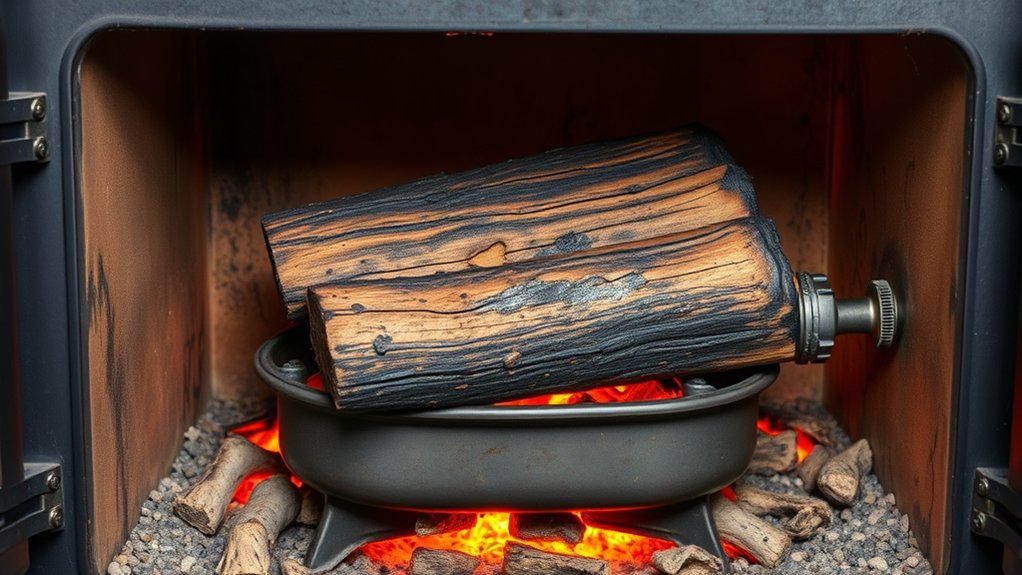
Using wood instead of pellets in your pellet stove directly harms its components. Wood burns hotter than pellets, causing critical parts like the burn pot and cast iron plate to warp. This warping leads to costly replacements.
The stove’s augur and blower are calibrated specifically for pellet density and burn rate. Introducing wood messes with these systems, which can cause malfunctions and damage. It’s not just a small issue—it really throws things off.
Wood combustion also generates excessive ash and debris. This clogs the combustion chamber and means you’ll have to do maintenance more often. The ash buildup impairs airflow, which reduces efficiency and speeds up wear.
Overall, burning wood puts a lot of stress on your stove’s mechanical and structural elements beyond what they’re designed for. This causes premature failure.
Risks of Burning Plywood and Scrap Wood
You really shouldn’t burn plywood or scrap wood in your pellet stove. That’s because the chemical binders and contaminants in these materials can release toxic fumes, which are a serious health risk.
On top of that, they can create fire hazards. Their unpredictable way of burning might cause your stove to overheat and even damage the equipment.
Knowing these dangers is key. It helps you keep your stove running safely and also makes sure you don’t accidentally void your insurance coverage.
Chemical Hazards Warning
Because plywood and scrap wood contain adhesives and binders, burning them in a pellet stove releases toxic fumes that pose significant chemical hazards.
When you misfuel your stove with these materials, you risk inhaling harmful aerosol emissions that can cause severe respiratory problems.
These chemical hazards don’t just threaten your health. They can also damage your pellet stove’s components.
Avoid these dangers by understanding the risks:
- Toxic fumes from adhesives and binders
- Increased aerosol emissions leading to poor indoor air quality
- Potential long-term respiratory illnesses
- Damage to stove mechanics due to misfueling
Stick to approved pellet fuels to protect your health and make sure your stove operates safely and efficiently.
Don’t compromise safety by experimenting with plywood or scrap wood.
Fire Safety Concerns
Beyond chemical hazards, burning plywood and scrap wood in a pellet stove introduces significant fire safety concerns that can compromise both your safety and stove functionality.
Using non-recommended materials like plywood risks creating extreme heat that damages critical components such as the combustion chamber and auger. This can lead to dangerous operational failures and void warranties or insurance coverage.
Unlike wood pellets engineered for controlled combustion, scrap wood burns inconsistently, increasing the chance of flare-ups and chimney fires.
To maintain fire safety, always use approved wood pellets and avoid experimentation with unconventional fuels. Proper ventilation and stove maintenance are essential to prevent fire hazards.
Prioritizing correct fuel types guarantees safe, efficient operation and protects both you and your pellet stove from avoidable damage.
Health Risks Exposure
Although burning wood in a pellet stove may seem straightforward, using plywood and scrap wood introduces significant health risks due to the release of toxic fumes.
Plywood contains adhesives and binders that emit harmful chemicals like formaldehyde and volatile organic compounds (VOCs) when combusted. These toxins can severely impact your respiratory system and indoor air quality.
Plus, burning scrap wood can produce unpredictable combustion. This increases particulate matter and raises the risk of chimney fires. So, it’s really not worth the risk.
When you burn plywood or scrap wood in your stove, you risk inhaling hazardous chemicals that damage your lungs.
You also increase indoor air pollution, which is harmful to your family. On top of that, it can trigger respiratory issues and allergies.
And don’t forget, using these materials might violate local regulations designed to protect health and the environment.
Avoid these materials to minimize health risks and keep your stove operating safely.
Why EnPlus A1 Pellets Are Best for Pellet Stoves
Three key reasons make EnPlus A1 pellets the ideal choice for pellet stoves: their low moisture content, strict quality certification, and sustainable carbon cycle.
EnPlus A1 pellets have a moisture content between 5% and 10%, which maximizes heat output and combustion efficiency when you burn pellets.
The EnPlus certification guarantees consistent quality by enforcing rigorous manufacturing standards. It also prevents additives and contaminants that could harm your pellet stove’s performance.
These pellets produce less ash, reducing maintenance needs.
Furthermore, EnPlus A1 pellets are carbon-neutral because the carbon released during burning equals the carbon absorbed by trees, supporting sustainability.
When you use EnPlus A1 pellets in pellet stoves, you optimize fuel efficiency, prolong your stove’s lifespan, and contribute to environmentally responsible heating.
Cost-Effective Alternatives to Wood for Pellet Stove Heating
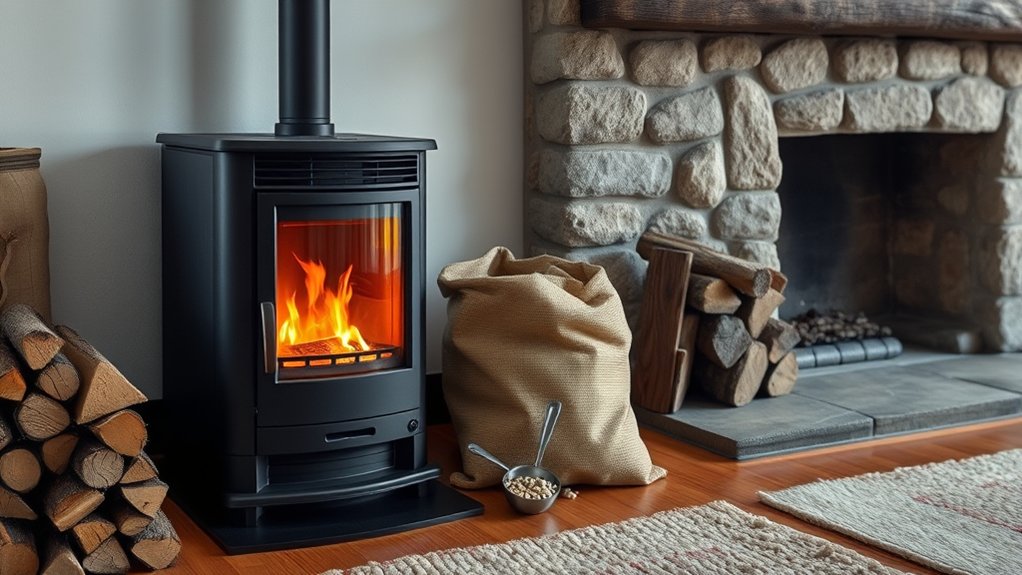
When managing heating expenses, exploring cost-effective alternatives to wood pellets can really help your budget. Pellet fuel usually costs around $300 to $350 per ton, but there are other options you might want to consider. It all depends on your heating system and what’s available locally.
Exploring affordable alternatives to wood pellets can significantly ease your heating expenses and fit your local resources.
If you have a wood stove that works with different types of fuel, mixing things up can be a smart move. Using a variety of heating sources may help you save money and boost efficiency.
Here are some cost-effective alternatives to think about:
- Seasoned firewood, which is often cheaper and easy to find in many areas
- Kiln-dried hardwoods like hickory, known for higher BTU output and better heat
- Multi-fuel stoves that burn both pellets and wood, giving you more flexibility
- Storing and maintaining your alternative fuels properly to get the most heat and stay safe
How Burning Wood Affects Safety and Warranties
If you use wood in a pellet stove not designed for it, you risk voiding the manufacturer’s warranty because of potential mechanical failures outside standard operating conditions.
Pellet stoves are made for specific pellet burn rates. Using wood disrupts combustion efficiency and increases creosote buildup, which raises fire hazards.
Safety concerns also include harmful fumes from improper fuels. These fumes can compromise indoor air quality and might even violate local regulations.
Unlike wood stoves designed for solid fuel, pellet stoves don’t have the right structure or airflow to safely handle wood combustion.
On top of that, insurance policies might become invalid if damage results from using non-approved fuels.
Pellet Stove Maintenance Tips for Best Results
You should remove ash from the burn pot regularly to keep the airflow steady and ensure efficient combustion.
It’s a good idea to check the auger mechanism often too, so your pellets feed smoothly without any jams.
Also, don’t forget to clean the blower fans; this helps maintain good airflow and stops the stove from overheating.
Regular Ash Removal
Daily ash removal plays an essential role in maintaining your pellet stove’s efficiency and airflow. To guarantee peak performance, you should regularly vacuum ash each morning after the stove cools down.
Using pellets with less than 1% ash content greatly reduces maintenance frequency and improves combustion quality.
Focus on these key steps:
- Regularly vacuum the burn pot and ash pan to prevent buildup.
- Use pellets with low ash content to minimize residue.
- Make certain ash doesn’t accumulate in the burn pot for proper fuel feeding.
- Dispose of ash safely to avoid damage or clogging.
Inspect Auger Mechanism
Inspect the auger mechanism frequently to confirm it operates smoothly and reliably, as it plays a critical role in feeding pellets consistently into the burn pot.
Start by checking the auger for signs of wear, damage, or obstructions that could impede pellet flow.
Blockages reduce heating efficiency by disrupting consistent fuel delivery. Clean the auger regularly to remove dust and pellet residue buildup that may hinder performance.
Monitor the auger motor closely to verify it functions properly; any malfunction can cause irregular pellet feed and poor combustion.
Finally, lubricate the auger as per the manufacturer’s guidelines to prevent rust and guarantee smooth operation.
Proper auger maintenance directly impacts your stove’s reliability and overall heating efficiency.
Clean Blower Fans
Maintaining blower fans by cleaning them at least once each heating season greatly improves airflow and prevents motor overheating.
Dust buildup from your pellet production process can hinder fan performance, reducing your stove’s ability to heat your home efficiently.
To keep your blower fans clean and functional, turn off power and confirm the stove is cool before cleaning.
Then, use a soft brush or vacuum with a brush attachment to remove dust gently.
Make sure to follow manufacturer guidelines for maintenance intervals.
Also, inspect fans regularly to catch dust accumulation early.
Keeping up with these steps will help your stove run smoothly all season long.
Frequently Asked Questions
How Do Pellet Stoves Compare to Traditional Wood Stoves in Efficiency?
Pellet stoves outperform traditional wood stoves in efficiency by reducing energy consumption and boosting heat output. You’ll get up to 83% efficiency with pellets compared to about 60% with wood.
The mechanical feeder in pellet stoves guarantees consistent combustion, optimizing heat production.
Maintenance differences are clear too. Pellet stoves produce less ash, so you’ll clean less often.
Wood stoves require more frequent upkeep because of higher residue buildup.
Can Pellet Stoves Be Used With Alternative Pellet Types Besides Wood?
You generally can’t use alternative fuels like corn or biomass pellets in a standard pellet stove because they require different combustion systems.
Using non-wood pellets risks damaging your stove and reduces combustion efficiency.
Always prioritize pellet quality.
Stick to EnPlus A1 certified wood pellets designed for your appliance.
If you want to use alternative fuels, you’ll need a stove specifically engineered for those types to guarantee proper operation and efficiency.
What Is the Environmental Impact of Using Wood Pellets Versus Firewood?
While firewood can raise sustainability concerns due to deforestation and inconsistent sourcing practices, wood pellets offer a lower carbon footprint by repurposing sawmill waste.
You’ll find pellets burn cleaner, with less ash and higher combustion efficiency, reducing pollutants compared to firewood.
Their production relies on more controlled, sustainable sourcing, making them a better environmental choice if you want to minimize impact while heating efficiently and responsibly.
How Often Should Pellet Stoves Be Professionally Serviced?
You should follow a service frequency of at least once a year for your pellet stove.
Maintenance tips include scheduling this annual professional check before the heating season starts. Confirm the technician qualifications are verified, as they must inspect critical components like the auger, seals, and blower motors for safety and efficiency.
Regular servicing prevents clogs and carbon monoxide risks.
It also extends your stove’s life and optimizes fuel consumption effectively.
Are There Any Health Benefits to Using Pellet Stoves Over Wood Burning?
Yes, using pellet stoves can reduce health risks compared to traditional wood burning.
You’ll benefit from improved indoor air quality because pellet stoves produce considerably lower smoke emissions. Their efficient combustion lowers particulate matter and harmful toxins, minimizing respiratory irritants.
By choosing pellet stoves, you actively reduce exposure to smoke pollutants.
This creates a safer environment inside your home while supporting cleaner air overall. It’s a smart choice for both your health and the environment.
Conclusion
You shouldn’t burn regular wood in your pellet stove. Doing so can damage key components and void warranties. Pellet stoves are engineered specifically for uniform wood pellets, which burn cleaner and more efficiently.
Curiously, using certified EnPlus A1 pellets can reduce emissions by up to 70% compared to untreated wood. For the best performance and safety, stick to recommended fuels and maintain your stove regularly.
This approach guarantees longevity, efficiency, and a safer heating experience. It’s really worth following these guidelines to get the most out of your pellet stove.