
Can You Stain Veneer Wood: Tips For Best Finish
You can stain veneer wood successfully by preparing the surface with fine-grit sanding and using a pre-stain conditioner to prevent blotching. Choose a stain that balances color richness and drying time. Water-based stains dry quicker, while oil-based ones give deeper hues.
Apply the stain along the grain, wiping off excess carefully. Protect your work with multiple coats of a durable finish like polyurethane. Make sure to allow proper drying and sanding between coats.
Keep going to uncover expert tips for flawless results. You’ll find that a little patience and the right technique go a long way when working with veneer wood.
Can You Stain Veneer Wood? What You Need to Know

How can you achieve a beautiful finish on veneer wood? Yes, you can stain veneer wood, but success depends on careful surface preparation and technique.
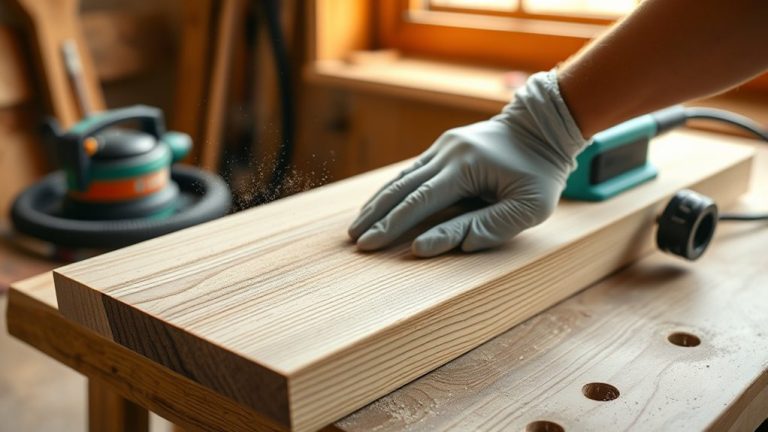
Before you apply stain, clean and sand the wood veneer smoothly to guarantee even stain absorption.
Clean and sand veneer thoroughly to ensure smooth, even stain absorption for a flawless finish.
Use a quality brush or cloth to apply stain in the direction of the grain, wiping off excess to prevent blotching. Multiple even coats may be necessary to achieve your desired color. Just remember to allow adequate drying times, typically at least 24 hours between coats.
After staining, sealing the veneer with a protective finish like polyurethane preserves the color and enhances durability.
Testing stain on a scrap piece helps you gauge the final look before committing. This way, you can make sure your wood veneer project turns out flawless.
Preparing Veneer Wood for Staining
Next, sand the surface lightly using fine-grit sandpaper (120 to 220 grit) in the direction of the wood grain to open the wood pores for ideal stain absorption.
To prevent blotching, especially on softer veneers, consider applying pre-stain conditioners. Always test the stain on a scrap piece or an inconspicuous area to verify the desired color before proceeding.
When staining, apply a thin coat evenly and allow the stain to dry completely, typically 24 hours, before adding any protective finish.
These steps guarantee a smooth, uniform finish and enhance the veneer’s natural beauty. Following them makes the whole process easier and the results much more satisfying.
Just take your time, and you’ll see the difference in the final look.
Choosing the Best Stain for Veneer Wood

When selecting a stain for veneer wood, you’ll want to balance color richness with ease of use and drying time.
Oil-based stains offer deep, rich hues and durable finishes but take longer to dry and require solvents for cleanup. Water-based stains dry faster, are easier to clean, and emit fewer fumes, making them ideal for indoor projects.
To choose the best stain wood veneer, follow these steps:
- Test stains on scrap veneer to confirm desired color and avoid surprises.
- Use pre-stain conditioning to promote even coverage and reduce blotching.
- Select a quality brush or cloth to apply the stain smoothly, following the grain.
- Consider multiple coats for a deeper, uniform finish, allowing full drying between layers.
This approach guarantees a professional, lasting result.
How to Apply Stain to Veneer Wood
Before you start staining, make sure you apply the stain in the direction of the wood grain.
Using a quality brush or cloth will help you get an even coverage. After letting it sit for a few minutes, go ahead and wipe off any excess stain with a clean, lint-free cloth. This step is important because it helps avoid blotching and ensures a nice, uniform tone.
Once you’ve done that, just let each coat dry completely.
Be sure to follow the manufacturer’s instructions for drying times. After it’s dry, you can decide if you want to add more coats for a deeper color.
Stain Application Techniques
Start by testing the stain on a scrap piece of veneer or an inconspicuous area to make sure you get the color you want and avoid any mismatches.
To properly apply stain on wood veneer, follow these steps:
- Use a pre-stain conditioner to help the stain absorb evenly, especially on softer veneers.
- Apply the stain with a brush or cloth, working along the direction of the wood grain for a smooth, consistent finish.
- Let the stain sit for a bit, then wipe off the excess with a clean, lint-free cloth to prevent blotching.
- Add more coats as needed, letting each one dry fully to reach the color depth you want.
These techniques will help you get a flawless, professional result on veneer surfaces. Give it a try!
Drying And Wiping
After applying the stain to your veneer, let it sit for a few minutes so it can absorb properly.
Then, grab a clean, lint-free cloth and wipe off any excess stain. Always wipe following the wood grain to get an even color and avoid blotches.
It’s a good idea to test the stain first on a scrap piece or a hidden spot. That way, you won’t be surprised by the results.
Make sure you’re working in a well-ventilated area and keep the temperature above 55°F for the best outcome.
Now, let the stain dry completely. This usually takes about 24 hours.
Waiting ensures the stain sets right and gives you a smooth, lasting finish that really shows off the veneer’s beauty.
Common Staining Problems and How to Avoid Them

Although staining veneer wood can really bring out its natural beauty, you might run into some common issues like uneven color, blotching, or smudging if you don’t prepare properly or use the right techniques.
To avoid these problems, try the following tips:
- Sand lightly with 120 to 220 grit to open the pores for even stain absorption.
- Use a pre-stain conditioner to prevent blotching and get a more uniform color.
- Always test stains on a scrap piece first so you don’t end up with mismatched areas.
- Apply thin coats and let each one dry completely before adding more.
Keep in mind things like temperature and humidity because they affect drying time.
If you follow these steps, you’ll get a smooth, even finish on your veneer wood project every time.
Top Finishes to Protect Stained Veneer
To protect your stained veneer, you’ll want to pick a durable finish that fits your project’s needs and the environment it’ll be in.
Finishes like polyurethane, shellac, or wax are great options, but applying them takes a bit of care to make sure the coverage is even and lasts a long time.
Let’s dive into some of the top finishes and share a few key tips on how to apply them effectively.
You’ll find it’s not too tricky once you get the hang of it!
Durable Protective Coatings
When you want to preserve the beauty of stained veneer while ensuring long-lasting protection, choosing the right top finish is essential.
After staining veneer, you need to apply a clear coat that delivers a durable finish and enhances the veneer surface.
Here are four top finishes to evaluate:
1. Water-Based Polyurethane Varnish
Dries quickly with low odor, resists stains and abrasion. It’s ideal for indoor use and easy to clean up.
2. Oil-Based Polyurethane Varnish
Provides a rich amber luster with excellent durability and water resistance. This one’s great for high-traffic areas.
3. Lacquer
Fast-drying and easy to apply. It does require multiple coats and proper ventilation to get a professional finish.
4. Shellac
Quick drying with good sealing properties. Just keep in mind it needs regular maintenance because it’s less durable.
Choose based on your project’s needs to get the protection and look you want.
Finish Application Tips
Since applying the right finish is essential to protecting stained veneer, you should focus on even application and proper drying conditions.
After completing the staining process on your wood veneer, always apply a clear coat of polyurethane or lacquer to enhance durability and shield against wear and moisture.
Choose water-based polyurethane for low odor and quick drying, or oil-based for a richer amber tone. Apply the finish fully according to instructions, using a brush or spray that follows the grain pattern to avoid streaks and achieve a professional finish.
Sand lightly between coats to remove excess stain and ensure smooth adhesion.
Always work in a well-ventilated area with controlled temperature and humidity to allow each layer to dry completely. This will guarantee a high-quality, long-lasting result.
Maintaining Color and Durability of Stained Veneer
Although stained veneer adds beauty to your wood surfaces, maintaining its color and durability requires careful attention. To guarantee a durable finish and vibrant color, follow these essential steps:
Always use a pre-stain conditioner before staining to promote even absorption and prevent blotching on the veneer.
Apply at least three coats of a protective finish, such as water-based polyurethane or oil-based varnish. Make sure to allow proper drying times, at least 24 hours between coats.
Choose UV-protective finishes to safeguard the veneer from sunlight. This helps minimize color fading caused by prolonged exposure.
Perform regular maintenance by gently cleaning with a damp cloth.
Periodically reapply sealants to prevent wear and preserve the stained wood’s appearance. Keeping up with these simple routines really makes a difference over time.
Frequently Asked Questions
Can Veneer Wood Be Stripped and Restained Multiple Times?
Yes, you can strip and restain veneer wood multiple times, but you’ll need to use gentle stripping techniques to protect the veneer’s durability.
Focus on careful sanding, starting with medium grit and then moving to fine grit to improve stain absorption.
Throughout the restaining process, test for finish compatibility and keep an eye on color retention.
Multiple applications are possible, but you must allow proper drying time and avoid harsh chemicals.
This will help maintain the veneer’s integrity and achieve a flawless finish.
How Long Should Stained Veneer Wood Cure Before Use?
You should allow stained veneer wood a curing time of at least 24 hours before use to guarantee proper stain absorption and finish quality.
Depending on veneer types and drying conditions, this time may extend to maintain color consistency and protect the wood grain.
Applying stain evenly and following recommended application techniques reduces uneven drying.
Proper curing supports maintenance needs and prevents damage, so always consider environmental factors for the best results.
Just keep in mind that these steps really help your wood look great and last longer.
Will Staining Veneer Wood Affect Its Flexibility or Bending?
Staining veneer wood doesn’t greatly affect its flexibility or bending. The staining process mainly changes the surface color, with minimal absorption into the wood grain. So, the flexibility of veneer wood pretty much stays intact.
When you compare finish types, oil- and water-based stains dry differently, but neither really impacts bending resistance. If you apply the stain properly and avoid adhesion problems, you’ll ensure long-term durability.
Just follow some simple veneer maintenance tips to keep your pieces flexible while preserving the quality of their finish. It’s all about taking good care of your wood!
Can Tinted Sealers Replace Traditional Stains on Veneer?
Yes, tinted sealers can replace traditional stains on veneer, offering benefits like faster drying times and easier application techniques.
Compared to traditional stains, they primarily coat the surface, preserving veneer flexibility while enhancing natural grain with subtle color options.
For best results, focus on thorough surface preparation and expect slightly less finish durability.
Keep maintenance tips in mind, and consider cost differences. Tinted sealers often cost less and simplify upkeep without sacrificing appearance.
How Do Environmental Factors Impact Stained Veneer Wood Longevity?
You need to control humidity effects and temperature fluctuations to guarantee your stained veneer wood lasts. Excess moisture retention weakens adhesive strength, causing veneer separation.
UV exposure accelerates color fading, so applying UV-protective finishes is vital.
Proper surface preparation boosts finish durability, while frequent maintenance prevents environmental wear.
Conclusion
You can definitely stain veneer wood successfully. Just remember that 85% of veneer projects benefit from proper surface prep and choosing the right stain. By sanding lightly and using a gel or water-based stain, you’ll achieve a rich, even finish without blotches.
Protect your work with a durable topcoat to maintain color and longevity. With careful technique, stained veneer can look just as stunning as solid wood. It gives your project a professional, polished appearance.