Can You Use Lysol On Wood: Safety And Usage Tips
You can use Lysol on wood, but you need to be careful. Always test it on a hidden spot first to avoid damage. Dilute Lysol for finished wood and wipe quickly to prevent dulling, especially on high-gloss surfaces.
Avoid using it on untreated or porous wood, which can absorb moisture and warp. Pick Lysol products labeled safe for wood and follow directions closely.
If you want to protect your wood better and avoid common mistakes, there’s more useful information ahead.
Is Lysol Safe for Cleaning Wood Surfaces?
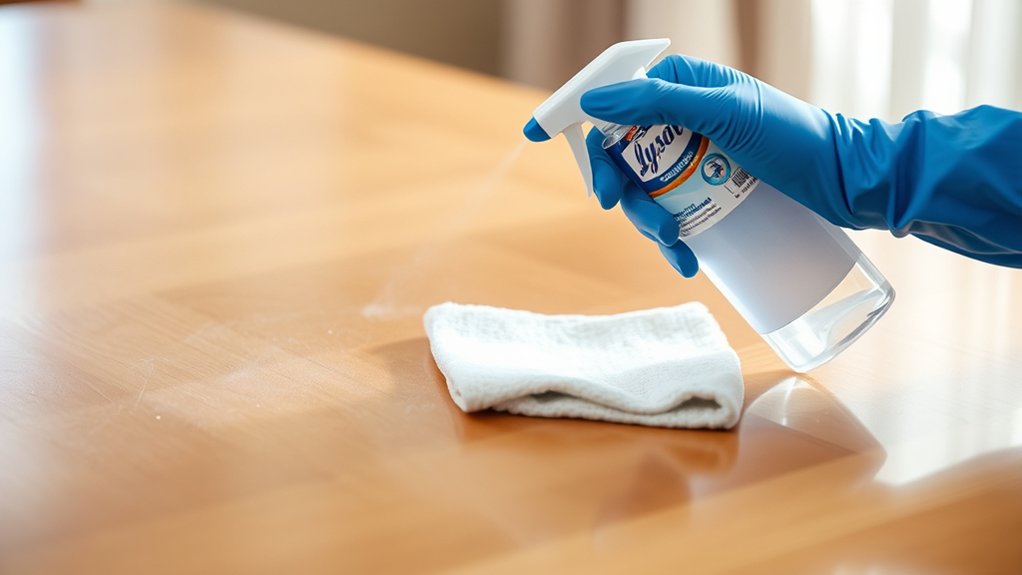
Wondering if Lysol is safe for cleaning wood surfaces? Lysol can disinfect wood effectively but you need to be careful. Untreated or porous wood might get damaged if you don’t use Lysol the right way.
Before you apply it broadly, do a spot test on a hidden area to see if the wood finish holds up. For finished wood, Lysol All-Purpose Cleaner is usually safe when diluted and wiped away quickly.
Just don’t go overboard, especially on high-gloss surfaces, because it can dull the finish. Make sure to follow the product directions carefully, and let the disinfectant sit for the recommended contact time before wiping.
How Different Wood Types Respond to Lysol
You’ll notice that porous woods tend to soak up Lysol’s moisture and chemicals, which can lead to damage over time.
On the other hand, sealed hardwoods usually handle it much better.
It’s also good to remember that the type of finish on your wood plays a big role.
For example, high-gloss surfaces might start to dull or develop a haze if you use Lysol on them repeatedly.
So, a smart move is to always test Lysol on a small, hidden spot first.
That way, you can see how your wood reacts before you go ahead and clean the whole surface.
Porous Vs. Non-Porous
Although Lysol is effective for disinfecting, its impact varies considerably between porous and non-porous wood surfaces.
Non-porous wood, typically sealed, resists moisture and safely handles Lysol without damage. You can use it confidently for disinfecting sealed floors or furniture.
Porous wood, however, absorbs liquids, including Lysol, which may cause discoloration or damage if applied undiluted. To protect porous wood, always spot test Lysol on an inconspicuous area before widespread use.
Different wood types like oak or engineered wood react differently, so testing is essential.
Following product directions and compatibility checks helps maintain wood integrity.
Finish Compatibility Concerns
Since different wood finishes react in varied ways to cleaning agents, understanding how Lysol interacts with them is vital to avoid damage. Sealed or non-porous finishes like polyurethane usually tolerate Lysol well, while porous or untreated wood can absorb moisture, causing warping or discoloration.
High-gloss finishes are especially sensitive. Even a single use of disinfecting wipes or traditional Lysol products can dull their shine. So, it’s important to be extra careful with these surfaces.
To figure out if Lysol is safe for your wood, always identify your wood’s finish type, whether it’s wax, natural oils, or polyurethane, before cleaning. Spot test Lysol on a hidden area first to check for any adverse reactions.
Choosing the right cleaning products based on your wood’s finish will help preserve its appearance and longevity while effectively disinfecting. Taking these steps means your wood stays looking great and stays protected.
Choosing the Right Lysol Products for Wood
When you’re picking out Lysol products for your wood surfaces, it’s best to go for those that say they’re safe for finished surfaces. This helps keep your floors looking great without any damage.
Also, make sure to always dilute the cleaners just like the instructions say. Doing this helps prevent your wood from getting dull or discolored over time.
And here’s a handy tip: try testing the product on a small, hidden spot first. That way, you can be sure it won’t harm your wood’s finish before you use it more broadly.
Compatible Lysol Cleaners
If you want to clean and disinfect wood surfaces without damaging them, choosing the right Lysol product is essential. Compatible Lysol cleaners like Lysol® Clean & Fresh Multi-Surface Cleaner work well on sealed wood. This lets you clean and disinfect effectively while preserving the finish.
For regular cleaning, dilute ¼ cup of this cleaner per gallon of warm water to protect wood integrity. When disinfecting, use it full strength and let it sit for 6 minutes before wiping to eliminate germs thoroughly.
Avoid Lysol disinfectant wipes on untreated wood, as they may cause damage.
Always spot test before applying any cleaning solutions. By selecting compatible Lysol cleaners and following usage guidelines, you’ll keep your wood floors and furniture looking fresh and germ-free.
It’s really about being careful and choosing the right products for the job.
Wood Floor Safety
Using the right Lysol products on your wood floors can protect their finish and prevent moisture damage. Always verify your wood floor is sealed and non-porous before applying any Lysol cleaner. This helps keep moisture from seeping in.
For regular cleaning and disinfecting, Lysol® Clean & Fresh Multi-Surface Cleaner is safe to use when diluted properly. To disinfect effectively, apply it full strength, let it sit for six minutes, then wipe.
Just remember to do a spot test in an inconspicuous area first to make sure it’s compatible with your floor.
Avoid using Lysol disinfecting wipes on untreated or porous wood surfaces. The harsh chemicals can cause damage.
Following these steps helps keep your wood floor clean, disinfected, and well-protected.
Cleaner Concentration Guidelines
Although Lysol offers several products suitable for wood surfaces, choosing the right concentration is essential to protect your wood’s finish and longevity. For regular cleaning of sealed hardwood, dilute Lysol® Clean & Fresh Multi-Surface Cleaner to ¼ cup per gallon of warm water. This prevents damage while effectively cleaning and disinfecting.
When tackling tough grime, you can use Lysol cleaner at full strength but rinse thoroughly afterward to avoid residue buildup.
Lysol® All-Purpose Cleaner works well for light cleaning and disinfecting, but don’t overuse it, as it may dull wood finishes.
Always spot test any Lysol product on an inconspicuous area first, especially on untreated wood, to avoid adverse reactions.
Disinfecting wipes can be safe for finished wood but require caution on untreated hardwood. Just keep that in mind when you’re cleaning.
How to Clean Wood Floors With Lysol Safely
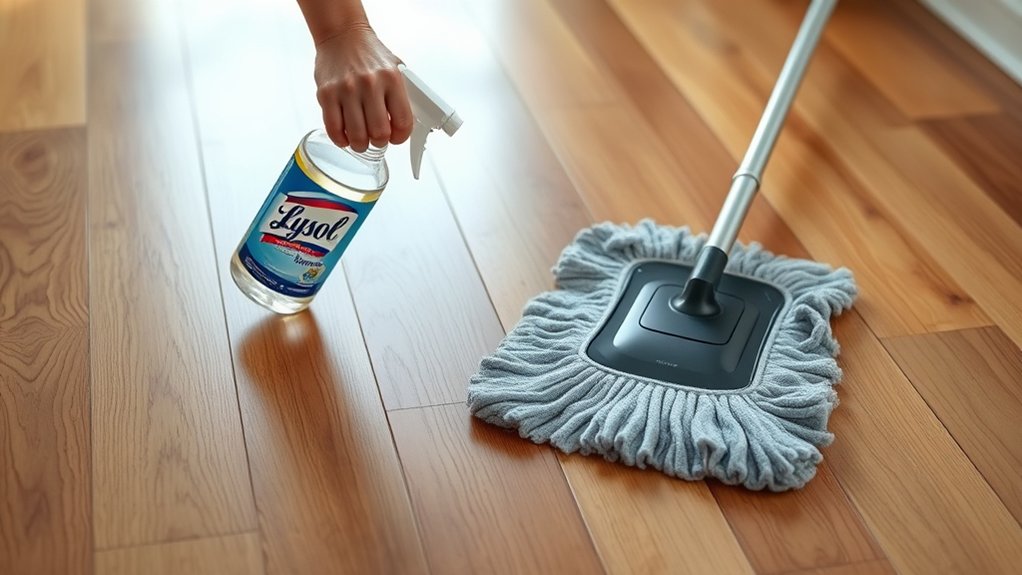
When cleaning sealed wood floors, you can safely use Lysol® Clean & Fresh Multi-Surface Cleaner by diluting ¼ cup per gallon of warm water. Mop carefully in a backward motion to avoid stepping on damp areas.
To clean hardwood effectively, follow these steps:
- Test a small, hidden area to confirm the cleaner won’t damage your finish.
- Use the right tools like a microfiber mop and disinfectant wipes for edges and corners.
- Mop floors with the diluted solution, making sure you don’t oversaturate the wood.
- For disinfecting, apply Lysol at full strength, let it sit for 6 minutes, then wipe dry.
Avoid using Lysol on untreated wood because moisture can cause damage.
When you use the right technique regularly, your wood floors will stay clean and well-maintained.
Disinfecting Wooden Tables the Safe Way
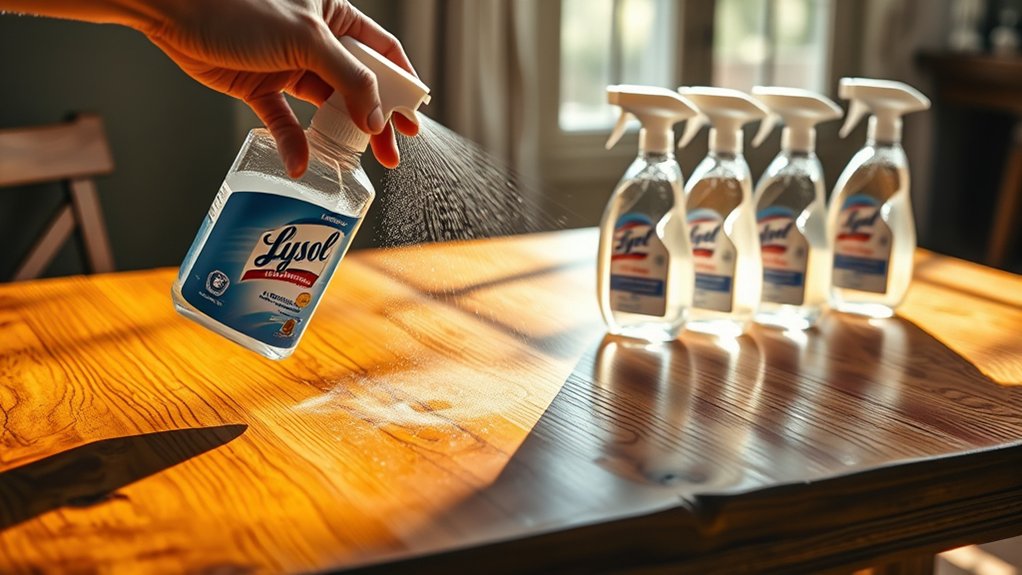
Disinfecting wooden tables requires careful attention to protect their finish while eliminating germs. Always use Lysol All-Purpose Cleaner or disinfecting wipes designed for finished wood surfaces. Before widespread use, perform a spot test to verify no damage occurs.
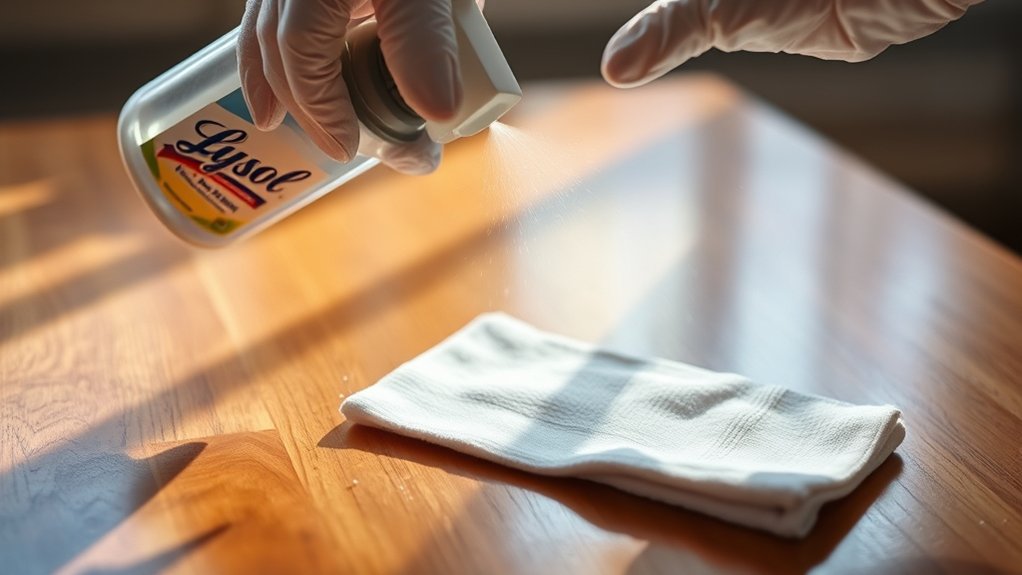
Lightly mist the table with Lysol, then wipe in the direction of the wood grain using a clean, damp microfiber cloth to maintain clean wood without excess moisture. Follow up with a dry microfiber cloth to remove any residue and keep a streak-free shine.
For hygiene, clean weekly to prevent dust and allergens buildup, and deep clean monthly or after heavy use. Avoid harsh chemicals or saturating the wood, as they can harm the finish.
Stick to wood-safe products like Lysol for effective and safe disinfection.
Common Lysol Mistakes to Avoid on Wood
If you want to keep your wooden surfaces looking their best, you need to avoid common Lysol mistakes that can cause damage.
Harsh chemicals in Lysol can discolor or dull wood surfaces if misused.
Here are four key mistakes to avoid:
- Using undiluted Lysol directly on wood, which can cause discoloration or white spots.
- Skipping a spot test. Always check an inconspicuous area first to make sure Lysol won’t harm the finish.
- Applying Lysol frequently on high-gloss wood, as it can dull the shine over time.
- Using Lysol on untreated or porous wood. This risks permanent damage because the harsh chemicals get absorbed.
Natural Alternatives to Lysol for Wood Care
Although Lysol is effective for disinfecting, you might want to contemplate natural alternatives that clean wood surfaces gently without risking damage. Vinegar and water solutions clean soap scum and grime safely, while olive oil mixed with vinegar conditions wood, enhancing shine and protection.
Adding essential oils like tea tree boosts antibacterial effects and leaves a fresh scent. For polishing, beeswax or carnauba wax provides natural moisture resistance. Baking soda serves as a mild abrasive for tougher stains without scratching.
| Natural Alternative | Benefits |
|---|---|
| Vinegar & Water | Cleans soap scum gently |
| Olive Oil & Vinegar | Conditions and shines wood |
| Baking Soda | Removes tough stains safely |
Use these cleaning tips to maintain wood’s beauty naturally.
Fixing Common Problems After Using Lysol on Wood
Several common issues can arise after using Lysol on wood, such as whitening, streaks, or cloudiness.
When fixing these common problems, you’ll want to restore the finish carefully to avoid causing more damage. Here’s how to address these issues:
For white marks, try applying a wood polish like Guardsman.
Or, gently rub denatured alcohol on the spots with a soft cloth to help bring back the finish.
If you notice streaks or cloudiness, buff the surface with a barely damp microfiber cloth.
Then, dry it off with a clean microfiber towel.
For deeper damage, you might need to lightly sand the affected area.
After that, apply a protective coat, such as polyurethane or wood polish.
Always test any product on an inconspicuous spot first.
This way, you can make sure it won’t cause any more harm.
These steps will help you fix common problems and keep your wood looking its best.
Frequently Asked Questions
Can Lysol Damage the Finish on Antique Wooden Furniture?
Yes, Lysol can damage the finish on antique wooden furniture. To guarantee antique preservation, you should avoid using harsh chemicals like Lysol, which can strip finish protection and cause discoloration.
Instead, you’ll want to try cleaning alternatives specifically made for delicate wood surfaces.
Always test products in a hidden spot first.
And prioritize gentle methods to maintain your antique’s beauty and value over time.
How Often Can I Use Lysol on Wood Without Harm?
You should limit Lysol cleaning frequency on wood to once every 1-2 weeks to protect the surface.
Different wood types react differently, so always spot test first. Using Lysol too often can wear down finishes, so dilute it properly to maintain surface protection.
For regular upkeep, milder cleaners are better.
Reserve Lysol for disinfecting when necessary to avoid harming your wood’s finish over time.
It’s all about keeping your wood looking great without overdoing it.
Does Lysol Leave a Residue on Wooden Surfaces?
Yes, Lysol can leave a residue on wooden surfaces if you don’t wipe it off properly.
To maintain good wood care and protect your finish, follow up with a barely damp cloth after spraying.
Adjust your cleaning frequency to avoid buildup, and always buff with a dry microfiber towel to guarantee surface protection.
Testing on a hidden spot first helps prevent unwanted hazy streaks or white marks.
Can Lysol Be Used on Veneered Wood Safely?
Picture a gleaming veneered wood surface, its protective coatings shimmering softly. You can safely use Lysol on veneer, but only if you dilute it and spot test first.
Stick to a gentle cleaning frequency to avoid stripping those coatings or harming veneer care.
After wiping with Lysol, dry the surface immediately to keep moisture out. This approach keeps your wood looking fresh without risking damage or discoloration.
Just take it slow and be gentle, and your veneered wood will thank you!
Is Lysol Effective Against Mold on Wood Surfaces?
Yes, Lysol is effective against mold on wood surfaces, especially non-porous ones, making it a good option for mold prevention and surface treatment.
You should pre-clean and spot test first to avoid damaging finishes.
For porous wood, consider alternative cleaners designed specifically for delicate surfaces.
Ensuring proper ventilation and drying after application will boost effectiveness and keep your wood safe while tackling mold growth efficiently.
Conclusion
Using Lysol on wood is like walking a tightrope. Balance is key. You can disinfect and refresh your surfaces without damage, as long as you choose the right product and use it carefully.
Remember, not all wood reacts the same. So, test first and avoid overuse. When in doubt, natural alternatives offer a safer path.
With these tips, you’ll keep your wood shining and healthy. You’ll turn your home into a sanctuary of clean, lasting beauty.