
Can Acrylic Paint Be Used On Wood: Tips For Smooth And Durable Finish
You can absolutely use acrylic paint on wood to create vibrant, lasting artwork. Start by choosing smooth woods like birch or MDF, then lightly sand and clean to boost paint adhesion.
Apply thin acrylic layers for bright color and durability, and finish with multiple coats of varnish to protect against chips and fading. This quick-drying, water-based paint lets you experiment with textures and details easily.
Keep exploring to uncover expert tips for sealing and maintaining your masterpiece’s brilliance.
Why Acrylic Paint Is Great for Wood

A splash of acrylic paint can transform plain wood into a vibrant masterpiece, thanks to its rich colors and smooth finish. When you apply acrylic paint, you’ll notice how it sticks well to wood, especially if the surface is prepped right. This means your artwork stays put, creating a durable finish that resists chipping and fading over time.
The paint glides effortlessly across the smooth surface, letting you explore everything from fine details to bold textures. Plus, its quick-drying, water-based formula makes layering and clean-up a breeze.
Seal it with the right varnish, and your painted wood will stand up to moisture and sunlight, keeping your vibrant creation looking fresh indoors or out. Acrylic paint really brings wood to life with ease and lasting beauty.
Choosing the Right Wood for Acrylic Painting
You’ll want to pick wood that feels just right beneath your brush. Smooth surfaces like birch or basswood really help your acrylics come alive with detail and durability.
And it’s important to keep in mind how moisture and weight can change your wood’s mood. So, choosing stable, well-prepared boards keeps your art steady and vibrant.
Let’s explore how the right wood sets the perfect stage for your acrylic masterpiece.
Best Wood Types
When selecting wood for acrylic painting, understanding how different surfaces interact with paint can really transform your artwork. Choosing the right wood sets the foundation for a vibrant, lasting finish.
Here are three top choices to think about:
- MDF offers a flawlessly smooth surface and absorbs primer evenly. It’s perfect for detailed brushwork and sharp designs.
- Birchwood stands out with its hard, durable texture, giving your paint a sleek, polished look. It does tend to be a bit pricier, though.
- Basswood is soft and light, ideal for intricate patterns. But handle it gently since it’s more vulnerable to damage.
Plywood can work too, but its imperfections might need some extra prep.
If you want your acrylics to really shine, opt for woods like MDF or sanded plywood with minimal grain.
Wood Surface Smoothness
Picking the perfect wood type sets the stage, but the texture of its surface truly shapes how your acrylic paint behaves. Smooth wood surfaces like MDF and plywood let you apply acrylic paint thickly without worrying about rough patches ruining your finish.
For detailed work, basswood’s soft texture is a dream, while birchwood offers a balance of smoothness and durability. Before painting, lightly sand the surface with fine-grit sandpaper to boost adhesion and remove oils that might bleed through.
Choosing wood with minimal grain keeps your artwork crisp and vibrant.
| Wood Type | Surface Texture | Best For |
|---|---|---|
| MDF | Very smooth | Even paint layers |
| Basswood | Soft, fine grain | Detailed work |
| Birchwood | Smooth, durable | Long-lasting art |
Moisture And Durability
Although selecting the right wood type lays the foundation, understanding how moisture interacts with your surface can make or break the longevity of your acrylic masterpiece.
Moisture sneaks in, warping and cracking beneath your brushstrokes if you’re not careful.
To guard your work, embrace proper preparation and seal the wood before the first splash of high-quality acrylic paint touches it.
Here’s how to guarantee durability:
- Choose moisture-resistant woods like MDF or birch. They resist warping and provide a stable canvas.
- Verify the wood’s moisture content is low. Damp surfaces repel paint, causing adhesion issues.
- Seal the wood with primer or gesso to block moisture, locking in your artwork’s vibrancy and lifespan.
With these steps, your acrylic painting will stand the test of time, weather, and wear.
Just a little extra care goes a long way!
Preparing Wood for Acrylic Painting
Before you let your brush touch the wood, make sure the surface is spotless and smoothly sanded to welcome every stroke.
Cleaning away dust and rough patches really helps your acrylic paint cling with vibrant life.
Once that’s done, go ahead and seal the wood with a layer of primer or gesso.
This creates the perfect stage for your masterpiece to come alive.
Surface Cleaning And Sanding
A smooth, clean surface is your canvas’s foundation when working with acrylic paint on wood. To guarantee your masterpiece lasts, you need to prepare the wood meticulously. Follow these steps:
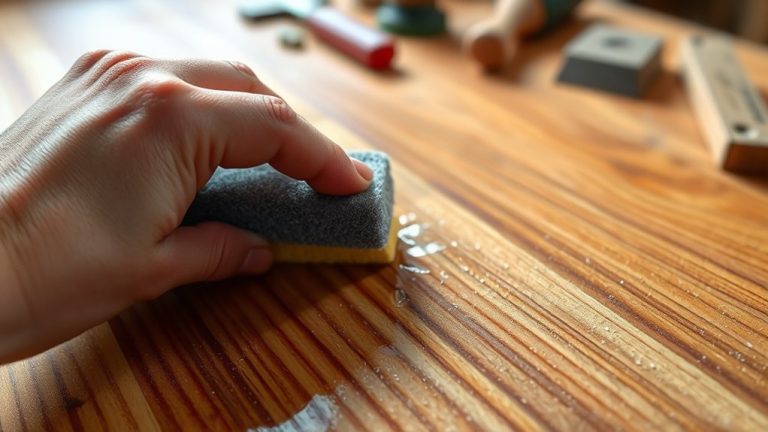
First, thoroughly clean the wood surface to remove dust, dirt, and oils. This clears the way for the paint to stick properly.
Next, lightly sand the wood with fine-grit sandpaper (220-320 grit) to create a soft, even texture that’s perfect for paint application.
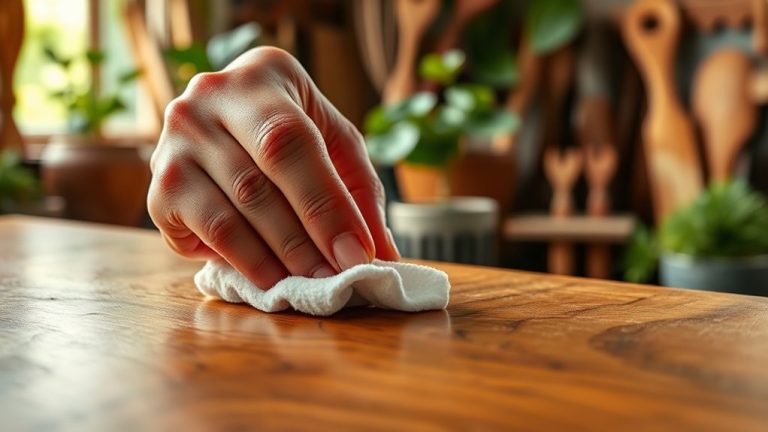
Then, remove any existing finishes or coatings. After sanding, wipe away the dust with a damp cloth so the surface is nice and clean.
Make sure the wood is completely dry before you start painting. Moisture can cause warping or uneven paint, and nobody wants that.
Taking the time to prepare your surface well sets you up for a smooth, durable acrylic finish.
Applying Primer Or Gesso
When you seal the wood with primer or gesso, you create a barrier that stops the paint from soaking in. This helps your colors stay vibrant and true. Applying a layer of gesso on your wooden surface preps it perfectly for acrylic paint.
It also prevents any tannin bleed and ensures smooth adhesion. Use thin coats, let each dry, then sand lightly for a flawless finish. Here’s a quick guide:
| Step | Action | Tip |
|---|---|---|
| 1 | Clean wooden surface | Remove dust & moisture |
| 2 | Apply thin layer of gesso | Use a large brush |
| 3 | Let dry completely | Patience enhances durability |
| 4 | Lightly sand with fine grit | Smooth surface = better paint |
| 5 | Repeat layers (3 recommended) | Build protection & vibrancy |
Step-by-Step Guide to Painting Acrylic on Wood

Three essential steps lay the foundation for painting acrylic on wood: preparing your surface, applying paint with care, and sealing your masterpiece.
Start by sanding your wood with fine-grit sandpaper to create the perfect texture for paint to cling. Next, apply a thin layer of primer or gesso and let it dry completely before applying any acrylic paint on wood. This seals the surface and guarantees vibrant colors.
When painting, apply thin coats of acrylic paint, allowing each layer to dry fully to avoid smudging or unevenness.
Finally, protect your artwork with a varnish that locks in colors and shields from moisture. This way, your creation stays vivid and durable for years to come.
- Sand wood lightly with fine-grit sandpaper.
- Apply a thin primer layer; dry completely.
- Paint with thin coats; seal with varnish.
Techniques to Enhance Texture and Detail on Wood
Although acrylic paint offers vibrant color on wood, mastering texture and detail can transform your piece from flat to enchanting. Use the impasto technique to sculpt thick layers with a palette knife, bringing bold, tactile depth. Try the dry brush method to whisper the wood’s grain, revealing its character softly.
Layering colors builds richness, with each translucent coat adding mystery and complexity. The sponging method blends hues gently, creating subtle, dreamy backgrounds. These techniques invite you to feel, see, and connect deeply with your artwork.
| Technique | Emotion | Effect |
|---|---|---|
| Impasto Technique | Boldness | Three-dimensional |
| Dry Brush | Nostalgia | Weathered, soft |
| Layering Colors | Depth | Rich, complex |
| Sponging Method | Serenity | Blended, subtle |
Sealing Acrylic Paint on Wood for Longevity

Because acrylic paint on wood faces constant exposure to moisture and wear, sealing your artwork becomes essential to preserve its vibrancy and integrity.
Sealing acrylic paint creates a protective finish that guards against chipping and fading, extending your piece’s life.
Here’s how to do it right:
1. Lightly sand the fully cured surface (24-72 hours) to smooth imperfections and boost sealant adhesion.
Then, wipe away dust with a soft cloth.
2. Choose a compatible clear protective finish like polyurethane or acrylic varnish for maximum durability.
3. Apply multiple thin coats, allowing adequate drying time (1-2 hours) between layers.
This helps build a resilient, even shield.
Maintaining and Caring for Painted Wood
Once you’ve sealed your acrylic-painted wood, keeping it looking fresh takes a bit of care and attention. Maintaining your painted surface means regularly wiping it down with a soft cloth and gentle cleanser to prevent dirt buildup that dulls its charm.
If you spot minor scratches, grab matching touch-up paint and a fine brush to seamlessly restore the beauty.
Don’t forget to inspect your work periodically. Signs of wear or fading mean it’s time to reapply a clear protective sealer, which helps reinforce durability.
And try to resist placing heavy objects on freshly painted surfaces; it needs about 24 to 72 hours to cure fully.
Finally, store your paint and sealers in a cool, dry spot with tight lids. This keeps them ready for future touch-ups and helps protect your masterpiece. Easy enough, right?
Frequently Asked Questions
Can Acrylic Paint on Wood Be Used for Outdoor Furniture?
Yes, you can use acrylic paint on wood for outdoor furniture, but achieving outdoor durability takes effort. You’ll boost paint adhesion by sanding and priming the surface first, creating a perfect canvas.
Seal your work with a weather-resistant varnish to fend off moisture and UV damage.
Regular maintenance, like touch-ups and reapplying sealants, keeps your furniture vibrant and protected.
This way, your furniture will weather the elements beautifully for seasons to come. It’s definitely doable, just takes a bit of care along the way.
How Long Does Acrylic Paint Take to Dry on Wood?
Like watching a flower bloom, acrylic paint’s drying time on wood takes patience. It usually takes 30 minutes to an hour to feel dry, but up to 72 hours to fully cure.
You’ll want to apply thin paint layers and let each dry completely to avoid smudges.
Humidity slows the process, while warm temperatures speed it up. So, keep an eye on your environment.
This careful balance guarantees your finish stays smooth and durable.
Is It Safe to Use Acrylic Paint on Wooden Toys?
Yes, you can safely use acrylic paint on wooden toys, but you’ve got to watch out for toxic chemicals. Choose paints labeled non-toxic to guarantee child safety.
Before painting, focus on wood preparation. Sand it smooth to boost paint durability and adhesion.
After painting, let it cure fully, then seal with a non-toxic varnish to protect the finish.
This way, your wooden toys stay safe, vibrant, and long-lasting for endless play. It’s all about taking those simple steps to make sure the toys are both fun and safe for kids.
Can I Mix Acrylic Paint Colors Directly on Wood?
You can mix acrylic paint colors directly on wood, but for vibrant color blending, it’s best to prep the surface first.
As you explore paint layering and texture techniques, remember acrylics dry fast, so work swiftly to shape your hues.
Experiment with finish types to enhance durability and visual depth.
Mixing on wood adds spontaneous charm, but test combos on a palette to avoid surprises.
This way, you keep your masterpiece smooth and striking.
What Are Common Mistakes to Avoid When Painting Wood With Acrylics?
You might think skipping surface preparation essentials won’t hurt, but it does. Rough wood ruins smooth finishes. Ignoring color selection tips can muddy your palette’s harmony.
Forgetting layering strategies guide leads to drips and smudges. Thin, patient coats work best. Many skip sealing techniques advice, leaving artwork vulnerable to damage.
Avoid these pitfalls: sand well, choose colors wisely, layer thinly, and seal thoroughly for vibrant, lasting wood paintings that truly sing.
Conclusion
Now that you know how to prep, paint, and seal wood with acrylics, imagine transforming a plain wooden chair into a vibrant centerpiece for your porch. With just a bit of patience and the right techniques, you’ll create a smooth, lasting finish that withstands weather and time.
Remember, each brushstroke adds character. Your creativity turns simple wood into art that tells a story, brightening your space and inspiring everyone who sees it.