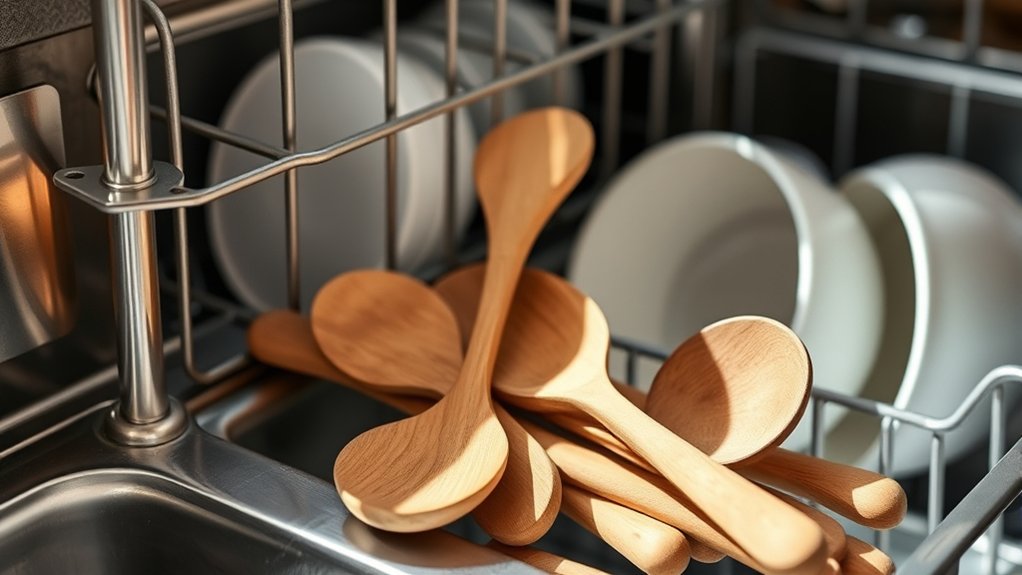
Can You Put Wood Utensils In The Dishwasher: Do And Donts
You shouldn’t put wooden utensils in the dishwasher because the high heat, moisture, and harsh detergents can cause warping, cracking, and loss of protective finishes. This damage weakens the wood, increases splinter risk, and shortens your utensil’s lifespan.
Instead, wash them gently by hand with mild soap, dry immediately, and oil regularly to keep them safe and durable. If you want to keep your wooden utensils in top shape, there’s more you can do to protect and maintain them.
Never Put Wooden Utensils in the Dishwasher: Here’s Why
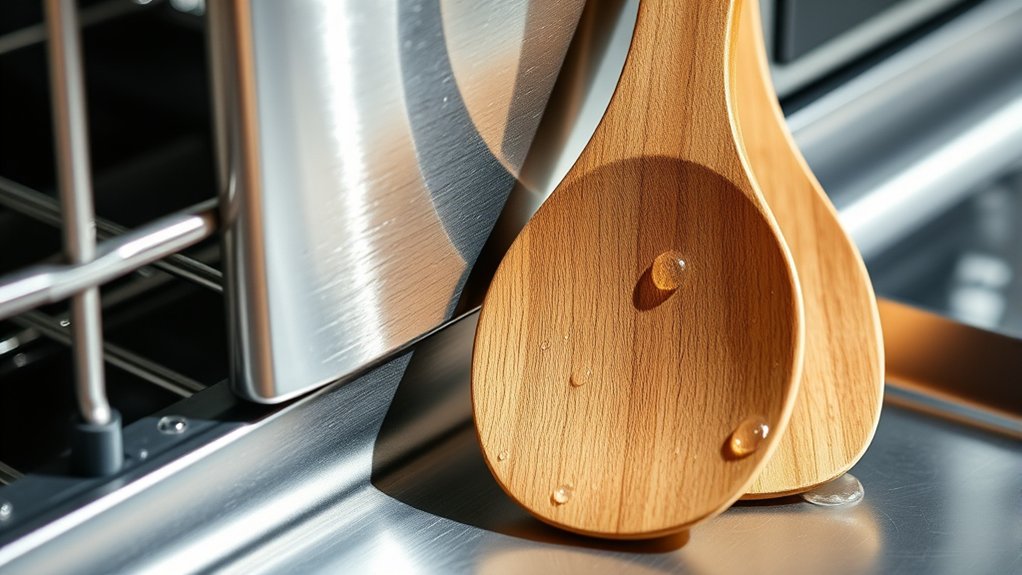
Although dishwashers offer convenience, you should never put wooden utensils inside them. Wooden utensils aren’t dishwasher safe because the high temperatures cause the wood to expand, warp, and crack. Harsh detergents and steam strip away protective finishes, leaving your utensils with a bleached appearance and rough texture.
This damage shortens their lifespan and can even lead to splintering, which is unsafe during food preparation. For proper care, hand-washing wooden utensils is essential as it limits their exposure to water and heat.
Regular maintenance, such as oiling after washing, helps preserve their integrity and guarantees they last longer. Avoiding the dishwasher is the best way to keep your wooden utensils in top condition and prevent costly replacements.
How Dishwashers Damage Wooden Utensils
When you put wooden utensils in the dishwasher, the high heat can cause the wood to warp and crack.
Plus, the moisture from the wash cycle seeps into the wood, making it swell and lose its shape.
Over time, this combination weakens your utensils and shortens their lifespan.
Heat Effects On Wood
Because dishwashers subject wooden utensils to intense heat and moisture, they often cause the wood to swell, warp, and crack over time. High temperatures strip away protective oils, leaving your utensils dry and bleached. The heat weakens wood fibers, making splintering more likely during use.
To properly care for wooden utensils, avoid the harsh environment dishwashers create. It’s better to wash them by hand and dry them gently. This way, you keep your utensils looking good and lasting longer.
| Heat Effects | Impact on Wood |
|---|---|
| High temperatures | Swelling, warping, cracking |
| Heat and moisture | Loss of protective oils |
| Prolonged exposure | Weakening of fibers |
| Regular dishwasher use | Increased splinter risk |
Moisture Damage Risks
Beyond the heat, moisture poses a serious threat to your wooden utensils in the dishwasher. The constant exposure to moisture causes the wood to swell, leading to warping and cracking over time.
This repeated cycle of absorbing and drying out water makes the wood fragile and prone to splits. Plus, excess moisture encourages mold and mildew growth, which can compromise the safety and usability of your utensils.
Dishwashers also strip away the natural oils that protect the wood, leaving it dry and rough.
To care for your wooden utensils properly, avoid the dishwasher and opt for handwashing instead. This helps maintain their integrity, prevents warping, and extends their lifespan by protecting them from moisture damage.
How to Wash Wooden and Bamboo Utensils by Hand
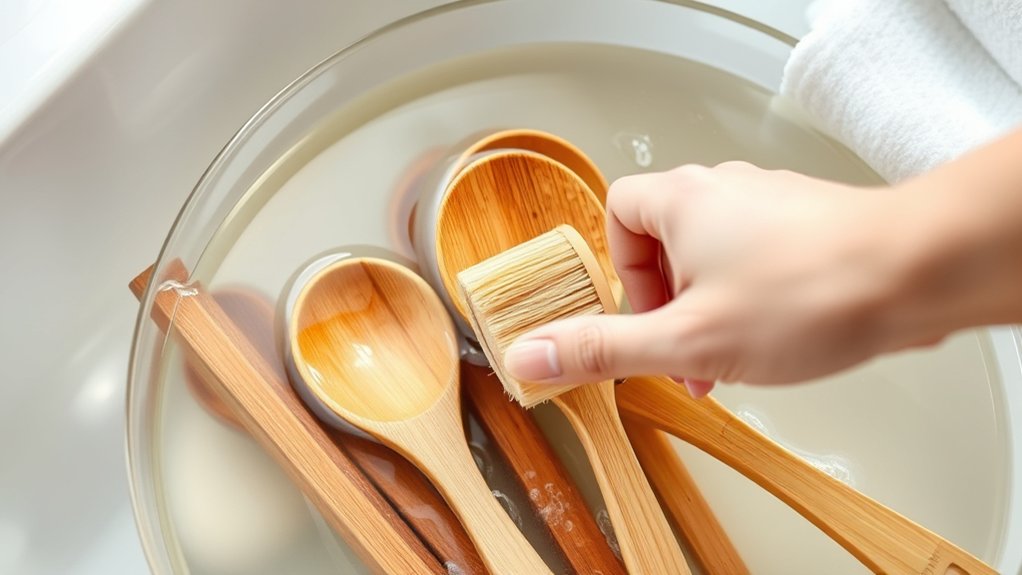
When washing wooden and bamboo utensils by hand, go for mild soap and warm water to clean them gently.
It’s best to avoid harsh scrubbing to keep the wood in good shape.
Once you’re done washing, make sure to dry them right away. This helps prevent moisture damage and warping, which can happen if they stay wet too long.
Also, try not to soak your utensils. Leaving them in water for a long time can cause swelling and weaken the wood, so it’s better to wash and dry them quickly.
Use Mild Soap
Although wooden and bamboo utensils can be durable, you should always wash them with warm water and a mild dish soap to protect their natural oils and finishes. Harsh detergents can strip these protective layers, causing your wooden utensils to dry out and crack.
Use a soft cloth or gentle sponge to clean them, avoiding abrasive materials that might scratch or damage the surface. After washing, rinse thoroughly to remove all soap residue.
Incorporating a routine of applying food-safe mineral oil helps maintain the wood’s protective barrier, keeping utensils smooth and extending their lifespan.
Dry Immediately After
Because wooden and bamboo utensils absorb moisture easily, you should dry them immediately after washing to prevent damage. After cleaning with warm, soapy water, grab a clean cloth and dry your wooden utensils thoroughly.
Avoid air drying, as lingering moisture can cause warping or cracking. Instead, prop the utensils upright to allow even airflow and help them dry completely.
Once dry, regularly apply food-safe mineral oil to your utensils to seal the wood and protect against moisture absorption. This simple step extends their lifespan and keeps them looking fresh.
Avoid Soaking Utensils
Keeping your wooden utensils dry right after washing helps prevent damage. But you also need to avoid soaking them in water. Prolonged exposure can cause swelling, cracking, and warping, which can ruin your utensils.
Instead, follow these steps to clean them safely:
- Wash wooden utensils immediately after use with warm, soapy water, never hot. Also, avoid using the dishwasher cycle since it’s too harsh.
- Gently scrub with a soft cloth or sponge. Stay away from abrasive cleaners because they can harm the wood’s finish.
- Dry thoroughly with a clean towel to minimize moisture. Then, regularly apply food-safe mineral oil to maintain their protective barrier and keep them from drying out.
Avoid soaking to extend your wooden utensils’ life and keep them looking great. It really makes a difference!
How to Remove Odors and Stains From Wooden Utensils
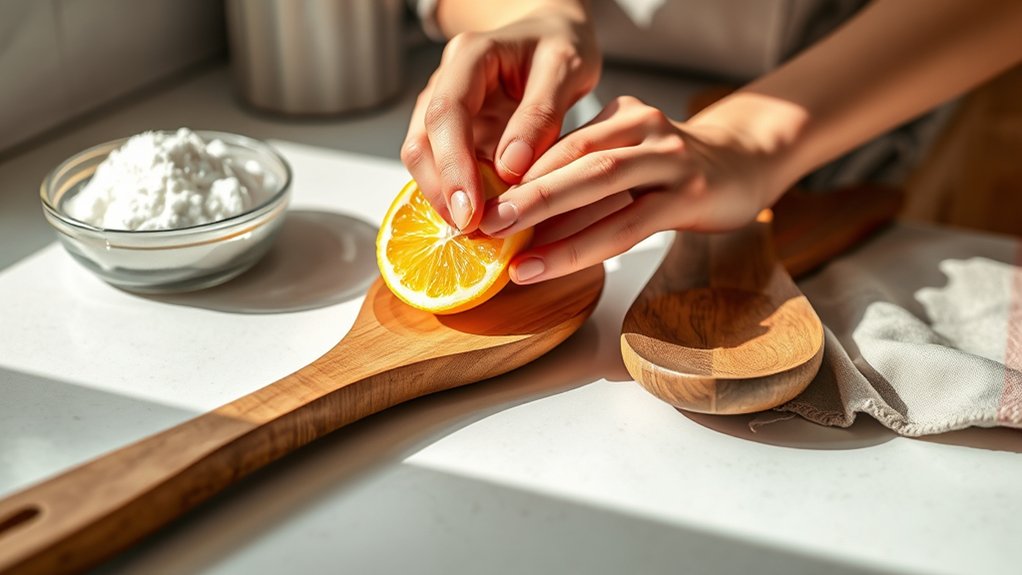
To get rid of odors and stains on your wooden utensils, start by sprinkling baking soda over their surface and letting it sit for a few minutes before rinsing.
If odors persist, rub the utensils with a cut lemon or apply white vinegar to neutralize smells and freshen the wood.
For tough stains, gently scrub with a soft brush or sponge using warm, soapy water, then rinse and dry immediately to prevent damage.
Regular maintenance is key. Applying food-safe mineral oil helps seal the wood, preventing moisture absorption that causes odors and stains.
Regularly applying food-safe mineral oil protects wooden utensils by sealing out moisture and preventing odors and stains.
By following these simple steps, you can effectively remove odors and keep your wooden utensils clean and odor-free without compromising their durability.
It’s pretty easy once you get the hang of it!
How to Deep Clean Wooden Utensils Safely
Although wooden utensils are durable, you should deep clean them regularly to maintain their hygiene and longevity.
To deep clean your wooden utensils safely, follow these steps:
- Wash immediately after use with warm soapy water to remove food residues before they settle into the grain.
- For stubborn odors, sprinkle baking soda on the utensil, let it sit, then scrub gently with a soft brush or sponge. Rubbing with lemon or applying white vinegar also helps neutralize strong smells.
- Rinse thoroughly and dry with a clean cloth to prevent moisture absorption, which can cause warping or mold growth.
Perform this deep clean every couple of weeks to keep your wooden utensils in great condition and guarantee they remain safe for food preparation.
It’s easier than you think, and your utensils will thank you!
Why You Should Oil Wooden Utensils Regularly
After deep cleaning your wooden utensils, applying oil regularly helps protect the wood from moisture and cracking.
Using food-grade mineral oil is the best choice to nourish and protect your wooden kitchenware without risking rancidity or unpleasant odors. Oiling creates a protective barrier that prevents moisture absorption, which can cause your utensils to crack or warp.
You should oil them monthly or whenever the wood looks dry to maintain their integrity and appearance. Properly oiled utensils also resist food odors and bacteria, promoting better hygiene in your kitchen.
By keeping up this simple maintenance, you’ll extend the lifespan of your wooden kitchenware, ensuring they stay functional and beautiful for years to come.
Avoid vegetable or olive oils, as they can spoil and damage your utensils.
How to Store Wooden Utensils to Prevent Damage
When you store your wooden utensils properly, you prevent moisture buildup and reduce the risk of mold and warping.
To keep your wooden utensils in top shape, follow these tips:
- Store them upright in a dry container or hang them on a wall rack or magnetic strip. This helps guarantee good airflow and avoids trapping moisture.
- Always dry wooden utensils thoroughly with a clean cloth after washing. Never leave them to air dry in damp conditions.
- Keep wooden utensils away from heat sources and damp areas. This prevents cracking, swelling, or warping.
When to Toss Your Wooden Utensils and What to Replace
If you notice your wooden utensils have deep cracks, warping, or rough surfaces, it’s time to toss them. These damages can trap bacteria and pose safety risks during food prep.
Also, keep an eye out for signs of mold or mildew, especially if your utensils have been exposed to moisture. Mold not only affects hygiene but can also damage the wood.
When wooden utensils lose their finish or feel excessively dry despite regular oiling, it’s a good idea to replace them to maintain peak cooking performance. Don’t wait until splinters appear. Rough or splintery utensils indicate deterioration and should be discarded promptly.
Regular inspection helps you know when to replace your wooden utensils, ensuring both safety and effectiveness in your kitchen. It’s a simple way to keep your cooking safe and enjoyable.
Frequently Asked Questions
Can Wooden Utensils Be Used for Cooking Acidic Foods?
Yes, you can use wooden utensils for cooking acidic foods, but you should apply wood preservation techniques to maintain them. Regular oiling, a key benefit of seasoning, creates a protective barrier that reduces acid absorption.
Make sure to wash your utensils promptly with mild soap and water, and avoid soaking them for too long. This helps prevent warping and odor retention.
Are There Specific Types of Wood Better for Utensils?
Did you know hardwood utensils can last decades with proper care? When choosing types of wood, go for beech, maple, or walnut. They’ve tight grains that boost utensil longevity and resist moisture.
Olive wood looks great but needs extra wood maintenance to avoid drying out.
Ash is lightweight and durable but demands regular oiling. Picking the right wood not only prolongs use but also keeps your utensils safe and hygienic.
How Often Should Wooden Utensils Be Replaced?
You should replace your wooden utensils every 3 to 5 years, depending on care and maintenance.
Regularly check for signs of wear like cracks, splits, or warping. These can trap bacteria and affect safety.
Proper storage tips, such as keeping them dry and away from extreme heat, really help extend their life.
If odors or stains persist despite cleaning, it’s a good indicator that it’s time to get new ones.
Can Wooden Utensils Be Safely Used in Microwave Ovens?
Yes, you can safely use wooden utensils in microwave ovens if you follow microwave safety guidelines.
Wood’s low heat resistance means it won’t get too hot quickly, but you should watch for overheating. Since wood absorbs moisture, avoid using damp utensils, as this can cause cracking or splitting.
Always verify your wooden utensils have no metal parts to prevent sparks.
And keep an eye on them during microwaving to maintain their condition and safety. It’s pretty simple once you get the hang of it!
Do Wooden Utensils Affect the Taste of Food?
Think of wooden utensils as silent partners in your kitchen. They won’t steal the spotlight or alter your dish’s flavor.
With proper wooden utensils maintenance, you’ll avoid flavor absorption issues that sometimes happen with strong-smelling foods. Unlike plastic or metal alternatives, wood naturally resists leaching chemicals or tastes into your meals.
Just keep them oiled and clean, and your wooden tools will enhance your cooking without interfering with your food’s true taste.
Conclusion
Just like you wouldn’t toss a treasured wooden chair into a rainstorm, don’t put your wooden utensils in the dishwasher. They’ll crack, warp, and lose their charm.
Instead, hand wash, deep clean, and oil them regularly to keep them strong and beautiful. Store them properly, and know when it’s time to let go.
Treat your wooden utensils with care, and they’ll serve you well, like a trusted friend in the kitchen.