Can You Burn Real Wood In A Gas Fireplace: Facts Explained
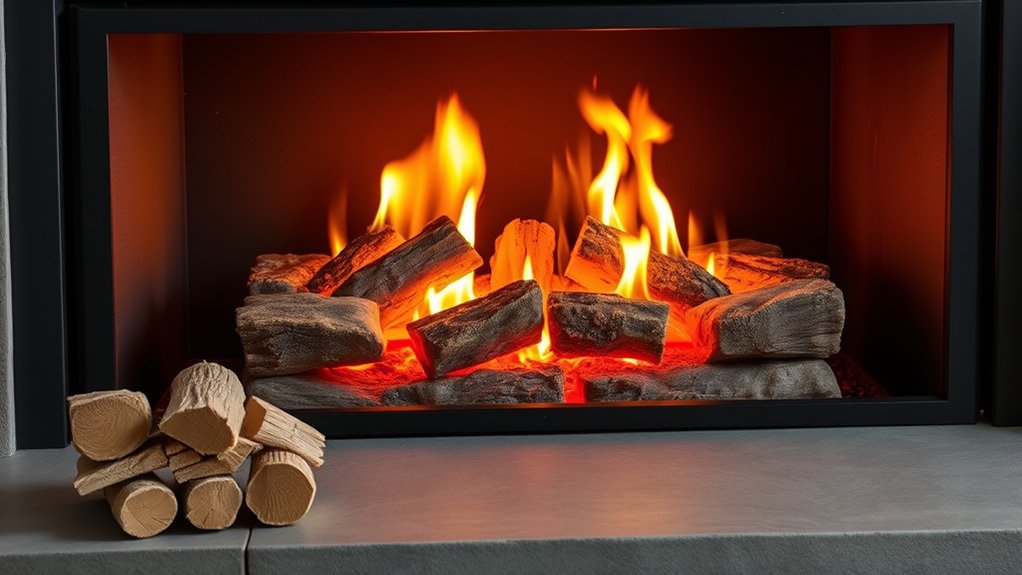
You shouldn’t burn real wood in a gas fireplace because it’s not designed for wood’s intense heat and smoke. Doing so risks warping metal, cracking glass, and causing dangerous buildup of soot and carbon monoxide. It can also void your insurance and violate building codes.
Instead, consider safe alternatives or professional conversion if you want a wood fire. If you want to understand all the risks and options, there’s more important information to explore.
Dangers of Burning Wood in Gas Fireplaces
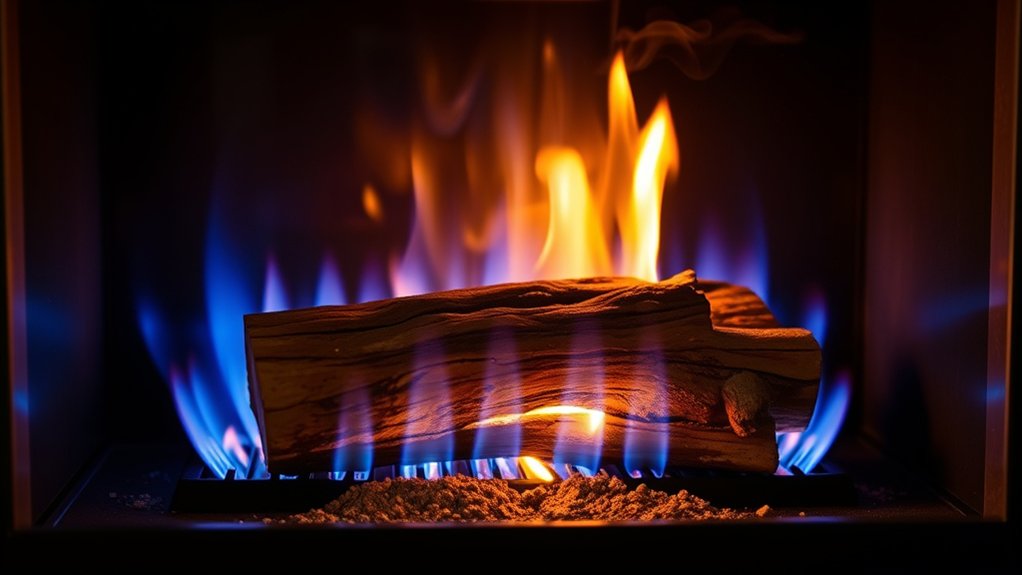
Although it might seem tempting to burn real wood in your gas fireplace, doing so can cause serious damage and safety hazards.
Burning wood produces excessive heat that can cause structural damage to the thin metal firebox and crack the protective glass. The soot and ash can clog gas burners and vents, leading to costly repairs and system malfunctions.
More importantly, wood smoke creates a serious fire safety risk, as gas fireplaces aren’t designed to vent heavy smoke properly. This can lead to dangerous carbon monoxide buildup inside your home.
Plus, using wood can greatly increase the risk of chimney fires because gas fireplaces have venting systems meant only for gas combustion.
For your safety and to avoid voiding insurance, stick to the intended fuel type.
It’s really best to keep things simple and use what the fireplace was designed for. That way, you stay safe and avoid unnecessary headaches down the road.
How Wood Fires Damage Gas Fireplace Components
When you burn wood in a gas fireplace, you’re putting its components under stress they weren’t built to handle. Wood fires generate higher heat that can warp steel parts and crack protective glass. Soot and ash clog gas burners and vents, causing damage and costly repairs.
The flue system in gas fireplaces can’t handle creosote buildup from wood smoke, risking blockages. This misuse shortens your fireplace’s lifespan and complicates maintenance.
| Component | Damage from Wood Fires |
|---|---|
| Steel Frame | Warping due to excessive heat |
| Protective Glass | Cracking from high temperatures |
| Gas Burners | Clogged by soot and ash |
| Flue System | Creosote buildup and blockages |
| Venting | Obstruction and smoke backdraft |
Avoid burning wood to protect your gas fireplace and prevent safety hazards. It’s really not worth the risk.
Safety Hazards of Burning Wood in Gas Fireplaces
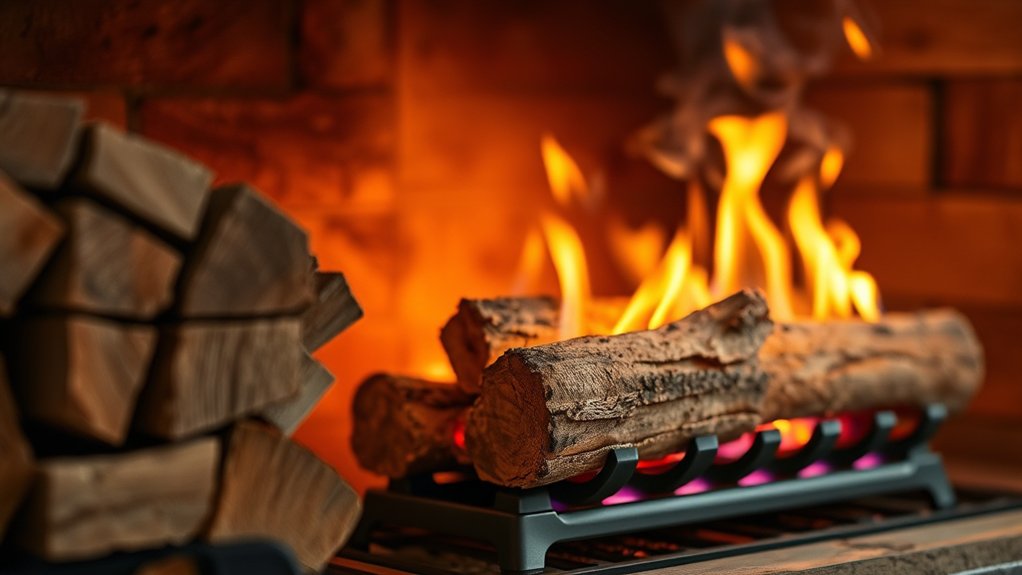
If you burn wood in your gas fireplace, you risk serious safety hazards that can affect both your home and health.
Gas fireplaces aren’t designed to handle the intense heat and heavy wood smoke produced by burning real wood. This can warp metal parts, crack glass, and clog burners with soot and ash, causing malfunctions and expensive repairs.
More importantly, wood smoke in a gas fireplace can release dangerous carbon monoxide due to incomplete combustion. That poses significant health risks you definitely want to avoid.
Ignoring local building codes and safety guidelines by burning wood may also void your home insurance, leaving you unprotected in case of fire damage.
For your safety, always follow manufacturer instructions and local regulations to avoid these serious risks.
It’s better to be safe than sorry when it comes to your fireplace. Stick to using it as it was meant to be used!
Ventilation Problems Burning Wood in Gas Fireplaces
You really shouldn’t burn wood in a gas fireplace. That’s because the direct venting system it uses isn’t made to handle the smoke and debris that come from wood fires.
When you do, smoke can actually backdraft right into your living space. This not only messes with your indoor air quality but also poses some serious health risks.
On top of that, if the ventilation isn’t working properly, dangerous buildup like carbon monoxide can occur. And that’s definitely not safe.
Direct Venting Limitations
Although gas fireplaces rely on direct venting systems designed specifically for gas combustion, burning wood in them disrupts proper ventilation.
Gas direct vents are engineered to handle clean gas exhaust, not the heavy smoke and debris from wood fires.
When you burn wood in a gas-burning fireplace, smoke can back up into your home, reducing air quality and risking your health.
Soot and ash from the wood can clog vents and gas burners, lowering efficiency and causing malfunctions.
Also, the intense heat from wood fires can warp internal parts meant only for gas flames, damaging your fireplace.
These direct venting limitations compromise your home’s safety by increasing fire hazards and risking structural damage.
For these reasons, it’s best to avoid burning wood in gas fireplaces.
It’s safer and more efficient to stick with the fuel your fireplace was designed for.
Smoke Backdraft Risks
Because gas fireplaces aren’t designed to handle the dense smoke produced by wood fires, burning wood in them often causes smoke to backdraft into your living spaces.
The venting system in gas fireplaces lacks the draw needed to expel heavy smoke from a wood-burning fireplace, leading to smoke backdrafting.
Improper use, like burning wood, can warp components and cause ventilation failures, which increases backdraft risks.
Soot and ash can clog burners and vents, making these problems worse.
Inadequate ventilation not only allows smoke inside but also raises the danger of carbon monoxide exposure, which is a serious health hazard.
To avoid these risks, it’s essential to use your gas fireplace only as intended and not burn wood since its venting system can’t safely manage that.
Impact On Air Quality
When you burn wood in a gas fireplace, it creates ventilation problems that directly impact your indoor air quality.
Gas fireplaces aren’t designed to handle the heavy smoke and soot from burning wood, which leads to ventilation issues. Smoke can backdraft into your living space, increasing indoor air pollution and raising health risks like carbon monoxide exposure.
The dense smoke and particulate matter can aggravate respiratory problems and other health conditions.
Plus, soot buildup can clog vents and gas burners, reducing your fireplace’s efficiency and causing malfunctions. Since gas fireplaces lack the proper draw to exhaust wood smoke effectively, harmful smoke can accumulate indoors.
Because of all this, burning real wood in a gas fireplace is a risky choice for your home’s air quality and your health.
It’s better to stick with the fuel your fireplace is designed for to keep the air inside safe and clean.
Legal and Insurance Risks of Burning Wood in Gas Fireplaces
You should know that burning wood in a gas fireplace often breaks building codes and can make your setup illegal.
Plus, if a fire happens, your insurance may refuse to pay claims because of improper use. This can leave you facing costly repairs and legal trouble.
Insurance Policy Violations
Although gas fireplaces might seem versatile, burning wood in them often violates building codes and manufacturer guidelines. This puts you at risk of serious legal and insurance issues.
Insurance policies typically don’t cover damages caused by improper use, like burning wood in a gas fireplace. If an insurance claim reveals wood ash or damage from burning wood, your claim could be denied. That would leave you responsible for costly repairs.
Many insurers explicitly exclude coverage for fires caused by unapproved changes to heating systems. To avoid financial consequences, it’s essential to check your insurance policies and talk to your provider before altering your fireplace’s intended use.
Sticking to approved fuels protects your home and your wallet. It also ensures your heating system stays safe and your insurance remains valid.
Legal Compliance Issues
Since burning wood in a gas fireplace often breaches local building codes, it can expose you to serious legal and financial risks. Legal compliance means following these codes closely.
Using a gas fireplace for wood can lead to fines or penalties if discovered during inspections. Many insurance policies specifically exclude coverage for damages caused by improper use.
So, if wood ash or soot is found, your claim may be denied. Any modifications to allow wood burning must meet strict safety standards. These standards are complex and costly to achieve.
To avoid voiding your insurance and facing legal trouble, it’s best not to burn wood in a gas fireplace unless the appliance is designed for it.
Plus, you need to guarantee full compliance with local building codes and insurance requirements.
Converting a Gas Fireplace to Burn Wood Safely
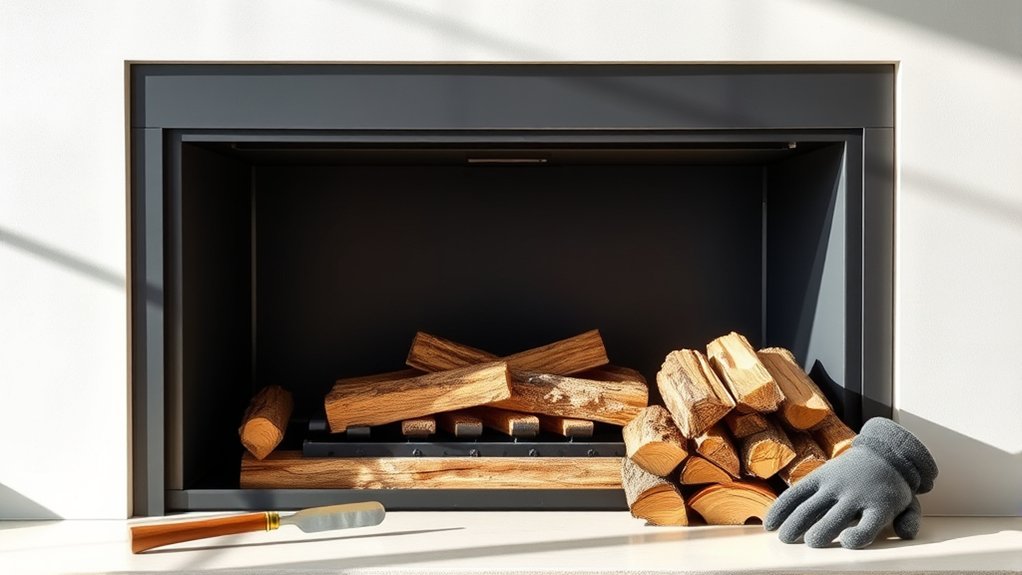
When converting a gas fireplace to burn wood safely, you’ll need to make significant modifications, including installing a wood-burning insert designed for higher heat and proper venting.
Gas fireplaces aren’t built to handle the intense heat output or smoke from wood fires, so using a wood-burning insert is crucial.
Before starting, consult a certified chimney sweep and a professional to guarantee the conversion meets fire safety regulations and local codes.
Improper installation can cause serious hazards, damage your home, and void warranties.
Costs can range from $800 to $4,500 plus labor, but it’s essential for your safety and insurance coverage.
Always prioritize professional evaluation and installation when converting a gas fireplace to burn wood.
Safe Alternatives to Burning Wood in Gas Fireplaces
If you want the cozy look of a wood fire without the risks, you have several safe alternatives to burning wood in your gas fireplace.
Gas fireplace inserts designed to burn natural gas can be added to existing wood-burning fireplaces. They offer efficiency without the mess of wood.
Gas fireplace inserts fit into wood fireplaces, providing efficient warmth without the hassle of burning wood.
Gas logs are another popular choice. They mimic the appearance of real logs but burn gas safely.
Electric fireplaces provide ambiance without combustion. This makes them low-maintenance and risk-free.
If you crave the true wood-burning experience, consider traditional wood-burning fireplaces or pellet stoves.
These options handle wood safely and burn cleaner than open fires.
These safe alternatives let you enjoy warmth and charm without compromising safety or your gas fireplace’s design.
Identifying Gas-Only vs. Wood-Capable Fireplaces
Although gas and wood fireplaces may look similar at first glance, you need to know the key differences before deciding which fuel to use. Gas fireplaces are designed to burn natural gas or propane, featuring components optimized for gas combustion.
Wood-burning fireplaces are built with a sturdy firebox and chimney to handle intense heat and smoke.
To identify your fireplace type, consider these points:
- Gas fireplaces often have direct venting, which isn’t suited for smoke from burning wood.
- Wood-burning fireplaces have robust fireboxes and chimneys for smoke ventilation.
- Trying to burn wood in a gas fireplace risks structural damage and safety hazards.
- Always get a professional inspection to verify compliance with safety standards before any modifications.
Knowing these distinctions keeps you safe and protects your home. It’s always better to be sure than sorry when it comes to fireplaces!
Frequently Asked Questions
What Types of Gas Are Compatible With Gas Fireplaces?
You can use propane gas or natural gas in your gas fireplace, but it depends on your model’s specifications.
Some fireplaces allow gas conversion kits to switch between propane and natural gas. This can enhance heating efficiency based on your fuel choice.
Always follow manufacturer guidelines for gas fireplace maintenance and fireplace safety to guarantee proper operation.
Using the right gas type helps maintain heating efficiency and prevents safety issues.
It’s really important to stick with what your fireplace is designed for to keep everything running smoothly.
How Often Should a Gas Fireplace Be Serviced?
You should follow a maintenance schedule like clockwork, servicing your gas fireplace at least once a year. This guarantees safety inspections catch common issues early, while professional cleaning removes soot and debris.
These service benefits boost performance checks, keeping burners efficient and flames vibrant.
Regular upkeep not only enhances your fireplace’s lifespan but also helps maintain warranties and insurance coverage.
It gives you peace of mind and a cozy, trouble-free fire season. Keeping up with service makes all the difference!
Can Decorative Logs Be Used in a Gas Fireplace?
Yes, you can use decorative logs in a gas fireplace, and they’re designed with decorative log safety in mind. These logs enhance gas fireplace aesthetics while ensuring burning efficiency and preventing damage.
When it’s time for log replacement, always choose approved firewood alternatives made for gas units.
To maintain your fireplace, follow maintenance tips like regular cleaning and inspections.
This keeps your setup safe, efficient, and visually pleasing without compromising performance. It’s a simple way to enjoy the look and feel of a traditional fire with the convenience of gas.
What Is the Average Lifespan of a Gas Fireplace?
Think of your gas fireplace as a trusty ship steering through years of cozy voyages. With quality gas fireplace materials and proper installation requirements, you can expect it to last 15 to 25 years.
Keeping safety precautions in mind and following maintenance tips like annual cleanings really boosts its lifespan.
Fuel sources and heat output affect wear, so managing these smartly helps your fireplace sail smoothly through many winters, providing warmth and charm.
Are Gas Fireplaces Energy Efficient Compared to Electric Ones?
Yes, gas fireplaces are generally more energy efficient than electric ones. You’ll benefit from lower energy consumption and higher heating output, making them cost-effective.
While installation costs and maintenance requirements can be higher, the user experience is often better with quicker, consistent heat.
Plus, gas fireplaces tend to have a smaller environmental impact, especially if your electricity comes from fossil fuels.
Conclusion
You might be tempted to burn real wood in your gas fireplace, but it’s a recipe for disaster. Doing so can damage components, create safety hazards, and even cause legal or insurance troubles down the line.
Instead, play it safe by sticking to your fireplace’s intended use or exploring proper conversions. Remember, don’t throw caution to the wind. Protect your home and family by using your fireplace the right way.