Can You Get Mold Out Of Wood: Proven Methods That Work
Yes, you can get mold out of wood using proven methods. Start by identifying visible mold, which is often black, green, or gray. Clean surface mold with vinegar or a diluted bleach solution applied gently.
For deeper infestations, sanding with 100 to 220 grit sandpaper after making sure the wood is dry helps remove embedded spores. Always keep wood dry and control humidity below 50% to prevent mold from coming back.
Knowing these steps will help you handle mold effectively and protect your wood surfaces. It’s not too hard once you get the hang of it!
Key Takeaways
- Surface mold on wood can be removed effectively using vinegar, soap and water, or diluted bleach solutions applied gently with a soft cloth.
- Sanding wood with 100 to 220 grit sandpaper removes deeper mold infestations after ensuring the wood is dry to prevent further growth.
- Thoroughly drying wood after cleaning is crucial to prevent mold recurrence and structural damage.
- Maintaining indoor humidity between 30% and 50% and ensuring proper ventilation helps prevent mold growth on wood surfaces.
- For mold infestations larger than 10 square feet, professional remediation is recommended to ensure safe and thorough removal.
What Causes Mold on Wood and Why It Matters
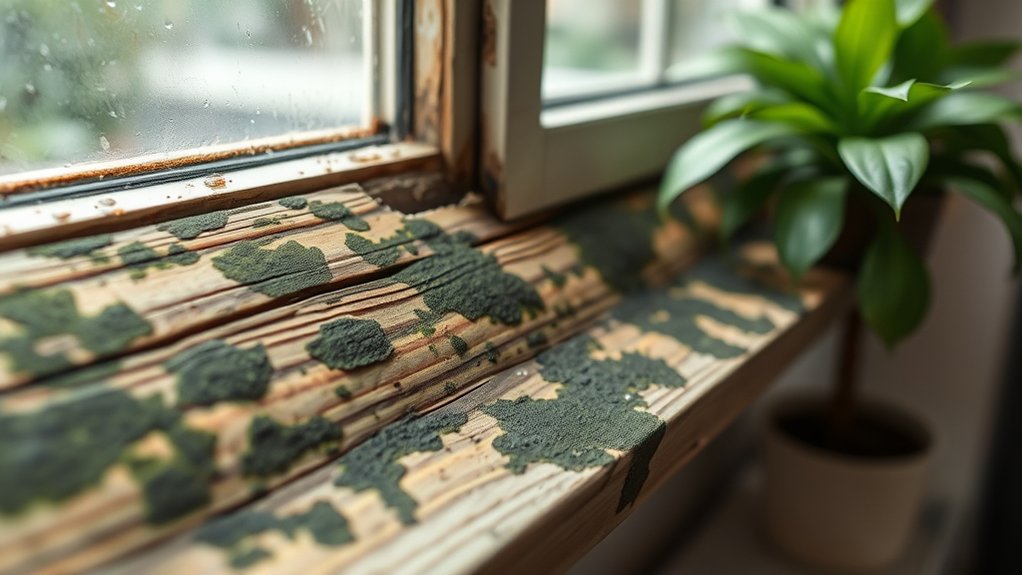
Mold growth on wood happens mainly because of prolonged exposure to moisture, especially when humidity levels go over 80%. Moisture problems often come from leaks, standing water, or poor sealing. All these let water get into wood surfaces.
High humidity creates the perfect environment for mold spores to start growing and multiplying. Black mold is a common type found on wood, and it produces mycotoxins that can be bad for your respiratory health.
High humidity fosters mold growth, with black mold posing serious respiratory health risks due to its toxic spores.
If you ignore the early signs, mold can cause serious structural damage by weakening the wood.
To stop this, you need to take preventive steps like making sure there’s good ventilation and doing regular inspections. Fixing moisture problems quickly is super important because mold spores can stay alive for years, even if you don’t see any mold growing.
How to Identify Mold on Wood Surfaces
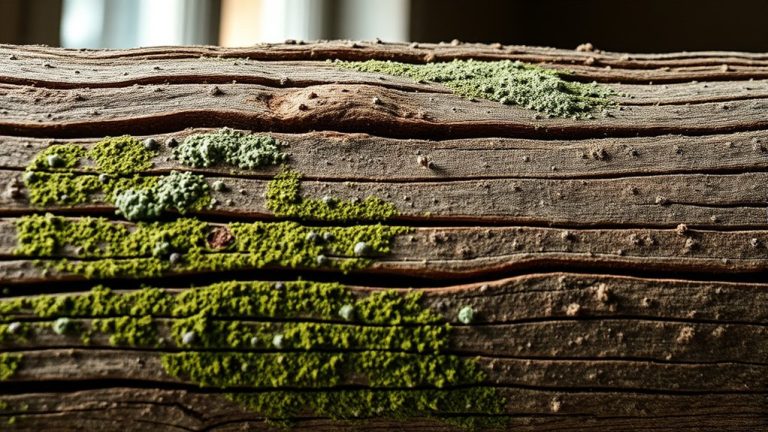
How can you accurately identify mold on wood surfaces before it causes significant damage? First, look for visible mold—patches in black, green, gray, or reddish hues that may appear fuzzy, slimy, or powdery. A musty smell often accompanies mold presence.
Since mold thrives where moisture accumulates, inspect areas near leaks or with poor ventilation. Identifying mold early is essential to prevent health risks like respiratory issues and skin irritation. Use this guide to spot mold effectively:
| Feature | Description |
|---|---|
| Color | Black, green, gray, or reddish |
| Texture | Fuzzy, slimy, or powdery |
| Odor | Musty, damp smell |
| Common Location | Moist, poorly ventilated wood areas |
Early detection helps target removal with proper cleaning solutions. This ensures safety and preserves wood integrity.
Simple Wiping Methods to Remove Surface Mold
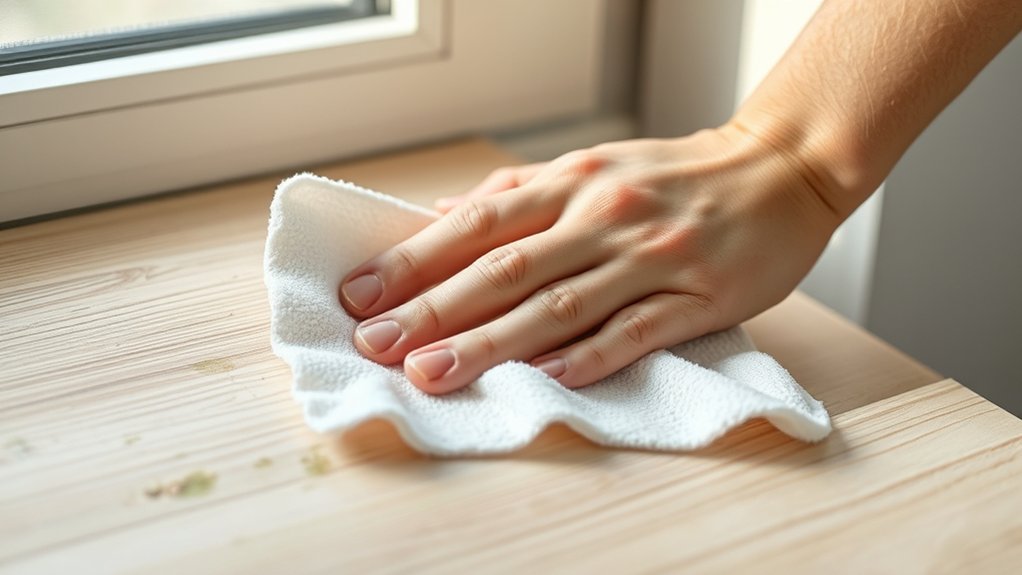
When surface mold appears on wood, you can often remove it effectively by wiping with a carefully prepared solution of vinegar, soap, and water or a diluted bleach mixture, provided you guarantee proper ventilation throughout the process.
Apply the cleaning solution gently with a soft cloth to avoid damaging the wood’s surface.
Vinegar acts as a natural mold removal product, disrupting mold growth without harsh chemicals. After cleaning, thoroughly dry the wood to eliminate moisture, which mold needs to thrive.
Confirm you target all affected areas, especially spots where sealing is compromised, as these may harbor mold beneath the surface.
This method is effective for intact surfaces, but persistent mold may require more intensive treatment. Proper moisture control post-cleaning is essential to prevent mold’s return and preserve wood integrity.
When Wiping Isn’t Enough: Sanding Wood Floors to Remove Mold
Address deeper mold infestations by sanding wood floors to remove contamination embedded within the grain, especially if the surface seal has deteriorated.
Before sanding wood floors, make sure the wood is dry to prevent further mold growth.
Ensure wood floors are fully dry before sanding to avoid encouraging additional mold growth.
Spray a dilute bleach solution on moldy wood to reduce spore aerosolization during sanding. Start with 100 grit sandpaper to remove mold colonies thoroughly, then finish with 220 grit for a smooth surface.
Sanding not only removes surface mold but also targets the deeper mold, helping to kill it.
After sanding, use a clean cloth to wipe away dust and debris.
Be sure to clean up any steel wool fibers because they can rust and damage the wood.
This method provides a precise, evidence-based approach when wiping isn’t enough.
Natural and Chemical Mold Killers for Wood
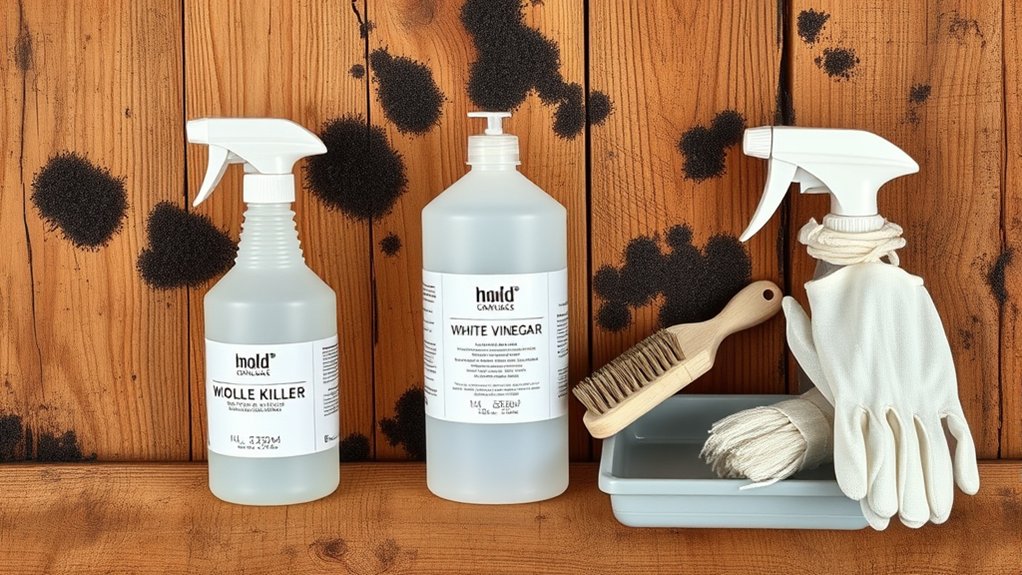
If sanding wood floors isn’t feasible or the mold infestation is confined to surface areas, applying natural or chemical mold killers can effectively eliminate spores and prevent regrowth.
White vinegar, used undiluted with a 60-minute contact time, penetrates porous wood to kill mold spores efficiently.
Hydrogen peroxide (3%) oxidizes mold cells quickly, requiring only 10 minutes before scrubbing to clean mold thoroughly.
Baking soda forms an alkaline environment that inhibits mold growth. A paste of baking soda and water also helps with physical mold removal.
Tea tree oil, a natural fungicide, offers effective mold control without harsh chemicals.
For severe cases, professional mold remediation may use quaternary ammonium compounds, ensuring effective mold treatment while preserving wood integrity.
These methods provide targeted, evidence-based options for safe and effective mold removal from wood surfaces.
Cleaning Dust Before Refinishing Wood Floors
Three essential steps guarantee dust is fully removed before refinishing wood floors: dry wiping with microfiber cloths, vacuuming sawdust and debris, and verifying the wood’s complete dryness.
Start by using microfiber cloths to capture dust without scratching the wood surface. This makes sure no particles remain that could stop the finish from sticking properly.
Next, vacuum the affected area thoroughly to remove any leftover sawdust and debris.
Before you apply any cleaning chemicals or finishes, check that the wood floors are completely dry. This is important because moisture can encourage mold growth.
Proper ventilation helps improve indoor air quality and removes mold spores.
These DIY tips prevent trapping water or mold beneath the finish, which keeps your wood floors safe.
How to Refinish Wood Floors After Mold Removal
Once you’ve thoroughly removed dust and confirmed the wood is dry using a moisture meter, you can begin refinishing the floors after mold remediation. Proper drying prevents mold species regrowth and serious health risks.
Start sanding with 100 grit to remove residual mold stains and damaged wood fibers, then finish with 220 grit for smoothness.
Begin refinishing by sanding with 100 grit, followed by 220 grit for a smooth, clean surface.
Apply water-based polyurethane for its quick drying time and low VOC emissions, guaranteeing indoor safety. Lightly sand between coats per instructions to avoid imperfections. Test the finish in a small area first to prevent color mismatches.
Use a moisture meter to verify complete dryness post mold removal. Employ a two-step sanding process targeting wood fibers and stains. Choose water-based polyurethane for safer, effective refinishing. Sand lightly between coats to guarantee a smooth, durable finish.
Preventing Mold on Wood and When to Call a Pro
Although mold growth on wood can often be prevented through diligent maintenance, understanding when to call a professional is critical for health and structural safety.
Keep indoor humidity levels between 30% and 50% to inhibit mold on wood surfaces, since mold thrives above 80% humidity. Regularly inspect for leaks and moisture issues, especially in basements and bathrooms, to catch problems early.
Guarantee proper ventilation by using exhaust fans and maintaining airflow in moisture-prone areas to support prevention efforts.
If mold covers more than 10 square feet or is embedded inside walls or HVAC systems, seek professional remediation. Address underlying leaks and use dehumidifiers promptly to maintain dry conditions.
These steps collectively minimize mold risks and protect structural integrity.
Frequently Asked Questions
Can Mold on Wood Cause Health Problems?
Yes, mold on wood can cause health problems. You might experience mold exposure symptoms like respiratory issues, allergic reactions, or skin irritation.
These effects depend on your sensitivity and exposure level.
To protect yourself, follow mold prevention tips such as moisture control and improving indoor air quality.
Use effective cleaning techniques to remove mold and reduce spore spread.
Managing humidity below 50% helps minimize mold growth and related health risks.
Is It Safe to Use Bleach on Moldy Wood?
You shouldn’t rely on bleach effectiveness for moldy wood because it only kills mold spores on the surface, not within the wood’s porous structure. For safe wood treatment, use alternative solutions like vinegar or hydrogen peroxide.
Always follow safety precautions to avoid harmful fumes.
Proper mold identification is essential before treatment. Focus on surface cleaning combined with long term prevention by keeping wood dry and ventilated to stop mold regrowth effectively.
This way, you can tackle the problem safely and prevent it from coming back.
How Long Does It Take for Mold to Grow on Wood?
Mold growth timeline is like a ticking clock once moisture levels rise. You’ll see mold start on wood within 24 to 48 hours under ideal environmental factors. That means high humidity above 80% and temperatures between 60°F and 100°F.
Surface types and wood treatment options impact speed. Untreated wood welcomes faster growth, so it’s more vulnerable.
To beat this, apply prevention techniques like moisture control and regular inspections. Using proper cleaning methods helps keep mold at bay effectively.
Just stay on top of it, and you’ll be fine.
Can Mold Return After Professional Removal?
Yes, mold can return after professional removal if mold regrowth factors aren’t controlled. You need to focus on humidity control and improve air circulation to maintain favorable environmental conditions.
Applying appropriate wood treatment options enhances mold prevention techniques. Despite cleaning product effectiveness, professional inspection necessity remains vital to identify hidden moisture or spores.
Consistently monitoring and addressing these elements guarantees lasting mold control and prevents recurrence on wood surfaces.
Just keep an eye on these factors, and you’ll better protect your space from mold coming back.
Are Certain Wood Types More Resistant to Mold?
Yes, certain wood types offer better mold resistance because of their natural oils and grain density. For example, cedar and redwood resist mold better than pine or spruce.
Your wood maintenance and surface finishes play essential roles, especially in humid climates where environmental factors increase mold risk.
Treatment options like sealing and pressure-treating help boost resistance.
It’s a good idea to implement prevention strategies tailored to your local climate. This way, you can protect wood surfaces effectively from mold growth.
Conclusion
Removing mold from wood demands precision and patience, much like restoring a delicate antique. By identifying mold early and using proven methods like wiping, sanding, and appropriate cleaners, you can guarantee the wood’s durability and safety.
Remember, thorough cleaning before refinishing is essential to prevent mold from coming back. Taking these evidence-based steps helps maintain wood integrity and indoor air quality.
If mold persists or spreads, don’t hesitate to call a professional for expert help. It’s better to be safe and make sure the problem is fully addressed.