How To Sharpen A Chainsaw Chain – Fast And Easy Method
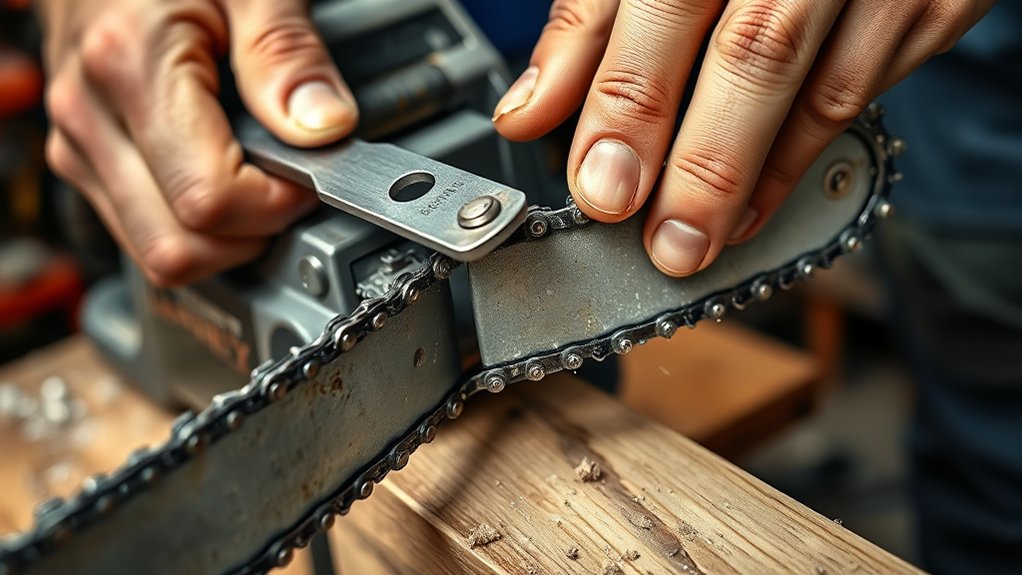
To sharpen your chainsaw chain quickly and easily, first identify the correct file size based on your chain pitch. Secure the bar in a vice, wear gloves and goggles, then file each cutter at a consistent 30-degree angle using a matched round file or an electric sharpener for faster results.
Remember to check and adjust the depth gauges afterward for smooth cuts. Proper tension and clean-up afterward help maintain sharpness longer.
Keep going to discover essential tips for efficiency and safety.
Signs Your Chainsaw Chain Needs Sharpening
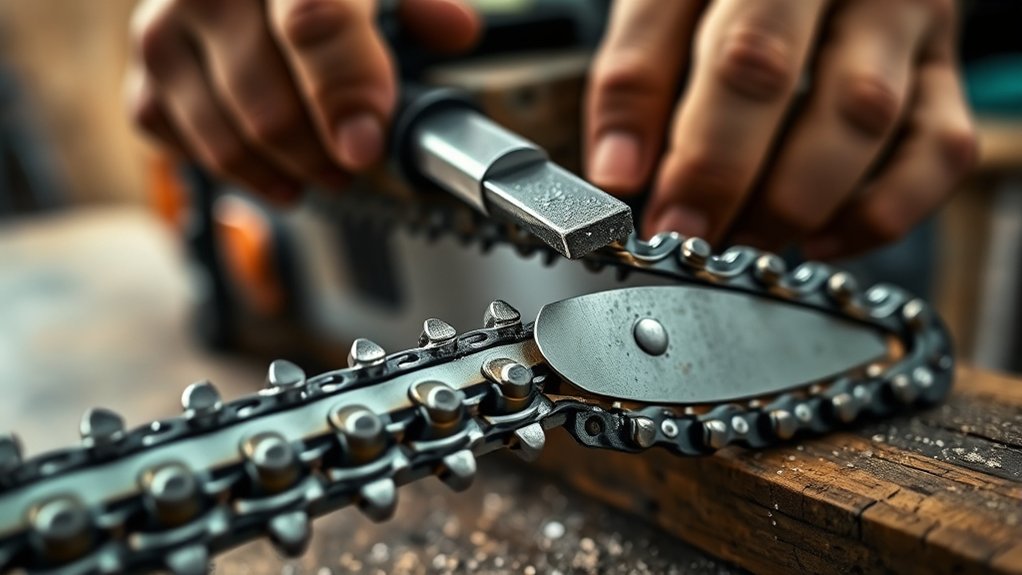
A dull chainsaw chain reduces cutting efficiency, forcing you to apply excessive pressure to slice through wood. When you notice fine sawdust instead of coarse chips, it signals the cutting edge is dull and needs sharpening.
If your chainsaw smokes despite proper lubrication, the chain isn’t cutting effectively, indicating immediate sharpening is necessary.
Uneven cutting, such as the chain pulling to one side, shows inconsistent sharpness along the cutting edge and requires prompt attention.
Moreover, chainsaw chatter or bouncing during operation compromises precision and safety, and it’s directly linked to a dull chain.
Recognizing these signs early guarantees you maintain peak cutting performance and control, preventing further wear or damage to your chainsaw.
Regular sharpening keeps the cutting edge sharp and efficient for safe operation. So, don’t wait until it’s too late—stay on top of your chainsaw maintenance!
Choosing the Right File for Your Chainsaw Chain
Choosing the right file diameter is essential for sharpening your chainsaw chain effectively. Start by identifying your chain pitch using a chain reference gauge, as this determines the correct round file diameter.
For example, a 1/4-inch pitch needs a 4.0 mm file, while a .325 pitch requires a 4.8 mm file.
Using the proper file diameter guarantees you sharpen the cutters accurately without damaging the chain. Maintain the recommended sharpening angle of about 30 degrees to optimize cutting performance.
Proper file diameter and a 30-degree angle ensure precise sharpening and protect your chainsaw chain.
It’s a good idea to use a file guide to keep the file aligned and consistently angled across all teeth.
Remember to inspect your file regularly and replace it when worn. A dull file compromises sharpening quality and can harm your chain.
Selecting the correct file and angle is critical for efficient, safe cutting.
Get Your Workspace and Safety Gear Ready
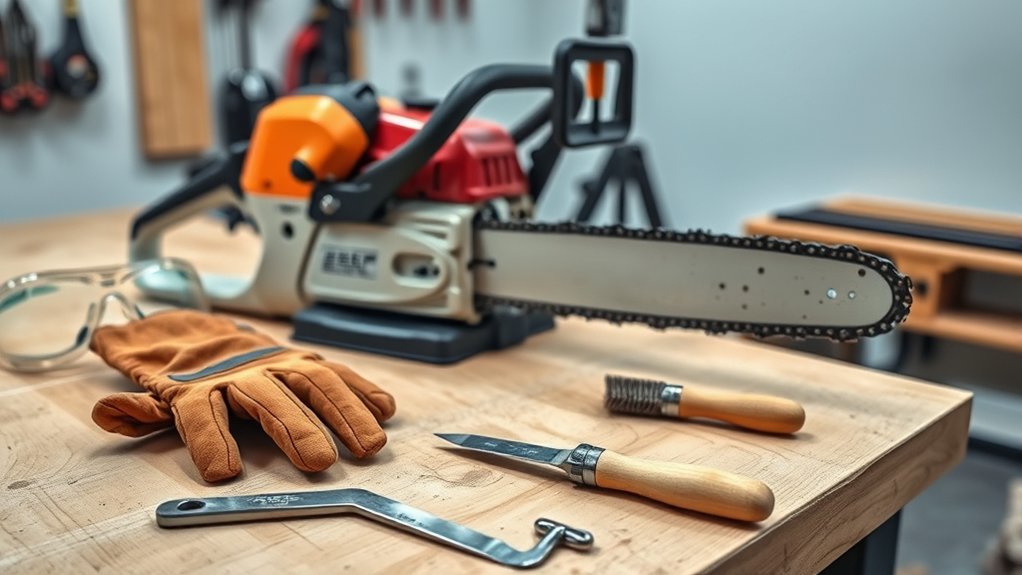
Before you start sharpening, go ahead and clear your workspace.
Then, secure the chainsaw bar in a bench vice to keep it steady. Always remember to wear gloves and safety glasses—these will protect you from sharp edges and any flying debris.
It’s also a good idea to have proper lighting and keep all your tools within reach.
That way, you can work more accurately and efficiently without having to stop and search for something.
Essential Safety Equipment
Safety remains paramount when sharpening your chainsaw chain. Before you start, always wear gloves to protect your hands from cuts and scrapes. Safety goggles are essential to shield your eyes from flying metal filings and debris.
Ear protection helps reduce noise exposure, especially when using power tools like electric grinders. Maintaining a clean workspace minimizes tripping hazards and keeps your tools within easy reach.
To guarantee safety, prepare by following these key steps:
- Wear gloves to prevent hand injuries
- Use safety goggles to protect your eyes
- Employ ear protection to guard against loud noise
- Keep a clean workspace free of obstacles
These precautions create a controlled environment, letting you sharpen efficiently and safely.
Just take your time and stay aware of your surroundings!
Workspace Preparation Tips
Protective gear helps guard you from injury, but your workspace setup plays a major role in sharpening efficiency and safety. Keep your workspace clean, well-lit, and free of clutter to avoid accidents.
Secure the chainsaw bar in a bench vice to stabilize the chain and minimize movement. Gather all necessary tools beforehand to maintain workflow without interruptions.
Wear protective gear like gloves and safety glasses to shield against metal filings. Keep a fire extinguisher nearby as a safety precaution.
| Task | Action | Reason |
|---|---|---|
| Workspace | Keep clean and well-lit | Prevent accidents, improve visibility |
| Chainsaw Bar | Secure in bench vice | Stabilize chain, enhance safety |
| Tools | Gather all before starting | Avoid workflow interruptions |
| Protective Gear | Wear gloves and safety glasses | Protect from filings and injury |
How to Sharpen Your Chainsaw Chain by Hand
To sharpen your chainsaw chain by hand, start by securing the chainsaw bar firmly in a bench vice and engaging the chain brake to keep it stable.
Use round files that match the chain pitch and maintain a 30-degree angle to set the correct sharpening edge. Consistency is key. Count your file strokes on each tooth to guarantee uniform sharpness.
After filing, check the depth gauges and adjust them according to the manufacturer’s specs for maximum cutting depth. Always wear protective gloves and eyewear during the process.
Match round files to chain pitch. Maintain a 30-degree angle to set. File each tooth with consistent strokes. Adjust depth gauges after sharpening.
This method helps you sharpen your chainsaw effectively without specialized tools.
Using an Electric Sharpener for Faster Maintenance
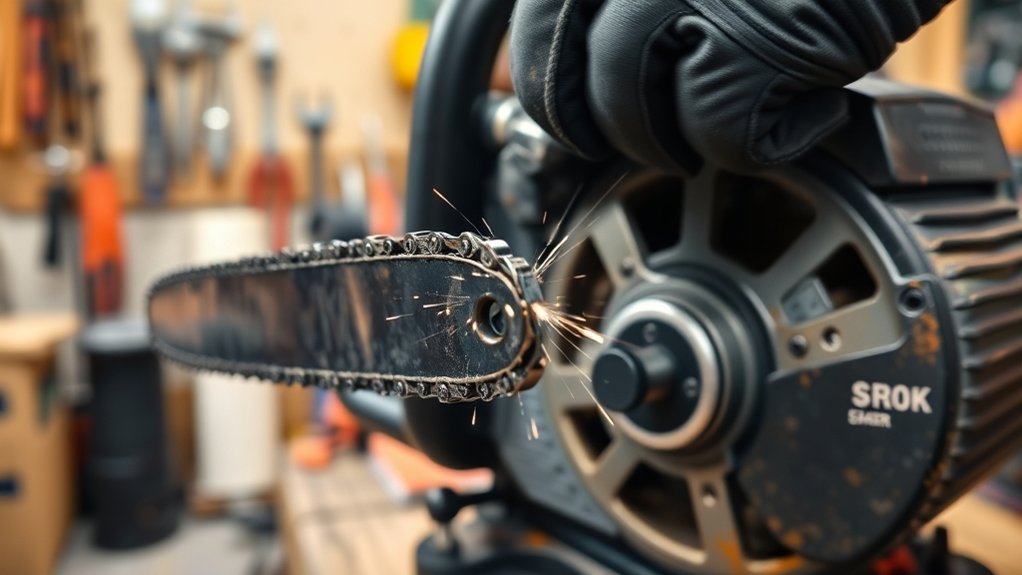
Speed up your chainsaw maintenance by using an electric sharpener. It delivers consistent and precise sharpening while cutting down the time compared to manual filing.
Before sharpening your chainsaw, make sure to match the grinder wheel to your chain type. Also, set the vise assembly to the correct top plate angle, which is typically around 30 degrees.
Remember to regularly dress the grinding wheel to maintain its shape. This helps ensure sharp and efficient cutting edges.
After using the electric sharpener, always inspect and adjust the depth gauge to optimize cutting performance.
| Aspect | Recommendation |
|---|---|
| Grinder Wheel Type | Match chain type |
| Top Plate Angle | ~30 degrees |
| Vise Assembly | Secure and adjustable |
| Wheel Dressing | Frequent for sharp edges |
| Depth Gauge Check | Always post-sharpening |
Adjusting Depth Gauges for Better Cuts
Once you’ve sharpened the chain using the electric sharpener, the next step is to check and adjust the depth gauges. Proper depth gauge settings are essential for optimal cutting performance and safety. Use a filing gauge that matches your chain pitch to measure the depth gauges accurately.
After sharpening, always check and adjust depth gauges with the correct filing gauge for safer, efficient cutting.
File the depth gauges horizontally, making sure you don’t touch the sharpened teeth. Maintaining the correct depth prevents excessive wood removal and reduces the risk of kickback.
Keep these points in mind when adjusting depth gauges:
- Use a filing gauge specific to your chain pitch
- File depth gauges horizontally without contacting cutting teeth
- Verify depth gauges don’t exceed the recommended height
- Regularly adjust depth gauges for consistent cutting depth
This precision in sharpening a chainsaw guarantees better cuts and efficient operation. It really makes a difference in how smoothly your saw works.
Cleaning and Storing Your Sharpened Chain
Although sharpening is essential, cleaning your chainsaw chain afterward guarantees it stays in peak condition. Begin by thoroughly cleaning the chain to remove metal filings and debris that could impair performance.
Next, apply chain oil evenly to lubricate the links. This helps prevent rust and extends the chain’s lifespan.
Before you store the chain, confirm it’s tensioned correctly to maintain its shape and avoid deformation.
Store the chain in a clean, dry container with lubricant to protect it from moisture and dust, which cause corrosion.
Finally, regularly inspect the stored chain for signs of wear or damage. Address any issues promptly before use to ensure safety and efficient operation during your next cutting job.
How to Keep Your Chainsaw Chain Sharp Longer
Maintaining your chainsaw chain’s sharpness goes beyond just cleaning and proper storage. To keep your chain sharp longer, you need to consistently sharpen and care for the bar and chain every time you use the saw. Proper maintenance reduces wear and extends cutting efficiency.
Regularly clean the bar and chain to remove dirt and debris. This helps prevent premature dulling.
Also, check and adjust chain tension before cutting. A snug chain minimizes friction and blade wear.
Try to avoid cutting into rocks, soil, or other unsuitable materials. These can seriously damage the teeth.
When you’re done, store your chainsaw in a dry, lubricated environment. This helps prevent rust and corrosion.
Frequently Asked Questions
Can I Sharpen a Chainsaw Chain Without Removing It From the Bar?
Yes, you can sharpen a chainsaw chain without removing it from the bar by using proper sharpening tools like a round file or 2-in-1 file holder.
Just make sure to follow chainsaw maintenance tips by securing the saw in a vise and keeping a consistent filing angle.
Be careful to observe sharpening safety precautions to avoid injury. Also, check for any signs of chain damage before and after sharpening.
This method really helps streamline your workflow. It offers practical and efficient upkeep without the need for full disassembly.
How Often Should I Sharpen My Chainsaw Chain During Heavy Use?
If you’re cutting dense hardwood all day, sharpen your chainsaw chain every time you refuel to keep it cutting efficiently. This is a good rule of thumb because heavy use wears down the chain faster.
Using proper sharpening techniques means you don’t have to remove the chain each time. This way, you keep it sharp and safe without extra hassle.
Regular maintenance also helps reduce fuel consumption and prevents dangerous kickbacks. That means your saw will work better and safer during those long cutting sessions.
Is It Possible to Over-Sharpen a Chainsaw Chain?
Yes, you can over-sharpen a chainsaw chain, which speeds up chain wear and reduces how well it works. To keep this from happening, keep an eye on how often you sharpen it and make sure you’re using the right file size for your chain.
Over-sharpening makes the teeth thinner and changes the cutting angles, which can be risky. It’s important to check the depth gauges regularly and only sharpen when it’s really needed. This way, you keep the teeth at the right length and angles.
What Are the Risks of Using an Incorrect File Size?
Don’t think any file will do. File selection importance can’t be overstated.
Using the wrong size risks chain damage, like over-filing teeth or uneven sharpening, which reduces cutting efficiency.
It also raises safety concerns by increasing kickback potential, making your saw harder to control.
To protect your chainsaw’s lifespan and guarantee safe, efficient operation, always match the file size precisely to your chain’s pitch.
Can Professional Sharpening Services Improve Chain Performance?
Yes, professional services can greatly boost your chain performance by using precise sharpening techniques that guarantee consistent tooth angles and depths.
They identify wear issues you might miss, optimizing cutting efficiency and reducing effort.
This expertise also enhances chain longevity by properly adjusting rakers and maintaining the chain’s integrity.
Trusting professionals means you get a sharper, safer chain that lasts longer and performs better during every cut.
Conclusion
Regularly sharpening your chainsaw chain boosts cutting efficiency by up to 30%, saving time and fuel. By choosing the right file, preparing your workspace, and following proper sharpening techniques, whether by hand or with an electric sharpener, you’ll maintain peak performance.
Don’t forget to adjust depth gauges and clean your chain before storage. With consistent care, you’ll extend your chain’s life and keep your saw running smoothly. This way, every cut becomes faster and safer.