Where Can I Dump Wood: Disposal Options And Guidelines
You can dump untreated wood at recycling centers or transfer stations after removing nails and metal fasteners. Pressure treated wood, with its greenish tint, requires careful handling and must go to hazardous waste facilities or eco-friendly landfills to avoid contamination and toxic fumes.
Never burn treated wood. Check local landfill policies and designated drop-off days, as rules vary by area. Proper sorting and preparation not only protect you but also guarantee compliance and environmental safety.
Keep exploring to find the best disposal approach for your wood.
Key Takeaways
- Pressure treated wood must be taken to hazardous waste recycling facilities or eco-friendly landfills, never burned or disposed of in regular trash bins.
- Untreated wood can be dropped off at specialized recycling centers after removing nails and metal fasteners.
- Many landfills and transfer stations accept clean, untreated wood, but treated lumber is often prohibited.
- Check local waste management for specific disposal rules, fees, and designated drop-off or bulk waste pickup days.
- Properly separate treated and untreated wood and remove all metal hardware to comply with safety and environmental regulations.
How to Spot Pressure Treated Wood and Why It Matters
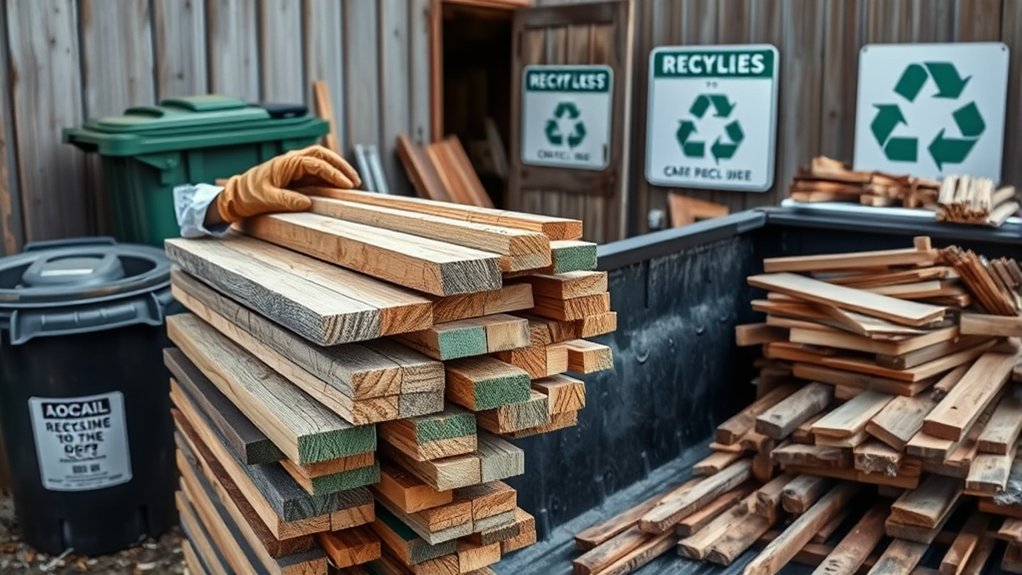
Although pressure treated wood looks similar to regular lumber, you can spot it by its distinctive greenish hue caused by chemical preservatives like chromated copper arsenate (CCA) or ammoniacal copper zinc arsenate (ACZA).
When you come across wood with this tint, you’re likely dealing with pressure-treated wood designed to resist rot and insect damage. This makes it ideal for outdoor projects like decks or fences.
Recognizing pressure-treated wood matters because these chemicals are highly toxic and can leach into the environment.
If you don’t identify it correctly, you might unknowingly mishandle it, leading to contamination risks.
So, knowing how to spot pressure-treated wood guarantees you treat it with the necessary caution and comply with proper disposal regulations.
This way, you protect both your health and the environment.
Safe Disposal Options for Pressure Treated Wood
Since pressure-treated wood contains toxic chemicals, you shouldn’t burn it or dispose of it casually. Safe disposal options for pressure treated wood focus on preventing environmental contamination.
One reliable method is taking the wood to a hazardous waste recycling facility, where it’s processed safely. This may involve a fee, though.
A dependable option is bringing the wood to a hazardous waste facility for safe processing, possibly with a fee.
You can also check with your local waste management company, as some allow regular trash disposal under specific guidelines.
Furthermore, eco-friendly landfills designed to contain chemical migration offer another safe option. These landfills help protect soil and water sources.
If you want to avoid landfill disposal entirely, consider repurposing the wood for outdoor projects like flower boxes or furniture.
Following these safe disposal options for pressure treated wood helps you manage waste responsibly and protects your environment.
It’s all about doing the right thing for the planet.
Recycling Pressure Treated and Untreated Wood
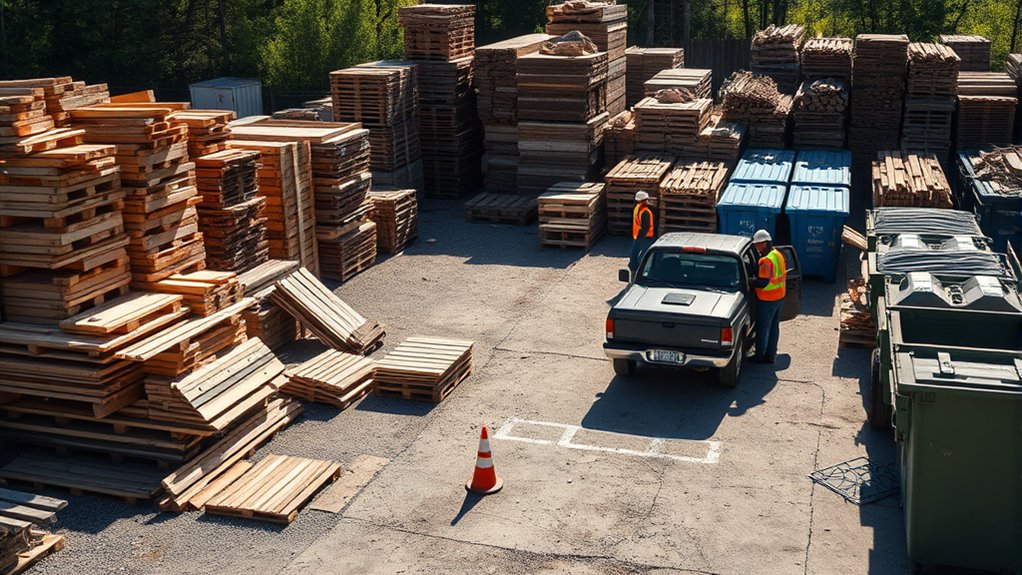
Many recycling facilities gladly accept untreated wood. You can have it transformed into mulch, compost, or reclaimed materials.
However, pressure treated wood needs special handling because of its chemical preservatives. It can’t be processed in standard wood recycling programs. You’ll have to dispose of pressure treated wood through local hazardous waste services to keep the environment safe.
Before recycling untreated wood, be sure to remove nails and metal fasteners. This helps avoid damage to the equipment.
Always check with your local regulations and waste management providers to make sure you’re following the rules.
- Untreated wood accepted at specialized recycling centers
- Untreated wood converted into mulch, compost, or reclaimed products
- Pressure treated wood excluded from standard recycling
- Pressure treated wood disposal via hazardous waste facilities
- Removal of metal fasteners required before recycling untreated wood
Where to Sell or Donate Lumber You Can Reuse
You can sell reusable lumber on platforms like Craigslist or Facebook Marketplace. Prices usually depend on the condition of the wood and how rare it is.
If you’re looking to donate instead, local donation centers like Habitat for Humanity ReStores are a great option. They accept quality lumber, but it has to meet certain guidelines.
Before you sell or donate, just make sure your wood is in good shape and doesn’t have any harmful treatments.
This way, you’ll get the best value and it’ll be easier for others to use.
Online Selling Platforms
Three effective online platforms can help you sell or donate lumber you no longer need. Online marketplaces like Craigslist and Facebook Marketplace let you list lumber for free, reaching local buyers quickly.
These platforms make it easy to connect with people in your community who want reusable wood.
When listing, verify your lumber is in good condition, free from nails and major damage. This helps you meet most organizations’ standards and attract buyers.
Pricing lumber between $1 to $5 per square foot works well, with rare woods going higher.
Joining local social media groups focused on building materials can boost your chances of a sale or donation.
- Use online marketplaces for local sales
- Verify lumber condition is good
- Price lumber based on type and quality
- Donate to nonprofits like Habitat for Humanity
- Join community groups for better reach
Local Donation Centers
Anyone looking to responsibly dispose of usable lumber can turn to local donation centers that support sustainable reuse.
Places like Habitat for Humanity ReStores often accept lumber donations, which help fund community housing projects.
Architectural salvage stores may also buy or accept high-quality reclaimed wood, providing an eco-friendly alternative to landfills.
Furthermore, local charities and non-profits sometimes run programs for construction material donations, but you’ll need to confirm their specific guidelines first.
Community centers and schools might welcome lumber for DIY or educational projects, promoting local reuse.
Before donating, verify your lumber is in good condition, free of exposed nails, and meets the requirements of these local donation centers.
This approach minimizes waste and benefits your community.
Pricing And Condition
Lumber’s value depends largely on its type, condition, and market demand. Prices typically range from $1 to $5 per square foot, with rarer woods fetching $25 or more.
If you want to sell or donate lumber you can reuse, make sure to assess its condition carefully. Ideally, it should be free of rot, damage, and exposed nails.
Keep in mind that treated wood needs to be disposed of properly, as it often requires special handling. Here are some options to consider:
- Donate usable lumber to Habitat for Humanity or local ReStores
- Sell lumber on Craigslist or Facebook Marketplace for local buyers
- Verify that painted or treated wood meets local disposal regulations
- Confirm donated wood is clean and safe for reuse
- Price lumber based on type, condition, and current market demand
Disposing Wood at Landfills and Transfer Stations
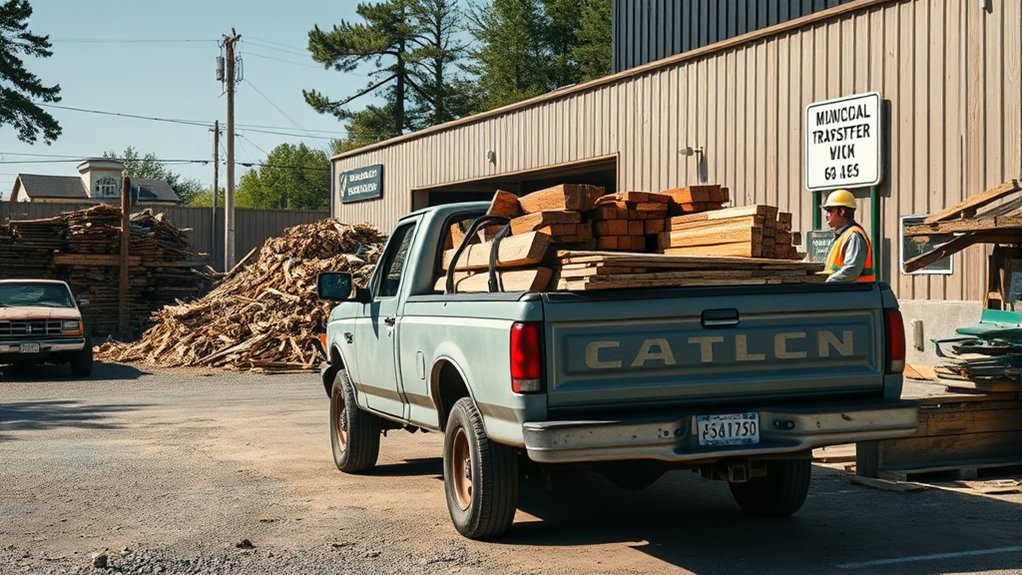
Although disposing of wood at landfills and transfer stations is a common option, you should first verify the associated fees and acceptance policies.
Many landfills don’t accept treated lumber because of its chemical content, so checking if the facility handles hazardous waste is crucial.
Transfer stations often provide designated areas for clean, untreated wood, allowing you to drop it off for recycling or composting.
Before disposal, remove nails and metal fasteners to avoid damaging recycling equipment and to comply with guidelines.
Some landfills schedule bulk waste pickup days, which can be a cost-effective method for larger wood quantities.
When You Should Rent a Dumpster for Wood Disposal
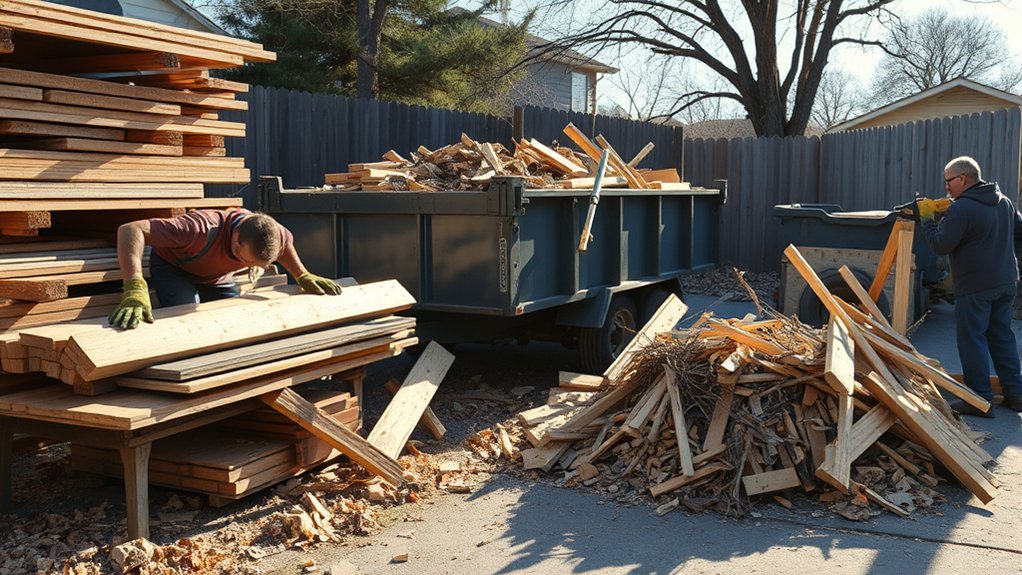
If you’re dealing with a large volume of wood waste from a renovation or construction site, renting a dumpster can offer a more efficient disposal method than making multiple trips to landfills or transfer stations.
A dumpster streamlines wood disposal, saving time and labor costs.
Think about the size you’ll need—dumpsters come in sizes from 10 to 40 cubic yards, so pick one that fits your volume.
Also, make sure the rental company accepts your type of wood waste, especially if it’s treated or painted.
Don’t forget to check for local fees and any extra charges that might come up if you go over weight limits or have prohibited items.
Using the dumpster helps you keep all the waste in one place, which means fewer trips and less handling.
Plan your rental duration so it matches your project timeline.
This way, you won’t have to pay for extra days you don’t need.
Renting a dumpster makes managing large-scale wood disposal way easier and can save you money in the long run.
Local Regulations for Pressure Treated Wood Disposal
Since pressure-treated wood contains chemicals that can harm the environment, you need to follow strict local regulations when disposing of it.
Burning pressure-treated wood is typically prohibited because it releases toxic fumes, so you should avoid this method. Most municipalities require you to take pressure-treated wood to specialized hazardous waste recycling facilities to prevent chemical leaching into soil and groundwater.
You can’t put this wood in regular trash bins. Instead, dispose of it at designated eco-friendly landfills or through authorized waste management services.
Some areas even have specific drop-off days for hazardous materials like pressure-treated wood, so it’s a good idea to check with local authorities for their schedules.
Staying informed about state and federal regulations helps you avoid fines and guarantees safe, compliant disposal.
It’s really worth taking the time to do it right, both for the environment and for peace of mind.
Tips for Handling and Preparing Wood for Safe Disposal
Before you get rid of any wood, make sure to take out all nails and metal hardware. This helps prevent injuries and keeps the equipment at disposal facilities safe from damage.
Also, it’s important to separate treated wood from untreated wood. Treated wood usually contains toxic chemicals, so it needs special handling.
By sorting and preparing your wood properly, you’re not only making disposal safer but also following local regulations.
It’s a simple step that makes a big difference!
Removing Nails And Hardware
Start by carefully removing all nails, screws, and hardware from your lumber to prevent injuries and guarantee safe handling during disposal. Removing nails reduces hazards and makes recycling or repurposing much easier.
Use tools like a pry bar or claw hammer to pull out nails without damaging the wood. If you come across stubborn nails, try using a reciprocating saw to cut around them, which helps with removal.
Always collect the nails you remove in a designated container to keep things safe during transport or disposal. Finally, make sure to check local guidelines because some facilities require all hardware to be removed before accepting wood waste.
- Use a pry bar or claw hammer for efficient nail removal
- Employ a reciprocating saw for difficult nails
- Avoid damaging wood during hardware extraction
- Store removed nails safely in a container
- Verify disposal facility requirements before dropping off wood
Sorting Treated Versus Untreated
Two key categories of wood, treated and untreated, require different handling and disposal methods because of their chemical makeup and environmental effects. You need to be able to tell treated wood apart since it’s chemically preserved and can be hazardous.
Untreated wood, on the other hand, is generally safer for disposal or recycling.
Always remove nails, screws, and any hardware before you dispose of wood. This helps prevent injuries and makes recycling easier.
Also, make sure to check your local rules carefully. Many places don’t allow burning treated wood and require it to be taken to special hazardous waste facilities.
Untreated wood should be clean and free from any contaminants to meet recycling center rules.
You usually can’t just throw treated wood into regular landfills because of environmental concerns. So, it’s really important to use the right hazardous waste facilities to dispose of it safely and follow all regulations.
Frequently Asked Questions
Can Pressure Treated Wood Be Composted Safely at Home?
You can’t compost pressure-treated wood safely at home because it contains toxic chemicals that pose serious health and environmental risks.
Composting safety requires avoiding materials that leach hazardous substances into your soil and plants.
Instead, you should dispose of pressure-treated wood through approved hazardous waste facilities.
Ignoring composting safety guidelines can lead to contamination, legal issues, and harm to your garden’s ecosystem.
Always follow local regulations for safe disposal.
It’s better to be safe and keep your garden healthy than to risk introducing harmful substances into your compost.
What Are the Environmental Impacts of Burning Pressure Treated Wood?
Burning pressure-treated wood is like opening Pandora’s box. It releases toxic emissions, including arsenic and chromium, that poison the air and soil.
You’re not just creating smoke; you’re spreading harmful pollutants that damage respiratory health and contaminate ecosystems.
The ash left behind carries hazardous substances that can leach into water, causing lasting environmental harm.
To protect yourself and the planet, avoid burning treated wood. Instead, choose safer disposal methods.
How Long Does Pressure Treated Wood Take to Decompose Naturally?
Pressure-treated wood takes around 20 to 30 years to decompose naturally because of its chemical preservatives.
Decomposition factors like moisture, temperature, and sunlight exposure greatly influence this timeline.
Unlike untreated wood, which breaks down faster, the chemicals in pressure-treated wood resist decay and pests, slowing decomposition.
You should consider these factors carefully, as the wood’s prolonged decomposition can impact soil and water quality through chemical leaching.
Are There Any Certified Companies Specializing in Pressure Treated Wood Disposal?
When it comes to pressure treated wood, don’t put all your eggs in one basket. Choose certified disposal companies.
These specialists operate hazardous waste recycling facilities designed to handle toxic chemicals safely.
You’ll want to check for certification and state compliance to avoid environmental risks. Many local Environmental Health Departments can point you to certified disposal services.
Keep in mind, these companies often charge a fee, but it’s essential for safe, legal processing.
Can I Use Pressure Treated Wood Ash in My Garden Soil?
You shouldn’t use pressure-treated wood ash in your garden soil because it poses serious risks due to chemical leaching. Harmful substances like arsenic and chromium can leach from the ash into the soil, contaminating plants and potentially affecting your health.
Instead, dispose of this ash at hazardous waste facilities. Always follow local regulations to prevent environmental damage and protect your garden from toxic contamination.
It’s better to be safe than sorry when it comes to your soil and plants.
Conclusion
When it comes to wood disposal, remember that “an ounce of prevention is worth a pound of cure.” Identifying pressure treated wood early helps you avoid environmental hazards and fines. Always explore safe disposal, recycling, or donation options before resorting to landfills or dumpsters.
Check local regulations to stay compliant, and handle wood carefully to protect yourself and the environment. Being informed guarantees you dispose of wood responsibly and efficiently every time. It’s really about taking a little extra time upfront to make a big difference later.