What Can I Use To Clean Wood Floors: Best Options Explained
You can clean your wood floors effectively using pH-neutral cleaners that protect the finish and prevent damage. Use microfiber or vacuum mops designed for hardwood to avoid excess moisture and scratches.
Safe options include commercial products like Bona and Murphy Oil Soap or household mixes like diluted vinegar and water. Just steer clear of bleach, ammonia, oil-based soaps, and abrasive cleaners because they can harm the wood.
For lasting results and more tips on extending your floor’s life, explore these best practices and products. Taking good care of your floors will keep them looking great for years to come!
Why Using the Right Cleaner Protects Your Wood Floors
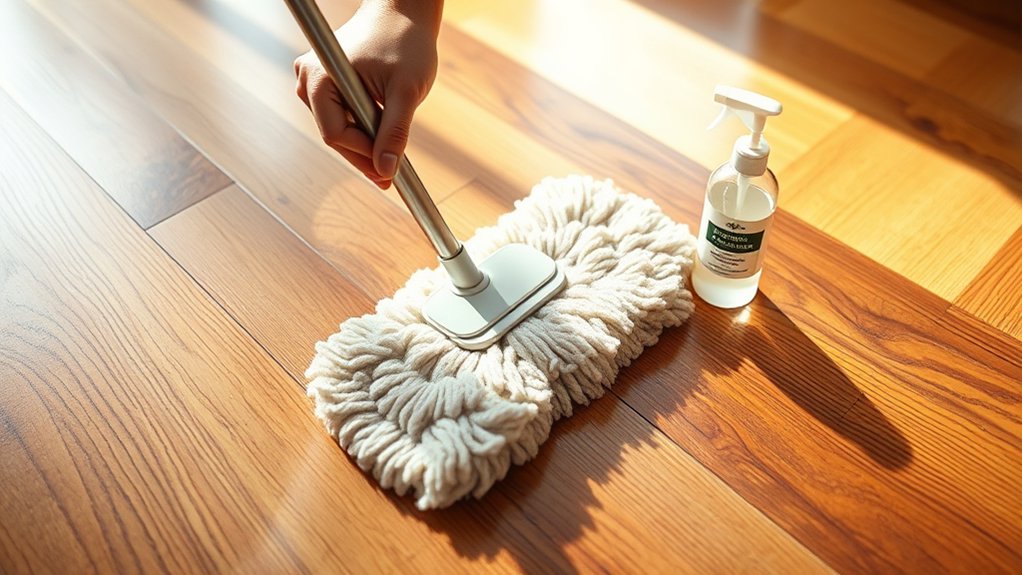
When you choose the right cleaner for your wood floors, you protect their finish and extend their lifespan. Using a pH-neutral cleaner designed for hardwood floors prevents dulling and residue buildup. This helps maintain the wood finish’s natural luster.
Choosing a pH-neutral cleaner preserves your wood floor’s finish and natural shine.
Avoid harsh chemicals like bleach and ammonia because they can cause discoloration and damage protective coatings. Oil-based soaps often leave sticky residues that attract dirt, making your cleaning routine more complicated.
Excessive moisture from unsuitable products can seep into the wood, which risks warping and structural damage.
To keep your floors lasting longer, pick cleaners that work well with your floor’s finish. This careful choice makes sure your hardwood floors stay beautiful and durable, so you protect your investment every time you clean.
Best Tools and Mops for Cleaning Wood Floors
Choosing the right tools plays an essential role in keeping your wood floors clean without causing damage. Microfiber flat mops are excellent for cleaning wood floors because they trap dirt and dust effectively while protecting the surface.
Wet and dry vacuum mops offer a dual function, which is ideal if you have pets or heavy foot traffic. Automated mops with built-in moisture control help maintain the finish by preventing excess water from seeping into the wood.
Avoid traditional cotton string mops since they hold too much water and risk damage. Instead, use a mop designed specifically for hardwood floors, featuring soft rollers or pads to gently clean without wearing down the finish.
Pair these tools with a suitable hardwood cleaner to guarantee safe, effective cleaning of wood floors every time. It really makes a difference when you combine the right mop with the right cleaner!
Recommended Cleaning and Mopping Frequency for Wood Floors?
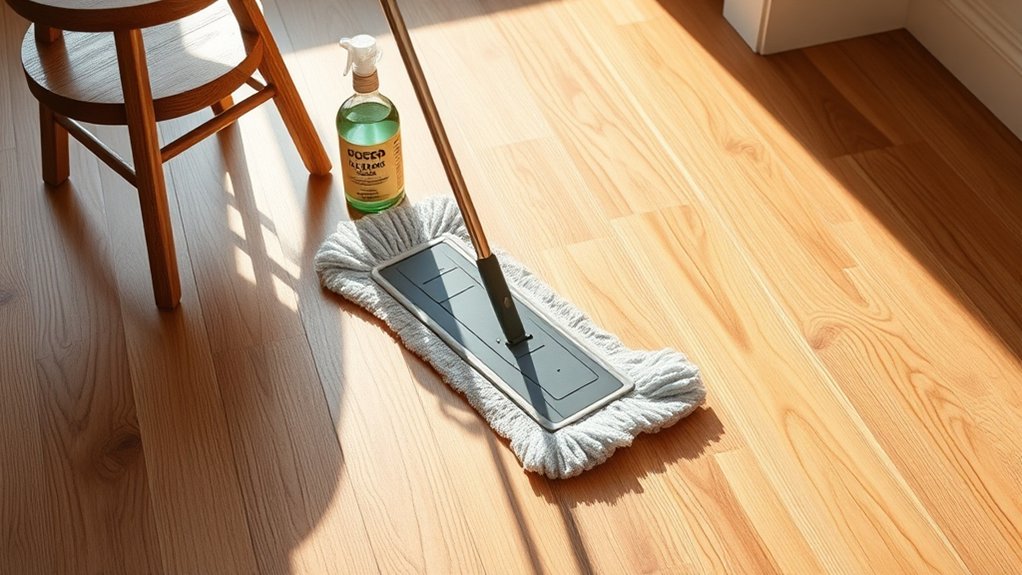
You’ll want to sweep or dust your wood floors every few days to keep dirt and scratches away. It’s a simple step that really helps protect the surface.
Then, vacuum once a week to catch all that fine dust that sweeping might miss.
When it comes to mopping, focus on the high-traffic areas about once a week or every other week. Those spots take the most wear and tear, so they need a bit more attention.
For areas you don’t use as much, you can stretch it out to a month or even longer between moppings.
And don’t forget about a deeper clean every month or two. Use a damp mop along with a hardwood cleaner to keep your floors looking fresh and polished.
It’s a great way to maintain that beautiful shine and extend the life of your wood floors.
Daily Cleaning Routine
Although wood floors add warmth and beauty to any space, maintaining their appearance requires a consistent cleaning routine. Your daily cleaning routine for hardwood floors should focus on regular maintenance to prevent dirt buildup and damage.
Use a dust mop or vacuum weekly with the brush turned off to avoid scratches. Spot clean spills immediately with an absorbent cloth to keep the finish pristine.
Damp mop high-traffic areas weekly using a microfiber mop and a pH-neutral hardwood floor cleaner to maintain shine without damage. Sweep or dust hardwood floors every few days.
Vacuum weekly with brush off. Spot clean spills immediately with absorbent cloth. Damp mop high-traffic zones weekly or bi-weekly. Schedule deep cleaning monthly or as needed.
This routine keeps your floors looking great between deep cleaning sessions. It’s easy to stick with and really makes a difference in maintaining the beauty of your hardwood floors.
Deep Cleaning Schedule
When dirt and grime start building up, deep cleaning your wood floors every 1-2 months helps restore their shine and protects the finish from damage.
Stick to a cleaning schedule that includes regular cleaning like vacuuming with a soft brush attachment once a week and daily dust mopping to remove loose debris.
Mop high-traffic areas weekly to prevent dirt buildup and maintain their appearance, while less-used spaces can be mopped every 1-2 months.
Always spot clean spills immediately to avoid stains and dulling of the hardwood floors.
By combining these steps, you’ll keep your floors looking their best and extend their lifespan.
This balanced approach guarantees your wood floors stay clean, shiny, and well-protected without overdoing any step.
Safe Commercial Cleaners for Wood Floors
Several safe commercial cleaners stand out for maintaining wood floors without damaging their finish. You’ll want to choose pH-neutral cleaners because they provide an effective clean while preserving the natural shine and avoiding residue buildup.
Opt for pH-neutral cleaners to effectively clean wood floors while preserving their natural shine and finish.
Here are some top cleaning solutions to check out:
- Bona hardwood floor cleaner: Removes dirt efficiently and helps maintain natural shine.
- Method Squirt + Mop: Uses plant-based ingredients for an eco-friendly, safe commercial cleaner.
- Zep Hardwood and Laminate Floor Cleaner: Dries quickly with no streaks, perfect for busy areas.
- Murphy Oil Soap: A traditional option that restores shine when diluted properly.
- pH-neutral cleaners: Safely clean sealed hardwood floors without dulling finishes.
Using these safe commercial cleaners will help you restore shine and keep your wood floors looking their best.
It’s really about finding the right product that works for your floors and fits your cleaning style.
Household Ingredients You Can Use to Clean Wood Floors
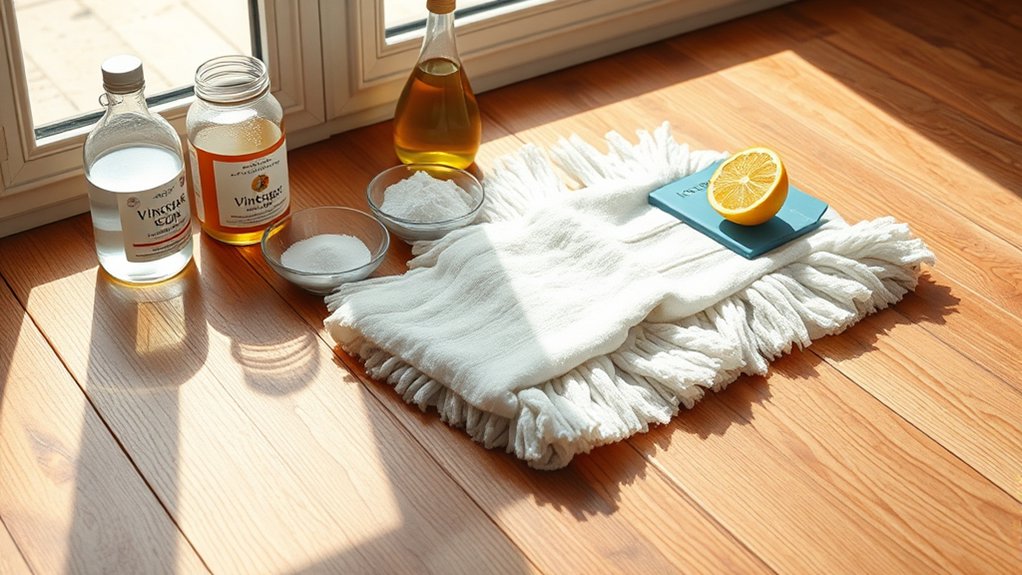
You can easily clean your wood floors using common household ingredients that are both natural and safe. For example, simple solutions like diluted white vinegar or a mix of Dawn dish soap and water work great. They cut through grime without harming your floors.
Plus, if you add a few drops of essential oils, it not only freshens the scent but also boosts the cleaning power.
It’s an easy way to keep your floors looking and smelling great!
Natural Cleaning Ingredients
Three common household ingredients can effectively clean and maintain your wood floors without harsh chemicals. A natural cleaning solution like a vinegar solution (1 cup vinegar to 1 gallon water) gently cleans hardwood floors without sticky residues.
Just make sure it’s well diluted.
Baking soda works as a mild abrasive paste to tackle stains and scuff marks. Mixing olive oil and vinegar creates a polish that helps restore shine while cleaning.
Mild dish soap diluted in warm water offers a gentle hardwood cleaner. Just mop damp, not wet, to avoid damage.
Adding essential oils, such as lemon or tea tree, enhances scent and adds antibacterial benefits.
- Vinegar solution for daily cleaning
- Baking soda paste for tough spots
- Olive oil and vinegar polish
- Mild dish soap for gentle cleaning
- Essential oils for freshness and antibacterial action
Safe Homemade Solutions
Building on natural ingredients, you can create safe homemade solutions that clean wood floors effectively without harsh chemicals. Vinegar diluted with water offers a gentle clean, breaking down dirt while protecting hardwood floors.
Olive oil combined with vinegar not only cleans but adds shine. Just use it sparingly to avoid any residue. Mild dish soap mixed with warm water gently cleans and keeps your home safe for pets and kids.
Baking soda acts as a natural cleaner and mild abrasive for tough spots. Club soda’s carbonation lifts grime without streaks, making it perfect for quick touch-ups.
| Ingredient | Use |
|---|---|
| Vinegar + Water | Gentle clean, breaks down dirt |
| Olive Oil + Vinegar | Cleans and adds shine |
| Mild Dish Soap | Gentle cleaning, safe for pets/children |
| Baking Soda | Mild abrasive for tough stains |
| Club Soda | Lifts dirt, streak-free quick touch-up |
Vinegar and Water: Pros and Cons for Wood Floors
Although vinegar offers an inexpensive and non-toxic way to clean wood floors, you need to dilute it properly to avoid damaging the wood and its finish.
Vinegar’s acidity can dull or discolor hardwood floors if used undiluted or too often. For safe cleaning, mix one cup of white vinegar with a gallon of water.
This diluted solution breaks down dirt and mineral deposits effectively. However, frequent use isn’t recommended because pH-neutral cleaners are safer for maintaining your wood finish over time.
Here are the key pros and cons of using vinegar and water for hardwood floors:
- Affordable and readily available
- Non-toxic and eco-friendly
- Requires proper dilution to prevent damage
- Can dull wood finish if overused
- White vinegar only; other types may stain
Use vinegar carefully to keep your floors safe and clean.
Cleaning Products to Avoid on Wood Floors
When maintaining your wood floors, you should steer clear of certain cleaning products that can cause lasting damage. Avoid bleach and ammonia, as they can discolor your floors and strip away their protective finish.
Steer clear of oil-based soaps because they leave a sticky residue that attracts dirt and gradually damages the wood’s finish.
Abrasive cleaners, including powdered scrubs, can scratch and permanently damage the surface, so don’t use them.
Also, avoid DIY solutions with undiluted vinegar since its acidity can harm the wood finish. If you use vinegar, always dilute it first.
Finally, be cautious with products that promise extra shine. They often leave buildup that dulls rather than enhances.
How to Extend the Life of Your Hardwood Floor Finish
To keep your hardwood floor finish looking fresh and durable, you should regularly remove dust and debris by sweeping or dusting every few days. This routine helps prevent scratches and wear.
To extend the life of your hardwood floors, follow these practical steps:
Use a pH-neutral cleaner specifically made for hardwood floors to avoid damaging the finish.
Try to implement a no-shoes policy to reduce tracked-in dirt and moisture that can harm the finish.
Deep clean your floors every 1-2 months with a damp mop to remove buildup.
Applying wood floor polish every few months helps restore shine and adds protection.
And don’t forget to wipe up spills immediately to prevent moisture from seeping into the wood.
These simple habits go a long way in keeping your floors looking great!
Frequently Asked Questions
Can I Use Steam Mops on Wood Floors Safely?
You can use a steam mop on wood floors, but you need to be cautious. Steam mops are great for efficient cleaning, but there are some drawbacks to keep in mind.
Moisture damage and finish dulling are real concerns, so frequent steam cleaning can be risky.
For keeping your wood floors safe, many people suggest alternatives like damp microfiber mops with pH-neutral cleaning solutions. These options tend to be gentler and reduce the chance of damage.
When comparing cleaning tools, user experiences often show that these alternatives support hardwood floor maintenance better.
Plus, they don’t risk voiding warranties or causing harm to your floors.
How Do I Remove Pet Stains From Wood Floors?
To remove pet stains from wood floors, start with the blotting technique to absorb liquids quickly.
Use a vinegar mixture (one part vinegar to three parts water) as a gentle cleaning solution.
For tough stains, apply baking soda paste, then rinse carefully.
Enzyme cleaners work well for odor elimination and deeper pet stain removal.
Be sure to tailor cleaning frequency to your floor type.
And remember, regularly practicing stain prevention will help keep your wood floors looking beautiful for a long time.
Is It Necessary to Wax Hardwood Floors Regularly?
Think of waxing as giving your hardwood floors a gentle hug, but it’s not always necessary. If your floors have modern finishes, regular waxing can cause buildup and slipperiness. So, follow floor maintenance tips closely.
Use the best wax products sparingly and only when needed, like with older finishes. DIY waxing methods require waxing equipment essentials and cleaning frequency recommendations.
It’s important to avoid common waxing mistakes. Know when to wax or consider alternatives to waxing for hardwood floor protection. This way, you can keep your floors looking great without overdoing it.
Can Sunlight Damage the Finish on Wood Floors?
Yes, sunlight exposure can damage your floor finish. UV rays break down protective coatings, causing color fading and heat damage over time.
To minimize long-term effects, use window treatments that block UV rays and rotate rugs to prevent uneven wear.
Combine these maintenance tips with gentle cleaning methods to preserve your wood floors.
Taking these steps helps keep your floors looking vibrant and extends the life of their finish. It’s all about a little care to keep your floors looking great for years to come.
How Do I Fix Minor Scratches on Wood Flooring?
When it comes to scratch repair on your wood floor, don’t throw the baby out with the bathwater.
Start with touch up kits or DIY solutions like colored markers to match minor scratches. These are simple fixes that can make a big difference.
For deeper marks, use color matching wood filler and sanding techniques for a smooth finish. This takes a bit more effort but really helps blend the scratch with the rest of the floor.
Regular furniture polish and protective coatings help maintain your floor’s beauty. They keep your wood looking fresh and prevent new scratches from showing up easily.
If scratches run deep, consider floor refinishing to restore its original charm. It’s more work but sometimes it’s the best way to bring your floor back to life.
Conclusion
You’d think cleaning wood floors is as simple as grabbing any mop or cleaner, but that’s exactly how they get damaged. Using the right tools and cleaners isn’t just a suggestion. It’s what keeps your floors looking great for years.
Skip harsh chemicals and stick to gentle, tested options. Trust me, your wood floors will thank you by staying beautiful, not worn out. So, choose wisely and clean smart. You’re protecting more than just your floors.