How To Start An Echo Chainsaw – Quick Start Instructions
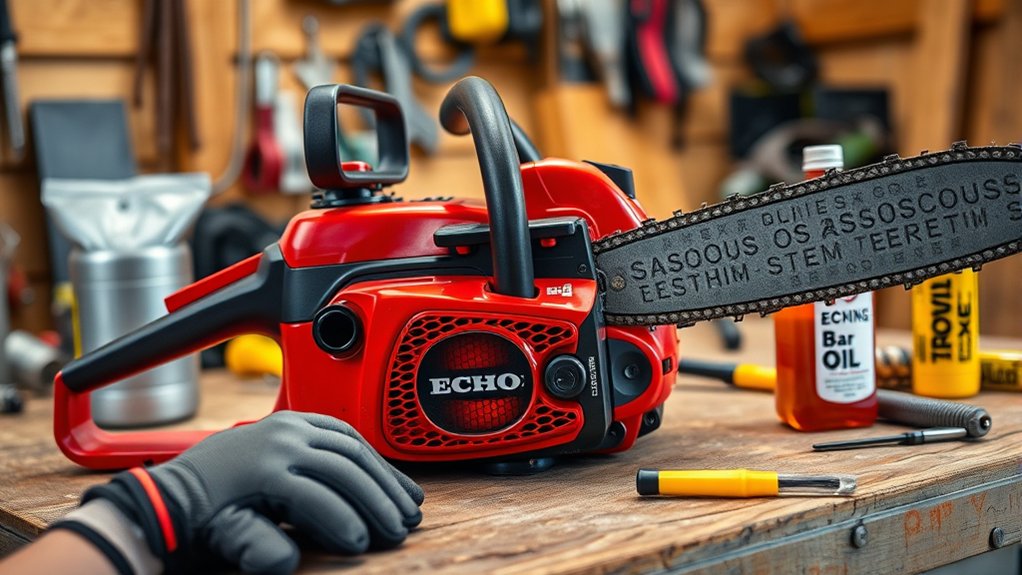
To start your Echo chainsaw, first mix fuel at a 50:1 gasoline-to-oil ratio and verify the bar and chain lubricant reservoir is full. Wear proper safety gear, position the saw on a stable surface, and engage the chain brake.
Set the choke to “on” and confirm the kill switch is in the “on” position. Pull the starter cord firmly until the engine pops, then adjust the choke for smooth running.
Mastering these steps guarantees safe, efficient starting and use. Just take it one step at a time, and you’ll be good to go!
Get Your Echo Chainsaw Ready To Start
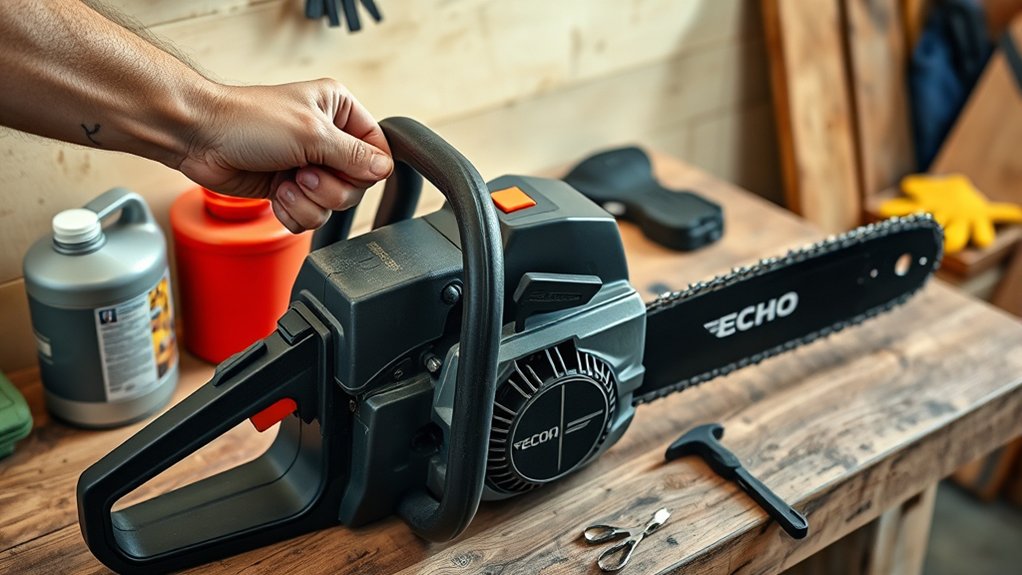
Prepare your Echo chainsaw by mixing fuel at a 50:1 ratio and topping off the bar and chain lubricant. This guarantees your saw is ready to go with proper lubrication and power.
Place the chainsaw on a stable surface and position your foot securely in the designated grip area.
Engage the chain brake to prevent accidental movement during startup. Next, set the choke lever to the “on” position and verify the kill switch is set to “on.”
Confirm all safety measures are in place and the chainsaw remains stable.
Following these steps prepares your Echo chainsaw for a smooth and safe ignition, so you’ll be ready to go when it’s time to start cutting. It’s all about making sure everything is set before you fire it up.
Wear Safety Gear Before Using Your Echo Chainsaw
Before you start up your Echo chainsaw, make sure you’re wearing the right safety gear. It’s really important to protect yourself. For example, put on safety glasses and gloves—they’ll keep your eyes and hands safe from flying debris and the vibrations of the saw.
Also, don’t forget sturdy footwear and fitted clothing. These help you stay steady on your feet and prevent anything from getting caught in the chainsaw while you’re working.
Taking these simple steps can make a big difference in keeping you safe.
Essential Protective Equipment
Although operating your Echo chainsaw demands focus and skill, wearing the right protective equipment is crucial to guarantee your safety.
Always wear safety glasses to shield your eyes from flying debris. Use gloves to improve grip and protect your hands from sharp edges and vibrations.
Hearing protection is essential, as chainsaws produce noise levels that can impair your hearing over time. Choose sturdy, non-slip footwear to maintain stable footing while operating the saw.
When working in wooded areas, a hard hat will protect you from falling branches or debris.
Equipping yourself with these items guarantees you minimize injury risks and maintain control during operation.
Eye And Hand Safety
Eye and hand protection are critical when operating your Echo chainsaw to prevent injuries from flying debris and accidental contact with the chain. Always wear safety glasses to shield your eyes from wood chips and dust.
Use sturdy gloves to maintain a secure grip and protect your hands from cuts or abrasions.
Before starting, engage the chain brake to immobilize the chain and reduce injury risk. Never use drop start methods, as they increase the chance of accidents.
Also, make sure your footwear offers solid footing to maintain balance while working.
By consistently following these safety measures, you’ll minimize injury risks and maintain control during chainsaw operation.
Proper Chainsaw Handling
When you operate your Echo chainsaw, wearing safety glasses and gloves is essential to protect yourself from flying debris and accidental contact with the chain.
For proper chainsaw handling, make sure you have firm footing to maintain balance and control. Always engage the chain brake before starting the saw to prevent unintended chain movement.
Avoid drop starting, as it increases the risk of injury. Stay alert to your surroundings, keeping clear of obstacles and bystanders.
Proper chainsaw handling means following these safety protocols consistently to reduce hazards and improve operational control.
By adhering to these guidelines, you’ll operate your Echo chainsaw efficiently and safely, minimizing the chance of accidents or injuries during use.
Just remember, staying safe is key to getting the job done right.
Mix Fuel And Check Lubricant Levels
To prepare your Echo chainsaw for operation, mix fuel at a 50 to 1 ratio to guarantee maximum engine performance. Use fresh gasoline combined with the recommended two-stroke oil in this precise proportion. Always mix fuel in a clean container to avoid contamination.
Before fueling, verify the bar and chain lubricant reservoir is full. The oil cap is usually located at the front of the chainsaw for easy access. Never open both the fuel and lubricant caps simultaneously to prevent accidental mixing.
Properly topping off the bar and chain oil is essential for reducing friction and preventing premature wear. Maintaining correct fuel and lubricant levels promotes smooth engine operation and extends the life of your chainsaw.
Double-check these before moving on to starting your Echo chainsaw.
Position And Secure Your Echo Chainsaw
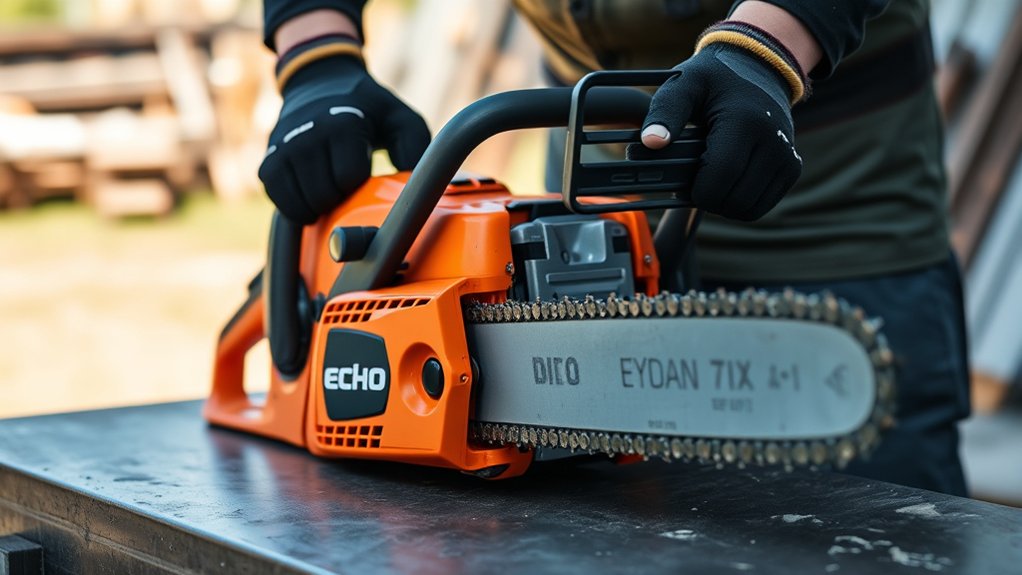
After mixing the fuel and checking lubricant levels, place your Echo chainsaw on a stable, flat surface to keep it from shifting during startup.
Position the saw so the fuel and lubricant caps are easily accessible but avoid opening both at the same time.
Secure the chainsaw by placing your foot firmly in the designated area on the rear handle to maintain control and stability.
Confirm the work area is clear of obstacles or debris that could interfere with your operation.
This stable positioning and secure footing are essential for safe, efficient startup.
Engage The Chain Brake
Before you start your Echo chainsaw, make sure to engage the chain brake. This stops the chain from moving and helps prevent accidents.
Just push the chain brake lever forward until you hear it click — that means the chain is fully locked in place.
It’s a handy safety feature that protects you from kickback and any accidental chain movement when you’re getting ready to start up.
Purpose Of Chain Brake
Although you might be enthusiastic to start cutting, you should engage the chain brake first to keep the chain from rotating unexpectedly. The chain brake is a critical safety feature designed to stop the chain immediately when engaged, preventing accidental contact during handling.
By activating the chain brake before starting your Echo chainsaw, you guarantee the chain remains stationary, minimizing injury risk. This mechanism typically operates by pulling a lever or pressing a button, locking the chain securely in place.
Regularly inspect the chain brake to confirm it functions correctly and halts chain movement as intended. Remember, before you begin cutting, you must disengage the chain brake to allow the chain to rotate safely.
Prioritize the chain brake’s purpose to maintain safe chainsaw operation. It’s a small step that makes a big difference in keeping you safe.
How To Engage
To engage the chain brake on your Echo chainsaw, firmly pull the brake lever forward toward the front handle until you hear it click into place. This action locks the chain, preventing it from moving.
Always engage the chain brake before starting the chainsaw to minimize the risk of injury from accidental chain movement.
The chain brake is a critical safety feature designed to stop the chain promptly during startup or handling. To disengage, pull the lever back toward the rear handle, allowing the chain to move freely once the saw is running.
Make it a habit to regularly test the chain brake’s functionality to make sure it engages and disengages smoothly.
Properly engaging the chain brake is essential for safe operation and preventing unintended chain rotation.
Safety Benefits Explained
Engaging the chain brake on your Echo chainsaw plays an essential role in ensuring your safety during startup and operation. The chain brake prevents accidental chain movement, reducing the risk of injury when you start the engine. It immediately stops the chain if the saw is dropped or experiences kickback, giving you critical protection.
Always engage the chain brake before starting to maintain control and stability. It’s a simple step that makes a big difference in your safety.
Key safety benefits of the chain brake include:
- Prevents unexpected chain rotation during startup
- Stops the chain instantly in case of drop or kickback
- Shields you from debris and potential injuries
Knowing how to operate the chain brake confidently enhances your overall safety and control while using your Echo chainsaw. It’s worth taking the time to get familiar with it before you start working.
Set The Choke And Kill Switch
Set the choke lever before placing your Echo chainsaw on the ground to guarantee engine readiness. To set the choke, move the lever to the full choke position, which enriches the fuel mixture for cold starts.
Next, confirm the kill switch is in the “on” position; this enables the engine to start when you pull the starter cord. Failing to set the kill switch correctly will prevent the engine from igniting.
Positioning the chainsaw on a stable surface after setting the choke guarantees safer handling during startup.
Pull The Starter Cord Until Engine Pops
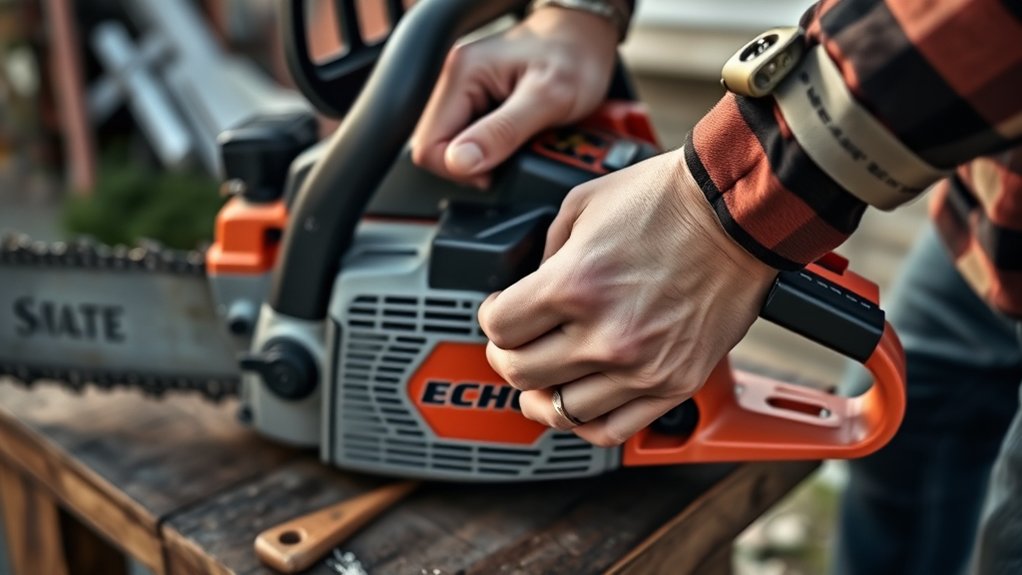
Grab the starter cord firmly and pull it with a smooth, steady motion until you hear the engine pop. This sound means the fuel mixture is igniting and the engine is ready to start.
Make sure you pull the starter cord without jerking or letting it snap back because that could damage the mechanism. Keep control throughout the pull to stay safe and make sure it works properly.
Pull the starter cord smoothly and steadily to avoid damage and maintain safe, proper operation.
Position the chainsaw securely on the ground with one foot stabilizing it. Pull the starter cord fully to engage the engine’s internal components.
Stop pulling as soon as the engine pops to avoid flooding. Pull the starter cord carefully to get the engine’s combustion cycle going and get ready for the next step.
Adjust The Choke, Restart, And Start Cutting
Once the engine pops, adjust the choke lever to help the engine draw in fuel more effectively and improve the chances of a smooth start. If the engine stalls, push in the choke to prevent flooding and enable a quick restart.
Always verify the kill switch is in the ‘on’ position before attempting to restart.
After the engine stabilizes, release the chain brake to prepare for cutting. Before you begin, confirm the saw is stable and your surroundings are clear to maintain safety.
By properly adjusting the choke during this process, you optimize engine performance and reduce starting issues.
This sequence guarantees your Echo chainsaw operates efficiently, allowing you to start cutting promptly and safely.
Frequently Asked Questions
How Often Should I Sharpen My Echo Chainsaw Chain?
You should sharpen your Echo chainsaw chain every 3 to 5 hours of cutting to keep it performing at its best and to make the chain last longer.
Regular sharpening helps maintain the cutting angle at 30 degrees, which means your cuts stay efficient and you reduce the risk of kickback.
Be sure to check the chain often for dullness. A dull chain slows down your cutting and makes you work harder than you need to.
Keeping up with this maintenance not only makes your chain last longer but also improves how accurately you cut and keeps things safer while you’re working.
What Type of Oil Is Best for Chain Lubrication?
You might think any oil will do, but that’s not the case. For chain lubrication, use high-quality bar and chain oil specifically designed for chainsaws. Oil types matter.
Synthetic oils outperform conventional ones, especially in extreme temperatures, by reducing friction and wear. Avoid motor oil because it causes build-up and damages components.
Always check your Echo chainsaw’s manual for recommended oil to guarantee peak performance and longevity.
It really makes a difference in how well your chainsaw runs and how long it lasts.
Can I Use Regular Gasoline for My Echo Chainsaw?
You shouldn’t use regular gasoline alone in your Echo chainsaw. Fuel quality is essential.
Echo requires a precise 50:1 gasoline-to-oil mix for peak performance and to avoid engine damage.
Using pure gasoline without oil or ethanol-blended fuels can harm your saw’s fuel system and reduce efficiency.
Always use fresh, unleaded gasoline mixed correctly with two-stroke oil.
Follow the manufacturer’s guidelines to guarantee reliable operation and longevity.
How Do I Store the Chainsaw Safely During Winter?
Last winter, Jake avoided costly repairs by following proper winter preparation for his Echo chainsaw.
You should empty the fuel tank and run the saw dry to prevent fuel degradation.
Clean all debris, lubricate the bar and chain, and add oil to the spark plug hole to protect the engine.
Store your chainsaw in a cool, dry place inside a protective case to shield it from moisture and rust during winter.
It really makes a difference when you take these simple steps.
What Maintenance Is Required After Each Use?
After each use, you should wear safety gear before cleaning your Echo chainsaw.
Start by removing debris and sawdust from the body and air filter to keep it running smoothly.
Next, check and refill the bar and chain lubricant to prevent wear.
Take a close look at the chain for dullness or damage. If needed, sharpen or replace it to keep things cutting efficiently.
Finally, examine the spark plug for buildup.
Replace it if necessary to guarantee reliable starts next time.
Taking these simple steps helps your chainsaw stay in great shape and ready for the next job.
Conclusion
Starting your Echo chainsaw is like igniting a powerful engine ready to carve through wood with precision. Make sure you’re wearing your safety gear and have mixed the fuel correctly before you begin. Position the saw securely to keep everything stable.
Next, follow the choke and starter steps carefully to guarantee smooth ignition every time. Remember, each step builds on the last, like links in a chain, so don’t skip any. Take your time with each part.
With a bit of practice, your chainsaw will roar to life quickly. This will make your cutting tasks both efficient and safe. You’ll get the hang of it before you know it!