What Causes A Chainsaw To Kick Back – Prevention And Safety Tips
A chainsaw kicks back mainly when the guide bar’s tip contacts an object, causing sudden backward motion. You can reduce risks by keeping the chain sharp, properly tensioned, and running at full power.
Use correct cutting techniques to avoid pinching or twisting the bar tip, and make sure safety features like chain brakes are functional. Always wear protective gear to minimize injury.
Understanding these causes and safety measures helps you handle your chainsaw with greater confidence and control. It’s all about staying safe while getting the job done.
Common Causes of Chainsaw Kickback
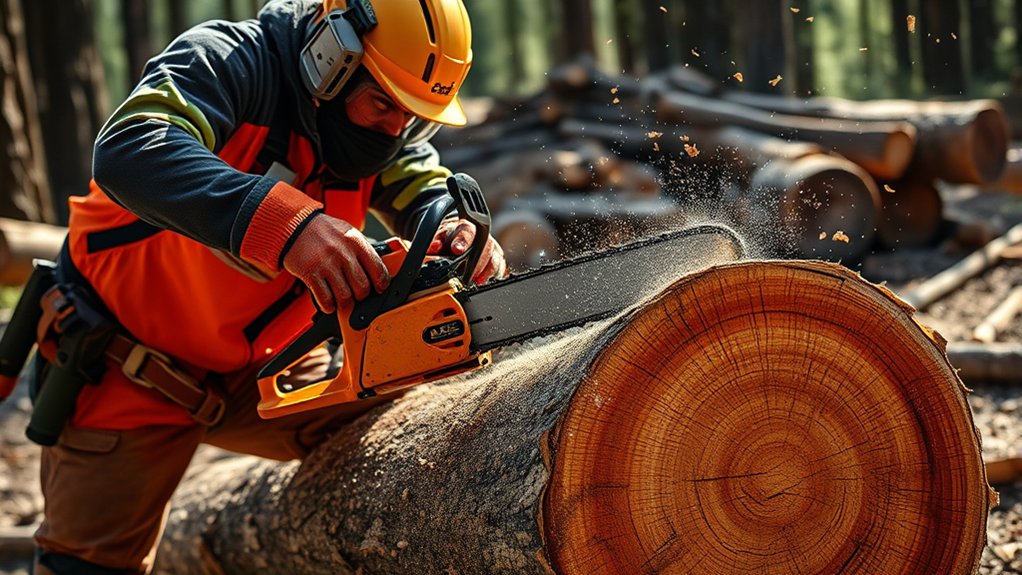
When the tip of the guide bar contacts an object, chainsaw kickback can happen suddenly, thrusting the saw upward toward you. This dangerous reaction often occurs when the guide bar’s nose touches logs, branches, or the ground during cutting. You can prevent kickback by avoiding contact with the guide bar tip and maintaining proper cutting angles.
Using dull chains increases resistance, which raises the risk of kickback, so keep your chain sharp. Running the saw at less than full power may cause the chain to snag or stall, and that can also trigger kickback. It’s best to operate the saw at full power for smooth cutting.
Incorporate safety features like chain brakes and kickback guards to help enhance control.
Always use correct cutting techniques to minimize the chance of sudden guide bar movements. These steps will go a long way in keeping you safe while working with your chainsaw.
How the Guide Bar’s Tip Zone Triggers Kickback
Although you mightn’t always realize it, the tip zone of your chainsaw’s guide bar is a critical area where kickback is most likely to occur. The kickback zone, located at the guide bar tip, can trigger sudden rotational kickback if it contacts an object at an angle. This rapid upward motion can catch you off guard and cause injury.
To prevent kickback, maintain proper technique by avoiding contact with the guide bar tip during cutting. Use kickback-reducing devices and always wear personal protective equipment for added safety.
Understanding the kickback zone’s position and applying correct cutting technique are essential to minimize risks. Staying alert and using both technical knowledge and safety gear helps you operate your chainsaw safely and effectively.
It’s all about knowing where that danger spot is and treating it with caution. Keep these tips in mind, and you’ll be cutting with more confidence and less worry.
Why a Dull or Loose Chain Increases Kickback Risk
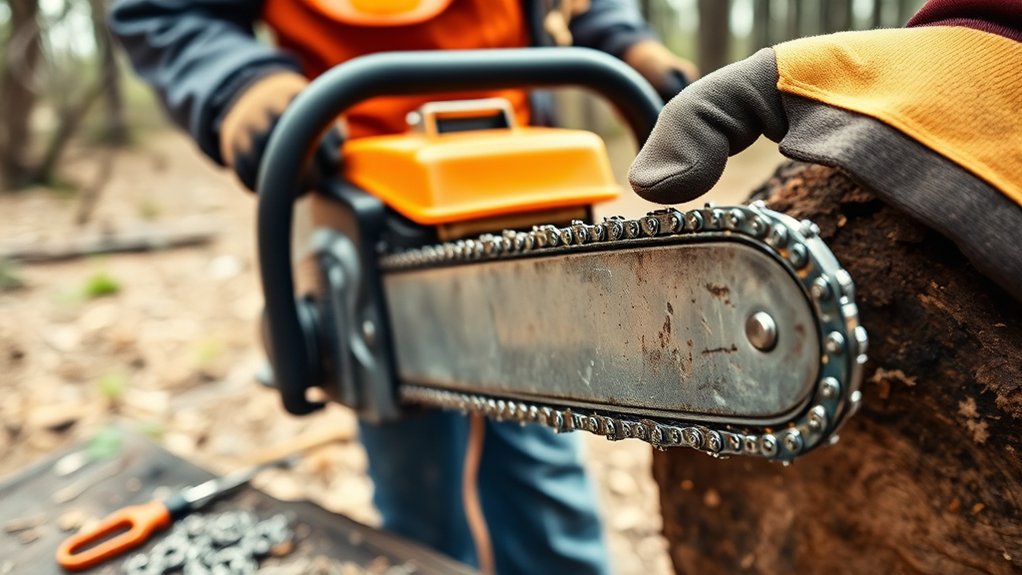
Avoiding contact with the guide bar’s tip is key to preventing kickback, but the condition of your chainsaw’s chain plays an equally important role. A dull chain and loose chains greatly increase kickback risk by disrupting cutting performance and causing snagging.
You must maintain a sharp chain and proper chain tension to guarantee safe operation.
Key risks include:
- Dull chains require more force, raising snagging chances
- Loose chains cause erratic movement and binding
- Poor chain tension reduces cutting efficiency
- Dull or damaged chains increase guide bar tip contact risk
- Snagging triggers unexpected guide bar jerks
Consistently checking and adjusting your chain tension and sharpening the chain minimizes kickback hazards and enhances control during cutting.
Regularly tuning your chain tension and sharpening keeps kickback risks low and boosts cutting control.
It’s a simple step that makes a big difference when you’re working with a chainsaw.
Cutting Techniques That Cause Kickback
You increase your risk of kickback when the bar tip contacts wood at improper angles or when you pinch the chain in tight cuts.
So, it’s really important to avoid cutting with the guide bar nose.
Always keep your technique in check to prevent sudden chain jerks.
Incorrect Bar Tip Contact
When the top front tip of your chainsaw bar strikes an object, it can cause a sudden and dangerous kickback. This throws the saw upward and out of control. This incorrect bar tip contact usually happens at the guide bar nose, where momentum reverses abruptly.
To prevent kickback, avoid contact with the bar tip by steering clear of cutting with the guide bar nose. Keep proper cutting angles away from the kickback zone. Use the lower section of the bar for most cuts.
Also, control your saw speed and feed pressure to avoid snagging. Stay alert to the saw’s position relative to obstacles. This safety tip helps improve chainsaw handling and reduces the risk of kickback by minimizing momentum transfer to you.
Understanding these mechanics is really important for safe operation and injury prevention.
Improper Cutting Angles
Although cutting at an angle may seem efficient, using improper techniques, especially near the tip of the guide bar, greatly increases your risk of kickback. When you engage the kickback zone at improper cutting angles, the chain can snag, causing sudden backward motion of the saw toward you.
Cutting with the tip of the guide bar or tilting it downward disrupts the cutting path and can pinch the chain, triggering dangerous kickback. To mitigate this, maintain firm footing and employ a four-point control grip, ensuring both hands securely hold the saw.
Also, always use kickback-reducing devices to minimize risks. Staying alert to your cutting position and technique is critical for safety when working with angled cuts near the bar tip.
It really makes a difference to be careful and focused when you’re working close to that area.
Pinching Wood Hazards
Because pinching happens when the wood closes in on the chainsaw blade, it creates a dangerous backward force that can cause kickback. You need to be especially careful during cutting to avoid this hazard.
Pinching often occurs when you use the bar tip or cut at awkward angles, which increases the risk of kickback.
Follow these safety tips to minimize pinching hazards:
- Always make a clear cut without cutting multiple wood pieces at the same time.
- Avoid using the bar tip near hard or irregular surfaces.
- Maintain proper chain tension and keep the chain sharp.
Also, be aware of hidden obstacles in your cutting environment.
Use controlled, steady cutting motions to prevent the wood from closing in.
Keeping these points in mind will greatly reduce the chance of pinching-related kickback during chainsaw operation. It’s all about staying alert and cutting smart.
Safety Features That Reduce Kickback
You should go for chainsaws that come with kickback-reducing features, like chain brakes and low-kickback chains, to keep things safer.
It’s a good idea to regularly check and maintain the chain brake to make sure it kicks in properly if the saw jerks unexpectedly.
Taking care of these safety features is really important because it helps prevent serious injuries from kickback.
Kickback-Reducing Devices
Several essential kickback-reducing devices work together to enhance chainsaw safety by minimizing the risk of sudden chain movement. These devices are vital for prevention and help make sure you maintain control during cutting operations.
Key components include the chain brake, which instantly stops chain rotation during kickback. Then, there are low-kickback chains designed to reduce kickback forces. You also have the safety tip on the guide bar that limits contact with the hazardous kickback zone.
Don’t forget about the chain sharpened to specifications, which guarantees smooth cutting and less likelihood of kickback.
Plus, regular maintenance like cleaning and testing these devices ensures they work at their best.
Following standards like CSA Z62.3-11 and ANSI B175.1-2021 means these features meet strict safety benchmarks. Using and taking care of these devices properly is really important for effective chainsaw kickback prevention.
Chain Brake Maintenance
The chain brake plays a pivotal role among kickback-reducing devices by stopping the chain instantly during a kickback event, considerably lowering injury risk.
To ascertain reliable chain brake functions, you must regularly inspect the brake for wear or damage. Chain brake maintenance involves cleaning the brake components from oil, dirt, and sawdust, which can impair responsiveness.
Always verify that your chain brake meets recognized safety standards like CSA Z62.3-11 (R2021) or ANSI B175.1-2021 to guarantee maximum protection.
Never operate your chainsaw without a fully functional chain brake, as this safety feature critically reduces injury risk during kickback.
Familiarizing yourself with how the chain brake operates will help you respond effectively if it’s activated. This knowledge enhances overall chainsaw safety and helps keep you protected on the job.
Maintaining Your Chainsaw to Prevent Kickback
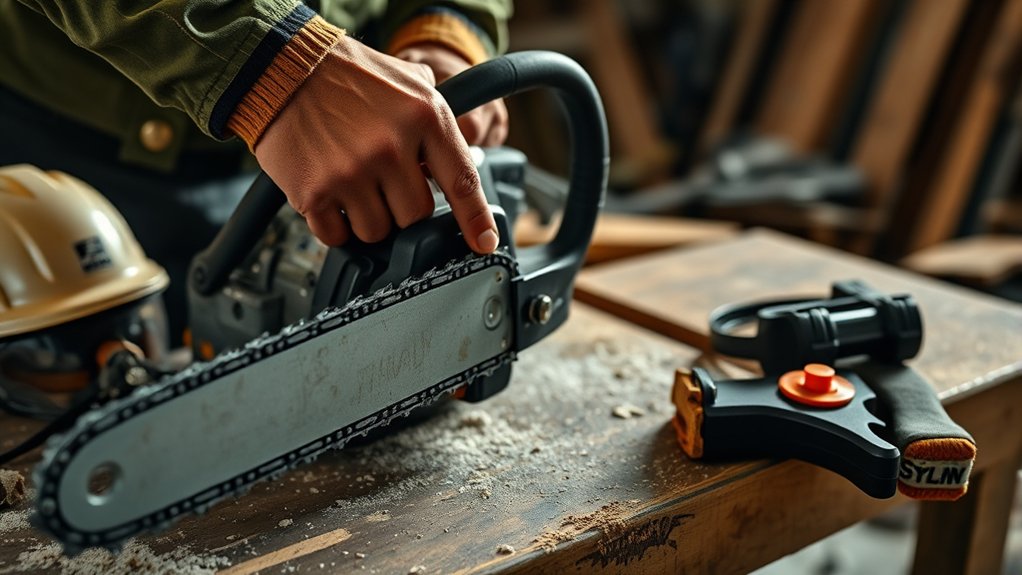
Regular inspections of your chainsaw’s components play a critical role in preventing kickback. Proper maintenance guarantees all safety features and kickback-reducing devices function as designed, maintaining peak performance.
Focus on these key areas:
Verify the chain brake stops the chain quickly and complies with CSA Z62.3-11(R2021) standards.
Keep the guide bar and chain clean, free from oil, dirt, and sawdust buildup.
Adjust chain tension precisely per manufacturer guidelines to avoid snagging.
Replace dull or damaged chains promptly to maintain a sharp chain for smooth cutting.
Check all safety features, including protective covers, for integrity and proper function.
Regular, precise maintenance reduces kickback risk and extends your chainsaw’s lifespan while guaranteeing safe operation.
It’s well worth the effort to keep your tool in top shape.
Handling Habits to Reduce Kickback Risk
Maintaining your chainsaw’s components sets the foundation, but how you handle the tool directly impacts kickback risk. Always maintain a firm grip with both hands, one on the handlebar and the other on the trigger, to maximize control.
Keep the tip of the guide bar clear from objects because contact in the kickback zone can cause sudden, violent reactions.
Position your body safely by standing to the side of the cutting path with a stable stance. Never stand directly behind the cutting path. Avoid cutting above shoulder height and try not to operate left-handed to reduce injury risk.
Familiarize yourself constantly with the guide bar’s tip location during use. Incorporate kickback-reducing devices whenever possible.
These handling habits are essential safety tips to minimize kickback and help you maintain control of your chainsaw during operation.
Essential Protective Gear for Chainsaw Safety
Personal protective equipment (PPE) plays a critical role in preventing injuries while operating a chainsaw. To enhance your safety and reduce the risk of kickback injuries, always use the proper gear. Key items include:
Personal protective equipment is essential for chainsaw safety, reducing injury risks and protecting against kickbacks.
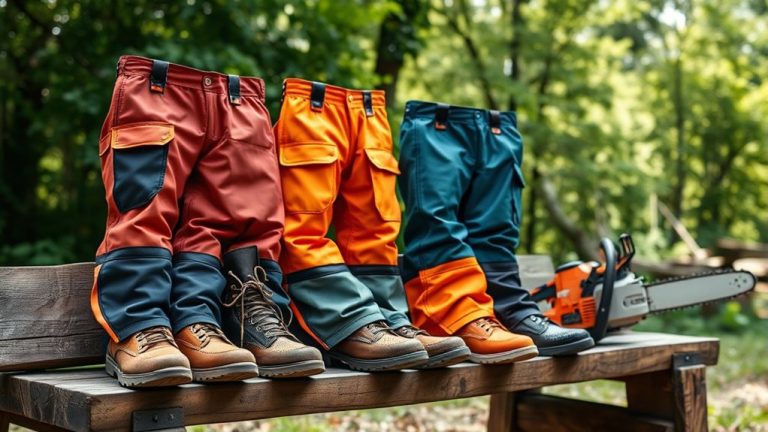
- Chainsaw chaps made from cut-resistant material to protect your legs from blade contact.
- Cut-resistant gloves that improve grip and shield your hands from sharp edges and sudden kickback.
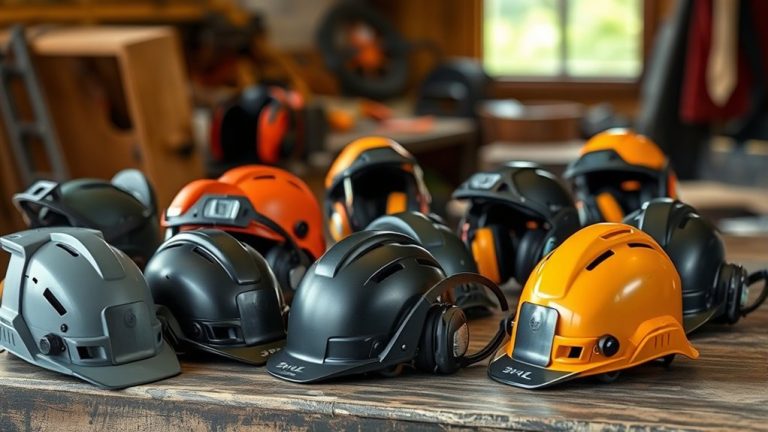
- A hard hat equipped with a face shield to guard against falling debris and facial injuries.
Don’t forget about hearing protection, such as earmuffs or earplugs, to prevent noise-induced hearing loss.
And make sure you wear steel-toed boots to protect your feet from dropped tools or accidental contact with the chainsaw.
Using kickback-reducing devices combined with this PPE is an essential safety tip to minimize injury risk during operation.
Frequently Asked Questions
Can Weather Conditions Affect Chainsaw Kickback Risk?
Yes, weather impact can increase chainsaw kickback risk by affecting wood type moisture and density. This can alter chain tension and make controlling the cutting angle trickier.
You must adjust bar length and keep your saw properly maintained to compensate for these changes. Operator experience is key here because it helps you anticipate what might happen.
Always wear appropriate safety gear.
Consistent maintenance practices guarantee reliable performance despite weather variations. This way, you can prevent dangerous kickback situations during cutting tasks.
Does Chainsaw Brand Influence Kickback Frequency?
You’ll find that chainsaw brand greatly influences kickback frequency. Studies show up to 40% fewer incidents with top-tier brands. Their chainsaw design often includes optimized bar length and low-kickback chain types, which enhance safety features.
By choosing reputable brands, you get better ergonomics and an improved user experience. This makes it easier to maintain control while cutting. Proper maintenance practices also matter, of course.
But a strong brand reputation usually means safer, more reliable equipment that helps prevent dangerous kickbacks.
How Does Chain Lubrication Impact Kickback?
Proper chain lubrication directly impacts kickback by reducing bar wear and maintaining ideal chain tension.
Using the correct oil viscosity guarantees smooth chain movement, minimizing friction in the kickback zone.
Inadequate lubrication increases heat, dulls the chain, and raises kickback risk, especially with tougher wood types or improper cutting angles.
You should adjust lubrication frequency based on how often you use the chainsaw.
Always prioritize chain maintenance to keep your chainsaw safe and effective.
Are Electric Chainsaws Less Prone to Kickback?
You might think electric chainsaws are kickback-proof, but they’re not entirely immune. Their advanced blade design and safety features reduce kickback mechanisms considerably.
Thanks to better weight distribution and electric chainsaw advantages, you’ll notice improved user experience and control.
However, consistent maintenance practices and thorough operator training remain essential.
Master these, and you’ll minimize risks while maximizing safety every time you operate your electric chainsaw.
What Role Does Operator Fatigue Play in Kickback Incidents?
Operator fatigue directly reduces your concentration levels, grip strength, and overall awareness, which increases the risk of kickback.
When you’re tired, it’s easier to lose your proper stance and make poor cutting decisions.
Taking regular breaks and sticking to safety protocols is key to managing fatigue effectively.
Consistent training programs help reinforce these good habits, and keeping your tools well-maintained supports smoother operation.
By prioritizing operator awareness and controlling fatigue, you can maintain better control and prevent dangerous kickback incidents.
It’s all about staying sharp and safe on the job.
Conclusion
To curb chainsaw kickback, consistently check chain sharpness and secure tension. Carefully control cutting angles, and cautiously avoid the guide bar’s tip zone. Cultivate confident, controlled handling habits while consistently using essential protective gear.
Regularly review safety features and routinely maintain your saw to reduce risks. By combining careful care, correct cutting, and consistent caution, you’ll greatly strengthen safety and successfully sidestep sudden, dangerous kickbacks during every cut.