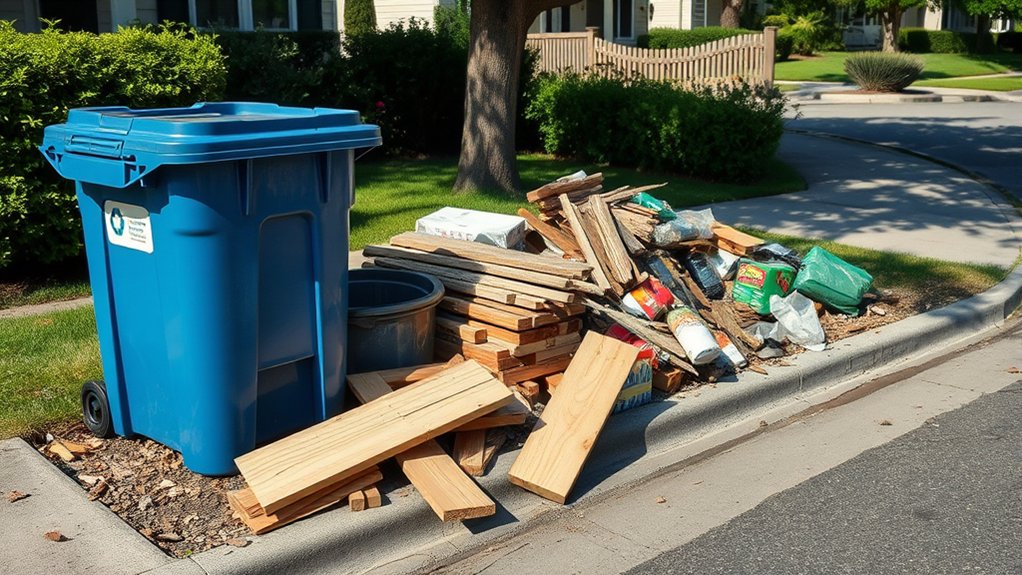
Can You Put Wood In Recycling Bin: Rules And Eco Friendly Options
You can’t put wood in your curbside recycling bin because it contaminates the stream with nails, varnish, and chemicals. Instead, take untreated wood like clean pallets to local drop-off centers where it’s properly sorted and turned into mulch or wood chips.
Treated, painted, or dirty wood requires special handling and should be disposed of securely. Following these guidelines helps protect recycling efforts and the environment.
Keep exploring to discover preparation tips and eco-friendly disposal options.
Key Takeaways
- Wood should not be placed in curbside recycling bins due to contamination risks from nails, varnish, and chemical treatments.
- Untreated, clean wood can be recycled but must be taken to dedicated drop-off centers or wood recycling facilities.
- Painted, stained, or treated wood requires special handling and often must be disposed of in heavy-duty contractor bags.
- Proper preparation includes removing metal fasteners, paint, and contaminants to ensure wood is accepted for recycling.
- Recycling clean wood diverts waste from landfills, reduces tree harvesting, and supports sustainable, circular economy practices.
Why Wood Recycling Doesn’t Belong in Curbside Bins
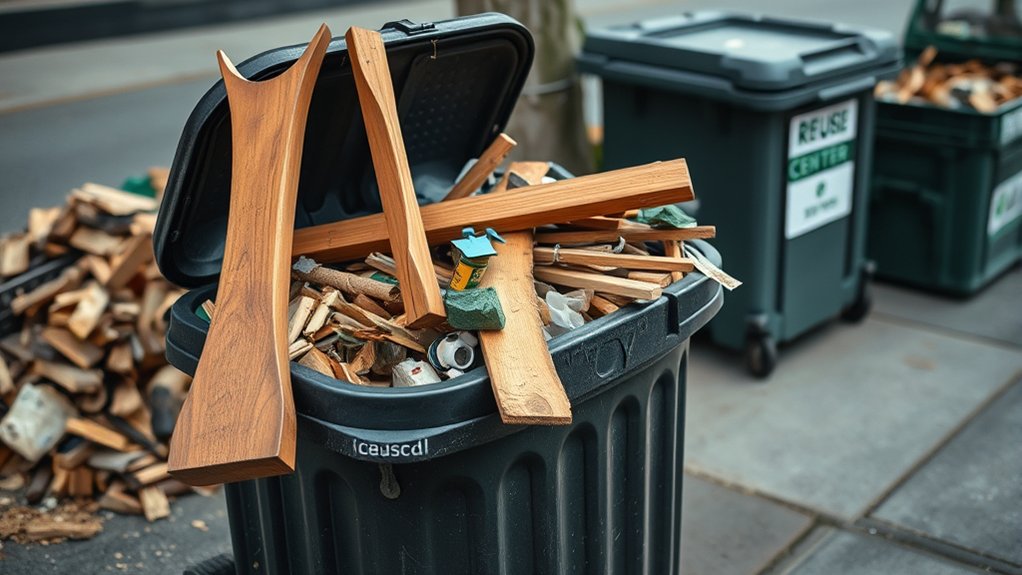
Although recycling curbside bins are convenient, they’re not designed to handle wood waste.
Wood doesn’t belong in curbside recycling bins because it can contaminate the entire recycling stream, leading to loads being diverted to landfills. Nails, varnish, and chemical treatments on wood create complications that many materials recovery facilities can’t efficiently process.
Wood in curbside bins contaminates recycling and disrupts processing due to nails, varnish, and chemicals.
Instead, wood requires separate handling at a dedicated wood recycling facility, where untreated wood can be turned into mulch or wood chips.
Since curbside programs focus on standard recyclables, you’ll often find that local recycling services offer specific drop-off centers or collection days for wood waste.
To recycle wood responsibly, check your area’s options instead of placing it in curbside recycling bins.
This way, you ensure it’s properly processed and kept out of landfills.
Types of Wood You Can and Can’t Recycle
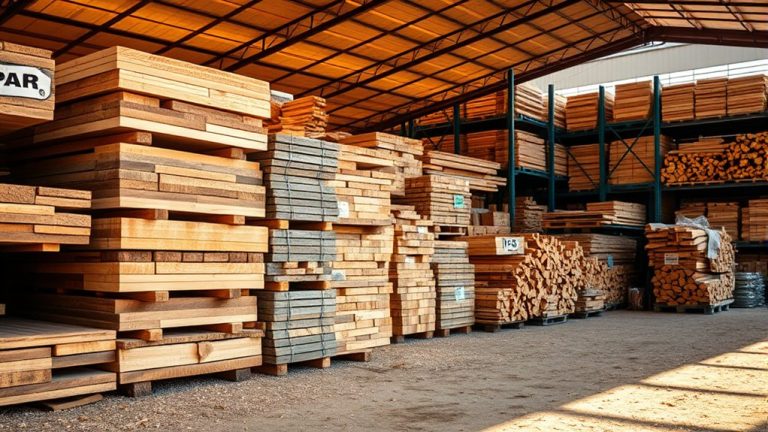
You can recycle several types of wood, but it’s important to know which ones qualify and which don’t. Untreated wood, like clean pallets and construction lumber, is recyclable and often repurposed or turned into mulch.
However, treated wood such as pressure-treated lumber needs special handling and shouldn’t go into standard recycling bins because of contaminants. Painted, varnished, or stained wood also isn’t recyclable and must be disposed of properly to avoid polluting recycling streams.
Also, “dirty” wood waste, including rotted or insect-infested pieces, can’t be reused or recycled and belongs in heavy-duty contractor bags. Knowing these types of wood will help you manage wood waste responsibly and keep recycling efforts effective and eco-friendly.
Always check local guidelines for specific preparation and acceptance rules.
How Local Programs Recycle Wood
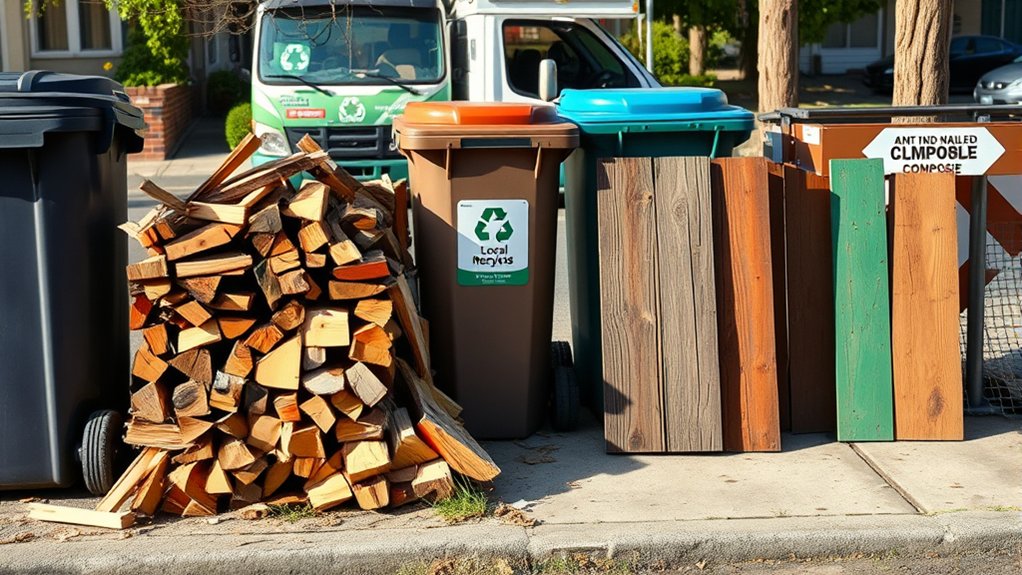
You won’t find wood accepted in curbside recycling bins because contamination risks can really mess up the process.
So, what do local programs usually do? They ask you to bring untreated wood to drop-off centers instead.
Once there, the wood gets sorted and recycled into mulch or wood chips.
But before you head out, it’s a good idea to check your community’s guidelines. Some places only accept certain types of wood, like clean pallets or construction lumber.
Local Wood Recycling
- Untreated wood is accepted, but hazardous materials aren’t allowed.
- Wood gets graded from A to C for recycling. If it’s Grade D, it needs special disposal.
- Accepted wood is then turned into mulch or wood chips.
- Facilities offer guidelines to help you prepare and sort clean wood properly.
Just follow their tips, and you’re good to go!
Facility Acceptance Guidelines
Most local recycling programs won’t accept wood in curbside bins because contamination can disrupt processing. If you want to recycle wood, you’ll need to take untreated wood to designated drop-off centers where recycling facilities can properly process wood.
These facilities classify wood into grades based on contamination levels. Grades A to C are typically accepted, while highly contaminated wood is rejected.
Before you drop off your wood, make sure it’s clean and free from paint, varnish, nails, or other contaminants.
Properly sorted wood can be recycled efficiently and is often converted into mulch or wood chips. This supports waste reduction and environmental sustainability.
Disposal Options for Non-Recyclable Wood
You should locate drop-off stations that accept non-recyclable wood to guarantee proper disposal and avoid contaminating recycling streams.
When handling treated wood, use heavy-duty contractor bags to contain it securely before transport.
It’s also a good idea to check local regulations—this will help you find the right facilities and avoid any unnecessary fees.
Drop-Off Station Locations
Anyone looking to dispose of old or non-recyclable wood can use designated Drop-Off Stations (DOS) like the one at 2950 E. Ellsworth Road.
These stations offer a practical alternative when wood in recycling bins isn’t accepted. Before you go, check fees and guidelines to guarantee compliance.
The Recovery Yard at 7891 Jackson Road is another option. It accepts clean wood and untreated pallets for recycling wood into mulch.
Here’s what you should know:
- Drop-Off Stations accept non-recyclable and clean wood.
- Fees apply per cubic yard, so verify costs ahead.
- The Recovery Yard recycles untreated wood into mulch.
- Follow preparation rules and accepted wood types strictly.
Using these locations helps reduce landfill waste and supports eco-friendly disposal.
It’s a simple way to do your part for the environment!
Handling Treated Wood
While Drop-Off Stations and Recovery Yards handle many types of wood, treated wood needs special attention because of its chemical content. Treated wood, like pressure-treated lumber, often contains chemicals that make it non-recyclable. So, you shouldn’t put it in your regular recycling program.
Instead, check local regulations for special collection days or municipal waste sites that accept treated wood. Disposal fees might apply, but these fees ensure the safe handling of hazardous materials.
Also, keep contaminated wood, such as painted, varnished, or stained pieces, separate to avoid polluting recyclable wood.
Using heavy-duty contractor bags helps contain treated wood during transport and disposal. This protects you and the environment from harmful substances.
Proper disposal of treated and contaminated wood is essential to keep recycling processes safe and protect environmental health.
Creative Alternatives to Recycling or Reusing Wood
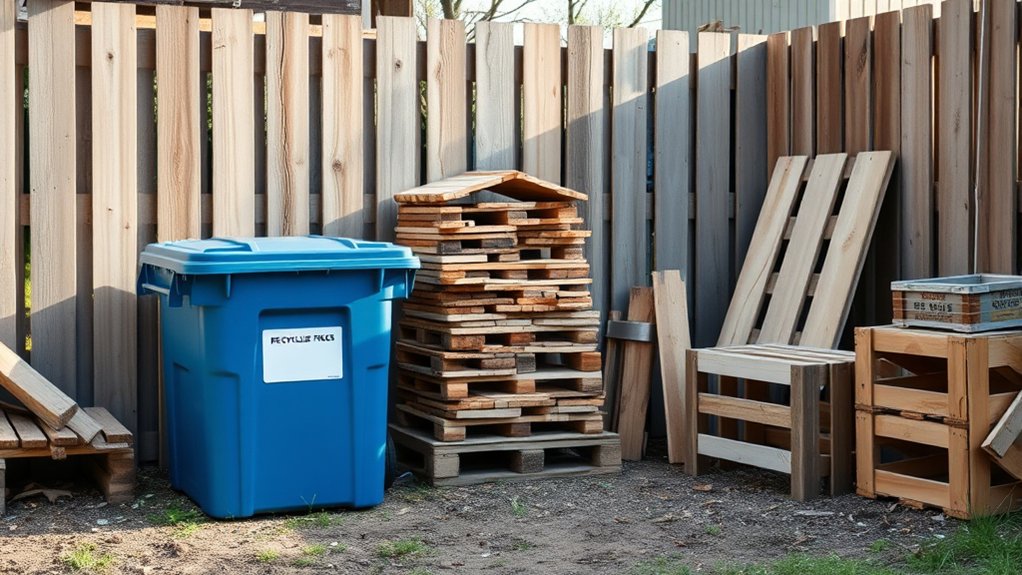
Although traditional recycling and reusing methods are effective, exploring creative alternatives can add value and functionality to old wood. Instead of just following the typical wood recycling process, you can transform wooden pallets and scraps into useful, eco-friendly items that reduce waste and enhance your home.
For example, you could convert wooden pallets into garden beds or outdoor furniture, giving new life to discarded shipping materials. Or, craft furniture or home décor from old wood, creating unique, sustainable pieces that showcase your style.
Using wood scraps for DIY projects like picture frames, small boxes, or toys is another fun way to foster creativity.
You can also repurpose clean, untreated wood as firewood or mulch, which enriches your garden while reducing landfill waste. These alternatives make wood recycling more practical and environmentally friendly.
Plus, they add a personal touch to your space!
Preparing Wood for Recycling or Drop-Off
Getting your wood ready for recycling or drop-off starts with making sure it’s clean and free from contaminants like paint, varnish, nails, or other non-wood materials.
Untreated wood must be free of these to guarantee it goes through the recycling process properly. You should remove metal fasteners and plastic components before drop-off to prevent contamination.
Ensure untreated wood is free of metal fasteners and plastics for proper recycling and contamination prevention.
Keep in mind that wood is classified into grades. Grades A to C can be recycled after cleaning, while Grade D is often hazardous waste.
Always check your local facility’s guidelines to confirm which types of wood they accept and their preparation requirements.
Properly preparing and disposing of wood at designated centers helps support sustainable recycling efforts and diverts waste from landfills.
This benefits your community and the environment.
What Happens to Wood After You Drop It Off
Once you drop off your wood at a recycling facility, workers sort it based on contamination levels to figure out what happens next. Wood is classified from grade A (clean) to C (contaminated).
Here’s what happens next: clean wood is shredded into smaller pieces. Then, these pieces get turned into mulch, wood chips, or new wood products like MDF.
Contaminated wood, like painted or treated wood, is treated as hazardous. This hazardous wood goes through special processing or safe disposal to keep the environment safe.
This sorting process makes sure wood products are reused efficiently or handled safely. When you know how it works, you can see how recycling centers manage wood waste responsibly.
They keep contaminated wood separate and make the most of clean materials.
Environmental Benefits of Wood Recycling
Understanding how wood is sorted and processed at recycling facilities reveals the broader impact of wood recycling on the environment. When you recycle wood pieces, you help divert over 22,000 tons of wood waste from landfills yearly. This reduces the burden on natural resources and prevents the mix of wood with plastic waste.
This process preserves forests, curbing deforestation, which cuts down roughly 42 million trees daily. It also helps maintain carbon sinks that combat climate change.
Recycling wood supports a circular economy by turning waste into products like MDF, lowering the demand for virgin materials. Using recycled wood for furniture reduces your ecological footprint. It offers a cost-effective, eco-friendly alternative to new wood production while keeping plastic contamination out of the recycling stream.
Frequently Asked Questions
Can Wood Recycling Reduce Termite Infestations in Neighborhoods?
Yes, recycling wood can reduce termite infestations by removing untreated wood that attracts these pests.
When you adopt sustainable practices like wood recycling, you help control termites naturally, benefiting your neighborhood’s health.
Properly processed wood is less appealing to termites, which lowers their population and the risk of damage.
How Does Wood Recycling Impact Carbon Emissions Compared to Burning Wood?
When you recycle wood instead of burning it, you greatly reduce your carbon footprint.
Burning releases stored carbon immediately, increasing emissions, while recycling locks in carbon and cuts greenhouse gases like methane.
Plus, recycling saves energy by repurposing wood into new products, supporting sustainable practices.
This approach not only avoids pollution but also conserves resources.
It’s a smarter, eco-friendly choice that benefits both you and the planet.
Are There Any Health Risks Associated With Handling Recycled Wood?
You might think handling recycled wood is harmless, but wood handling safety is essential. Recycled wood pathogens and chemicals can cause respiratory issues and skin irritation if you’re not careful.
Health precautions wood workers take, like wearing masks and gloves, help reduce exposure to hazardous dust and contaminants.
Always guarantee good ventilation and avoid sanding treated wood to protect yourself from potential long-term health risks. Your safety depends on these careful steps.
Can Recycled Wood Be Used in Construction for Homes and Buildings?
Yes, you can use recycled wood in construction for homes and buildings. When you choose reclaimed wood with sustainable sourcing, you help reduce environmental impact while maintaining structural integrity.
Recycled wood is ideal for beams, flooring, and cabinetry. It offers strength and durability comparable to new timber.
By incorporating it, you support eco-friendly building practices and promote resource efficiency.
Plus, you don’t have to worry about compromising safety or quality in your projects.
What Certifications Ensure Recycled Wood Products Are Environmentally Safe?
You should look for eco labels like FSC, PEFC, and SFI to guarantee recycled wood products come from sustainable sourcing and certified practices.
These certifications assure the wood is responsibly managed, promoting environmental stewardship.
Furthermore, Cradle to Cradle Certified™ verifies that materials are safe and designed for circularity.
Choosing products with these eco labels helps you support sustainability while reducing environmental impact effectively.
Conclusion
You might think tossing wood in your recycling bin is a simple fix, but it’s not that easy. Knowing which wood you can recycle and where to take it makes a huge difference for the environment.
By following local guidelines and exploring creative reuse options, you’re not just disposing of wood, you’re giving it a second life. Remember, every piece you recycle helps save the planet in ways bigger than you can imagine!