
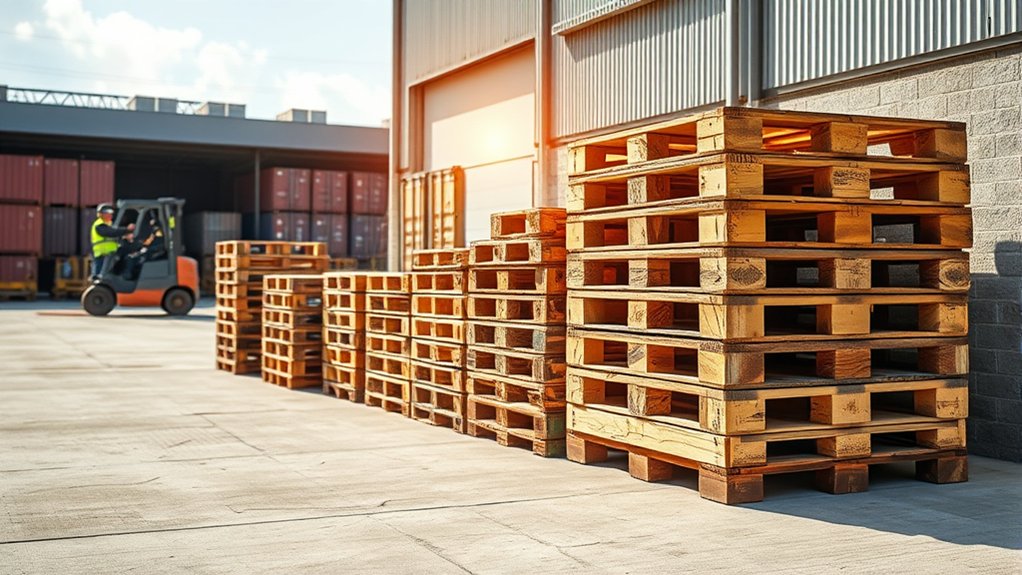
Where Can I Buy Wood Pallets: Best Places To Find Cheap Or Free Pallets
You can find cheap or free wood pallets by checking with local businesses like grocery stores, hardware shops, and furniture retailers that often discard them post-delivery. Construction sites and small contractors also have surplus pallets, especially during off-peak hours.
Online marketplaces like Craigslist, Facebook Marketplace, and OfferUp list affordable options, while suppliers offer new or refurbished pallets in bulk. Prioritize quality and safety by inspecting pallets and securing permission before collecting.
Explore further to uncover strategic sourcing and legal tips. It’s worth putting in a little effort to get the best pallets for your needs without breaking the bank.
Finding Free Pallets at Local Businesses
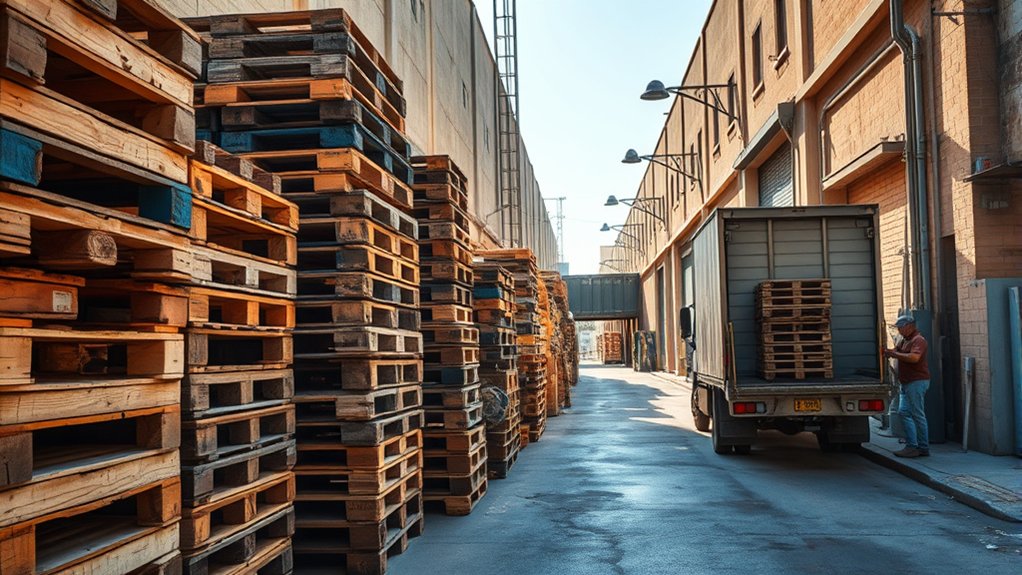
Where can you find free wood pallets in your community? Local grocery stores often discard pallets after shipments. So, asking permission can get you free pallets easily.
Local grocery stores frequently discard pallets after shipments, so simply asking can often get you free wood pallets.
Hardware stores also tend to have excess pallets following deliveries of tools and equipment. That makes them another reliable source.
Pet supply stores receive products on wooden pallets and may offer them once they’re done.
Small construction companies frequently accumulate surplus pallets from various deliveries. Reaching out could yield free options.
Moreover, furniture stores and other retailers that handle one-way shipments often have unwanted pallets available. They might give these away or sell them cheaply.
Getting Pallets From Construction Sites and Small Businesses
Local businesses like grocery and hardware stores are great starting points. But construction sites and small businesses often provide even more opportunities for getting wood pallets.
Construction sites frequently have used pallets left after deliveries or remodeling. You can often get these pallets for free if you connect with local contractors. Small businesses usually don’t have formal disposal systems, so they’re often open to giving away or selling pallets in good condition.
Building relationships with these sources guarantees consistent access and updates on pallet availability. This can save you a lot of time compared to dealing with a pallet recycling company.
| Source | Key Benefits |
|---|---|
| Construction Sites | Excess pallets post deliveries |
| Small Businesses | Willingness to give/sell used pallets |
| Contractors | Tips on discarded pallets |
| Off-peak Hours | Better chance to collect pallets |
| Relationships | Reliable and updated pallet access |
Finding Pallets on Online Marketplaces

You can find wood pallets on popular online platforms like Craigslist and Facebook Marketplace by searching local listings tailored to your area.
Timing is critical since availability fluctuates, and quick responses often secure the best deals.
Popular Online Platforms
How can you efficiently source wood pallets without leaving your home? Online platforms like Facebook Marketplace and Craigslist offer dedicated sections where you can find free pallets or low-cost options. This makes it easy to connect with local sellers.
Regularly checking these sites increases your chances of securing available pallets.
Freecycle is another valuable resource. It allows you to obtain pallets at no cost through community giveaways.
OfferUp and similar apps enhance local search capabilities, listing both free and affordable pallets from pallet recyclers or individuals.
While many focus on used pallets, platforms occasionally feature new wood pallets or reclaimed wood options. This caters to specific project needs.
Leveraging these popular online platforms streamlines your search, saving time and expanding access to quality pallets without visiting physical locations.
Searching Local Listings
Beyond popular online platforms, tapping into local listings on marketplaces like Craigslist and Facebook Marketplace can quickly connect you with free or low-cost wood pallets nearby.
Regularly scanning the “free” section on Craigslist and using targeted keywords like “pallets,” “wood pallets,” or “free pallets” sharpens your search results.
Many local businesses post surplus pallets in community groups on social media, making these groups valuable resources.
By joining relevant community groups, you gain access to immediate postings from businesses and individuals looking to offload pallets.
Also, apps and websites that aggregate classified ads across multiple online marketplaces can streamline your search and save you time.
Leveraging these local listings efficiently increases your chances of finding quality pallets at minimal or no cost.
Timing And Availability
Although pallet listings appear frequently on online marketplaces like Craigslist and Facebook Marketplace, timing your searches strategically can markedly improve your chances of finding available pallets.
You’ll want to check regularly, especially around weekends and local holidays, when businesses often clear out excess inventory and list free pallets.
Seasonal demand also influences availability. For example, post-holiday periods typically yield more discarded pallets from retail stores.
Engage with local groups to get real-time updates and act quickly.
Sellers usually respond fast, so have a prepared message ready to secure pallets before others do.
When arranging pickup, confirm details like the availability stamp and whether your pickup truck can handle the load.
By aligning your search timing with these factors, you’ll efficiently find free pallets on online marketplaces.
It really pays off to stay on top of things and be ready to move fast when you spot a good listing.
Buying Affordable New and Refurbished Pallets
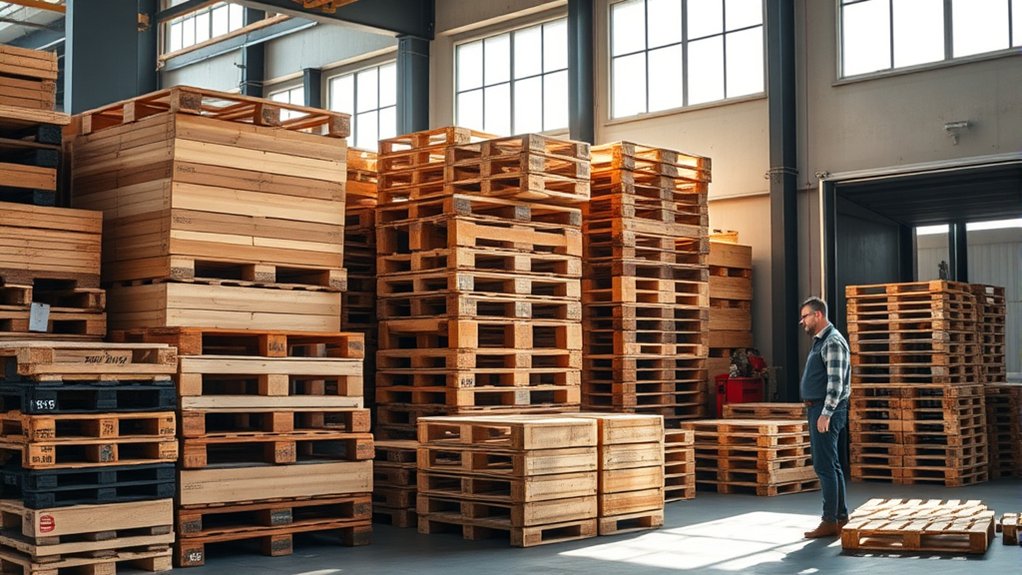
If you’re looking for affordable new pallets, suppliers like ULine and Home Depot are great places to start. They often have bulk discounts, so buying more can really save you money.
On the other hand, refurbished pallets from recycling companies are a smart option too. They’re not only cost-effective but also a more sustainable choice.
Plus, when you buy in bulk, the price per pallet goes down, which makes it a win-win for businesses and big projects alike.
New Pallet Suppliers
Where can you find affordable new and refurbished wood pallets that meet your specific needs? Start with shipping supply stores like ULine and Grainger. They offer a variety of new pallets in bulk at competitive prices.
Pallet recycling companies provide refurbished options. These are often cheaper and reliable for industrial use.
Packaging companies can supply custom-sized pallets tailored to your shipping requirements. This helps optimize space and protection.
Local hardware stores may carry both new and used pallets, which is convenient for quick purchases.
Moreover, online marketplaces such as Craigslist and Facebook Marketplace list new pallets and free wood pallets nearby. This gives you flexible options.
By exploring these sources, you can secure quality pallets that fit your budget and specifications without compromising on durability or service.
It’s all about finding what works best for you.
Refurbished Pallet Sources
Since cost efficiency and sustainability are key considerations, refurbished pallets offer a smart alternative to new ones without sacrificing quality.
You can find refurbished pallets through pallet recycling companies that restore used pallets to meet safety standards, ensuring reliable performance.
Local hardware stores often stock affordable options, saving you shipping fees and providing quick access.
Packaging companies sometimes sell refurbished pallets tailored to specific sizes or strength requirements, which is ideal for unique shipping needs.
For larger needs, online retailers offer bulk purchases of both new and refurbished pallets at competitive prices.
Choosing refurbished pallets supports sustainable practices and can cut your costs substantially, often up to 50% compared to new pallets.
This balance of affordability and environmental responsibility makes refurbished pallets a practical choice for your pallet sourcing.
Bulk Purchase Advantages
Purchasing pallets in bulk offers clear financial advantages, often cutting costs considerably with prices ranging from $6 to $15 per pallet depending on size and condition.
When you focus on purchasing pallets in volume, supply stores typically provide bulk discounts that deliver significant cost savings.
Opting for refurbished pallets enhances these savings further while supporting sustainability through reuse.
Besides affordability, buying in bulk guarantees a consistent supply, helping you avoid frequent reorder delays and streamlining your logistics.
Many suppliers also offer a variety of sizes, allowing you to tailor your pallet selection to specific shipping or storage needs.
Building Relationships for Reliable Pallet Supplies
Although finding wood pallets may seem straightforward, building strong relationships with local businesses guarantees a steady and reliable supply.
By connecting with small businesses that regularly receive shipments, you can access sources for free pallets they might otherwise discard.
Try visiting during slower hours and discuss your needs to encourage them to set aside pallets for you.
Networking with community groups and woodworking clubs expands your reach, often revealing additional free pallet sources.
Keep clear records of your contacts and maintain ongoing communication to make sure these relationships stay dependable.
Engaging in local recycling or DIY events boosts your visibility and strengthens your network.
This proactive approach turns pallet hunting into a consistent, efficient process.
You’ll secure reliable supplies while building mutually beneficial community connections.
Evaluating Pallet Quality and Safety Before Use
Once you’ve established dependable sources for wood pallets, it’s important to assess each pallet’s quality and safety before use.
Whether you pick pallets from a free section or purchase them, always inspect pallets carefully. Look for visible damage and contamination signs that could undermine safety.
Check the ownership stamp to confirm if pallets are treated or untreated. Avoid those marked with HT or MB chemicals. To protect yourself during handling, use gloves.
Key points to take into account:
- Inspect for broken boards, protruding nails, or pest infestations
- Identify stains or odors indicating contamination
- Verify ownership stamp and treatment type
- Avoid pallets with chemical treatment markings
- Use gloves to prevent splinters and reduce injury risk
This way, you guarantee you use safe, reliable pallets fit for your projects.
Legal and Safety Tips for Collecting Pallets
Before collecting pallets, you should always get permission from the business owner to avoid legal issues. Taking pallets without consent can be considered theft.
You also need to understand local laws and legal implications related to acquiring pallets for free. It’s a good idea to stay informed so you don’t run into trouble.
Always inspect pallets for chemical treatment, damage, or contamination to reduce safety risks. Wearing gloves and masks helps protect you from splinters, dust, and potential chemical exposure.
Make sure to document where your pallets come from. This guarantees accountability and helps build good relationships for future collections.
| Key Consideration | Action Required |
|---|---|
| Permission | Obtain explicit consent |
| Legal Implications | Know local laws |
| Safety Risks | Inspect for chemicals and damage |
| Documentation | Record pallet source and condition |
Frequently Asked Questions
How Do I Properly Dispose of Unwanted Wood Pallets?
You should explore pallet disposal options by first checking local regulations to avoid penalties.
Take unwanted pallets to recycling centers to minimize environmental impact.
Disassemble pallets safely to facilitate recycling, and consider donation possibilities to community projects or artisans.
If the pallets are untreated, you can use composting techniques for small wooden pieces.
Always prioritize safety considerations when handling pallets.
Make sure nails or splinters don’t cause injury during disposal or repurposing.
Can Wood Pallets Be Recycled or Repurposed Creatively?
Long before the smartphone era, you could already transform wood pallets into treasures.
Absolutely, you can recycle and repurpose pallets creatively. You’ll find endless possibilities in creative pallet projects like DIY furniture, garden planters, and rustic shelving.
These materials make excellent home decor, storage solutions, and upcycled art.
Just inspect pallets for safety first, then plunge into crafting sustainable, functional pieces that reduce waste and elevate your space.
It’s a fun way to get creative and do some good for the environment too!
What Tools Are Needed to Break Down or Modify Pallets?
To master pallet dismantling techniques, you need essential woodworking tools like a pry bar, reciprocating saw, and hammer.
Safety gear essentials like gloves and goggles protect you during efficient pallet modification.
For pallet repair methods and creative pallet projects, a sander or sanding tools help smooth rough edges.
Make sure to work on a sturdy surface to enhance safety and precision.
Using these tools guarantees you break down and modify pallets effectively.
This way, you’ll be ready to prepare them for any creative or functional use.
How Long Do Wood Pallets Typically Last Under Normal Use?
Wood pallets typically last 5 to 7 years under normal use, but factors like weight capacity, usage conditions, and environmental impact play a big role.
You’ll want to watch for pest concerns and moisture exposure because these can shorten their life.
Regular maintenance, such as inspections and proper storage, really helps boost cost efficiency by extending durability.
Hardwood pallets last longer than softwood ones, so it’s smart to choose based on your needs and budget.
Are There Specific Wood Types to Avoid When Buying Pallets?
You should avoid pallets made from weak softwoods that can’t support heavy loads or withstand weather.
Pallet safety concerns mean you need sturdy types of wood.
Also, steer clear of chemically treated pallets marked HT or MB. This helps you comply with wood pallet regulations and avoid harmful chemical treatments.
Follow pallet inspection guidelines closely and prioritize pallet sourcing tips that emphasize sustainable practices.
That way, you’ll choose durable, safe pallets that meet industry standards and protect your products.
Conclusion
By exploring local businesses, construction sites, and online marketplaces, you can find affordable or free wood pallets to suit your needs. For example, Sarah, a small business owner, built a reliable supply by regularly checking with nearby warehouses and refurbishing used pallets.
Always assess pallet quality and follow legal guidelines to guarantee safety. With these strategies, you’ll secure cost-effective pallets while maintaining professionalism and reliability in your sourcing approach.