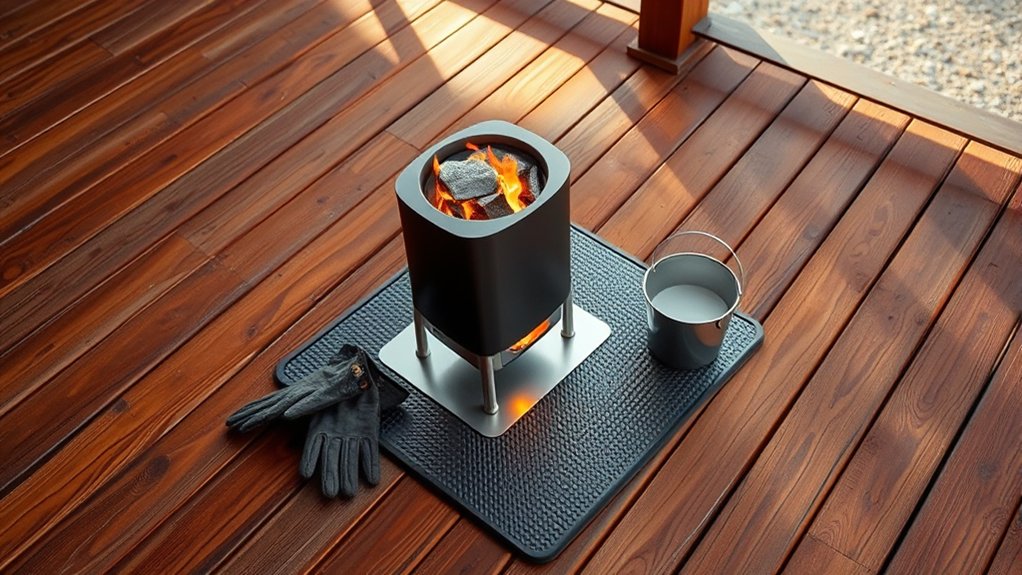
Can You Use A Solo Stove On A Wood Deck: Safety Tips
You can use a Solo Stove on a wood deck safely if you take proper precautions. Always elevate the stove with the official Solo Stove Stand to protect your deck from intense heat and improve airflow.
Pair it with a heat-resistant mat to catch embers and prevent scorch marks. Keep at least 10-15 feet clearance from structures and avoid covered decks to reduce fire and safety risks.
Here’s what else you need to know to keep your deck safe and secure.
Is It Safe to Use a Solo Stove on a Wood Deck?
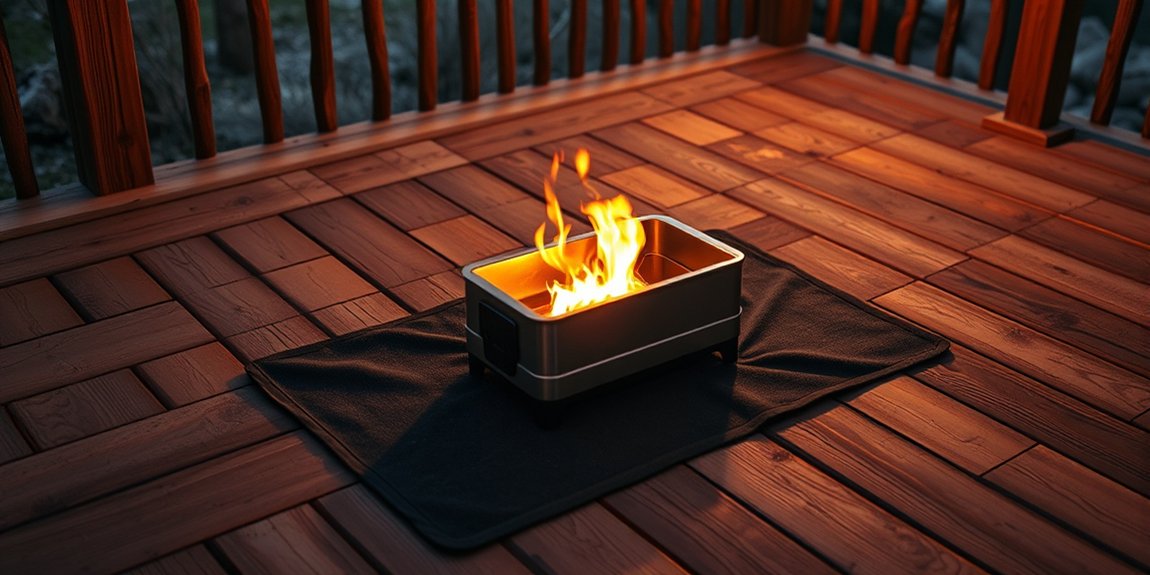
Wondering if you can safely use a Solo Stove on your wood deck? Yes, but you must follow key safety tips. The Solo Stove’s intense heat, over 1000°F, can cause serious heat damage to your wood deck if not managed properly.
Using a Solo Stove on a wood deck is possible with proper precautions to prevent heat damage.
Creating an air gap beneath the stove is vital for heat circulation, which is why using the official Solo Stove Stand is highly recommended.
Plus, placing a heat-resistant mat under the stove protects your deck from radiant heat and catches stray embers.
Always keep at least 10 to 15 feet of clearance from flammable materials like your home or nearby branches.
And don’t forget to check your local fire codes before use, since regulations on wood-burning fire pits on decks can vary.
Why You Must Use the Solo Stove Stand on Your Deck
To safely use your Solo Stove on a wood deck, you need more than just careful placement and clearance. You must use the Solo Stove Stand. This stand elevates the stove, creating an air gap that protects your deck from radiant heat. Radiant heat can easily damage heat-sensitive surfaces like wooden decks.
It also promotes better airflow, which improves combustion efficiency and reduces smoke. Plus, the stand stabilizes the stove, so it’s safer to use by minimizing tipping risks on uneven surfaces.
| Benefit | Reason |
|---|---|
| Protect your deck | Blocks radiant heat from damaging wood |
| Better airflow | Enhances combustion and lowers smoke |
| Safe operation | Stabilizes stove, prevents tipping |
Pairing the Solo Stove Stand with a fire-resistant mat adds even more protection for your deck against stray embers. It’s a simple step that makes a big difference.
Do You Need a Heat-Resistant Mat Under Your Solo Stove?
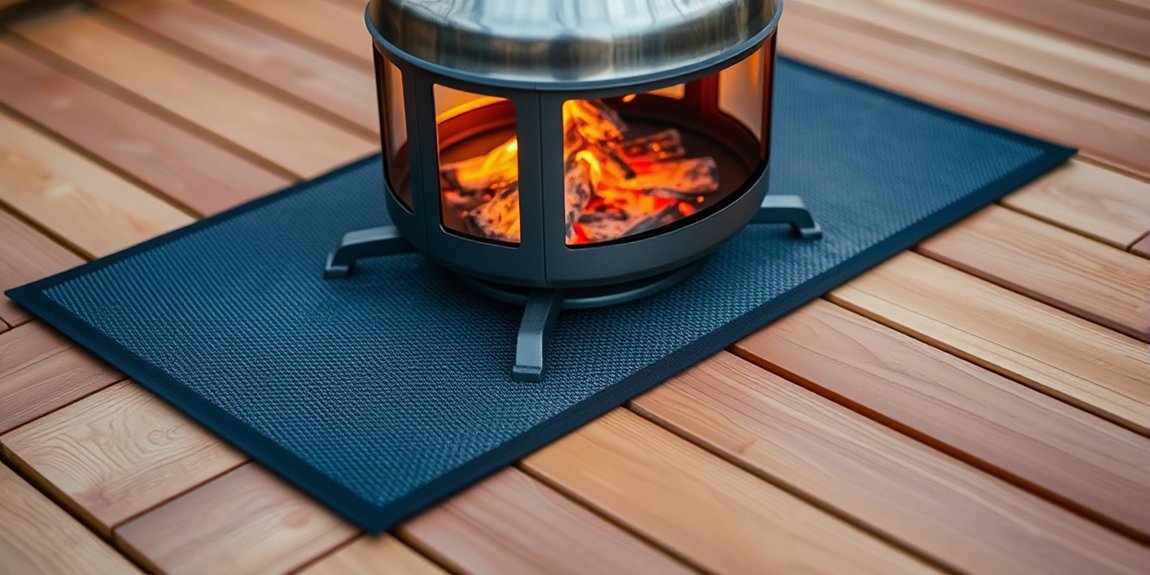
Although the Solo Stove Stand provides essential elevation and airflow, placing a heat-resistant mat beneath your Solo Stove greatly enhances protection for your wood deck. The mat acts as a critical barrier, preventing heat from directly contacting the deck surface and catching stray embers that could cause burns or scorch marks.
Using a fire pit mat is especially important for composite decks, which can be more vulnerable to heat damage. Make certain the mat extends beyond the stove’s diameter to protect the surrounding area effectively.
Combining the heat-resistant mat with the Solo Stove Stand guarantees ideal airflow while considerably improving safety.
This simple addition helps you protect your deck and prevent damage, letting you enjoy your Solo Stove fire pit with greater peace of mind.
How Hot Does a Solo Stove Get: And What It Means for Your Deck
Because a Solo Stove can reach temperatures exceeding 1000°F, you need to be very careful about how it affects your wood deck. High heat can scorch or warp wooden decking, so you must use a Solo Stove stand to create a protective air gap. Sparks and embers also pose a risk, making a heat-resistant mat essential.
These safety tips help prevent damage and fire hazards while enjoying your stove.
| Risk Factor | Safety Measure |
|---|---|
| Extreme heat (>1000°F) | Use official Solo Stove stand |
| Sparks and embers | Place heat-resistant mat |
| Wooden decking | Avoid direct contact with stove |
| Composite decks | Also use stand and mat |
| Prolonged exposure | Monitor stove constantly |
Following these precautions guarantees your deck stays safe when you use a Solo Stove.
What Clearance Should You Keep Around Your Solo Stove?
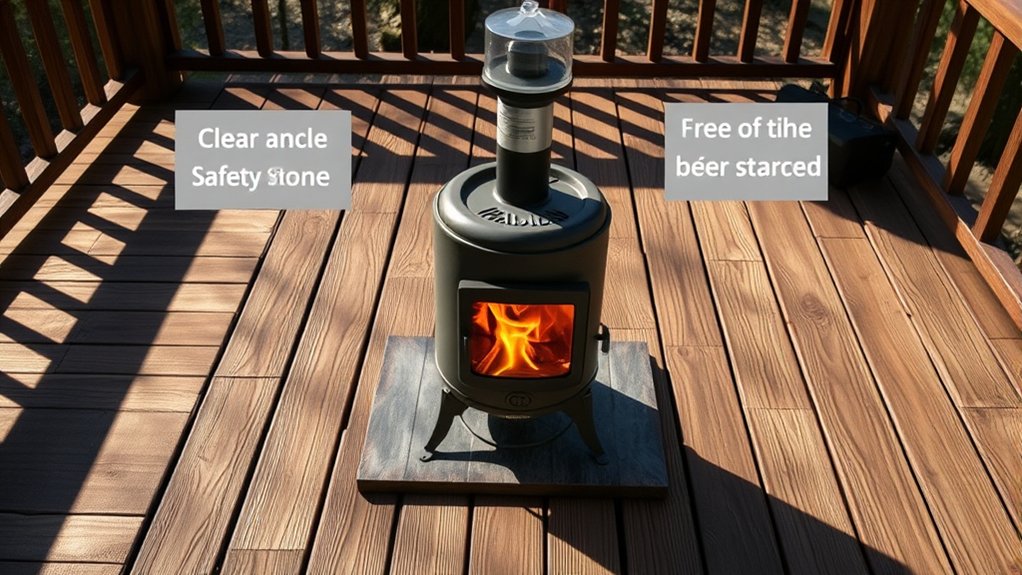
After confirming your Solo Stove sits securely on a proper stand with a heat-resistant mat, you’ll need to keep a safe distance between the fire pit and any surrounding structures or materials.
Maintain a clearance of at least 10-15 feet from your home, combustibles, and overhanging structures to reduce fire risk and heat damage.
The Solo Stove stand creates an air gap that aids airflow and minimizes heat transfer to the deck.
Avoid obstructions like awnings or umbrellas that could trap heat or catch fire.
Always check local fire codes and HOA guidelines, as they may require specific clearance distances for safety.
Regularly inspect the area around your Solo Stove to confirm it remains free of flammable debris, maintaining a safe environment while enjoying your fire pit.
How to Protect Your Wood Deck From Sparks and Embers
When you use a Solo Stove on a wood deck, protecting the surface from sparks and embers is essential to prevent damage or fire hazards.
Start by placing a heat-resistant fire mat beneath the Stove to catch stray embers and shield your deck from radiant heat.
Keep the Stove at least 10 to 15 feet away from flammable materials to minimize fire risks.
Use high-quality hardwood logs because they produce fewer sparks than softwoods or treated wood.
Always make sure the Stove sits on a stable, flat surface to prevent tipping and ember scatter.
Ensure your Solo Stove is on a stable, flat surface to avoid tipping and prevent ember scatter.
Most importantly, keep an eye on the fire continuously and have a fire extinguisher or fire blanket nearby for immediate response.
These steps really help keep your deck safe while you enjoy your Solo Stove fire.
It’s all about being prepared so you can relax and have fun without worry.
Can You Use a Solo Stove Safely on Composite Decks?
Protecting your deck from heat and sparks doesn’t just apply to wood surfaces; composite decks need careful attention too. Composite decking varies in fire resistance, and high heat can cause warping or melting.
To use a Solo Stove safely on composite decks, follow these precautions: Always use the Solo Stove Bonfire Stand to elevate the stove, reducing radiant heat contact.
Place a heat-resistant fire mat beneath for an additional layer of protection. Make sure there’s proper ventilation around the stove to prevent heat buildup.
Also, keep a safe distance between the stove and the composite decking. Don’t forget to check local fire codes and HOA rules before use to stay compliant.
These simple steps will help protect your composite deck while you enjoy your Solo Stove safely.
Why You Should Avoid Using Solo Stoves on Covered Decks
Although Solo Stoves are designed for open-air use, placing one on a covered deck introduces serious risks you should consider before lighting a fire.
A covered deck often lacks proper ventilation, which increases the danger of carbon monoxide buildup and smoke accumulation. This can really impair air quality and pose health risks.
The intense heat and sparks from a Solo Stove may damage the deck’s covering materials. That creates potential fire hazards and could lead to costly repairs. It’s definitely something you want to avoid.
Plus, many local fire codes restrict or prohibit open flames in covered areas. So using a Solo Stove there might actually violate regulations.
To stay safe, it’s best to avoid operating a Solo Stove on a covered deck.
Instead, opt for open, well-ventilated spaces that minimize these risks effectively. That way, you can enjoy your fire without worry.
Frequently Asked Questions
How Do Weather Conditions Affect Solo Stove Use on Wood Decks?
Weather impacts your Solo Stove use by increasing fire hazards and smoke concerns, especially on wood decks.
Wet deck materials absorb moisture, which raises heat exposure risks and makes controlling the flame harder.
Seasonal precautions really matter here. Rain can cause rust, and wind might blow embers onto flammable surfaces.
So, you’ve got to stay on top of the weather before you light up.
You’ll also need proper ventilation to prevent carbon monoxide buildup, especially if you’re using the stove under a cover.
Always keep a close eye on conditions to stay safe and protect your deck from damage.
Can You Use Solo Stove Accessories Like Grills on a Wood Deck?
Think of your wood deck as a delicate garden; using Solo Stove grills on it requires care.
You can safely use these accessories if you prioritize grill safety by placing them on a heat-resistant mat and the official Solo Stove Stand to guarantee airflow and prevent surface damage.
Keep burning materials and smoke controlled, follow fire regulations, and maintain clearance from combustibles.
Always monitor cooking methods closely to protect your deck from heat and sparks.
What Types of Wood Are Safest for Decks With Solo Stove Use?
For decks with Solo Stove use, choose dense hardwoods like oak or maple because they offer better fire resistance and heat retention.
Always follow spacing guidelines and use protective barriers beneath the stove to shield deck materials. Regular maintenance helps prevent damage, and adhering to safety regulations reduces risks.
Also, consider insurance considerations before use, ensuring you meet all local codes.
This cautious approach keeps your wood deck safer while enjoying your Solo Stove. It’s always better to be safe than sorry when dealing with fire on wood surfaces.
Taking these steps makes your outdoor space both cozy and secure.
How Often Should You Clean the Solo Stove When Used on a Deck?
Think of cleaning your Solo Stove like tuning a fine instrument. It needs regular care to perform well. Your cleaning frequency should be after every use, focusing on debris removal and ash disposal to maintain airflow and safety.
Make sure to follow maintenance tips like using gentle cleaning methods and doing safety checks for damage. Always stick to usage guidelines, and don’t skip seasonal care to protect both your stove and deck.
Doing this will ensure lasting performance and safety. It’s easier than it sounds and keeps your setup in great shape.
Are There Specific Fire Extinguishers Recommended for Solo Stove Fires?
You should use a Class B fire extinguisher for Solo Stove fires, as it handles flammable liquids and gases effectively.
Always keep it accessible and fully charged for quick emergency response.
Make sure to review outdoor fire regulations in your area to guarantee compliance.
Considering flame retardant materials and fire pit alternatives can add an extra layer of safety.
For deck maintenance advice, regularly inspect your wood deck.
Also, propane fire options may require different extinguisher types, so be prepared.
Conclusion
Using a Solo Stove on your wood deck can be safe if you follow key precautions. Did you know that nearly 70% of deck fires start from sparks or embers? That’s why using the Solo Stove stand and a heat-resistant mat is essential.
Make sure to keep proper clearance around the stove and never use it on covered decks to minimize risks. These simple steps really make a difference.
By doing this, you’ll enjoy your fire safely without damaging your deck or risking a fire hazard. It’s all about being smart and careful while you relax outdoors.