
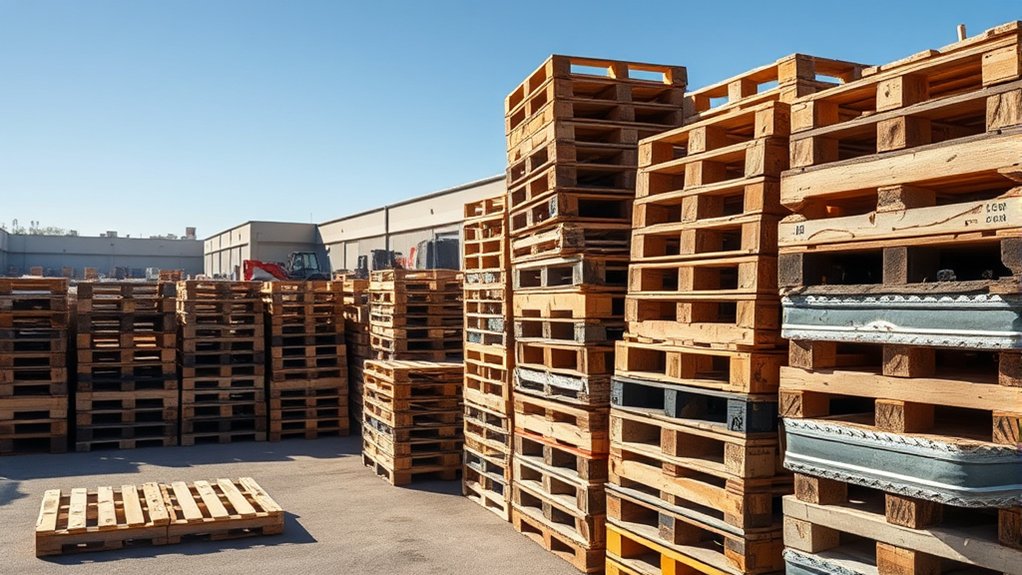
Where Can I Get Wood Pallets: Best Places To Find Them
You can get wood pallets by checking local hardware stores, tile shops, and electrical suppliers. They often have extras or discard old pallets. Industrial parks and landscaping suppliers are also great spots for surplus pallets.
Try posting on Craigslist or joining community groups to find free or low-cost options. Consider hardwood for durability or pine for lighter uses. Knowing where to look and what to inspect will help you find the best pallets to suit your needs.
Explore further to uncover key quality tips and sourcing strategies.
How to Find Free Wood Pallets Near You
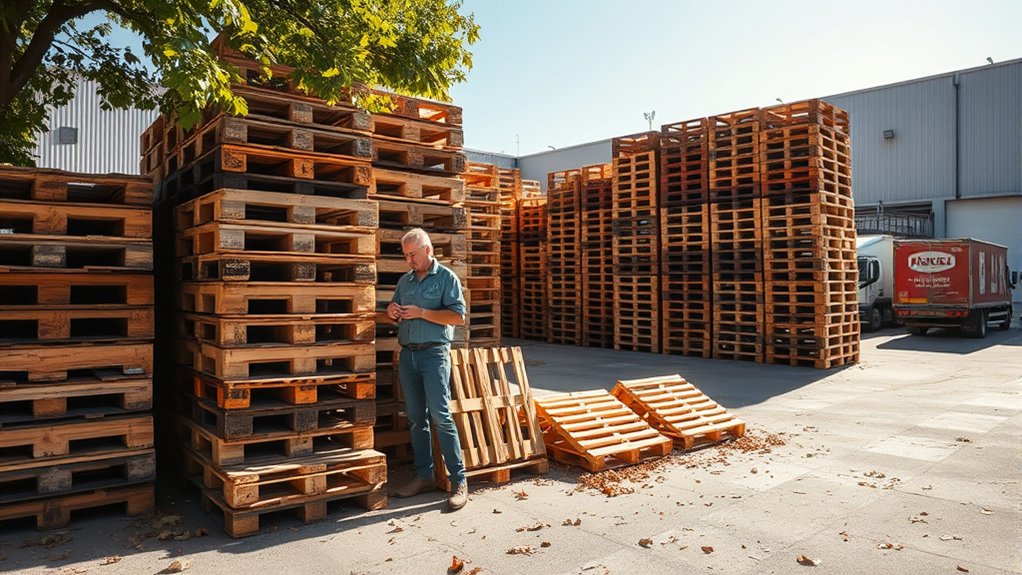
Where can you score free wood pallets near you? Start by checking hardware stores, local tile shops, and electrical supply houses. They often have excess pallets they’re willing to give away.
These spots are practical first stops for free pallets because they regularly receive shipments on pallets and don’t always need to keep them.
Next, tap into community groups on social media platforms where members frequently share or request free pallets. These groups can connect you with people nearby looking to clear out unused pallets.
Keep in mind availability varies by region, so expanding your search to include hospitals or local online classifieds can increase your chances.
By focusing on these accessible sources, you’ll efficiently find free pallets without unnecessary hassle. It’s all about knowing where to look and being willing to ask around.
You might be surprised how many places want to get rid of them for free!
Where Industrial and Commercial Facilities Store Pallet Surplus
If you’re looking to find surplus pallets, industrial and commercial facilities often store them in designated areas behind their buildings or in storage yards. These locations, especially within industrial parks, are hotspots for wooden pallets that businesses no longer need.
You’ll find surplus pallets near electrical supply houses, tile stores, hospitals, and gardening suppliers. Pallets tend to accumulate from regular shipments and deliveries.
| Facility Type | Common Pallet Source | Storage Location |
|---|---|---|
| Electrical Supply | Excess shipment pallets | Outdoor storage yards |
| Tile Stores | Received shipment pallets | Behind retail buildings |
| Landscaping Supply | Delivery pallets discarded | Designated storage areas |
Target these spots within industrial parks, and you’ll efficiently source quality wooden pallets. It’s a smart way to find what you need without much hassle.
How to Source Pallets From Local Businesses, Warehouses, and Suppliers
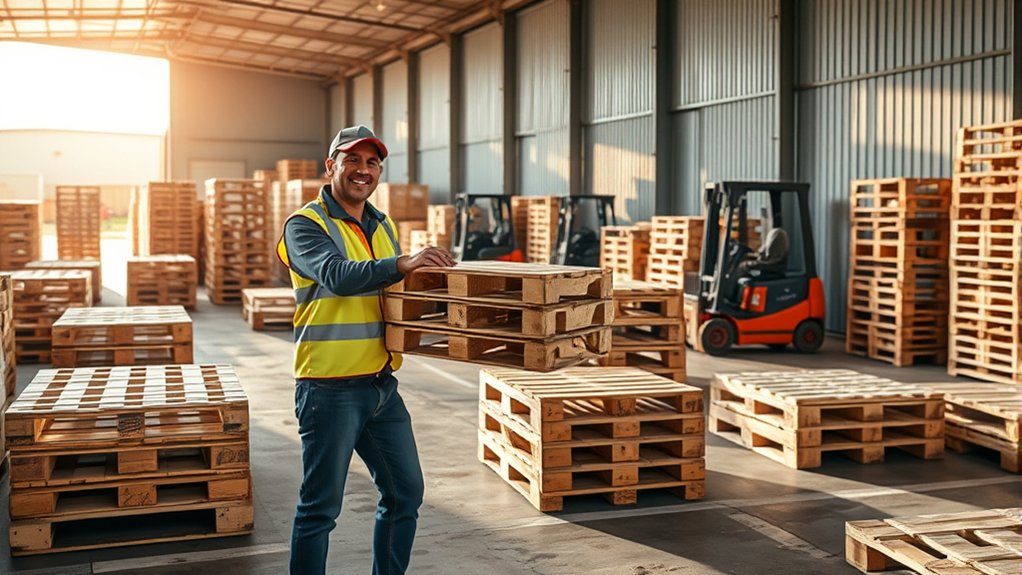
You can find pallets by reaching out to local businesses like tile stores, electrical suppliers, and landscape centers. These places often have extra pallets they’re happy to give away.
Warehouses and suppliers, including hospitals and industrial parks, might also have surplus pallets if you get in touch or take a look around their areas.
Since many companies buy back pallets, it helps to act quickly. Checking online community listings can boost your chances of finding some too.
Local Business Opportunities
Many local businesses regularly receive shipments on pallets and often have extras they’re willing to give away. Tile stores, electrical supply houses, hardware stores, and landscaping suppliers frequently discard wood pallets after unloading. This presents strong local business opportunities.
Hospitals also get regular shipments and may have surplus pallets available. To tap into these sources, visit businesses directly or post a “want to buy” ad on Craigslist. Try targeting the “free” section to attract offers.
This approach helps minimize your freight costs since you can pick up pallets nearby. By focusing on local connections, you can secure wood pallets without any expense while supporting efficient reuse.
It’s smart to prioritize businesses with high shipment volumes because they’re more likely to have extra pallets. This way, you reduce your search time and transportation effort.
Warehouse And Supplier Sources
Although warehouses and suppliers handle large volumes of shipments daily, they often have surplus wood pallets available at little to no cost. You can source pallets by contacting local warehouses, tile stores, or electrical suppliers that frequently receive truck loads of goods on pine pallets.
These businesses view pallets as disposable raw materials once shipments unload, making them open to giving away or selling pallets cheaply.
To secure a steady supply, build relationships with suppliers who can set aside pallets for you. Checking with landscape suppliers and hospitals is also practical, as they regularly discard pallets.
When dealing with large suppliers, ask about truck load availability so you can negotiate bulk acquisitions efficiently.
This approach guarantees you access to quality wood pallets without incurring significant expenses. It’s all about knowing who to ask and keeping a good rapport with them.
That way, you’ll always have a source when you need pallets.
How to Use Online Marketplaces and Community Groups to Get Wood Pallets
You can easily find wood pallets by checking out Craigslist’s free section and local classified ads. Businesses often list surplus pallets there, so it’s a great place to start.
Another good tip is to join social media community groups. This way, you can connect directly with people who are giving away or selling pallets nearby.
And don’t be shy about posting a “want to buy” ad yourself. It can help attract offers from local suppliers or individuals looking to sell.
Craigslist Pallet Listings
When searching for wood pallets, Craigslist offers a dedicated “free” section where you can often find listings at no cost. You can also post a “want to buy” ad to attract local sellers or donors.
When using Craigslist, keep in mind the importance of pallets with Heat Treatment certification to guarantee they meet safety standards for shipping or repurposing.
To effectively use Craigslist for pallets, consider these tips: regularly check the free section for new pallet listings nearby. Also, specify your interest in Heat Treated pallets when posting ads.
And don’t forget to communicate promptly with listers to secure the best deals or free offers.
Craigslist is a practical tool that connects you with local sources, saving you time and money on wood pallets. It’s definitely worth checking out if you’re on the hunt!
Social Media Community Groups
Beyond Craigslist, social media community groups offer a dynamic way to find wood pallets locally. You can join local Facebook groups, Nextdoor, or apps like OfferUp to connect with neighbors and businesses offering free or cheap pallets. These platforms provide a rich source for community sourcing tips and neighborhood exchange networks.
Engaging with gardening and DIY groups also opens doors to pallet repurposing ideas and potential leads. Here’s a quick comparison to help you navigate these options:
| Platform | Best For | Key Benefit |
|---|---|---|
| Local groups & forums | Real-time posts from neighbors | |
| Nextdoor | Neighborhood connections | Direct outreach to local users |
| OfferUp | Marketplace listings | Broader reach, easy searching |
Use these resources actively to maximize your pallet finds.
Local Classifieds Platforms
Several local classifieds platforms offer efficient ways to source wood pallets without spending much.
Sites like Craigslist and Facebook Marketplace often have free or low-cost pallets listed nearby. You can also post a want-to-buy ad to attract offers from businesses offloading excess pallets.
These platforms support pallet recycling benefits by reducing waste while providing materials for creative pallet projects or practical pallet storage solutions.
It’s a win-win for both the environment and your budget.
To maximize your search, check the “free” sections regularly for fresh listings.
Join local buy/sell/trade groups to get direct community deals.
And don’t forget to use location filters to find pallets close to you.
Hardwood vs. Pine Wood Pallets: Which One Is Right for You?
How do you decide between hardwood and pine wood pallets for your needs? Start with a pallet durability comparison.
Hardwood pallets, made from dense species like oak, support heavier loads and last longer. They’re ideal for demanding projects.
Pine pallets, on the other hand, are lighter and softer. They suit lighter applications and help save costs.
When you look at the cost analysis, pine typically wins due to lower manufacturing expenses. So, it’s practical if your budget is tight.
For environmental impact, hardwood pallets are biodegradable and recyclable, offering long-term eco benefits.
Pine’s lighter weight means less material use, which is often preferred for short-term or single-use scenarios.
In the end, your choice depends on load requirements, budget, and sustainability goals.
Hardwood works best for durability and strength, while pine is great for affordability and lighter use.
Key Quality and Condition Factors When Buying Wood Pallets
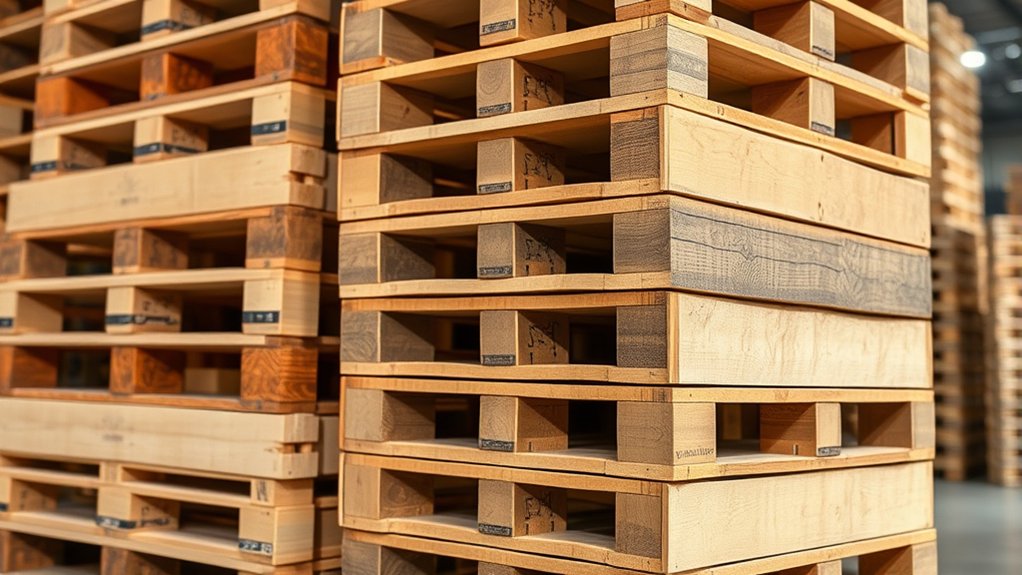
Choosing between hardwood and pine pallets sets the foundation, but you also need to evaluate key quality and condition factors before buying.
Start by understanding pallet grading systems. Grade A pallets look like new, while Grade C can be worn but still functional.
Understanding pallet grades helps balance appearance and usability, from like-new Grade A to functional Grade C.
Always perform structural integrity checks to spot broken boards or repairs that reduce load capacity and safety.
Heat treatment compliance is vital, especially if you’re shipping internationally. Look for ISPM 15 stamps indicating proper treatment to prevent pest issues.
Focus on these factors: pallet grading systems to balance quality and cost, structural integrity checks to guarantee durability and safety, and heat treatment compliance for regulatory and shipping standards.
This approach ensures you pick pallets that fit your needs without compromising performance.
How Regional Factors Affect Pallet Availability and Pricing
Because local supply chain practices vary widely, wood pallet availability and pricing can differ sharply across regions. Industrial supply chains often yield more discarded pallets, but the quality may be lower. In contrast, rural areas might have fewer pallets because there’s less industrial activity and stronger pallet recycling practices.
Regional pricing trends reflect these dynamics. Areas with scarce supply or high demand tend to push prices up. Also, regulations on pallet types like CHEP affect availability locally. Understanding these factors helps you source pallets efficiently and cost-effectively.
| Region | Availability | Pricing Trend |
|---|---|---|
| Industrial Zone | High, lower quality | Moderate |
| Rural Area | Low, better quality | Higher |
| Transfer Stations | Variable, recycled pallets | Variable, competitive |
How to Safely Inspect and Transport Your Wood Pallets
Understanding regional availability and quality differences helps you select the right wood pallets, but making sure they’re safe to use is just as important. Always inspect each pallet carefully before putting it to work.
Using an inspection checklist can really help you spot cracks, broken boards, or loose nails. Don’t forget to check the IPPC stamp to confirm heat treatment compliance—it’s key for safety.
An inspection checklist helps identify damage; always verify the IPPC stamp for essential heat treatment safety.
When it comes to transporting pallets, using the right techniques can prevent accidents or damage. It’s all about being careful and prepared.
Keep these tips in mind: wear gloves and proper footwear to protect yourself while handling pallets.
Stack and secure them evenly using straps or ropes so they don’t shift around. Also, make sure to distribute weight evenly when loading pallets onto vehicles.
Frequently Asked Questions
Can Wood Pallets Be Customized for Specific Shipping Needs?
Yes, you can get custom pallet designs tailored to your specific shipping needs. By adjusting dimensions, weight capacity, and materials, you’ll boost shipping efficiency and guarantee compatibility with your cargo.
Using tools like the Pallet Design System helps calculate load distribution precisely. Plus, you can meet industry standards, including heat treatments for export compliance.
Customizing pallets guarantees your shipments are secure, cost-effective, and streamlined throughout the supply chain.
It’s all about making sure your goods arrive safely and smoothly.
What Are the Environmental Benefits of Using Reclaimed Wood Pallets?
Using reclaimed wood pallets greatly boosts your sustainability impact by reducing demand for virgin lumber and conserving forests.
You’ll benefit from recycling perks like diverting waste from landfills and supporting local circular economies. Plus, you lower your carbon footprint since manufacturing new pallets emits more CO2 than reusing existing wood.
Choosing reclaimed pallets not only promotes environmental responsibility but also enhances your brand’s appeal to eco-conscious customers.
It’s a simple way to make a big difference while showing you care about the planet. So, why not give reclaimed wood pallets a try?
How Long Do Wood Pallets Typically Last With Regular Use?
You can expect wood pallets to last 3 to 5 years with regular use.
Pallet durability depends on a few factors like the type of wood, exposure to moisture, and how heavy the loads are. Hardwood pallets usually last longer than softwood ones.
To get the most out of your pallets, store them in dry areas.
It’s also a good idea to check them regularly for any damage. Fixing worn parts as soon as you spot them can really help.
Taking proper care of your pallets makes a big difference.
It helps you get the best value and keeps them durable for as long as possible.
Are There Any Legal Regulations for Transporting Wood Pallets Interstate?
Yes, you must follow interstate shipping regulations when transporting wood pallets. These regulations require compliance with wood pallet standards like ISPM 15, ensuring pallets are heat-treated or fumigated.
When exploring pallet sourcing options, always verify that pallets carry the appropriate treatment stamp. Ignoring these rules risks fines and shipment delays, so stay proactive by checking both federal and state requirements before moving pallets across state lines.
It’s always better to be safe than sorry when it comes to legal compliance. That way, your shipments keep moving smoothly without any unexpected issues.
What Treatments Ensure Wood Pallets Are Pest-Free and Safe?
A stitch in time saves nine. When it comes to wood pallet treatments, heat treatment is key. By heating pallets to 56°C for at least 30 minutes, you effectively eliminate pests.
This ensures safe handling and compliance with international standards.
Chemical pest control methods using approved pesticides also work, but they may have restrictions. So, it’s important to know what’s allowed.
Always verify treatment stamps and certifications. This way, you can confirm your pallets are pest-free and safe for use in any industry.
Conclusion
Finding wood pallets isn’t just about luck. It’s a strategic hunt. Whether you’re tapping into local warehouses, scouring online marketplaces, or checking with industrial sites, your success depends on knowing where to look and what to check.
Keep an eye on quality and regional pricing. And don’t forget safety when inspecting and transporting. Like a knight choosing his armor, picking the right pallet sets you up for victory in your project.