Can You Powder Coat Wood: Is It Possible Explained
You can powder coat wood, but it’s different from metal because wood has low thermal conductivity and is sensitive to heat. You’ll need specialized low-temperature or UV-curable powders. Plus, you have to carefully control moisture content and curing temperatures between 220°F and 400°F to avoid damage.
Proper surface prep is essential for good adhesion. That means cleaning, sanding, priming, and enhancing conductivity. It can be a bit tricky, but with the right steps, it’s definitely doable.
Advanced pre-treatments and curing methods make the process more feasible. If you want to really understand it, there’s a lot more to explore about powder coating wood.
Why Powder Coating Wood Is Different From Metal
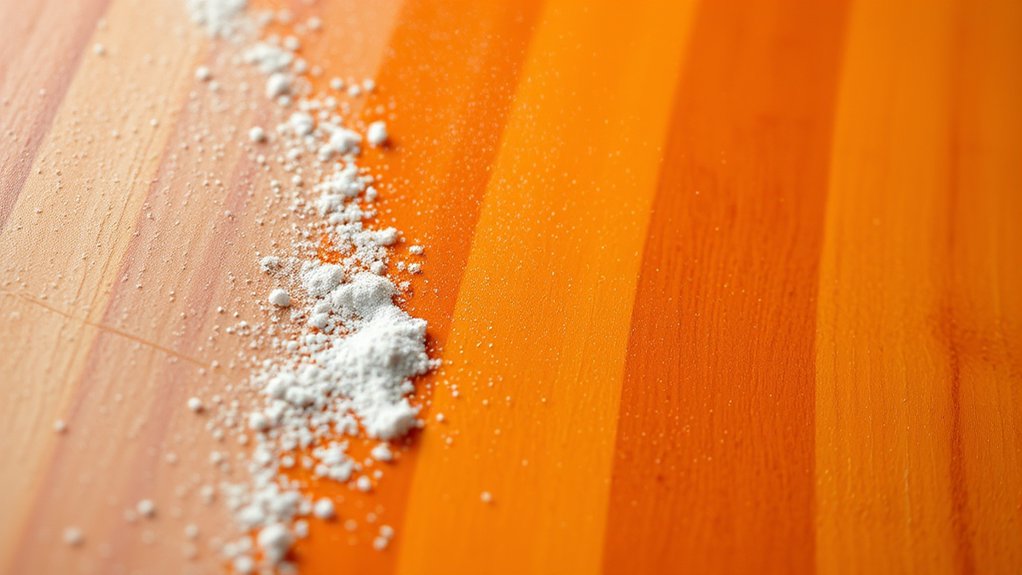
Although powder coating is traditionally associated with metal, applying it to wood involves distinct challenges because wood is sensitive to heat and has lower thermal conductivity. When coating wood, you have to use low-temperature or UV-cured powders to avoid damage during the curing phase.
Wood’s moisture content also needs careful control since too much moisture can stop the powder from sticking properly.
The powder coating process on wood requires thorough surface preparation like cleaning, sanding, and often priming to make sure the electrostatic charge sticks well. This step is less critical with metal, so it’s something to pay extra attention to with wood.
Also, because wood doesn’t conduct heat well, pre-heating or some kind of pre-treatment is usually needed to get a uniform coating.
When done right, this method creates a durable finish that beats traditional wood coatings. You get better wear resistance and a smooth look without needing edge banding.
Which Wood Types Can Be Powder Coated Successfully
Understanding the unique properties of different wood types helps determine their suitability for powder coating. Medium density fiberboard (MDF) is ideal because it has consistent density and a smooth surface. This minimizes surface defects and promotes uniform powder coatings.
Solid woods like oak, ash, and walnut can also be powder coated successfully if prepared properly. You need to ensure adequate adhesion and conductivity for the coating to work well.
However, woods with high resin or oil content, such as pine and cedar, generally perform poorly. Their composition interferes with coating adherence, making the process less effective.
Since powder coatings require curing at high temperatures, typically between 220°F and 400°F, you must select wood types that can withstand these conditions. This helps prevent warping or damage during the process.
Preparing Wood Surfaces for Powder Coating
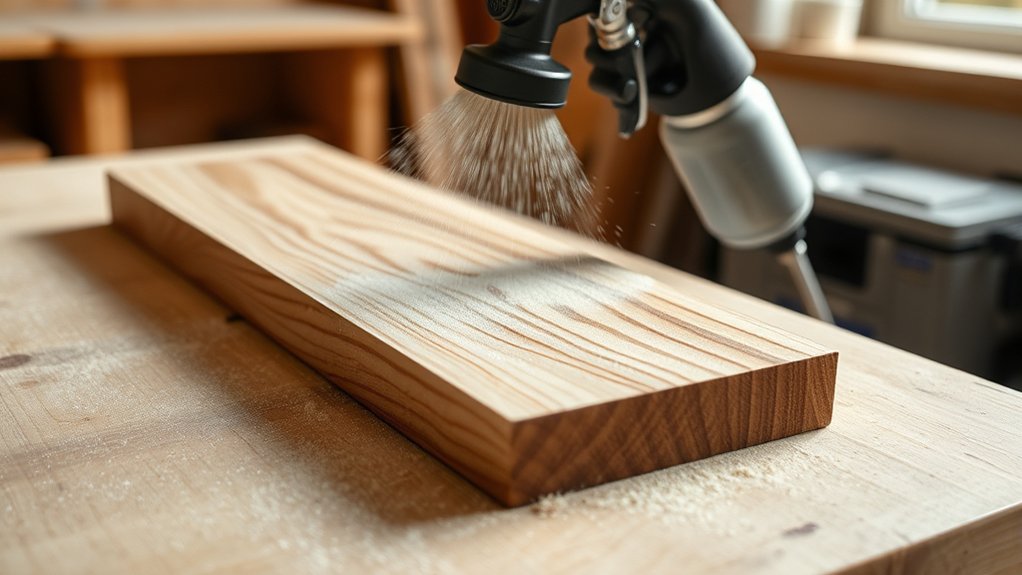
You’ll start by thoroughly cleaning the wood surface to remove dust, oils, and contaminants that can get in the way of powder adhesion.
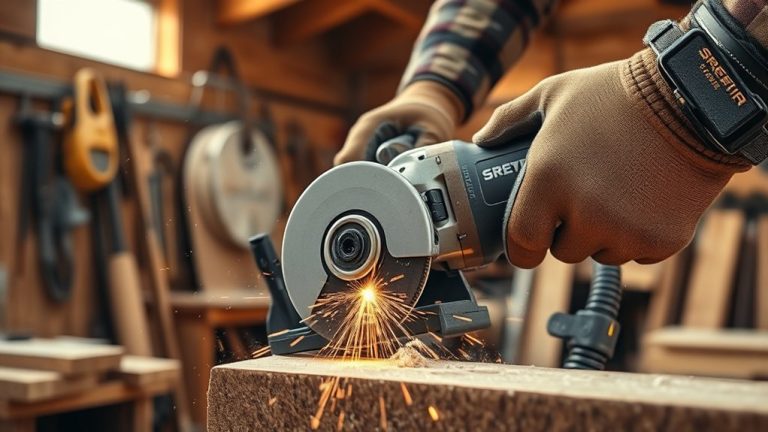
After that, sanding comes into play—this smooths the surface and opens up the pores, which really helps with mechanical bonding when the powder is applied.
Finally, you’ll want to apply a suitable primer. This step boosts adhesion and gets the wood ready for the electrostatic coating process.
Surface Cleaning Techniques
Five critical steps guarantee successful surface cleaning when preparing wood for powder coating. Surface cleaning removes contaminants like dust, grease, and oils that compromise adhesion and cause finish defects.
Start by using compressed air to dislodge loose particles, ensuring a contaminant-free base.
Next, sanding the wood creates a uniform texture, increasing surface area to enhance powder adhesion. After sanding, rinse thoroughly to eliminate residual debris.
Finally, apply a pre-treatment conductive spray, which promotes electrostatic attraction between the wood and powder coat, improving coating uniformity.
Focus on these key techniques for excellent results:
- Compressed air for particle removal
- Sanding to increase surface roughness
- Pre-treatment conductive spray to boost adhesion
Properly executed surface cleaning is essential for a durable, defect-free powder-coated wood finish.
Priming And Sanding Steps
After thoroughly cleaning the wood surface to remove contaminants and roughen the texture, focus on priming and sanding to maximize powder coat adhesion.
Sanding mechanically increases surface roughness, expanding the contact area and promoting uniform powder coverage. You’ll want to monitor moisture content closely, as preheating the wood can drive moisture to the surface, enhancing conductivity.
Priming plays a critical role, especially for less conductive woods. Applying a suitable primer improves surface conductivity and strengthens powder adhesion.
Moreover, you can apply conductive coatings post-sanding to further enhance electrostatic attraction during the powder coating process.
This precise surface preparation sequence—cleaning, sanding, priming, and conductive coating—ensures excellent powder adhesion, prevents coating failures, and delivers a durable, consistent finish on wood substrates.
Following these steps really makes a difference in the final result.
Conductivity’s Role in Wood Powder Coating
Because powder coating relies on electrostatic attraction, the conductivity of wood plays a critical role in achieving proper adhesion. Without sufficient conductivity, the electrostatic charge won’t effectively attract powder particles, leading to uneven powder adhesion.
Medium-density fiberboard (MDF) is preferred because it has consistent conductivity and moisture content. This helps support reliable electrostatic charge buildup. You can improve conductivity by applying conductive coatings or preheating the wood to increase surface moisture, which enhances powder attraction.
Here are some key points to keep in mind:
- Test wood surface resistance with a meter to make sure conductivity is adequate.
- Choose wood types like MDF for more uniform electrostatic behavior.
- Use conductive coatings to make up for woods that naturally have low conductivity.
Following these steps will help ensure the powder coating process achieves ideal adhesion on wood surfaces.
How Heating and Curing Work for Wood Powder Coating
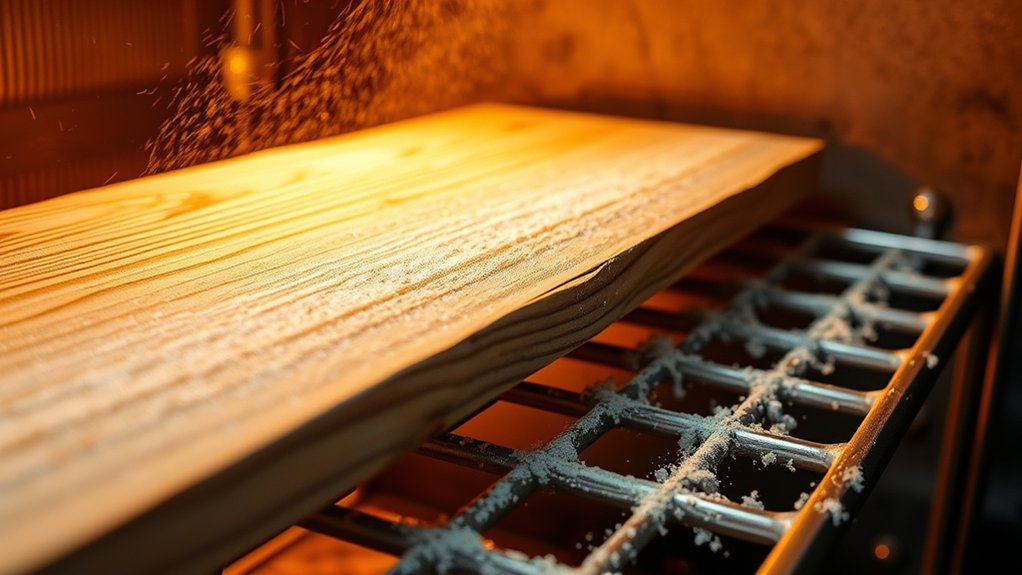
When powder coating wood, you’ll want to carefully control the heating process. Thermal curing techniques usually involve using infrared or convection ovens. These ovens help ensure the powder melts and bonds evenly across the surface.
Alternatively, there’s UV powder curing, which is a great lower-temperature option. This method reduces the risk of damaging the wood while still solidifying the finish effectively.
Thermal Curing Techniques
When you apply powder coating to wood, controlling the thermal curing process is essential to achieve a smooth, durable finish. Thermal curing typically occurs between 220°F and 400°F. This is where the powder melts and forms a uniform film that tightly bonds to the wood surface.
Preheating wood enhances surface conductivity, which allows the powder to adhere more effectively during application.
Key aspects of thermal curing techniques include using infrared, convection, or hybrid ovens to supply consistent thermal energy for proper curing. It’s important to ensure the curing process fully transforms the powder into a durable finish that resists wear.
Managing post-application cooling naturally or via cooling tunnels helps maintain the finish’s integrity.
Mastering these factors guarantees that the powder coat not only sticks well but also withstands long-term use on wooden substrates.
UV Powder Curing
Although traditional thermal curing relies on high heat to bond powder coatings to wood, UV powder curing offers a low-temperature alternative that uses ultraviolet light to initiate rapid chemical hardening. This method suits heat-sensitive materials like wood, curing at temperatures around 250°F or less.
By exposing UV-cured powders to UV light, you trigger a swift chemical reaction that hardens the coating, markedly reducing drying times and accelerating the manufacturing process.
Powder coating offers an environmentally friendly finish with excellent resistance to scratches, chemicals, and UV degradation.
Moreover, UV powder curing enables you to achieve seamless, smooth, and even textured finishes on complex wood shapes and intricate designs, expanding design possibilities beyond conventional coatings.
This precision and efficiency make UV curing an advanced option for wood powder coating applications.
Benefits of Powder Coating Wood vs. Traditional Finishes
Because powder coating wood delivers a durable and eco-friendly finish, you gain enhanced resistance to chips, stains, spills, and scratches.
It outperforms traditional liquid finishes in longevity. This durable finish greatly extends the lifespan of wood products, reducing maintenance frequency and associated costs.
Powder coating also streamlines production by requiring fewer application steps than traditional finishes. This leads to notable cost savings.
Key benefits include:
- Superior abrasion resistance and UV protection, maintaining aesthetic integrity indoors and outdoors.
- Expanded design flexibility with a broader spectrum of colors and textures.
- Elimination of edge banding, minimizing risks of chipping and peeling common in laminated wood.
Challenges in Powder Coating Wood and How to Fix Them
While powder coating wood offers notable advantages over traditional finishes, you’ll face specific challenges that require careful management to achieve the best results.
Wood’s low conductivity impairs powder coating adhesion, so you’ll need to preheat the surface to release moisture and improve charge retention.
Surface preparation is critical: thorough cleaning and sanding remove contaminants that compromise coating quality.
Applying conductive coatings can greatly enhance electrostatic attraction, ensuring uniform powder adherence.
Furthermore, curing temperatures between 220°F and 400°F must be tightly controlled. Excessive heat risks warping or damaging wood, especially heat-sensitive species.
High resin or oil content in woods like pine demands careful selection and pre-treatment to avoid adhesion failures.
Addressing these technical hurdles systematically will help you achieve durable, high-quality powder-coated wood finishes.
With the right steps, powder coating wood can be a game-changer for your projects.
Innovations Making Wood Powder Coating More Feasible
As innovations in pre-treatment and curing technologies advance, powder coating wood has become increasingly practical for diverse applications.
Enhancing surface conductivity through conductive sprays and preheating prepares wood products for effective powder application. Research and development have introduced low-temperature and UV-curable powders, addressing wood’s heat sensitivity during curing.
Plus, advanced application methods like electrostatic spraying guarantee superior powder adhesion, even on complex shapes.
Key innovations include:
- Conductive pre-treatment techniques improving surface conductivity for uniform coating
- Low-temperature and UV-curable powders enabling gentle curing on wood substrates
- Electrostatic spraying enhancing powder distribution and adhesion on wood products
These advancements collectively improve coating quality and operational efficiency.
Frequently Asked Questions
Can Powder Coating Be Removed From Wood Surfaces?
Yes, you can remove powder coating from wood surfaces using various methods like chemical strippers or mechanical sanding.
You’ll want to evaluate the surface preparation carefully to avoid damaging the wood and to ensure the finish lasts when you re-coat it.
The way you apply these removal techniques can also affect the environment, so it’s a good idea to pick eco-friendly options whenever possible.
Taking the time to prepare properly and remove the coating cautiously helps preserve the wood’s integrity.
This makes your refinishing process both more effective and more sustainable.
How Long Does Powder Coating on Wood-Like Finishes Last?
Think of powder coating on wood-like finishes as a fortress shielding against time’s assault. It typically lasts over 10 years.
Durability factors like UV exposure and moisture influence its lifespan, but precise surface preparation and advanced application techniques really help fortify it.
Environmental impact plays a role, yet the seamless coating resists scratches and chips better than laminate.
When you compare cost, powder coating offers long-term value through extended protection and reduced maintenance needs.
It’s a smart choice if you want something that lasts and looks good over time.
Is Powder Coating Safe for Indoor Wooden Furniture?
Yes, powder coating is safe for indoor wooden furniture when you use proper application techniques and low-temperature or UV-cured finish options. This helps minimize durability concerns like warping or cracking.
Plus, it’s great for the environment since it emits minimal VOCs.
To keep the finish looking good, you should clean gently and avoid abrasive materials.
Can Powder Coating Wood Be Done at Home?
Yes, you can do DIY powder coating on wood at home, but it demands strict equipment requirements like an electrostatic spray gun and a curing oven.
Surface preparation is critical. You need to clean, sand, and possibly apply a conductive layer to guarantee adhesion.
Finishing techniques may involve low-temp or UV powders to reduce heat needs.
Cost considerations include investing in gear and safety equipment.
It’s a complex but achievable project with precise execution. Just be ready to put in the effort and plan carefully.
What Colors Are Available for Wood Grain Powder Coating?
You’ll find extensive color options for wood grain powder coating, including custom RAL and Pantone matches.
Application techniques enable textured finishes that enhance durability factors by resisting wear and UV exposure. When comparing finishes, you’ll notice uniform gloss levels that maintain aesthetic consistency.
Plus, this process offers a lower environmental impact than traditional painting.
That makes it both an efficient and sustainable choice for achieving realistic wood grain effects on metal surfaces.
Conclusion
Think of powder coating wood as painting with a high-tech brush that fuses durability and elegance onto a living canvas. While wood’s natural conductivity and heat sensitivity challenge the process, careful preparation and innovation act as your guiding compass.
By mastering these variables, you transform wood’s organic grain into a resilient, vibrant surface. Powder coating isn’t just a finish; it’s a precise science turning natural textures into engineered artistry.