Can You Epoxy Wood Floors: Pros And Cons Explained
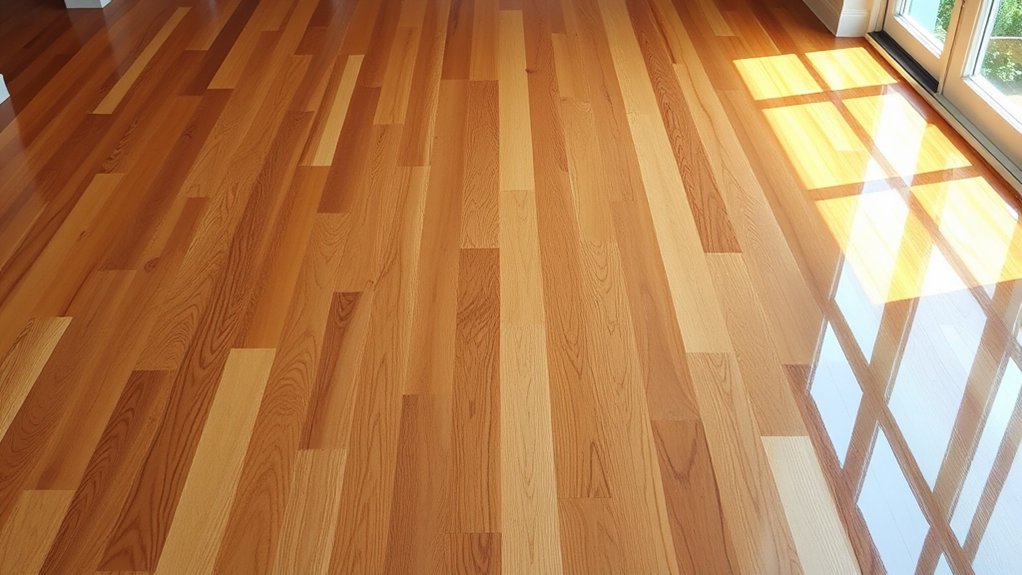
You can epoxy wood floors to create a durable, moisture-resistant surface that enhances the wood’s natural beauty with a glossy finish. However, epoxy’s rigidity may cause cracking or peeling due to wood movement, especially on softwoods. It also requires extensive surface prep and curing time.
Plus, it’s slippery when wet unless you add anti-slip additives. So, weigh these pros and cons carefully before deciding. If you want to explore preparation steps and alternative finishes suited for wood, there’s more to reflect on ahead.
What Is Epoxy Flooring?
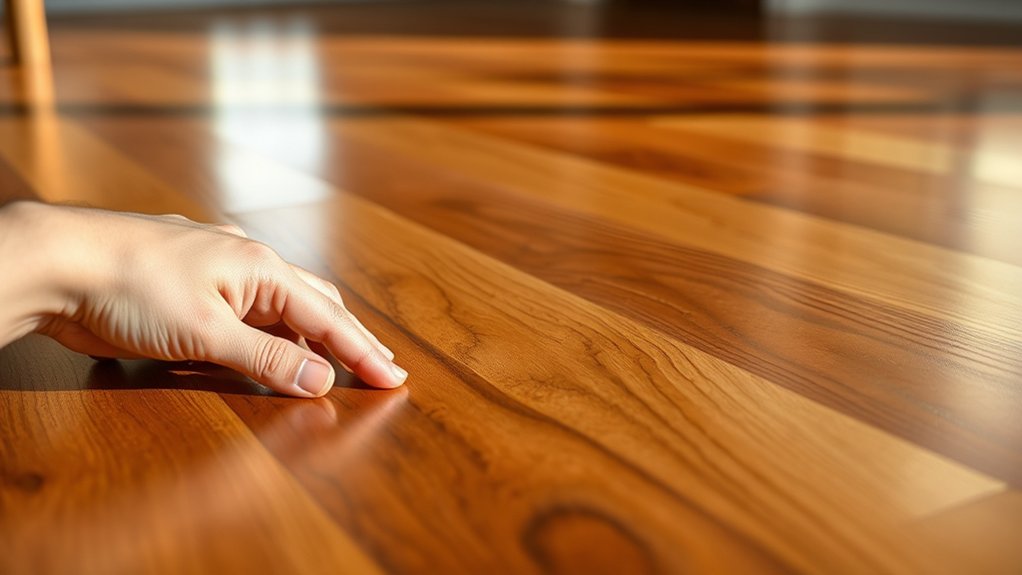
Epoxy flooring is a resilient coating created by combining resin and hardener to form a chemically strong bond that resists physical and chemical damage. This durable coating offers a moisture-resistant barrier, making it ideal for areas prone to spills or humidity.
The installation process involves pouring and spreading the epoxy mixture over a well-prepared surface, where it cures into a tough, seamless layer.
One key advantage is the high-gloss finish that enhances aesthetics while providing low maintenance. You just need to clean it regularly to keep its shine.
However, there are some things to keep in mind. For example, epoxy flooring can be slippery when wet, so adding anti-slip additives is important for safety.
Can You Use Epoxy on Wood Floors?
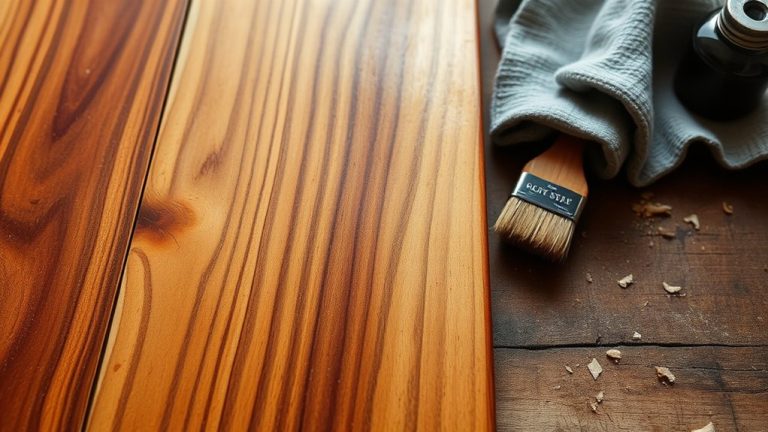
How well does this coating perform on wood floors? Epoxy provides a durable, waterproof layer that protects wood floors from wear and moisture while enhancing their natural beauty with a glossy finish.
For successful installation, you must thoroughly sand and clean the surface to guarantee proper adhesion and avoid problems like peeling or cracking.
Although epoxy is highly durable, lasting 10 to 15 years with care, it can become slippery when wet. So, it’s a good idea to add anti-slip additives to keep things safe.
Epoxy lasts 10 to 15 years but can be slippery when wet; adding anti-slip additives is recommended.
The cost of epoxy application varies widely, typically ranging from $3 to over $20 per square foot, depending on the complexity and customization of your project.
How Epoxy Bonds to Hardwood vs. Softwood Floors
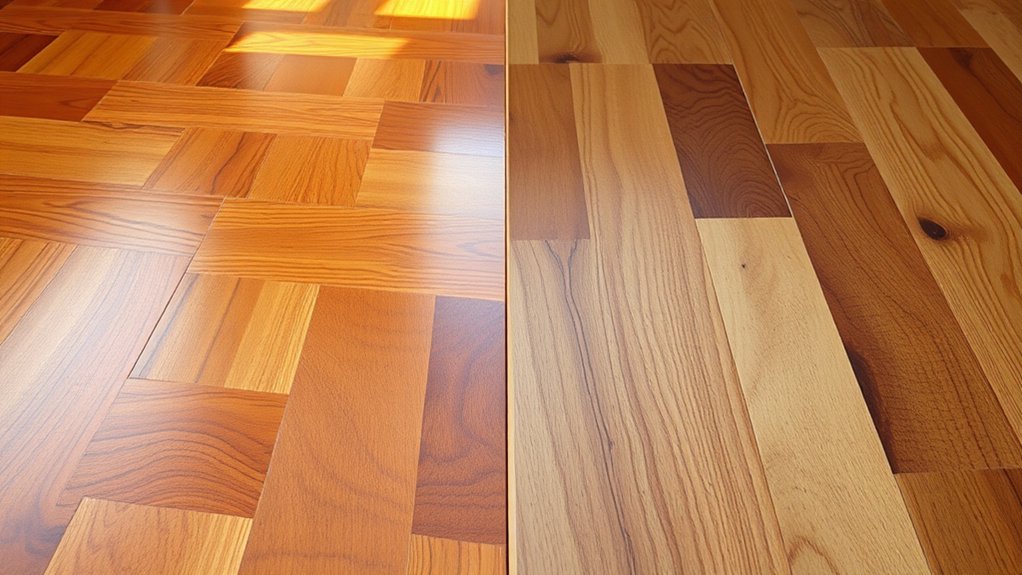
Although both hardwood and softwood floors can be coated with epoxy, their differing densities and structural properties greatly affect adhesion and durability.
Epoxy flooring bonds strongly to hardwood floors due to their dense, stable structure, which helps enhance moisture resistance and longevity.
On the other hand, softwood floors have a porous, less dense nature that can reduce adhesion. This increases the risk of peeling or cracking over time.
To get the best epoxy bonding on either wood type, you need to do proper surface preparation, including thorough sanding and cleaning.
Hardwood’s natural dimensional stability means it works better with epoxy. Softwood, however, tends to warp more, which might compromise the bond.
Using epoxy formulations designed specifically for softwood can improve both adhesion and durability.
Understanding these factors is really important when you’re weighing the pros and cons of epoxy flooring on wood surfaces. It helps you make the best choice for your floor’s longevity and appearance.
Benefits of Epoxy Flooring on Wood
Understanding the bonding differences between hardwood and softwood floors sets the stage for recognizing the advantages that epoxy coatings bring to wood surfaces.
The benefits of epoxy flooring on wood include:
- Durable Surface: Epoxy creates a robust, long-lasting finish that withstands wear in high-traffic areas, markedly extending wood floor lifespan.
- Waterproof Barrier: It seals wood against moisture, spills, and scratches, protecting sensitive wood grains and preventing damage.
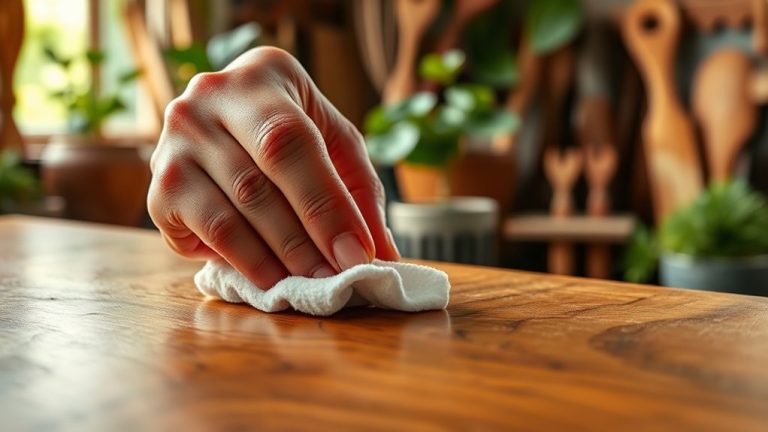
- Easy to Maintain: Epoxy flooring requires minimal upkeep. Regular sweeping and occasional mopping keep it looking pristine.
Plus, adding anti-slip additives makes it safer by reducing slipperiness when wet.
These technical benefits make epoxy an efficient and practical solution to preserve and enhance wood floors.
It combines aesthetic appeal with functional resilience in a way that really works.
Drawbacks of Epoxy Flooring on Wood
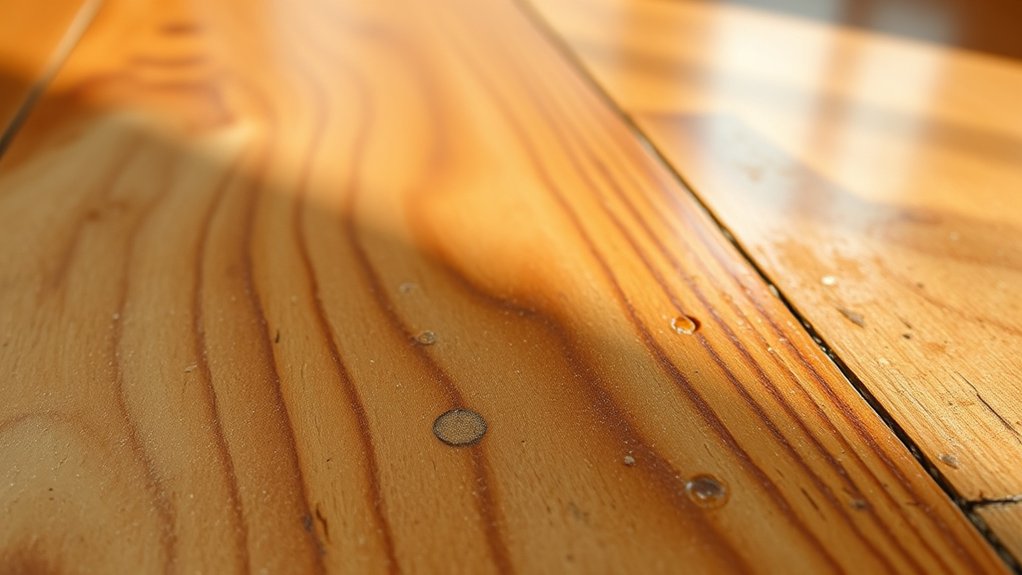
Because wood naturally expands and contracts with changes in temperature and humidity, applying epoxy coatings can present significant challenges.
Epoxy flooring’s rigid nature doesn’t flex with wood floors, increasing the risk of peeling and failure due to warping and cracking. The installation demands thorough surface preparation, including sanding and cleaning, to promote adhesion. This process can be pretty labor-intensive.
Also, the curing process takes several days, which delays floor usability and may disrupt your schedule.
Another drawback is that epoxy coatings can become slippery when wet, creating safety hazards unless you add anti-slip additives.
Considering these cons of epoxy on wood, you need to weigh the durability benefits against potential maintenance issues and safety concerns before deciding on epoxy flooring for your wood floors.
It’s worth thinking about what matters most to you in the long run.
Preparing Wood Floors for Epoxy
To prepare your wood floors properly for epoxy, start by thoroughly cleaning and sanding the surface to remove all existing finishes, dirt, and debris. This step guarantees a smooth base for maximum adhesion.
Next, address any imperfections by filling gaps or cracks with a suitable filler to prevent flaws in the finish. Finally, apply a bonding primer formulated for wood to enhance epoxy adhesion.
When preparing wood floors for epoxy, follow these key steps:
- Confirm the wood is completely dry and free of moisture to avoid curing issues.
- Maintain an ambient temperature between 60-85°F (15-30°C) to facilitate proper epoxy curing.
- Verify the surface is uniform and primed for a durable, even finish.
These precise steps maximize adhesion and curing, resulting in a long-lasting epoxy wood floor.
It’s all about setting the right foundation for your epoxy to perform its best.
Installing Epoxy on Wood Floors: Step-by-Step
Start by carefully evaluating the wood floor’s condition. Check for any warping, cracks, or soft spots that could compromise the epoxy’s effectiveness.
Next, prepare the surface by sanding, cleaning, and filling gaps to guarantee strong adhesion. Apply a bonding primer before you install epoxy, creating a smooth base.
Pour a thin, even epoxy coating and allow proper curing time, usually 24 to 48 hours, before applying a second coat. Keep the temperature between 60 and 85°F for ideal curing.
Follow this step-by-step process to guarantee your epoxy coating is properly installed and durable.
| Step | Action | Notes |
|---|---|---|
| 1 | Assess wood’s condition | Check warping, cracks |
| 2 | Sand and clean wood | Remove debris, smooth surface |
| 3 | Apply bonding primer | Improves adhesion |
| 4 | Pour 1st epoxy coat | Thin, even application |
| 5 | Allow curing time | 24-48 hours, 60-85°F |
When to Choose Other Wood Floor Finishes
You’ll want to go with polyurethane or other finishes when your hardwood floors regularly expand and contract.
These coatings flex with the wood, which helps prevent cracking. Plus, polyurethane is easier to apply and repair, so it’s a practical choice if you want a simpler installation process.
On top of that, some alternative finishes offer durable protection while keeping the wood’s natural look better than epoxy does.
Hardwood Floor Movement
Although epoxy offers a durable and glossy finish, it’s important to recognize that hardwood floors naturally expand and contract with changes in temperature and humidity.
This hardwood floor movement poses challenges for epoxy coatings due to their rigid nature. You should consider these factors before opting for epoxy.
Epoxy’s rigidity doesn’t accommodate temperature changes, increasing the risk of warping, cracking, and eventual coating failure.
Cracks in epoxy can create sharp edges, leading to safety hazards, especially in high-traffic areas.
A flexible alternative like polyurethane better absorbs wood movement, reducing damage risks and extending floor life.
So, weigh these pros and cons carefully.
Take a good look at your environment and floor condition to decide if epoxy is truly suitable for your hardwood flooring.
Polyurethane Finish Benefits
When hardwood floors go through frequent changes in temperature and humidity, polyurethane finishes offer a practical solution. They flex with the wood’s natural movement, which helps prevent damage. These finishes create a durable, protective layer that resists scratches and dents, making them perfect for high-traffic areas.
You’ll find polyurethane finishes easier to apply compared to epoxy. They require less surface preparation and maintenance, which is a big plus. Plus, they come in both oil-based and water-based formulas, giving you options to suit your needs.
They also enhance natural beauty by offering various sheen levels without compromising the wood’s appearance.
And here’s something great—polyurethane is less prone to yellowing over time, which helps keep light-colored floors looking fresh.
Alternative Durable Options
If your flooring project demands specific performance characteristics beyond what epoxy offers, exploring alternative durable finishes becomes essential.
While epoxy floors provide a long-lasting surface, certain flooring solutions cater better to wear and tear, ease of maintenance, and aesthetic preferences.
Consider these durable options:
- Polyurethane Finish: Ideal for wood that expands or contracts due to humidity, it offers flexibility without cracking, maintaining a long-lasting surface.
- Oil-Based Finishes: Penetrate deeply to enhance wood’s natural beauty, providing durable protection and easy-to-clean surfaces perfect for high-traffic areas.
- Water-Based Finishes: Fast-drying and low in VOCs, they create a clear, durable surface that resists yellowing, suitable for lighter woods requiring frequent cleaning.
Choosing the right finish depends on your environment, traffic level, and maintenance needs beyond what epoxy floors can provide.
Frequently Asked Questions
How Long Does Epoxy Flooring on Wood Typically Last?
Epoxy flooring on wood typically lasts 10 to 15 years, depending on factors like resin quality and environmental impact.
How long it lasts can really vary based on these details.
Proper surface preparation is key. That means thorough cleaning and paying attention to moisture levels to make sure it holds up well.
Installation usually takes a few days to allow for full curing. It’s a bit of a process but worth it for the durability you get.
When it comes to cost, epoxy is pretty affordable over the long haul.
Plus, you can customize the look to match your style. So, you get a good balance of performance and design.
Can Epoxy Flooring Be Repaired if It Gets Scratched?
Like fixing a cracked phone screen, you can repair epoxy wood floors using specific epoxy repair techniques.
Start with thorough wood floor preparation. Clean and sand the scratched area carefully.
Next, apply the epoxy, making sure to match the original surface finish options to restore uniformity.
Using scratch prevention methods afterward can help extend the floor’s durability.
If you’re into DIY, repair kits often work well for minor damage.
Plus, cost comparison shows repairs are usually more affordable than a full replacement, so maintaining your floors is definitely worthwhile.
Is Epoxy Flooring Safe for Homes With Pets?
Yes, epoxy flooring is safe for pet safety when fully cured, offering odor resistance that prevents harmful fumes. Its flooring durability withstands pet claws, maintaining integrity over time.
To improve surface traction, especially when wet, you should add anti-slip additives during the installation process.
These pet-friendly options guarantee comfort and safety. Considering long-term effects, epoxy remains hygienic and easy to clean, making it ideal for homes with pets.
It’s a practical choice if you want something that lasts and keeps your furry friends safe.
How Does Epoxy Flooring Affect the Wood’s Natural Color Over Time?
You know what they say: “A stitch in time saves nine.”
When you epoxy wood floors, UV exposure can cause color fading over time. This can slightly dull the natural hue despite the epoxy’s moisture resistance.
Using the proper application process and UV-resistant formulations really helps maintain the aesthetic appeal and surface texture.
Compared to untreated wood, epoxy offers superior durability. But natural aging still impacts the color.
Regular upkeep is key to making sure your floor stays vibrant longer.
It’s all about staying on top of maintenance so you can enjoy that beautiful wood look for years.
What Maintenance Is Required for Epoxy-Coated Wood Floors?
You’ll need to follow specific epoxy cleaning techniques, like using mild soap and warm water.
Avoid harsh chemicals to protect your floor’s finish.
It’s a good idea to regularly inspect the surface so you can catch scratches early.
Understanding the application process also helps you maintain important durability factors, like moisture resistance.
If you want to enhance the look, consider UV-resistant coatings.
Also, keep installation cost comparisons in mind for any future upgrades.
Consistent care will make sure your epoxy-coated wood floor lasts longer and stays beautiful.
Conclusion
Imagine your wood floor transformed into a glossy, durable surface that resists stains and wear, thanks to epoxy’s protective layer. While epoxy can bond well with hardwood and add resilience, it demands precise preparation and careful application to avoid peeling or discoloration.
If you want a tough, moisture-resistant finish and don’t mind the prep work, epoxy’s a strong choice. Otherwise, consider traditional wood finishes for natural warmth and easier upkeep. It really depends on what you’re looking for in terms of maintenance and look.