Can You Put Wood In The Oven – Safe Practices And Tips
Yes, you can safely put wood in the oven if you follow some guidelines. Keep the temperature between 140 to 215 degrees Fahrenheit to avoid cracking and damage. Monitor the wood closely and limit drying time to a couple of hours.
Make sure there’s proper ventilation to manage moisture and avoid hazards. Using a reliable thermometer and checking moisture content is vital. For more in-depth tips and techniques to get the best results, consider exploring further options.
Is It Safe to Use the Oven for Drying Wood?
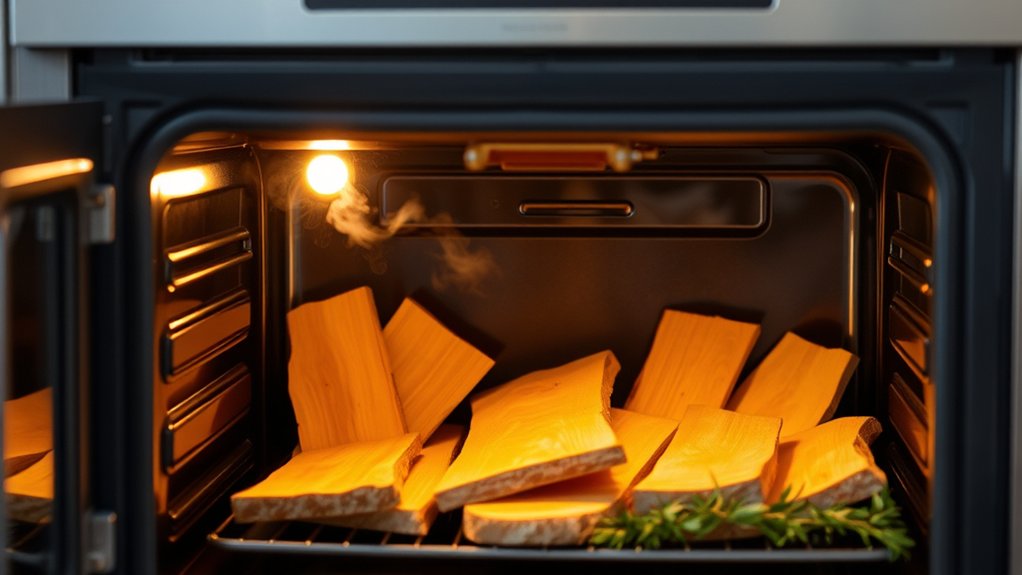
While it might seem unconventional, drying wood in the oven can be a safe and effective method when done correctly. To guarantee safety, keep the oven temperature at low to moderate levels, between 140 to 215 degrees Fahrenheit. This helps avoid boiling the water inside the wood and causing damage.
It’s vital to monitor the wood closely during the drying process to prevent uneven drying or cracking. Moreover, using heat-resistant materials under the wood, like metal sheets or silicone mats, helps protect your surfaces.
Proper ventilation around the oven is essential to minimize fire hazards. When managed correctly, oven drying not only helps eliminate wood bugs but also maintains the quality of your wood.
Key Risks of Oven Drying Wood: Preventing Damage and Fire Hazards
Even if oven drying wood seems like a handy solution, it comes with several risks that you need to evaluate to prevent damage and fire hazards. High temperatures during the drying process can lead to uneven drying and cracking, so stick to the recommended range of 140 to 170 degrees Fahrenheit.
Oven drying wood may seem convenient, but be mindful of risks like cracking and fire hazards from high temperatures.
It’s essential to monitor the drying process because excessive heat may cause internal boiling, which risks serious damage to the wood.
Avoid placing the oven on wooden surfaces; instead, use heat-resistant materials to prevent fire hazards.
Also, guarantee proper ventilation to manage steam that could harm wood finishes.
Be cautious, as the lack of clear warnings about safe placements increases your risk of accidents while oven drying wood.
Best Practices for Safe Oven Drying Wood
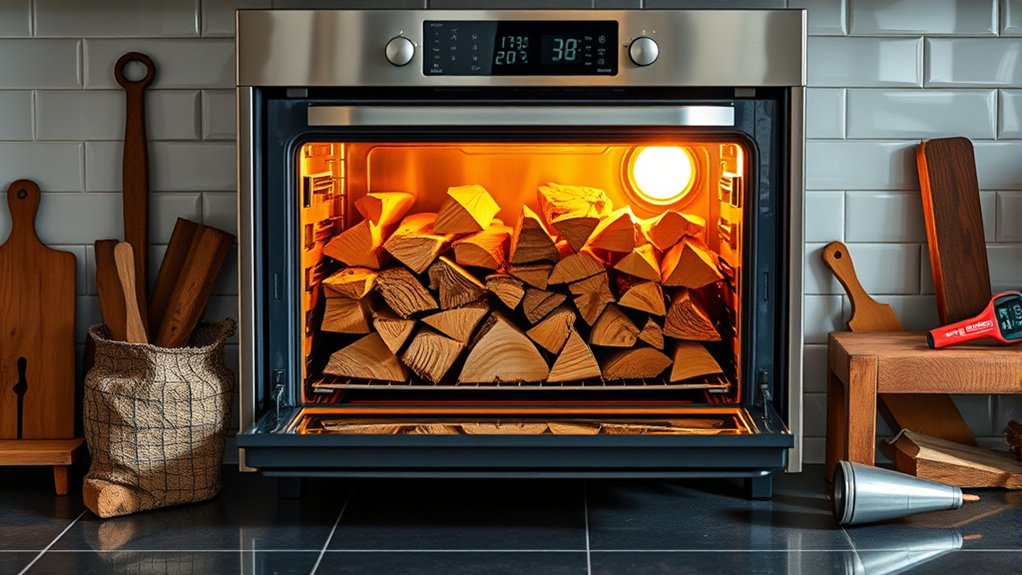
When you’re drying wood in the oven, it’s really important to keep a close eye on the temperature. You want to avoid problems like cracking or even the wood boiling, which can happen if things get too hot.
Try to keep the heat low—somewhere between 140 and 170 degrees Fahrenheit is ideal. This way, the drying process stays safe and controlled.
Also, don’t just set it and forget it. Staying attentive over those couple of hours helps you get the wood dried evenly without causing any damage.
It’s all about patience and careful monitoring!
Monitor Temperature Closely
To successfully dry wood in the oven, you need to monitor the temperature closely, making sure it stays between 140 to 170 degrees Fahrenheit.
Using a reliable thermometer is essential for keeping an eye on the heat because inconsistent temperatures can cause cracking and uneven drying.
It’s important to check on the wood regularly during the drying process, which usually takes a couple of hours.
This helps prevent fire hazards and keeps things safe. You might want to set a timer to track the drying time since different wood species need different amounts of time to dry effectively.
Also, keep the oven well-ventilated so steam can escape.
This reduces moisture buildup that could damage the wood or cause uneven drying.
Paying attention to these details is really the key to drying wood successfully in the oven.
Use Low Heat
Using low heat is essential for safely drying wood in the oven, as it helps prevent issues like cracking and uneven drying. Aim for temperatures between 140 to 170 degrees Fahrenheit to minimize the risk of internal boiling during the drying process.
Keep a close eye on your wood to avoid uneven drying, which can lead to splintering. Limit the drying time to a couple of hours and regularly check the moisture content for ideal results without over-drying.
Consider placing a heat-resistant barrier, like a metal sheet or silicone mat, under the wood to protect surfaces from heat damage.
And finally, avoid putting the oven directly on valuable or finished wood to reduce fire hazards. Just a few simple steps can make a big difference!
Alternative Methods for Drying Wood Safely
If you want to dry wood safely without turning to the oven, there are some practical options you can try. Air drying is a straightforward and effective method, especially if you’re working with larger pieces of wood.
It might take a bit longer, but it’s gentle and reliable.
On the other hand, if you have smaller items to dry, microwave drying can be a quick and convenient solution. It’s definitely faster, but you’ll want to keep an eye on things to avoid overheating.
Air-Drying Techniques Overview
When it comes to air-drying wood, knowing the right techniques can make all the difference in maintaining its quality. Start by stacking your lumber outdoors, allowing for proper air circulation. Use concrete blocks or treated timbers as a sturdy foundation, and place stickers 18 to 24 inches apart to enhance airflow and prevent warping.
Depending on your location, expect drying times to range from several months to nearly a year. You’ll aim for a moisture content of around 12% to 14% in Western Oregon and 8% to 10% in Eastern Oregon.
Keep a close eye on drying rates because too slow can lead to decay, while too fast might cause surface cracks.
Finally, monitor moisture content using sample boards or moisture meters to guarantee ideal results. It’s all about finding that sweet spot to keep your wood in great shape.
Microwave Drying Method Explained
While many people stick to traditional air-drying methods for wood, the microwave drying technique offers a quick and effective alternative for small projects. This microwave drying method uses microwave energy to heat the moisture within the wood, enabling rapid drying.
However, it’s important to dry only one piece at a time, which limits efficiency for larger batches. To avoid damage, keep a close eye on the wood to prevent overheating because that can cause internal boiling.
Typically, you’ll want to heat the wood in short intervals, checking for dryness between each session until you reach the desired moisture content.
This method is especially popular with bowl turners and hobbyists because it’s super convenient. Just keep in mind, not all wood types are suitable for this technique.
Monitoring Moisture Content When Drying Wood
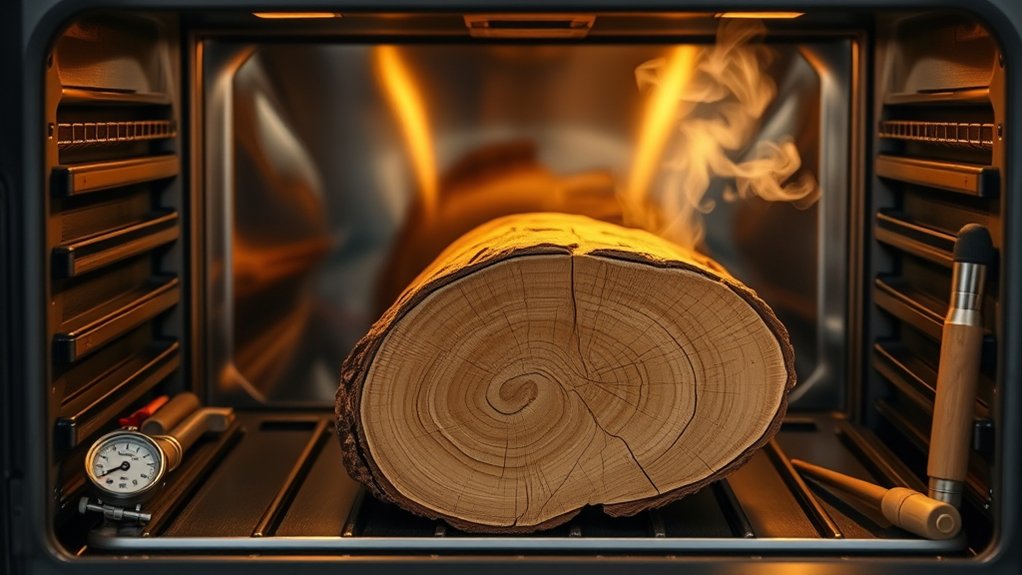
Monitoring moisture content (MC) during the drying process is essential to guarantee your wood remains functional and free from defects. Aim for a target MC of 12% to 14%, especially in Western Oregon climates.
You can effectively track drying progress using the sample board method. Just cut sections of representative lumber, weigh them, and calculate the average MC. Hand-held moisture meters are also valuable for daily assessments. Just remember their accuracy drops above 30% MC.
Regular moisture testing helps catch issues like drying speed. Signs of permanent stains or checks indicate improper conditions.
Balance in drying rates is vital too. Drying too fast can cause surface checks, while drying too slow puts your wood at risk for staining or decay.
How to Prevent Damage to Wood When Using an Oven
To prevent damage to wood while using an oven, it’s essential to take a few precautions that will safeguard your surfaces. Always place heat-resistant materials like metal sheets or silicone mats beneath the oven. This helps protect your wood from any heat damage.
Taking simple precautions, like using heat-resistant materials beneath your oven, can effectively safeguard your wood surfaces from damage.
Avoid putting the oven directly on finished wood, as steam venting can harm the moisture content and finish. Keep your oven temperature low, ideally between 140°F and 170°F, to minimize overheating and drying.
Consider using non-flammable surfaces or elevated platforms for added safety.
Finally, guarantee proper ventilation around the oven to help dissipate heat, reducing the risk of damage to nearby wooden items.
Following these steps can keep your wood safe and intact. It’s really about taking a few simple measures to protect your surfaces.
Essential Facts About Wood Types for Oven Drying
When it comes to oven drying wood, understanding the type of wood you’re working with is key to achieving the best results. Different wood species respond variably.
Hardwoods like cherry and yellow birch require lower temperatures of 140-160°F to avoid boiling moisture. These types have maximum drying rates of 5.8% and 6.1% moisture loss per day, so rapid drying can be detrimental.
Thick or wide dry lumber is particularly susceptible to cracking, so keep an eye on moisture content. Avoid exceeding the fiber saturation point of 25%-30%, as this can cause internal damage.
Finally, make certain your wood is sealed properly and maintain consistent drying temperatures to mitigate risks associated with different wood types during the oven drying process.
It really helps to be patient and attentive throughout. This way, your wood will dry evenly and stay in great condition.
When to Seek Professional Help for Wood Drying?
Recognizing the signs that you might need professional help with wood drying can save you time and prevent costly mistakes. If you notice significant cracking or warping in your wood, despite your best efforts, it’s time to consult an expert to assess the moisture content. This is especially important when drying large quantities or species prone to checking.
If you’re unsure about safe drying rates for particular wood types or lack knowledge about kiln drying, professionals can offer guidance and access to the right equipment.
Also, for valuable woods, using moisture meters and sample boards can be tricky. An expert can provide precise monitoring and effective drying strategies, ensuring your wood remains in top condition.
Frequently Asked Questions
Can I Use My Regular Oven for Drying Wood?
Yes, you can use your regular oven for drying wood! Just keep the oven temperature between 140 to 170 degrees Fahrenheit to prevent damage.
Monitor the wood closely, as uneven drying can cause cracking.
It’s smart to place heat-resistant materials underneath to protect your surfaces.
Don’t forget proper ventilation to reduce fire risks.
The drying time typically lasts a few hours, depending on the wood’s thickness and moisture content.
Happy drying!
What Types of Wood Are Safest for Oven Drying?
When it comes to wood selection for oven drying, you’ve got to tread carefully.
Softwoods like pine and cedar are your best bets since they’re less dense and have lower moisture content. Avoid woods with high resin, like fir and spruce, as they can smoke up your kitchen.
Dense hardwoods, such as oak or maple, require controlled conditions to prevent damage.
Stick to kiln-dried options for maximum safety and performance. Keep an eye on the temperature!
How Long Should I Leave Wood in the Oven?
You should leave wood in the oven for a couple of hours at low to moderate temperatures, ideally between 140 to 170 degrees Fahrenheit.
This helps in reducing moisture content effectively. Keep an eye on it, though, to prevent cracking or warping.
Drying time can vary based on the wood’s thickness and type, so check periodically.
Avoid exceeding 215 degrees Fahrenheit, as it can damage the wood.
Happy drying!
Can I Store Dried Wood in the Oven?
No, you shouldn’t store dried wood in the oven. It poses fire hazards and can damage both the wood and your oven.
Instead, look for a well-ventilated area to keep your wood storage safe and dry.
High temperatures can lead to uneven drying, causing cracks and moisture problems.
Protect your wood by opting for a safer storage method that maintains its integrity without the risks associated with an oven environment.
What Are Signs of Overheating Wood in the Oven?
When you’re drying wood in the oven, keep an eye out for overheating indicators. If you notice visible scorching or bubbling on the surface, that’s a warning sign.
A burnt smell or darkening color means the heat might be too high.
Cracking or splitting indicates moisture boiling inside. To avoid any issues, you should monitor the temperature closely.
Ideally, keep it between 140 to 170 degrees Fahrenheit for safe drying. Just take it slow and steady!
Conclusion
Using your oven to dry wood can be tempting because it’s convenient. But it comes with risks that could lead to fire hazards or damage to your load. The controlled heat might speed up the process, sure, but the potential for disaster is still pretty high.
Instead, think about safer, alternative drying methods. It’s all about balancing urgency with caution. After all, protecting your home and your wood is way more important than drying it fast.
Always put safety first. That way, you’ll get the best results without the risks.