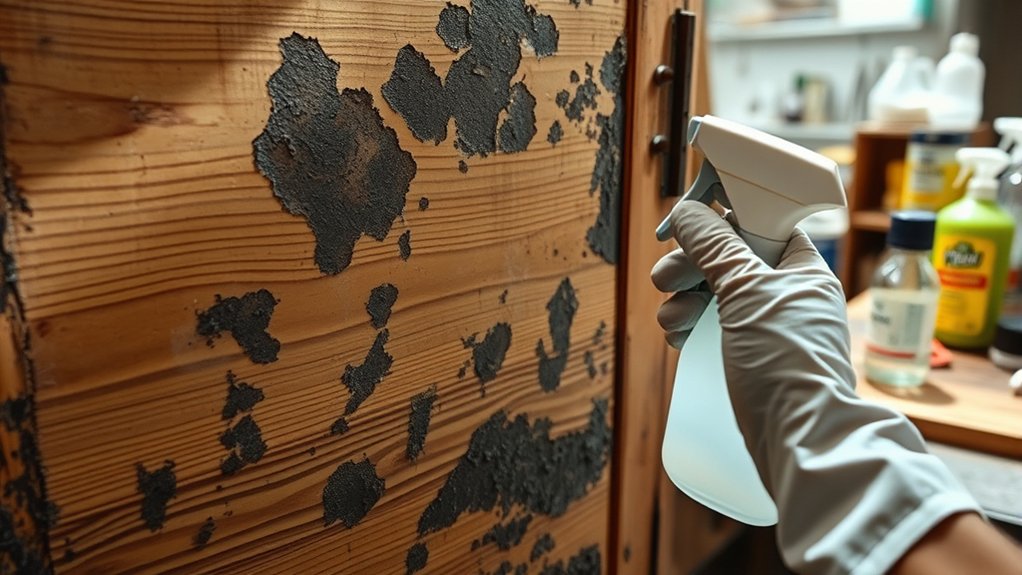
Can You Clean Mold Off Wood: Effective Removal Methods
You can clean mold off wood effectively by using solutions like a 50/50 mix of hydrogen peroxide and white vinegar. These kill mold without damaging the wood.
Before you start cleaning, make sure to wear an N95 mask, gloves, and goggles. Also, keep the area well-ventilated to reduce the chance of inhaling mold spores.
Avoid using bleach because it can damage the wood. After cleaning, be sure to dry the wood thoroughly to prevent mold from coming back.
If you’re dealing with a deep problem or a large infestation, you might need professional help. It’s a good idea to learn how to prepare, treat, and prevent mold for better results.
Key Takeaways
- Use a 50/50 mix of hydrogen peroxide and white vinegar to effectively kill mold on wood surfaces without damaging fibers.
- Wear protective gear like N95 masks, gloves, and goggles to minimize exposure to mold spores during cleaning.
- Pre-treat moldy wood with hydrogen peroxide or vinegar solution and ensure good ventilation to reduce spore spread.
- Avoid bleach as it can harm wood; instead, opt for borax and vinegar to inhibit mold regrowth on porous wood.
- Thoroughly dry wood after cleaning and maintain humidity below 60% to prevent future mold growth.
Why Mold Grows on Wood and Why It’s a Problem
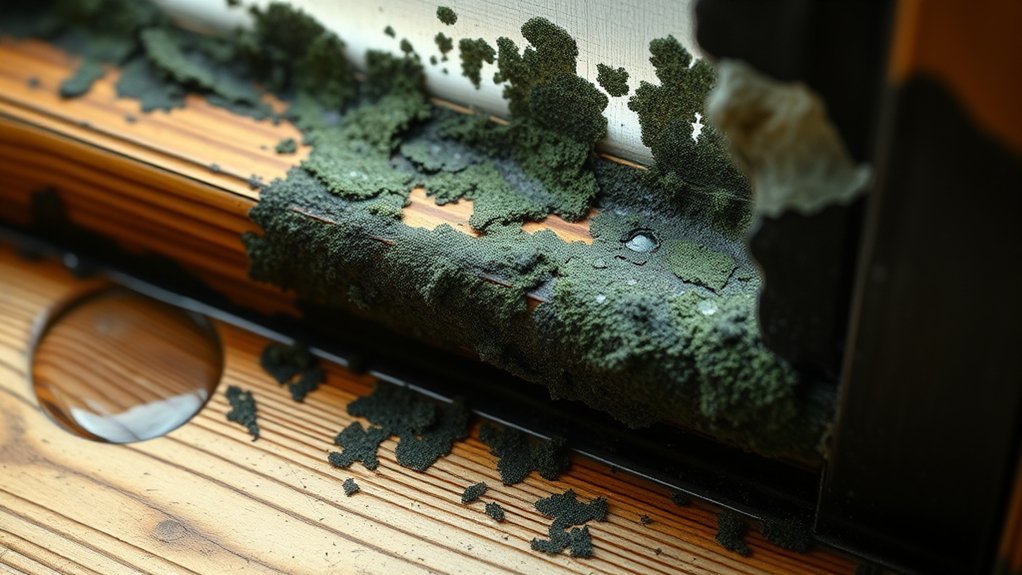
Moisture plays a vital role in why mold grows on wood, as high humidity levels above 80% create an ideal environment for fungal growth. When wood remains damp, its porous structure absorbs moisture, providing nutrients that accelerate mold growth.
Black mold, particularly Stachybotrys chartarum, poses significant health risks due to its toxic spores, which can cause respiratory problems and skin lesions. You should understand that mold not only compromises air quality but also penetrates deeply into wood, making removal more difficult.
If left untreated, mold growth deteriorates wood’s structural integrity, weakening the material and threatening the stability of your building.
Because mold can hide in crevices and less visible areas, it’s essential to address moisture issues promptly to prevent extensive damage and costly repairs.
How to Tell Mold From Other Wood Stains
You can usually spot mold on wood by looking for irregular patches that might be black, green, or white. These spots often feel fuzzy or slimy, which is different from the smooth, even stains you get from finishes or the natural grain of the wood.
Mold tends to cause discoloration and soft spots because it actually penetrates the wood, whereas stains just sit on the surface and don’t damage the wood’s structure.
Another good way to tell if it’s mold is by checking for moisture around the wood and sniffing for any musty odors. These signs often go hand in hand with mold growth.
If you really want to be sure, though, lab testing is the most reliable method to identify mold for certain.
Visual Mold Indicators
Identifying mold on wood requires careful observation of its visual and textural characteristics. Mold, including black mold, often appears as irregular black, green, or white spots with a fuzzy or slimy texture. This is especially common in humid conditions.
In contrast, wood stains show uniform color and smoothness. Mold may also emit a musty odor, unlike stains. Plus, surface mold can sometimes be wiped away, while stains cannot.
Below is a table summarizing these visual mold indicators:
| Indicator | Mold / Black Mold |
|---|---|
| Color | Irregular black, green, or white |
| Texture | Fuzzy or slimy |
| Odor | Musty |
| Removal | Wipes off (surface) |
| Wood Discoloration | Irregular beneath surface |
Differentiating Stains
How can you quickly tell if a discoloration on wood is mold rather than a stain?
Mold typically appears as black, green, or white patches with a fuzzy or slimy texture. It’s often accompanied by a musty odor.
In contrast, wood stains have a uniform color and sheen, a smooth finish, and usually smell like solvents or oils used in their application.
Mold penetrates wood fibers, which can cause dampness or a spongy feel beneath the surface. Stains, on the other hand, stay on the surface without affecting the wood structure.
To confirm, try wiping the area with a damp cloth. If the discoloration persists or spreads, mold is likely present.
Proper mold control means understanding these differences to ensure effective treatment and prevent damage to the wood fibers.
How to Prepare Wood for Safe Mold Cleaning
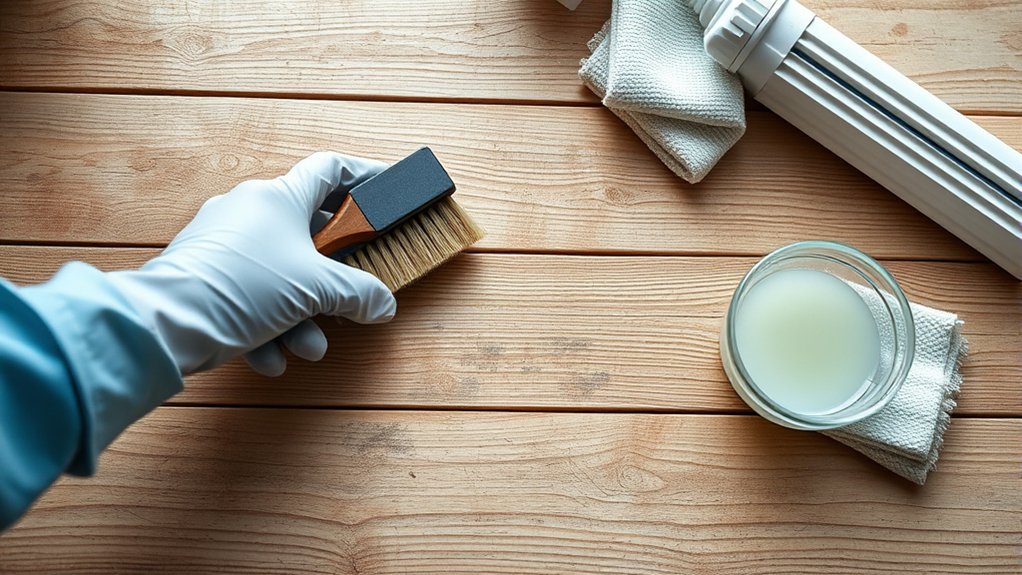
Three essential steps prepare wood effectively for safe mold cleaning.
First, thoroughly inspect the wood for visible mold and structural damage. If you find extensive rot, it might be better to replace the wood rather than try to fix it.
Second, make sure you have proper ventilation by working outdoors or in a well-ventilated area. This helps minimize the spread of mold spores during the cleaning process.
Third, pre-treat the mold-affected areas with a warm solution containing hydrogen peroxide or vinegar. This helps the solution penetrate better and improves how well the mold comes off.
While you’re preparing, it’s important to wear protective gear to reduce your exposure to mold spores.
After you finish cleaning, check that the wood is completely dry. Moisture is a big reason mold comes back, so keeping the wood dry is key.
Following these steps makes the mold removal process safer and more effective for your wood surfaces.
Choosing the Right Protective Gear for Mold Removal
Because mold removal exposes you to harmful spores and chemicals, choosing the right protective gear is critical to safeguard your health.
Start by wearing an N95 mask to effectively filter airborne mold spores. This helps prevent respiratory issues, especially if you have pre-existing conditions.
Use protective gloves to avoid direct skin contact with mold and cleaning agents. This minimizes the risk of allergic reactions or infections.
Also, wear goggles or safety glasses to shield your eyes from irritants and chemical splashes.
Dress in long sleeves and pants made from non-absorbent materials to protect your skin. This also helps prevent spores from settling on your clothing.
Make sure you have adequate ventilation by working outdoors or near open windows with fans. This helps disperse airborne spores and reduces inhalation risks during mold removal.
DIY Solutions to Clean Mold Off Wood
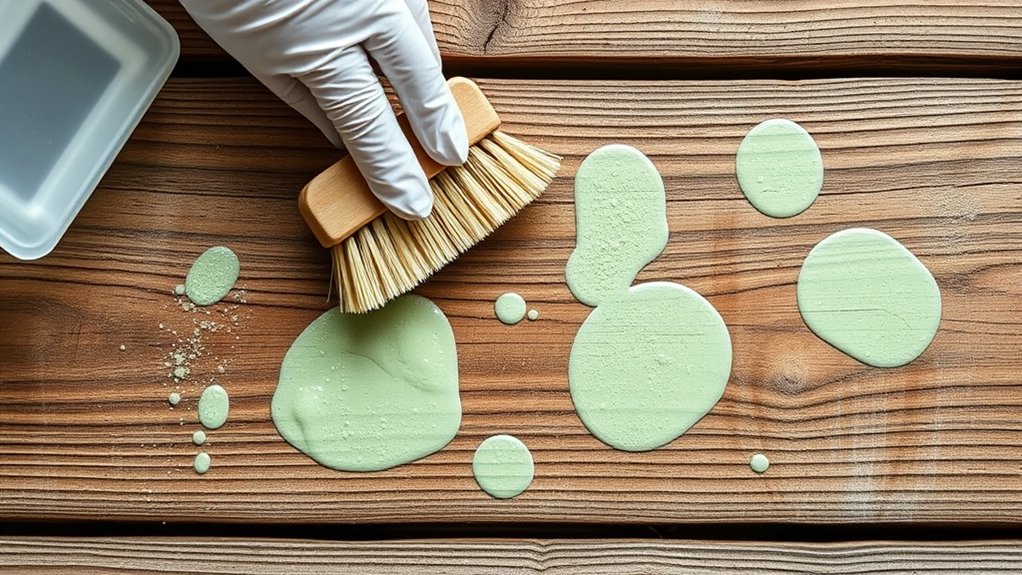
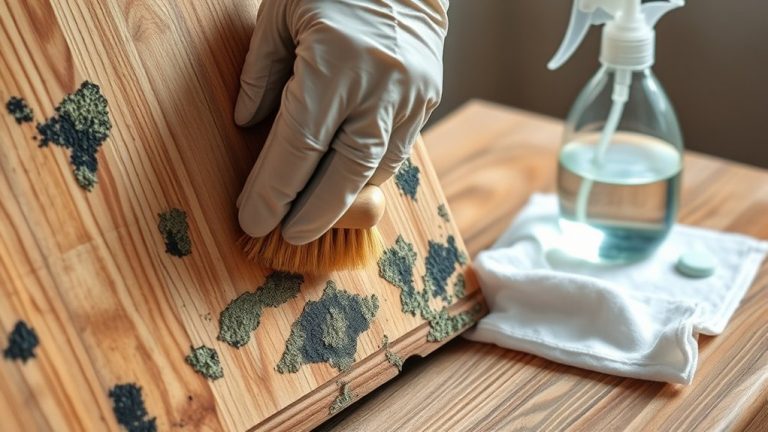
With the right protective gear in place, you can safely tackle mold removal from wood using effective DIY solutions. To kill mold, use a 50/50 mix of hydrogen peroxide and white vinegar. This combo penetrates organic material really well.
Warm vinegar solutions increase penetration and kill black mold without harsh chemicals. For deep mold, borax combined with vinegar helps inhibit regrowth. Just avoid bleach, since it can damage wood fibers.
| Solution | Application Method |
|---|---|
| Hydrogen Peroxide & Vinegar | Spray and wipe thoroughly |
| Warm Vinegar | Apply with cloth, let sit |
| Borax & Vinegar | Scrub surface, no rinse |
| Protective Gear | Gloves, N95 mask mandatory |
| Ventilation | Maintain airflow during cleaning |
Follow these steps carefully to get rid of mold safely and effectively.
Sanding Moldy Wood Floors: What You Need to Know
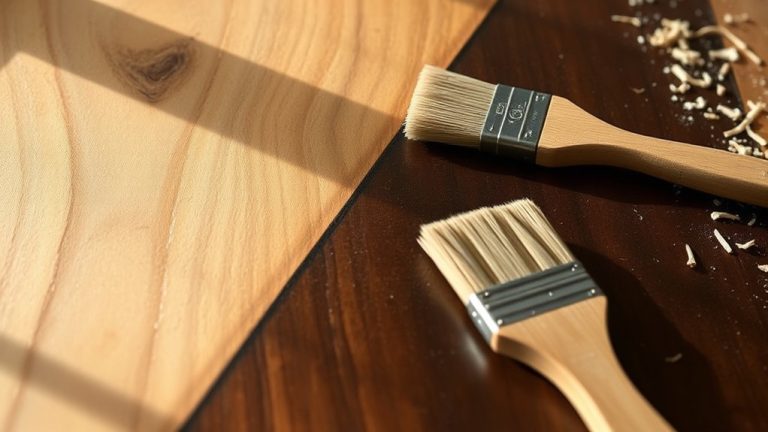
When you’re sanding moldy wood floors, start with 100 grit sandpaper, then move on to 220 grit. This combo helps get rid of surface mold and the spores that are stuck deep in the wood grain.
To keep dust under control, try dampening your sandpaper with a diluted bleach solution. Make sure you have good ventilation going while you work, too.
Once you’ve finished sanding, be sure to vacuum or wipe down the area thoroughly. This step is key to removing debris and stopping mold from coming back.
Proper Sanding Techniques
Begin sanding moldy wood floors using 100 grit sandpaper to effectively remove surface mold. This initial step is essential when sanding moldy wood to get rid of black stains and surface spores.
Follow up with 220 grit sandpaper for a smooth finish and to eliminate more mold spores.
While sanding, lightly spray a diluted bleach solution to reduce airborne spores. Just keep in mind, bleach doesn’t work that well on porous wood.
After sanding, clean the dust thoroughly with a dry microfiber cloth and vacuum to get rid of any leftover mold particles.
Make sure the wood is completely dry before applying a protective water-based polyurethane finish. This step helps prevent mold from coming back.
Keep these points in mind when sanding moldy wood floors:
- Start with 100 grit sandpaper to remove black mold.
- Progress to 220 grit for smoothness.
- Use diluted bleach spray cautiously.
- Clean dust meticulously after sanding.
- Verify full drying before sealing.
Dust Control Measures
Sanding moldy wood floors generates a significant amount of dust and airborne spores that can affect indoor air quality and your health. Implementing effective dust control measures is crucial when cleaning mold to minimize these hazards.
Use 100 grit sandpaper followed by 220 grit to remove mold embedded in the wood grain efficiently.
While sanding, lightly spray a diluted bleach solution to reduce airborne spores, though bleach won’t penetrate deeply into porous wood.
After sanding, thoroughly clean all dust and steel fibers to prevent rust and guarantee a smooth surface. Employ microfiber cloths for dry wiping and vacuum to eliminate residual sawdust before applying finishes.
Maintain regular inspections and control humidity levels to prevent future mold growth on wooden floors.
These steps guarantee safe, thorough mold removal and prolong wood integrity. Taking these precautions really helps keep your home healthy and your floors looking great.
How to Prevent Mold From Coming Back on Wood
Although mold can be removed from wood, preventing it from coming back means you’ve got to control the environment that helps it grow. The key is managing humidity and making sure there’s good ventilation all the time.
To stop mold from returning on wood, keep humidity low and ensure constant ventilation.
Mold loves moist places where its spores can settle and multiply.
To keep mold away, here are some simple things you can do:
- Keep indoor humidity below 60%.
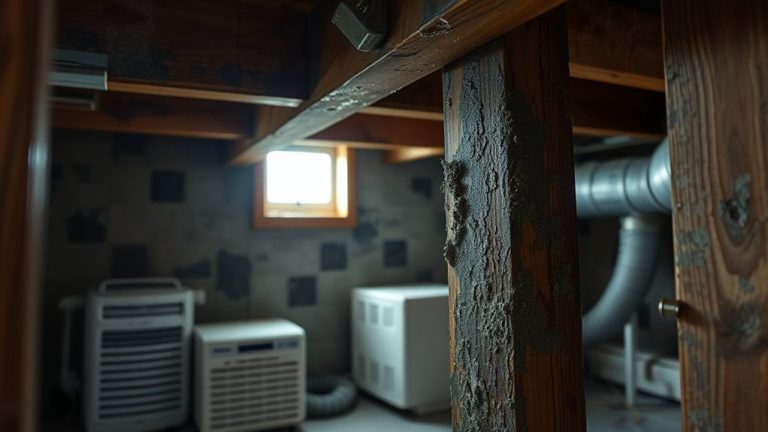
- Improve airflow in places that tend to get damp, like basements and attics.
- Fix any leaks or water problems as soon as you notice them.
Also, consider applying mold-resistant paints or sealants on wood surfaces.
And don’t forget to check regularly for any signs of moisture or mold showing up.
Doing these things consistently will really help stop mold from making a comeback on your wood.
When to Call Professionals for Mold Removal Help
When mold infestation exceeds 10 square feet, you should call professionals who’ve the specialized tools and expertise to handle large areas safely and effectively. They can manage mold spores that spread easily and are often resistant to household bleach treatments.
If mold hides behind walls or under floors, professionals use advanced inspection techniques to detect and remediate it thoroughly.
Also, if anyone in your home has respiratory issues or weakened immunity, expert removal reduces health risks.
Porous materials like drywall or insulation often require replacement, which professionals can execute properly.
For persistent mold problems that recur despite your efforts with household bleach or other methods, consulting professionals guarantees tailored solutions and long-term control.
Trusting experts helps prevent further contamination and safeguards your indoor air quality.
It’s really the best way to keep your home safe and healthy.
Frequently Asked Questions
Can Mold on Wood Cause Health Problems?
Yes, mold on wood can cause health problems. When you experience mold exposure, you face health risks such as respiratory issues, skin irritation, and allergic reactions.
Prolonged exposure can worsen conditions like asthma and increase susceptibility to infections like pneumonia.
It’s essential you address mold promptly to minimize these risks and protect your well-being. This is especially important if you have a weakened immune system or pre-existing respiratory conditions.
Don’t wait to take action once you notice mold.
Is It Safe to Paint Over Moldy Wood?
No, you shouldn’t paint over moldy wood because it compromises paint adhesion and traps moisture, which stops you from preventing mold effectively.
Painting directly over mold lets it keep growing beneath the surface. That can cause structural damage and make the paint finish less durable.
To make sure you prevent mold and get proper paint adhesion, you need to clean and dry the wood thoroughly before painting.
If you’re not sure how bad the mold is, it’s a good idea to talk to professionals for proper remediation.
How Long Does Mold Take to Grow on Wood?
You can’t beat around the bush. Mold can start growing on wood within 24 to 48 hours if conditions are right. High wood moisture levels, typically above 80% humidity, create ideal mold growth conditions.
Softer woods absorb moisture quicker, which speeds up growth. If you don’t control moisture, mold can establish rapidly, especially black molds like Stachybotrys.
Can Mold Return After Using Vinegar to Clean?
Yes, mold can return after using vinegar to clean because vinegar’s effectiveness is limited on porous wood.
It often fails to kill all the spores deep within.
To really keep mold away, you should combine vinegar cleaning with borax treatments.
Also, controlling moisture levels and improving ventilation are key.
These simple mold prevention tips help get rid of leftover spores and reduce humidity.
That way, you can stop mold from coming back and keep your wood surface mold-free over time.
What Type of Wood Is Most Resistant to Mold?
You’ll find mold resistant woods like cedar, redwood, and teak to be your best option. These woods contain natural oils that inhibit mold growth effectively.
Pressure-treated lumber also offers excellent protection due to chemical wood treatment processes that prevent mold, rot, and insect damage.
When selecting wood for mold resistance, consider hardwoods over softwoods. Their dense grain and oil content reduce moisture retention, which helps enhance durability against mold.
Conclusion
Cleaning mold off wood is like defusing a ticking time bomb. You need precision and care. By identifying mold early, preparing the wood properly, and using the right protective gear and cleaning methods, you can effectively remove mold and protect your wood surfaces.
Remember to sand cautiously when needed and apply preventative measures to stop mold’s return. If the infestation overwhelms you, don’t hesitate to call professionals to guarantee safe, thorough removal.