Can You Cook On A Wood Stove: Practical Guide And Safety Tips
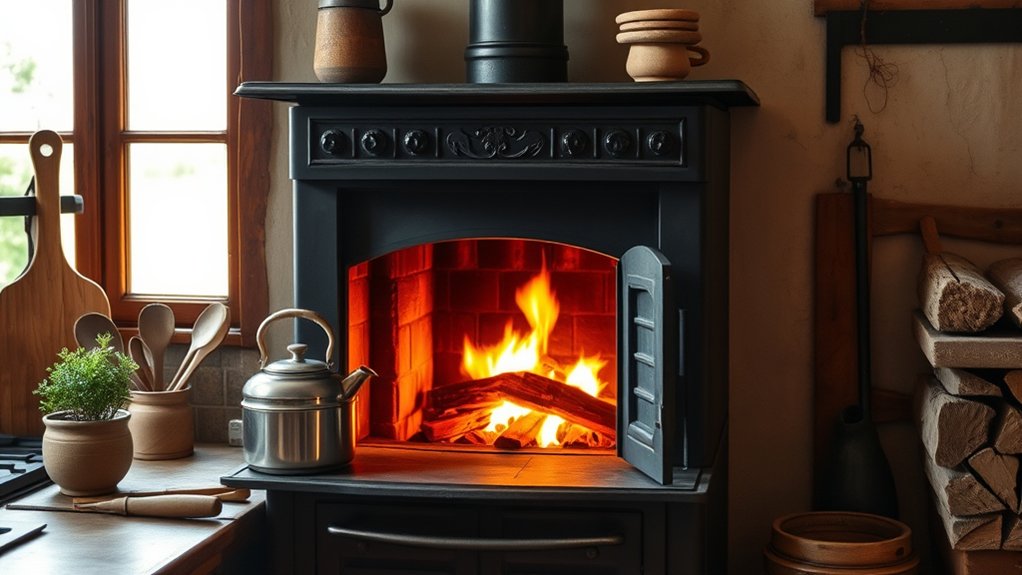
You can definitely cook on a wood stove if you follow key safety steps like clearing flammable items, wearing heat-resistant gloves, and keeping a fire extinguisher handy. Understand your stove’s heat zones: center for high heat, edges for simmering, and corners for warming. Choose seasoned hardwoods for steady, clean-burning fires.
Use sturdy cookware and monitor airflow to maintain temperature. With the right approach, you’ll enjoy efficient, flavorful meals. And there’s plenty more to explore about mastering wood stove cooking.
Key Takeaways
- Clear flammable materials around the wood stove and wear heat-resistant gloves to ensure cooking safety.
- Use heavy-duty cookware and cast iron trivets for even heat distribution on the stove surface.
- Position pots on hotter center areas for high heat and cooler edges for simmering or warming.
- Select well-seasoned hardwoods like oak or maple for sustained, clean-burning heat and reduced creosote buildup.
- Keep a fire extinguisher nearby and maintain chimney cleanliness with annual professional inspections for safe cooking.
Cooking Safely and Effectively on a Wood Stove
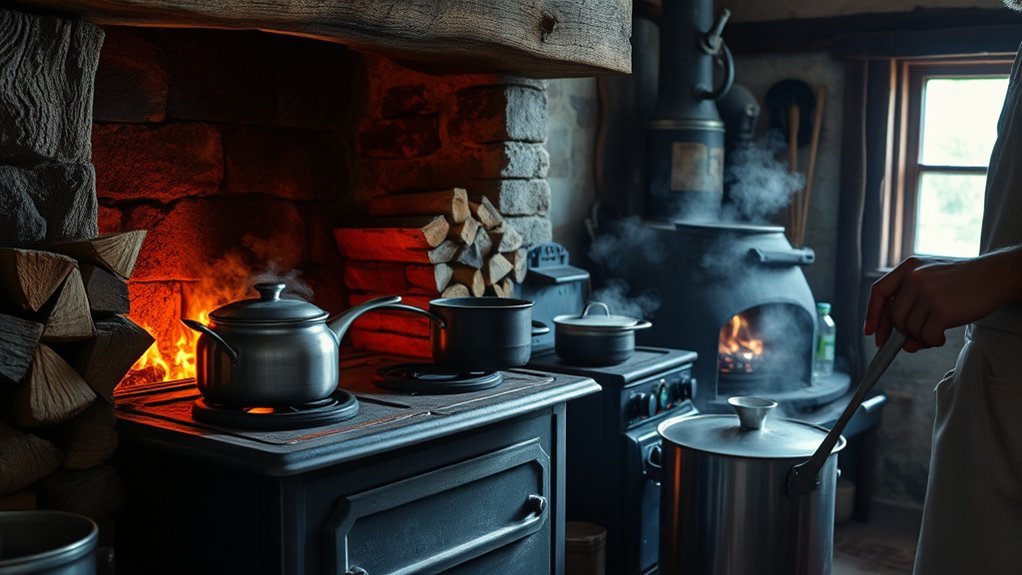
When you cook on a wood stove, using heavy-duty, fire-resistant cookware like cast iron guarantees your pots and pans can handle high heat and distribute it evenly.
To cook safely and effectively, always use dry, well-seasoned hardwoods such as oak or ash to maintain consistent heat and reduce smoke.
Use dry, well-seasoned hardwood like oak or ash for steady heat and less smoke when cooking.
Monitor your stove’s temperature with a magnetic thermometer to avoid temperature swings that affect cooking times and food quality.
Keep your stove and chimney clean to prevent creosote buildup, which poses a fire hazard. Clear the area around the stove of flammable materials.
And don’t forget to follow safety tips by always using oven mitts or gloves when handling hot cookware.
These practical steps assure safe, reliable cooking on your wood stove. It’s really all about being prepared and staying cautious.
Understanding Your Wood Stove’s Cooking Surfaces and Hot Spots
Understanding the cooking surfaces and hot spots on your wood stove is essential for mastering temperature control and improving your cooking results. The center of your wood stove usually holds the highest cooking temperature, but hot spots can vary by model. To cook efficiently, use a magnetic stove thermometer and cast iron trivets for even heat distribution.
Regularly rotating pots helps heat evenly and prevents burning. Here’s a quick overview of typical heat zones on your stove:
| Zone | Temperature Range | Cooking Tip |
|---|---|---|
| Center | Highest | Best for searing and boiling |
| Outer Edges | Moderate | Ideal for simmering |
| Corners | Lowest | Use for warming or slow cooking |
| Cast Iron Trivet | Even heat | Protects stove, smooth surface |
| Rotated Pans | Balanced | Prevents hot spot burning |
Mastering these zones really enhances your wood-burning stove cooking experience.
Choosing the Right Wood for Cooking on a Wood Stove
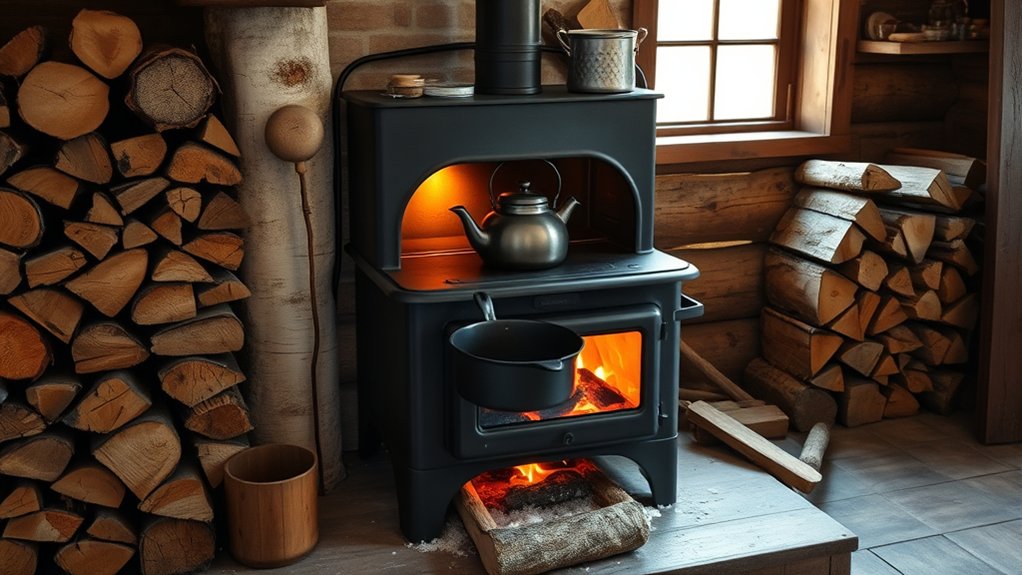
Selecting the right type of wood considerably impacts your cooking efficiency and flavor when using a wood stove. Choose hardwoods like oak, ash, or maple for their ability to burn hotter and longer, providing steady heat essential for consistent cooking.
Always use well-seasoned wood dried for at least six months to minimize smoke and improve burning efficiency.
Smaller pieces ignite quickly for high heat, while larger logs sustain longer cooking times. Regulate airflow carefully to maintain the right temperature, adjusting wood size as needed.
For added flavor enhancements, consider woods like hickory or cherry, which impart unique smoky tastes ideal for grilling.
By selecting the proper wood type and managing airflow, you guarantee a safer, more efficient cooking experience on your wood stove. It really makes all the difference when you get these details right.
Essential Tools for Wood Stove Cooking
When you’re cooking on a wood stove, having heat-resistant gloves is a must. They help you handle hot cookware safely without worrying about burns.
Plus, cast iron cookware is a game-changer. It can withstand those high temperatures and spreads heat evenly, making your cooking much smoother.
With these tools on hand, you’ll not only cook more efficiently but also keep yourself protected from any accidents.
Heat-Resistant Gloves
A reliable pair of heat-resistant gloves is indispensable for cooking on a wood stove, as they protect your hands from burns while handling hot cookware.
When selecting gloves, consider these key features:
- Made from aramid fibers or silicone for high heat resistance (over 900°F)
- Flexible fit that allows safe, precise handling of pots and pans
- Extended wrist coverage to shield against splashes and hot surfaces
- Non-slip surface to grip heavy cast iron cookware securely
- Regular inspection for damage to maintain safety and prevent burns
Using proper heat-resistant gloves lets you confidently manage the intense heat of a wood stove, reducing the risk of injury.
Always prioritize quality and fit to guarantee your hands stay protected when moving or adjusting hot cookware.
It’s definitely worth investing in a good pair. That way, you can cook without worrying about burns or accidents.
Cast Iron Cookware
To get the best from your cast iron cookware, preheating it on the stove mimics oven conditions, which helps with browning and caramelization.
Using a cast iron trivet elevates pots, promoting better heat circulation and protecting your stove surface.
Regular seasoning is vital to maintain the cookware’s non-stick properties and prevent rust, especially with the moisture from wood stove cooking.
With cast iron, you unlock versatile cooking options—from searing and frying to slow braising. It’s a reliable, practical choice for your wood stove kitchen.
How to Cook Meals on a Wood Stove
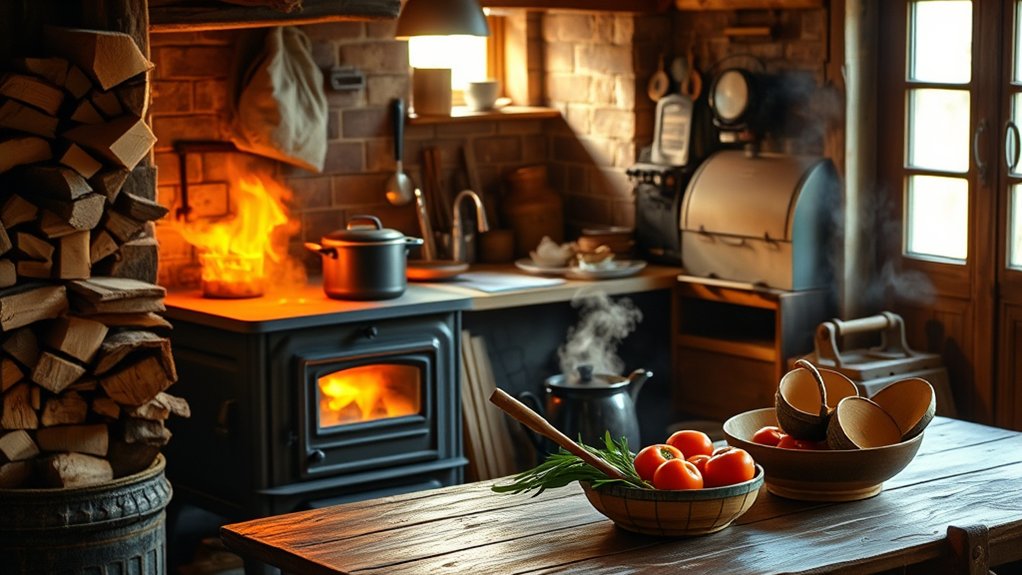
Although cooking on a wood stove requires attention to heat variations, you can get excellent results by preheating your cookware and rotating food regularly to ensure even cooking.
Using a wood cookstove takes patience and skill, especially with cast iron pots that distribute heat efficiently.
To cook meals successfully, remember to preheat cast iron cookware before adding ingredients—this helps reduce cooking time. Use seasoned hardwoods like oak or maple for steady, efficient heat and less smoke.
Keep a close eye on the stove, adjusting pot placement to manage uneven heat zones. Rotate food regularly to prevent burning and make sure everything cooks thoroughly.
Also, understand your stove’s airflow controls to maintain consistent temperatures. It might take some practice, but you’ll get the hang of it!
Baking and Simmering Techniques for Wood Stove Cooking
When you bake on a wood stove, managing temperature carefully is essential to get consistent results. Use a cast iron Dutch oven to guarantee even heat distribution and retain moisture in your baked goods.
Wait until the fire stabilizes and the oven’s thermal mass reaches the right temperature, usually after about an hour, before placing food inside.
Position your items in the middle of the oven for balanced heat. If the temperature spikes, move them toward the top.
For simmering, place pots on cooler stove areas or shift them away from direct heat to cook gently and avoid burning.
Since wood stove temperatures fluctuate, use an oven thermometer to monitor heat levels closely. Adjust cooking times as needed for the best baking and simmering outcomes.
It takes a bit of practice, but you’ll get the hang of it!
Maintaining and Cleaning Your Wood Stove for Cooking
You’ll want to check your wood stove regularly to catch any creosote buildup before it becomes a problem.
It’s also a good idea to schedule annual chimney cleanings to keep everything running safely and efficiently.
If creosote is left unchecked, it can ignite and cause dangerous chimney fires.
Regular Chimney Inspections
Since creosote buildup poses a serious fire hazard, you should schedule regular chimney inspections at least once a year, especially if you frequently use your wood stove for cooking.
These inspections help maintain safety and efficiency in your wood-burning stove cooking. A professional chimney sweep can remove dangerous creosote deposits and guarantee proper airflow.
Watch for signs like a smoky smell or slow draft, which indicate your chimney needs cleaning.
To optimize safety and performance, remember to:
- Schedule regular chimney inspections yearly
- Hire a professional chimney sweep for thorough cleaning
- Use dry seasoned hardwoods to reduce creosote buildup
- Monitor for smoky odors or visible soot
- Maintain your chimney to improve cooking efficiency and safety
Staying proactive with inspections keeps your stove safe and efficient.
It’s definitely worth the effort to avoid any hazards and keep your cooking going smoothly.
Creosote Buildup Prevention
Although creosote buildup can quietly accumulate over time, taking proactive steps to prevent it will keep your wood stove safe and efficient for cooking.
Always use well-seasoned hardwoods like oak or maple, as they burn cleaner and produce less smoke, reducing creosote buildup. Avoid softwoods, which increase resin and creosote formation.
Maintain a hot fire with proper airflow to promote complete combustion, minimizing smoke and creosote production. You can even try small additions like potato peels to encourage a cleaner burn. It’s a simple trick that can make a difference.
Make sure to regularly inspect and clean your chimney and flue at least once a year to remove any creosote deposits.
These measures will prevent dangerous chimney fires and keep your wood stove reliable and safe for cooking.
Safety Precautions for Wood Stove Cooking
When cooking on a wood stove, taking safety precautions is essential to prevent accidents and guarantee a smooth cooking experience.
Follow these practical tips to stay safe:
Follow these straightforward tips to ensure safety and enjoy a worry-free wood stove cooking experience
Clear the area around the stove of any flammable materials to avoid fire hazards.
Use heavy-duty, heat-resistant cookware designed for high temperatures to prevent warping or melting.
Regularly inspect and clean the chimney and flue to minimize creosote buildup and reduce fire risk.
Make sure to maintain distance from the stove while cooking, and wear oven gloves rated for high heat to protect your hands.
Keep a fire extinguisher nearby and know how to operate it in case of emergencies.
These steps really help keep things under control while you’re cooking.
Frequently Asked Questions
Can I Use Aluminum Foil on a Wood Stove Cooking Surface?
Yes, you can use aluminum foil on a wood stove cooking surface, but make sure to follow aluminum foil safety guidelines carefully.
Use heavy-duty foil so it can handle the heat from the cooking surface without tearing. Also, avoid placing the foil directly in the flame.
Proper foil cooking techniques help keep your wood stove working efficiently. Plus, they can enhance your food’s flavor by locking in moisture.
Just be sure the foil doesn’t block any airflow, and keep an eye on your cooking while you’re at it.
Using foil also makes cleanup easier, which makes cooking on your wood stove more practical and enjoyable.
How Do Altitude Changes Affect Wood Stove Cooking Times?
Altitude cooking can turn your wood stove into a wild beast! You’ll need serious heat adjustment because lower pressure speeds up evaporation and messes with moisture retention.
This drying out your food fast can be a real challenge.
Timing techniques become essential as flavors concentrate oddly and cooking times shift. Some dishes cook quicker, others slower.
To nail it, monitor evaporation closely, add extra liquids, and tweak your heat to keep everything balanced and tasty at high altitudes.
Is It Safe to Cook Acidic Foods on a Wood Stove?
Yes, you can safely cook acidic foods on a wood stove if you follow wood stove safety guidelines.
Use heavy-duty cookware like cast iron or stainless steel to prevent acidic food reactions that could leach harmful compounds.
Make sure to adjust your cooking techniques to control heat and enhance flavor while protecting your cookware. It’s all about finding the right balance.
Also, keep health in mind by ensuring good ventilation. You don’t want to be breathing in smoke or fumes.
Regular maintenance is key too. Check the condition of your cookware often to avoid corrosion, and keep your stove clean for peak performance.
Taking these steps will help you cook safely and enjoy delicious meals on your wood stove.
What’s the Best Way to Store Leftover Food Cooked on a Wood Stove?
For the best leftover storage, cool your food using proper cooling techniques before placing it in airtight containers. This helps preserve freshness and keeps your food safe.
Use glass or BPA-free plastic containers that seal well.
Make sure to label each container with the date so you can keep track of how long your leftovers last.
When reheating, warm the food evenly to avoid cold spots.
A little tip for seasoning: add fresh herbs after reheating to boost flavor without compromising safety. It really makes a difference!
Can I Grill Directly Over the Wood Stove Fire?
Yes, you can grill directly over a wood stove fire, but only about 30% of users master heat management effectively.
Use grilling techniques like placing a cast iron skillet or grill grate above the firebox. Choose seasoned hardwood firewood for flavor enhancement and minimal smoke.
Always wear heat-resistant gloves when handling cooking utensils.
Know your stove’s hot spots and follow safety precautions closely to guarantee even cooking and avoid burns while grilling.
It might take a bit of practice, but once you get the hang of it, grilling over your wood stove can be really rewarding.
Conclusion
Cooking on a wood stove lets you embrace rustic charm while preparing hearty meals. Picture the warm glow of crackling logs as you skillfully manage hot spots and simmer stews to perfection.
With the right wood, tools, and safety precautions, you’ll enjoy both efficiency and flavor. Keep your stove clean and stay attentive, and you’ll master this timeless cooking method.
It can turn every meal into a cozy, satisfying experience. Give it a try, and see how enjoyable cooking on a wood stove can be!