Can You Use Vinegar On Wood Floors: Cleaning Tips Without Damage
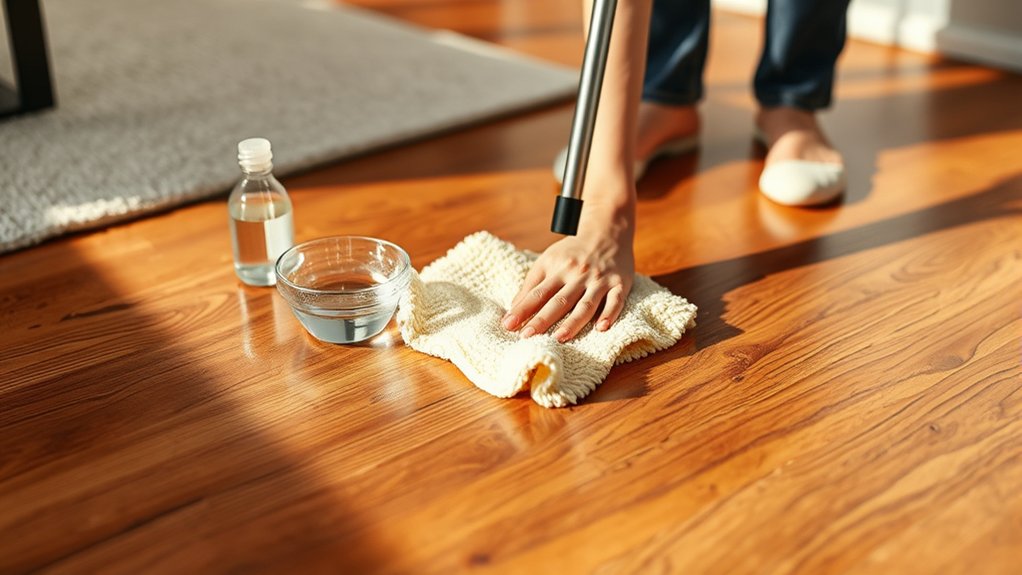
You can use vinegar to clean your wood floors, but you’ve got to dilute it well. Mix about 3 teaspoons of distilled white vinegar with 16 ounces of warm water to avoid damaging the finish. Always mop with a damp, not soaked, microfiber to protect the wood.
Vinegar’s acidity can dull or harm unsealed floors, so use it sparingly and test a hidden spot first. If you want to keep your floors safe and shiny, there are also gentler alternatives and protective tips you’ll find helpful.
Is It Safe to Use Vinegar on Wood Floors?
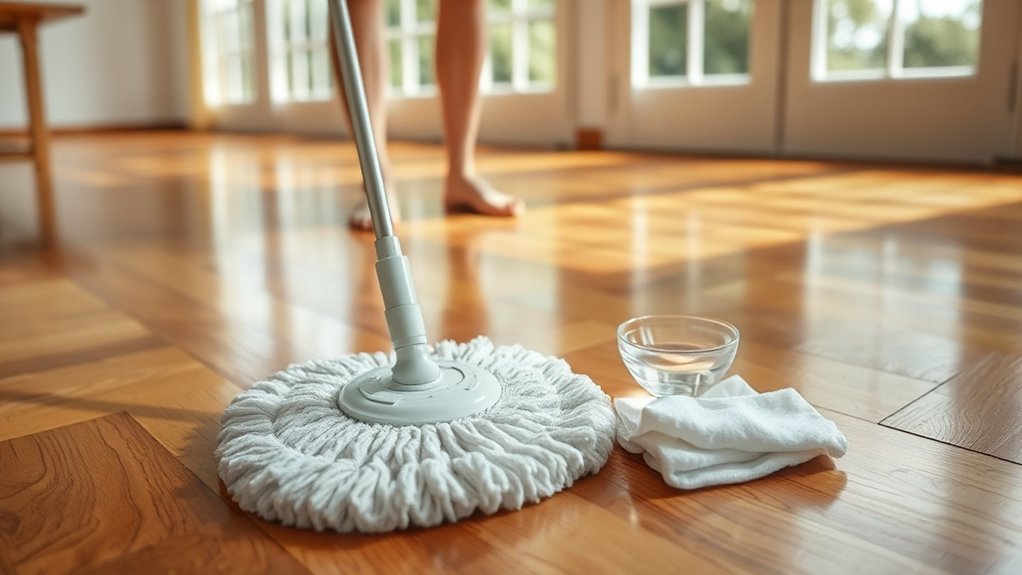
How safe is it to use vinegar on wood floors? Vinegar is acidic, with a pH between 2.4 and 3.4. This means it can gradually damage the protective finish on hardwood floors.
A diluted vinegar cleaning solution, like 1/2 cup vinegar in a gallon of water, can remove surface dirt and help clean wood floors temporarily.
But repeated use risks dulling and harming the finish over time.
Flooring professionals usually advise against vinegar, especially on unsealed or wax-finished hardwood floors because of this damage potential.
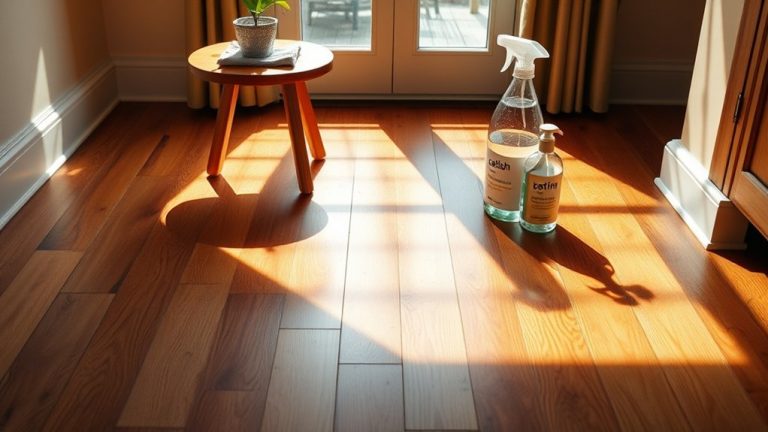
Instead, you should choose a pH-neutral cleaner designed specifically for hardwood floors, such as Bona, to maintain your floor’s finish safely.
Choose a pH-neutral hardwood floor cleaner like Bona to protect your floor’s finish safely.
Always test any cleaning solution, including vinegar, in a small, hidden area before applying it broadly.
It’s better to be safe than sorry!
How to Dilute Vinegar Properly for Cleaning Wood Floors
If you decide to use vinegar for cleaning your wood floors despite the risks, it’s important to dilute it properly to minimize damage.
To create a safe, effective solution, mix 3 teaspoons of distilled white vinegar with 16 ounces of warm water. Always choose distilled white vinegar, as other types like brown vinegar can leave stains or residues on hardwood floors.
For deeper cleaning, you can dilute 1/2 cup of white vinegar in 1 gallon of warm water, but use this solution sparingly to avoid harming the floor’s finish.
Before applying, test your diluted vinegar solution on a small, hidden area to guarantee it won’t damage the wood.
Use a damp mop to prevent excess moisture during cleaning, protecting your hardwood floors. It’s a simple step that goes a long way in keeping your floors safe and looking great.
How to Clean Wood Floors With Vinegar: Step-by-Step Guide
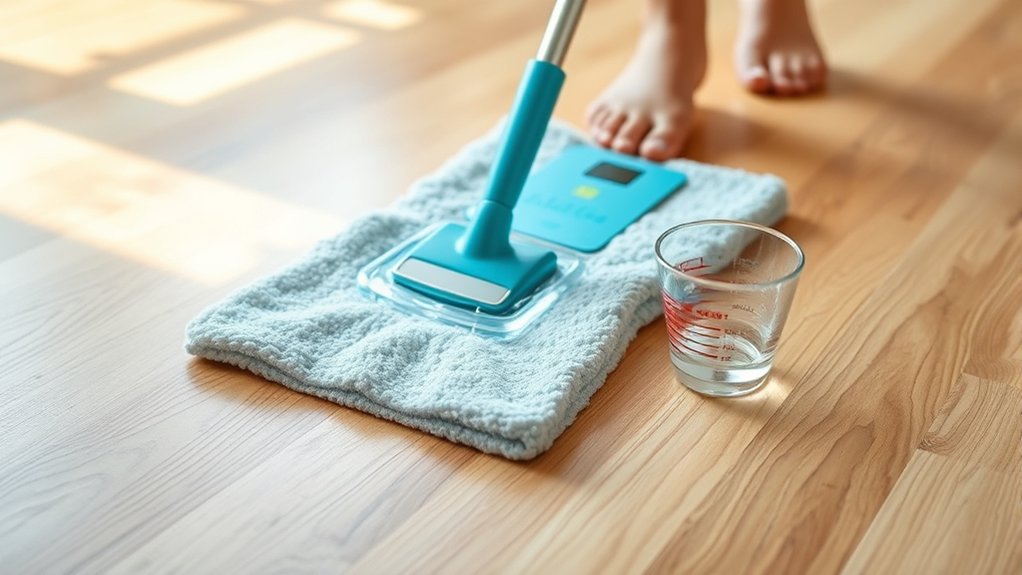
Start by preparing a gentle cleaning solution by mixing 3 teaspoons of distilled white vinegar with 16 ounces of warm water.
Test this solution in an inconspicuous spot to make sure it suits your hardwood floor finish.
Next, dampen a microfiber mop with the vinegar and water mixture.
Dampen a microfiber mop with the vinegar solution, ensuring it’s just moist, not soaking wet.
Make sure it’s not soaking wet to avoid excess moisture.
Mop your floors gently, focusing on small sections at a time to prevent water damage.
For deeper hardwood floor cleaning, you can use a stronger solution of 1/2 cup vinegar per gallon of warm water.
Just keep in mind to reserve this for occasional use.
Regularly using this vinegar-based solution helps maintain clean floors without harsh chemicals.
And always avoid vinegar on unsealed or waxed floors to protect their finish.
How to Tell If Vinegar Is Damaging Your Wood Floor Finish
You’ll want to keep an eye out for signs like a dull or hazy finish, visible scratches, or sticky residue after using vinegar on your wood floors.
These changes might mean the vinegar’s acidity is starting to wear down that protective layer.
Signs Of Finish Damage
A dull, hazy appearance on your wood floors often signals that vinegar has begun to damage the protective finish. When cleaning wood with vinegar, watch for signs like scratches or worn areas. These make hardwood floors more vulnerable to finish damage.
If the floor feels rough or the wood grain becomes more visible, the finish might be breaking down because of vinegar’s acidity. Discoloration or dark spots appearing on the surface also indicate that the protective finish is compromised, exposing the wood beneath.
Moreover, a gradual loss of sheen or gloss in certain areas is a clear warning that vinegar is harming your floor’s finish. At this point, it’s best to stop using vinegar and switch to gentler cleaning methods to preserve your hardwood floors.
Monitoring Floor Appearance
Regularly inspecting your wood floor’s appearance helps you catch early signs of vinegar damage before it worsens.
Start by monitoring for any dull or hazy spots, which often indicate that vinegar is wearing down the protective finish. Check for scratches or worn areas, as these can make your floor more vulnerable to damage during cleaning.
Notice any discoloration or fading where vinegar has been applied. That’s a clear sign the finish may be deteriorating.
Also, watch for sticky or tacky patches, which can develop if vinegar solutions aren’t properly diluted or used too frequently.
If you detect a loss of shine or a rough texture underfoot, it’s time to rethink your cleaning approach.
Careful monitoring keeps your wood floor looking its best and prevents lasting vinegar damage.
Alternatives to Vinegar for Cleaning Hardwood Floors
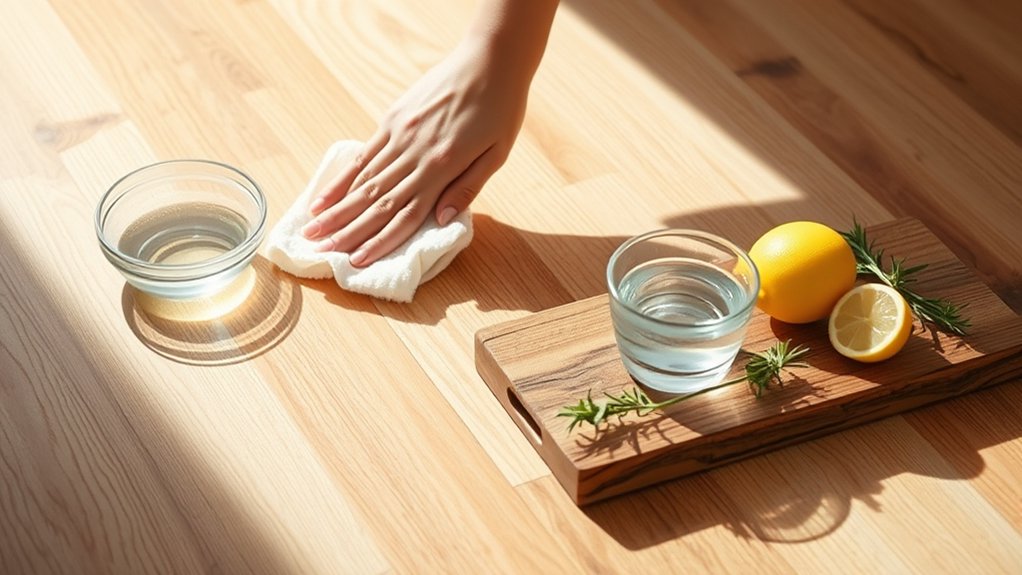
If vinegar isn’t the right choice for your hardwood floors, no worries—you’ve got other safe options.
For example, commercial pH-neutral cleaners made especially for wood work really well.
You could also try some gentle DIY solutions, like mixing up a bit of castile soap or simply using a damp microfiber mop with plain water.
These methods clean your floors effectively without putting the finish at risk.
Safe Cleaning Alternatives
When you want to protect your hardwood floors without risking damage, choosing pH-neutral cleaners designed specifically for wood, like Bona, can be your best option. Unlike a vinegar solution, these safe cleaning alternatives maintain the wood’s finish and prevent drying or dulling.
For gentle natural cleaning, you can also use a mild dish soap diluted in warm water. Always apply with a microfiber cloth or mop to avoid excess moisture that harms wood floors.
Baking soda works well for removing odors or stains. Just apply it for 15-30 minutes, then vacuum.
Before fully committing to any method, test your chosen cleaner on an inconspicuous spot to confirm it won’t damage your floors. These steps help you keep your hardwood looking great without the risks linked to vinegar solution use.
Commercial Hardwood Cleaners
Although vinegar is a popular natural cleaner, you can choose commercial hardwood cleaners specifically formulated to protect and maintain your wood floors. Brands like Bona offer pH-neutral solutions that clean the wood effectively without using harsh chemicals, promoting the longevity of your floor’s finish.
These commercial hardwood cleaners let you clean your floors safely by applying a fine spray mist in sections, preventing excess moisture that could cause damage.
Many options are also designed with environmental consideration in mind, combining effective cleaning power with eco-friendly ingredients.
Products like Quick Shine Multi-Surface Floor Cleaner remove dirt and grime while enhancing shine, providing a safe alternative to vinegar.
You can easily find these cleaners at local stores or online, making them a convenient choice for regular wood floor maintenance.
DIY Gentle Solutions
Since harsh cleaners can damage your hardwood floors, you’ll want to try gentle DIY solutions that protect the finish while keeping your floors clean. Instead of vinegar and water, opt for pH-neutral cleaners or a Castile soap solution. Use a damp microfiber mop to avoid excess moisture that harms wood.
Regular dry dusting prevents scratches and buildup. For tough stains, a baking soda paste works well without harsh chemicals. It’s an easy and safe way to tackle spots without risking your floor’s finish.
| Solution | Benefits | Usage Tips |
|---|---|---|
| pH-Neutral Cleaners | Safe, effective dirt removal | Use as directed on label |
| Castile Soap Solution | Mild, gentle cleaning | Mix few drops with warm water |
| Microfiber Mops | Traps dirt, limits moisture | Damp mop, avoid soaking floor |
| Baking Soda Paste | Tackles tough stains | Apply, wait 15-30 mins, scrub |
| Dry Dusting | Prevents scratches, debris | Sweep regularly with soft broom |
Protecting Wood Floors From Vinegar and Moisture Damage
Anyone using vinegar to clean wood floors should take care to protect the finish and avoid moisture damage. Vinegar’s acidity can wear down the protective finish on hardwood floors, causing dullness and haze over time.
To minimize risk, only apply vinegar on floors with a strong polyurethane protective finish. Never use it on unsealed or waxed surfaces.
Use a damp mop rather than soaking the floor, since excess moisture can lead to swelling, warping, and discoloration.
Avoid standing water at all costs. For regular upkeep, sweep often and rely on pH-neutral cleaners instead of vinegar to maintain your floor’s integrity.
Maintaining Your Hardwood Floor’s Shine After Vinegar Cleaning
When you clean your hardwood floors with vinegar, maintaining their shine requires extra care to protect the finish.
To keep your floor looking its best, follow these tips:
Use a pH-neutral hardwood floor cleaner, like Bona, after vinegar cleaning to preserve the finish and boost shine.
Dust-mop or sweep weekly to prevent dirt buildup that dulls the floor’s surface.
Cleaning daily with a microfiber mop dampened with plain water helps lift dirt without harming the finish.
Always dilute vinegar properly (½ cup per gallon of warm water) to avoid damage.
After cleaning, buff the floor with a dry microfiber cloth to remove moisture and restore luster.
This little extra step really makes a difference in keeping your floors looking fresh.
Frequently Asked Questions
Can Vinegar Remove Tough Stains Like Pet Urine From Wood Floors?
You can use vinegar for stain removal and to tackle pet odors on wood floors, but it’s not always enough for tough stains.
Vinegar’s natural cleaners work well as a gentle cleaning solution, helping neutralize odors while supporting wood preservation. Just make certain to dilute it properly and dry the floor thoroughly to avoid moisture damage.
For deep-set stains, consider professional help to guarantee floor protection and complete stain removal.
It’s better to be safe than sorry when it comes to your wood floors!
How Often Can I Safely Clean Wood Floors With Vinegar?
You should stick to frequency guidelines by cleaning your wood floors with vinegar no more than once a month.
Use vinegar dilution, like 1/2 cup vinegar per gallon of warm water, to protect the surface.
Try to incorporate alternative cleaners with a pH-neutral formula into your weekly cleaning schedule for better surface protection.
For maintenance tips, always dry floors with a microfiber cloth after cleaning.
This balanced routine keeps your floors safe and looking great.
It’s a simple way to make sure your wood floors stay in top shape without any damage.
Does Vinegar Affect Different Wood Floor Finishes Differently?
You might think vinegar turns all wood floor finishes into disaster zones overnight, but the truth is more nuanced.
Vinegar damage varies with finish types: polyurethane resists better, while shellac dissolves and lacquer clouds. Its acidity effects strip delicate finishes, so you must tailor maintenance tips accordingly.
Instead of risking your floors, opt for pH-neutral cleaning alternatives to protect your wood floor finishes and keep them looking pristine without harsh acidity.
Can Vinegar Be Used on Engineered Wood Flooring?
Yes, you can use vinegar on engineered wood flooring, but always stick to a safe vinegar dilution ratio. About 3 teaspoons of white vinegar per 16 ounces of warm water works well. This helps with vinegar odor removal and prevents damage.
Remember, engineered wood benefits from gentle care.
What Household Items Can I Mix With Vinegar for Better Cleaning?
Like adding spices to a favorite recipe, mixing baking soda with vinegar powers up your cleaning solutions for odor removal and natural disinfectants.
Toss in a few drops of dish soap for grease-cutting strength and essential oils for scent and surface protection.
Olive oil adds a natural polish, while cornstarch guarantees a streak-free shine.
These eco-friendly alternatives make your floors sparkle without harsh chemicals. They keep your home fresh and safe.
Conclusion
Using vinegar on your wood floors calls for a gentle touch and careful dilution. This helps avoid any unintended wear on their natural beauty.
By following the right steps, you can brighten your floors without leaving behind any unwelcome marks. If you notice subtle changes, it’s just a gentle nudge to adjust your cleaning routine.
Remember, sometimes the softest care preserves the wood’s true spirit. That way, your floors stay shining and well-loved for years to come.