Where Can I Buy Wood Chips: Best Places And Buying Tips
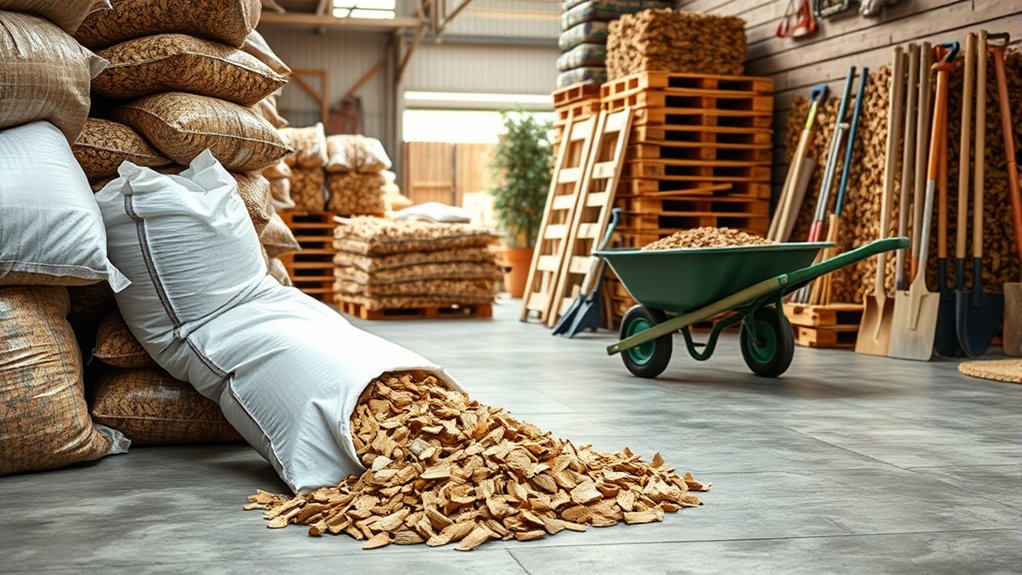
You can buy wood chips conveniently at major retailers like Home Depot, Lowe’s, Walmart, or Atwoods. They usually have consistent stock and a good variety to choose from.
Specialty BBQ stores and online platforms such as Smokinlicious and Amazon offer unique options. Plus, you might find bulk pricing that saves you money.
For cost-effective solutions, consider free delivery through services like ChipDrop or sourcing from local tree services. Choosing organic, untreated chips is a smart move because it guarantees soil health and longevity.
Keep exploring to uncover DIY methods and some advanced sourcing tips that could come in handy.
Key Takeaways
- Major retailers like Home Depot, Lowe’s, Walmart, and Atwoods offer consistent wood chip stock for various needs.
- Specialty BBQ stores provide unique local wood chip brands ideal for smoking and grilling.
- Online platforms such as Smokinlicious and Amazon offer convenient wood chip purchasing options.
- Bulk wood chip purchases, averaging around $7.99 per cubic yard, are more cost-effective than smaller bags.
- Free wood chips can be obtained through services like ChipDrop and local arborists, often promoting sustainable gardening.
Choosing the Right Wood Chips for Gardening and Landscaping
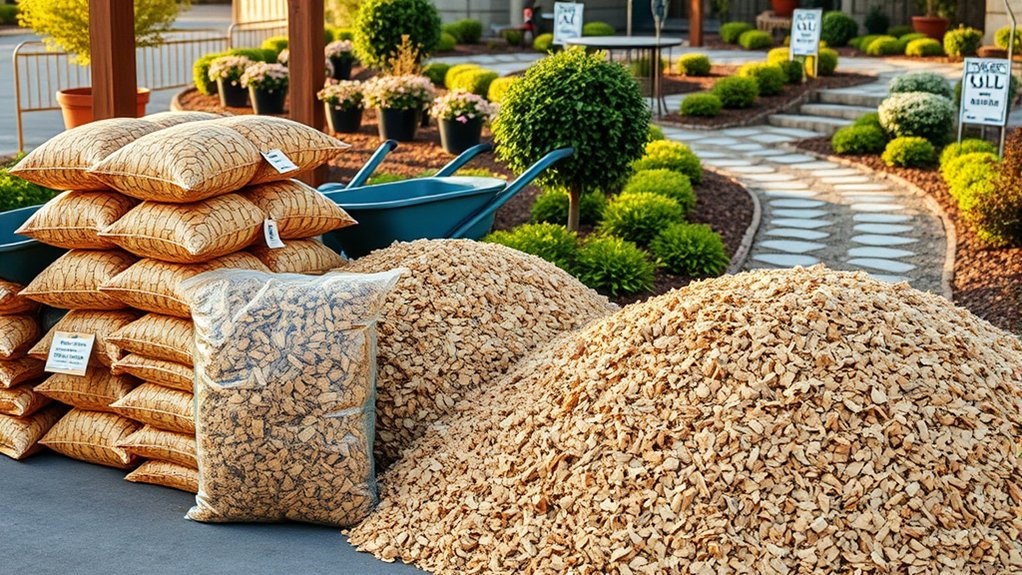
When you choose wood chips for gardening or landscaping, picking the right type of wood is super important. Hardwood chips like oak or maple decompose slowly, so they provide lasting mulch. On the other hand, softwoods such as pine break down more quickly.
Make sure to opt for organic wood chips that are free from chemicals and contaminants. This helps protect your soil health and keeps your plants vigorous. Wood chip mulch made from untreated material can really boost soil fertility, improve its structure, retain moisture, and even suppress weed growth effectively.
If you have areas that need durability and good drainage, like walking paths, go for larger, unscreened wood chips.
Where to Buy Wood Chips Locally and Online
Selecting the right wood chips is only part of the process; sourcing them from reliable suppliers guarantees you get quality material suited to your project.
Locally, major retailers like Home Depot, Lowe’s, Walmart, and Atwoods provide consistent stock. Specialized BBQ stores offer unique, local brands you mightn’t find elsewhere.
Major retailers ensure steady supply, while specialized BBQ shops offer exclusive local wood chip varieties.
Opening a new account with these suppliers can streamline repeat purchases and help you access exclusive deals.
Online, platforms such as Smokinlicious and Amazon present convenient options. Just keep in mind, prices often rise for smaller packages.
If you’re budget-conscious, consider making homemade wood chips from pruned branches or checking with local tree services—they can be a sustainable source.
Balancing convenience, price, and quality, you’ll find both local and online vendors ready to meet your wood chip needs effectively.
Comparing Wood Chip Prices: Bulk vs. Small Bags
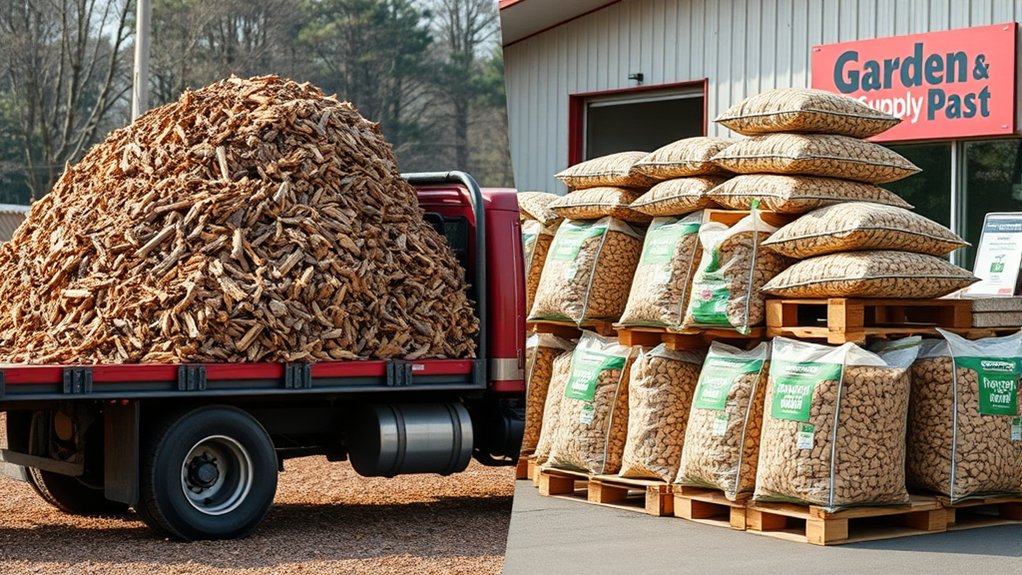
You’ll find bulk wood chips priced around $7.99 per cubic yard, which can save you quite a bit compared to buying small bags.
Those small bags might be more convenient, but they usually come with a higher price tag, especially if you buy them online or during the off-season.
Bulk Pricing Benefits
Three key factors make buying wood chips in bulk far more cost-effective than purchasing small bags: unit price, markup elimination, and supplier discounts. When you leverage bulk ordering advantages, the per-cubic-yard cost often drops to around $7.99, which is considerably lower than small bag prices.
By removing the packaging and retail markups, you streamline your expenses.
Using cost comparison strategies helps you analyze local supplier rates and seasonal promotions to maximize your savings. Plus, supplier negotiation tips come in handy when discussing volume discounts with landscaping companies or local providers. This can further reduce your overall spend.
Community initiatives like ChipDrop also offer free bulk wood chips, which can really boost your budgeting options.
At the end of the day, buying in bulk delivers superior value through precise cost control and smart purchasing. It’s a win-win for your wallet and your landscaping projects!
Small Bag Costs
Small bags of wood chips offer convenience and accessibility, but their cost per cubic yard tends to be notably higher than bulk options.
You’ll find small bag advantages in portability and ease of selection, especially when exploring diverse wood chip varieties at retailers like Home Depot, Lowe’s, or Walmart.
While Amazon sells smaller packages, local stores often provide better pricing and unique selections.
Keep an eye on seasonal pricing at gardening centers, where discounts on small bags can appreciably reduce expenses.
Though bulk purchases can drop costs to as low as $7.99 per cubic yard, small bags remain ideal for limited projects or testing different wood types.
Balancing convenience with price, small bags suit those valuing variety and flexibility over volume savings.
Get Free Wood Chips Delivered to Your Garden
You can get free wood chips delivered right to your garden by signing up with ChipDrop. It’s a platform that connects you with local arborists.
Once you’re registered, you’ll be added to a regional list and get notified whenever a delivery is available nearby.
It’s a super easy system that helps reduce waste and supports sustainable landscaping.
Plus, it takes very little effort on your part.
Free Delivery Options
Wondering how to get free wood chips delivered straight to your garden? Utilizing free delivery options through community resources is a sustainable gardening strategy that enhances soil health while supporting waste reduction.
Services like ChipDrop connect you with local arborists who supply wood chips as a byproduct of tree maintenance, delivered directly to your specified location.
By signing up, you join a network that efficiently redistributes organic mulch, minimizing landfill contributions and fostering community engagement.
While some local businesses offer free wood chips, they often require self-loading, making delivery services a convenient alternative.
These delivery options provide high-quality wood chips promptly, allowing you to integrate mulch seamlessly into your garden.
It promotes sustainability and resource efficiency without additional transport costs or effort on your part.
How ChipDrop Works
Although it requires some patience, ChipDrop streamlines the process of obtaining free wood chips by connecting you directly with local arborists and tree companies. After signing up, you’re added to a regional list, enabling you to request wood chip deliveries to your garden, school, or community space.
The delivery process is efficient and eco-conscious, repurposing arborist byproducts while reducing landfill waste. User testimonials consistently praise the quality and volume of the loads, highlighting friendly and reliable service.
ChipDrop benefits extend beyond free materials; it fosters sustainable landscaping and community engagement by sharing resources locally. By embracing this system, you gain access to a steady supply of wood chips, all while supporting environmental stewardship and resource optimization through a streamlined, user-friendly platform.
Wood Chip Sources Beyond Home Depot and Lowe’s
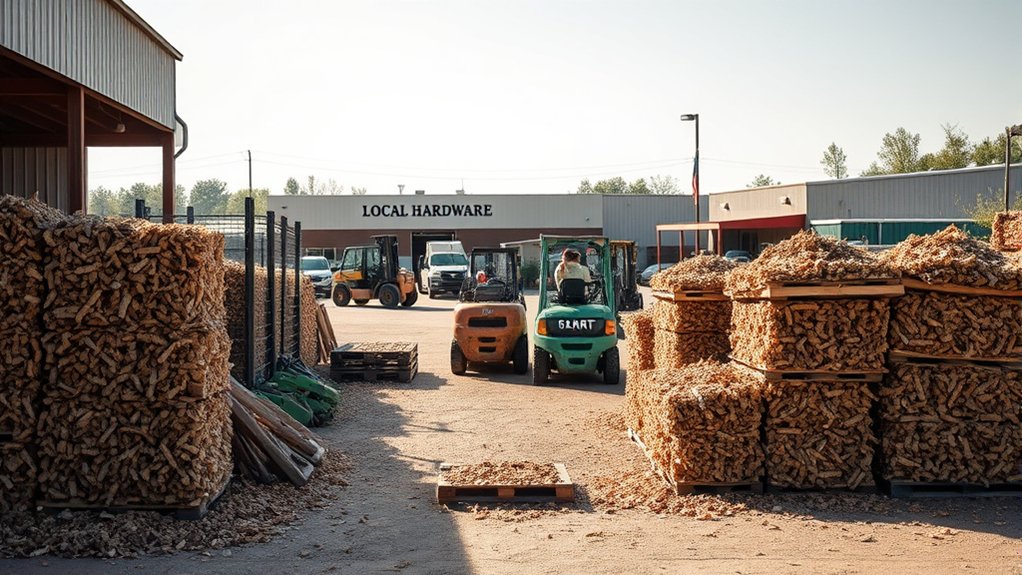
Several alternative sources for wood chips go beyond big retailers like Home Depot and Lowe’s, giving you more variety and better value. Regional suppliers and local BBQ stores often have unique wood chip types, including specialty blends made for specific uses.
Explore regional suppliers and local BBQ shops for unique wood chip varieties and specialty blends beyond big retailers.
It’s worth checking these out if you want something a bit different.
You can also explore sustainable options. Some wood chips come from pruned fruit trees or responsibly managed forests, which supports eco-friendly landscaping. That feels good, right?
Online platforms like Smokinlicious and Amazon make buying convenient. But don’t forget to compare prices with local businesses such as Great Western or Double D. Sometimes, you might even score free materials.
Gardening centers often have seasonal sales, too, which are great for buying in bulk without breaking the bank.
How to Make Your Own Wood Chips
If you prefer more control over the type and quality of wood chips you use, making your own is a practical solution. Using a bandsaw, wood chipper, or hand splitting, you can transform pruned branches from fruit trees into ideal DIY wood chips.
Focus on dry, disease-free wood to maximize wood chip benefits and promote sustainable mulching. It’s a great way to know exactly what’s going into your garden.
| Method | Description |
|---|---|
| Bandsaw | Precise cutting of branches |
| Wood Chipper | Efficient shredding of wood |
| Hand Splitting | Minimal tools, versatile |
| Local Sourcing | Cost-effective wood acquisition |
Creating your own wood chips provides an eco-friendly, cost-saving alternative while enhancing soil health naturally. Plus, it gives you a satisfying project to work on!
Using Wood Chips for Landscaping and Erosion Control
When you apply wood chips as ground cover, you actively improve soil moisture retention and suppress weed growth. This makes them an essential element in effective landscaping. Their benefits go beyond just appearance. They stabilize soil and help prevent erosion on slopes and banks.
By holding soil in place, wood chips reduce runoff. This protects disturbed areas from degradation.
Consider these applications for the best results:
- Layer wood chips on garden beds to conserve moisture and reduce weeds.
- Spread chips along embankments to prevent soil erosion during heavy rain.
- Use chips to reinforce woodland trails, balancing looks with practical soil protection.
Using wood chips this way helps you maximize moisture retention and erosion control. You’ll create a sustainable, resilient landscape that thrives with minimal maintenance.
Finding Local Arborists and Tree Services for Wood Chips
Because arborists and tree services generate wood chips as a byproduct of their routine work, you can often acquire these materials at little to no cost. Local tree services typically avoid landfill tipping fees by donating chips, streamlining sustainable practices that benefit both you and the environment.
To locate these resources, explore online platforms like ChipDrop or check local listings for arborists participating in wood chip donation programs. Engaging with community groups accelerates connections, as nearby professionals frequently respond to requests promptly.
This proactive community engagement not only secures quality wood chips but also fosters environmentally responsible landscaping. By leveraging these networks, you access cost-effective, sustainable wood chips tailored to your project’s needs while supporting local arboricultural initiatives.
Frequently Asked Questions
How Long Do Wood Chips Typically Last in Mulch Beds?
Wood chips typically last 2 to 5 years in mulch beds, depending on durability factors like moisture, climate, and wood type.
You’ll want to maintain a mulch depth of 2 to 4 inches to optimize their lifespan and weed suppression.
As they break down, wood chips enhance soil benefits by slowly releasing nutrients and improving soil health.
Regularly topping off your mulch every couple of years helps maintain these advantages and extends their durability.
Are Wood Chips Safe for Use Around Edible Plants?
You’d think wood chips could fix every garden problem overnight. They’re that powerful! Yes, wood chips are safe around edible plants if you choose untreated, organic sources.
Their benefits include moisture retention, weed suppression, and enhancing soil health. Just avoid treated wood and allelopathic varieties like cedar.
Using wood chips as mulch alternatives can improve your soil’s nutrient profile.
It’s even better if you compost them first. That way, you ensure a thriving, chemical-free garden.
Can Wood Chips Attract Pests or Insects to My Garden?
Yes, wood chips can attract pests if they’re not managed properly. To keep pests under control, it’s important to maintain your wood chips by keeping them dry and turning them regularly. This helps prevent the buildup of moisture that pests love.
You can also plant insect-repelling plants nearby, like lavender or marigolds, to keep unwanted bugs away. Make sure the wood chips don’t touch the plant stems directly, as that can increase moisture and invite pests.
What Is the Environmental Impact of Using Wood Chips?
Using wood chips offers significant sustainability benefits by repurposing organic waste, reducing landfill contributions, and lowering your garden’s carbon footprint.
You actively enhance biodiversity by creating habitats for beneficial microorganisms and insects, which improves ecosystem health.
Plus, wood chips stabilize soil and retain moisture, promoting long-term soil fertility.
This eco-conscious choice supports a circular economy, advancing both environmental stewardship and the resilience of your landscape’s natural systems.
It’s a simple way to make a positive impact while keeping your garden healthy.
How Should I Store Wood Chips to Keep Them Fresh?
You’ll want to master wood chip storage since improperly stored chips can absorb up to 30% moisture, which speeds up decay.
Keep them in a dry, well-ventilated spot, off the ground on pallets or in containers. Using breathable covers helps control moisture and prevents mold.
Make it a habit to check regularly for pests and rotate your stock to keep everything fresh.
Adding layers of dry leaves or straw can also help by soaking up extra moisture. This not only maintains quality but also helps keep pests away.
Conclusion
You’d be amazed how transforming your garden with the right wood chips can feel like wielding nature’s secret weapon. Whether you buy in bulk, snag free deliveries, or even craft your own, wood chips aren’t just mulch—they’re the ultimate armor against erosion and weeds.
Don’t settle for less. Tapping into local arborists or exploring beyond big-box stores reveals a world of precision landscaping.
Your garden’s future depends on this simple, powerful choice.